



































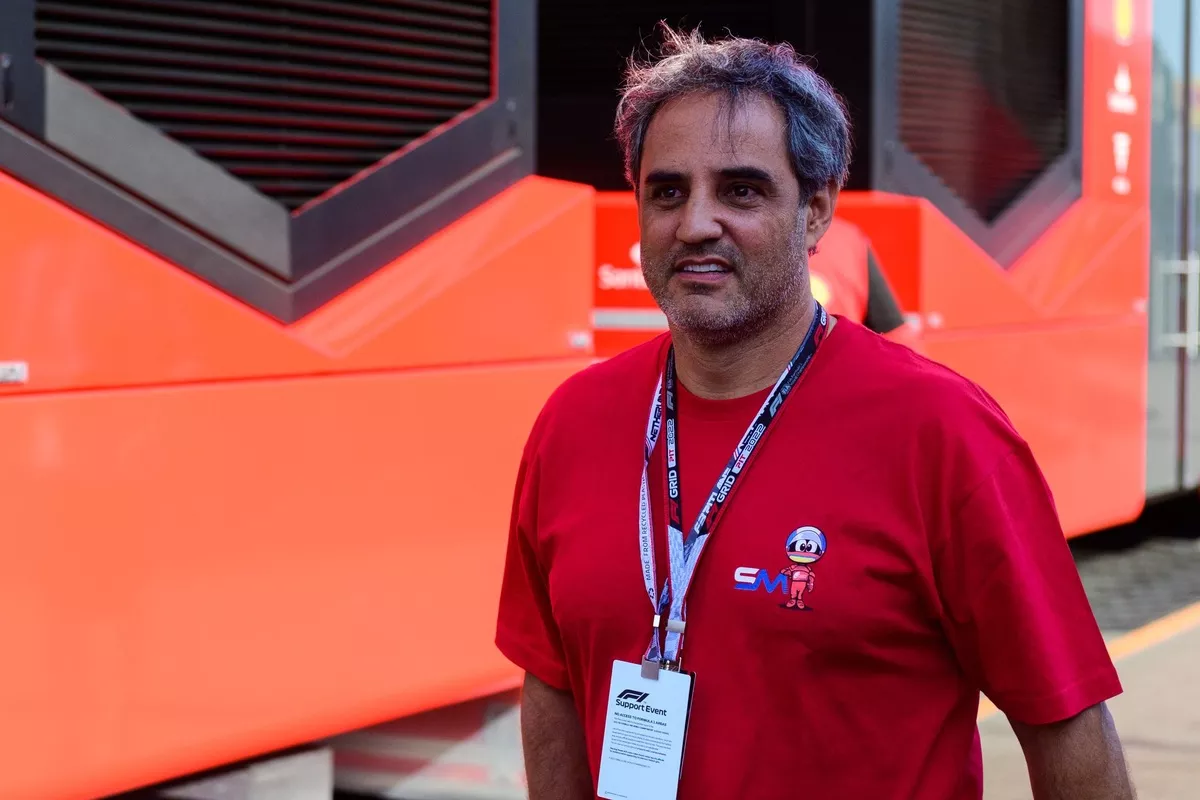
“Afraid of Making Decisions”: Juan Pablo Montoya Calls Out McLaren Over Qatar GP Pit Call
Montoya Says McLaren Were “Afraid of Making Decisions” During Crucial Qatar GP Strategy Moment
In the aftermath of a Qatar Grand Prix filled with tension, missed opportunities, and championship implications, former Formula 1 race-winner Juan Pablo Montoya didn’t hold back. The Colombian openly criticised McLaren for being “afraid of making decisions”—a mindset he believes ultimately jeopardised both Lando Norris’ and Oscar Piastri’s chances in the title fight as the season heads toward its Abu Dhabi finale.
Montoya’s sharp comments came during the F1 TV Post-Race Show as he dissected McLaren’s puzzling choice to stay out under the early safety car—making them the only team on the grid not to pit. It was a moment that sent shockwaves through the paddock, as most strategists agreed the pit window was too attractive to ignore. Yet McLaren insisted their decision gave them “flexibility.” In reality, that flexibility evaporated almost instantly, replaced by a strategic disadvantage neither driver could fully overcome.
The Qatar GP outcome speaks for itself:
-
Piastri, starting from pole, finished P2.
-
Norris, starting from P2, slipped to P4.
-
Verstappen took the win — and slashed a huge chunk out of Norris’ championship lead.
Heading into Abu Dhabi, Norris leads the standings by just 12 points over Verstappen, with Piastri a further four behind. What could have been a more comfortable margin has now turned into a nail-biting showdown — and Montoya firmly believes McLaren’s hesitant decision-making is to blame.
A Strategy Shaped More by Fear Than Logic
Montoya’s critique wasn’t simply about the choice itself, but the mindset behind it. His view was clear: McLaren seemed more worried about avoiding a mistake than about making a strong, aggressive call.
“I think honestly McLaren thought, ‘Okay, we’re still too close. We’re going to have to double-stack,’” Montoya said. “Oscar is gonna be fine, but we’re sacrificing Lando here… and Lando might lose five or six places because he might have an unsafe release or have to find a hole.”
Montoya understood the dilemma: pit both drivers, and one loses out. But in his view, McLaren took the passive route rather than the winning one. By avoiding a double-stack that might have cost Norris a few seconds, they instead made a decision that cost him a whole lot more over the course of the race.
“And I think they were so afraid,” Montoya added. “They thought he had enough pace to get away with it.”
It’s the kind of statement that hits at the core of McLaren’s historical Achilles’ heel — brilliant pace, strong development, but occasional hesitation when the pressure spikes.
The strategy not only compromised Norris but also forced Piastri into a race of recovery rather than control. Starting from pole, the Australian had every chance to dictate the tempo. Instead, he was playing catch-up within the opening laps.
Hard Tyres: The Second Head-Scratcher
Just when Montoya thought he had wrapped his head around McLaren’s first questionable decision, along came the second: putting Lando Norris on the hard tyre compound.
“The last surprise was Lando going to hards,” Montoya said bluntly. “After we spoke in practice, he hated them. He couldn’t drive the car on the hards.”
His frustration is hard to argue with. Throughout practice and sprint running, Norris had openly voiced his discomfort on the hard tyres. The softs and mediums were clearly stronger options for him, both in terms of grip and confidence. And yet, on Sunday, McLaren steered him right back onto the compound he struggled most with.
Montoya didn’t mince words:
“They went to the softs, he looked really competitive. The mediums looked really competitive. Hold Max a little longer and go to softs.”
It’s a sentiment many fans and analysts echoed. If Norris was going to take the fight to Verstappen — or at least protect his championship lead — why not put him on the tyres he could attack with? The hards only boxed him in, limiting his pace at a moment when pace was everything.
Montoya summed up the psychological side of the issue rather cleanly:
“I think they’re so afraid of making decisions. They’re so afraid of screwing it up that a lot of times, when you’re afraid of making bad decisions, you end up making them.”
It was a brutal assessment, but one grounded in the pressure-cooker reality of a title fight. McLaren may have the fastest car on certain weekends — but speed alone doesn’t win championships. Precision does. Conviction does. And above all, boldness does.
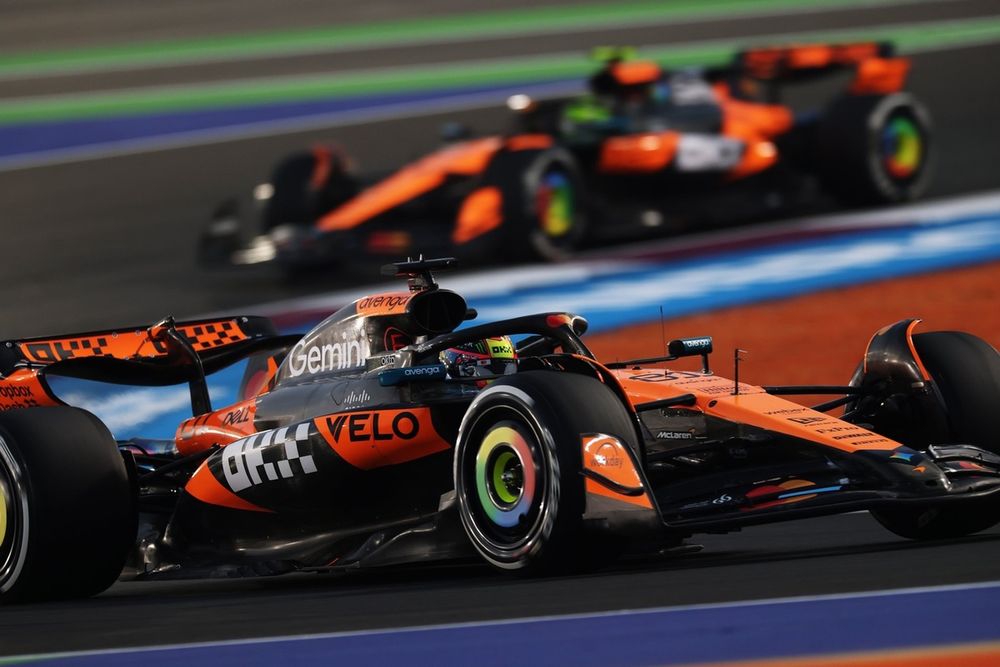
Lando Norris, McLaren, Oscar Piastri, McLaren
The Ripple Effect Heading Into Abu Dhabi
What makes Qatar such a stinging moment for McLaren is that this isn’t just about a single race. This is about momentum, psychology, and championship geometry. With only 12 points separating Norris and Verstappen, the margins are wafer-thin. The decisions made on Sunday afternoons now echo across the entire season narrative.
McLaren’s miscalculation didn’t hand Verstappen the trophy — far from it — but it certainly made the fight more complicated than it needed to be.
Norris still leads, yes. Piastri is still mathematically alive, yes. But both are walking into Abu Dhabi with the sense that their team left points on the table when it mattered most. That kind of doubt can linger.
To their credit, McLaren owned the mistake. The team was open, transparent, and humbled about the outcome. There was no attempt to sugarcoat it. No corporate spin. They admitted it was the wrong call — and promised to learn from it.
But learning and reacting are two different things. The question now is: what version of McLaren shows up in Abu Dhabi?
The brave?
The cautious?
The brilliant?
Or the hesitant?
Because if Montoya is right — if fear is creeping in behind the scenes — then the final race of the season may come down not to car performance, but to the team’s willingness to take the decisive, aggressive option when the lights go out.
What Abu Dhabi Now Represents
The Yas Marina finale has transformed from a comfortable defence scenario to a potential championship cliffhanger. With Verstappen closing in and Piastri lurking, McLaren now finds itself in the spotlight not just for speed, but for strategy.
Every pitstop.
Every tyre choice.
Every split-second call.
They all carry the weight of a possible world title — or the loss of one.
Montoya’s criticism, at its core, is not meant to tear the team down. It’s a warning: in the biggest moments, hesitation is more dangerous than risk.
The drivers have done their part. The car is competitive. The opportunity is real. Now, McLaren must decide which version of itself it wants to be — the bold one that fights for championships or the careful one that lets them slip away.
And if they needed a final nudge, Montoya has already given it to them:
When you’re afraid of making a bad decision, that’s usually when you make one.


There are no comments yet. Be the first to comment!