


































































































































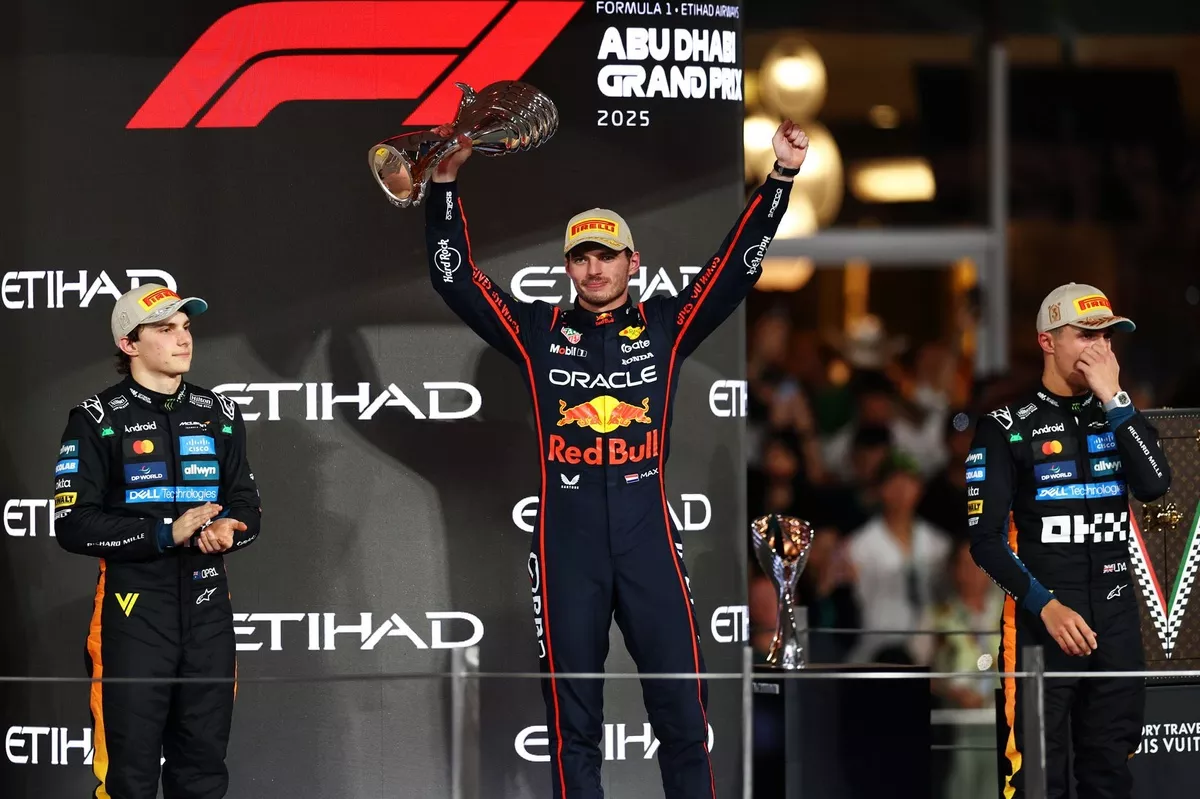
Max Verstappen “would always pick a number one driver” as F1 team boss after fighting McLaren stars alone
Max Verstappen explains why being Red Bull’s sole frontrunner against Lando Norris and Oscar Piastri actually helped his 2025 Formula 1 title fight
Max Verstappen has never been shy about his views on racing, team dynamics, or how Formula 1 teams should be run. But during the long, intense grind of the 2025 season, the four-time world champion offered one of his clearest insights yet into how he sees the sport — and how he would run a team himself.
Speaking candidly after a season in which he effectively carried Red Bull’s championship hopes on his own shoulders, Verstappen admitted that being the only Red Bull driver capable of fighting McLaren’s Lando Norris and Oscar Piastri was not a disadvantage. In fact, he believes it helped him. And it reinforced a belief he has held for a long time: if he were an F1 team boss, he would always pick a clear number one driver.
In a season full of political tension, strategic compromise, and internal uncertainty at Red Bull, Verstappen’s comments felt less like post-race frustration and more like a philosophy shaped by experience.
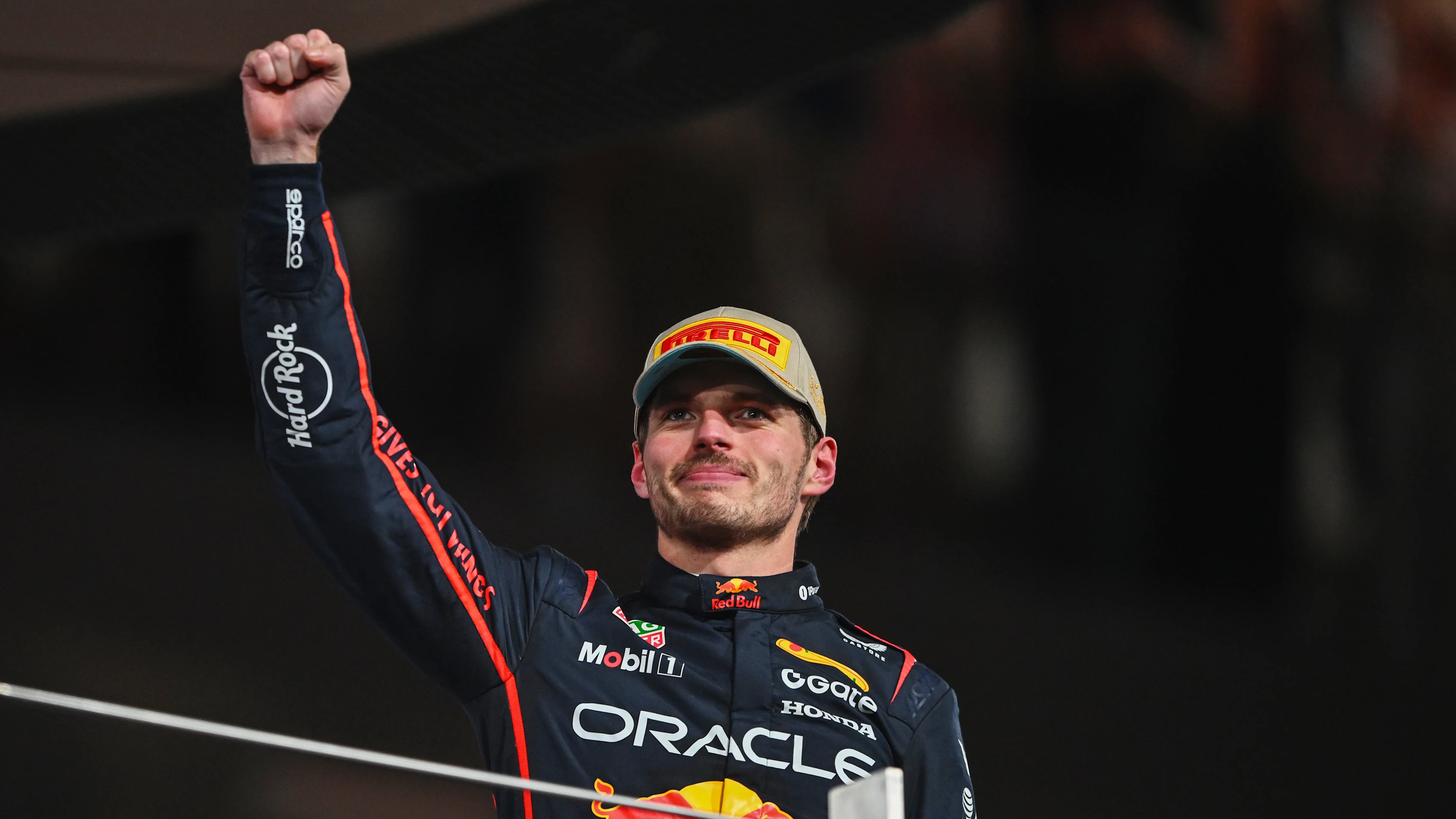
Max Verstappen confirms he will use car number 3 for 2026 season
Red Bull’s second-seat gamble and the Verstappen reality
Red Bull entered the 2025 Formula 1 season hoping — once again — to solve its long-running second-seat problem. The team made a bold call by promoting Liam Lawson, believing the young New Zealander could finally provide stability alongside Verstappen.
That experiment didn’t last long.
After just two difficult race weekends, Lawson was replaced by Yuki Tsunoda in a move that underlined Red Bull’s ruthless approach when expectations aren’t met. Tsunoda, despite flashes of speed, struggled to find consistency in an unforgiving car that has historically been built around Verstappen’s driving style.
By mid-season, it was clear that Tsunoda was not going to be a factor at the front. His performances faded, his confidence dipped, and Red Bull ultimately demoted him to a reserve role for 2026, turning instead to highly-rated youngster Isack Hadjar.
The result? Verstappen was left to fight the championship battle alone.
Taking on Norris and Piastri solo
While Red Bull wrestled with internal instability, McLaren enjoyed the luxury of strength in numbers. Lando Norris and Oscar Piastri emerged as a formidable pairing, pushing each other hard and consistently finishing at the sharp end of the grid.
On paper, that should have spelled trouble for Verstappen.
Two McLaren drivers meant more strategic options, more pressure, and more chances to box Red Bull in during races. But Verstappen saw it differently.
“When you’re on your own, you can go on the attack,” he explained in an interview with Viaplay. “You can be much more aggressive. I always prefer that.”
It was a telling comment. Verstappen thrives in clarity. Without having to worry about protecting a teammate’s race, compromising strategy, or playing internal politics, he could focus entirely on maximising his own result.
And as the season unfolded, that freedom became a weapon.
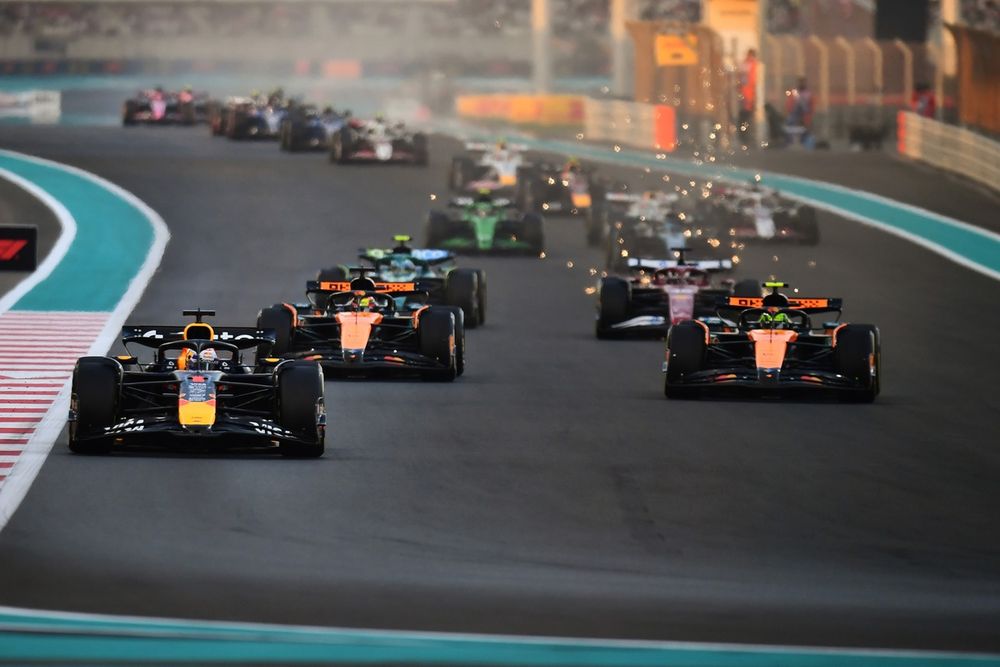
Lando Norris, McLaren, Oscar Piastri, McLaren, Max Verstappen, Red Bull Racing
How McLaren’s equality worked against them
One of the defining features of McLaren’s 2025 campaign was its commitment to treating Norris and Piastri equally. On principle, it was admirable. On track, it proved costly.
Race after race, the two McLaren drivers took points off each other. They fought wheel-to-wheel, split strategies, and occasionally compromised the team’s overall outcome in order to remain fair.
Verstappen noticed.
“Because McLaren had two drivers, they gave away some things with their strategy,” he said. “So, of course, we benefited from that too.”
While Norris and Piastri battled for internal supremacy, Verstappen quietly collected points. Second places, third places, opportunistic wins — they all added up. In a title fight defined by margins, consistency mattered more than dominance.
Why Verstappen would always pick a number one driver
Verstappen’s experiences in 2025 reinforced a belief he has held since early in his Red Bull career.
“If I were a team boss, I would always put a clear number one and two in place,” he said.
The statement wasn’t delivered with arrogance, but with practicality. Verstappen understands the realities of modern Formula 1: limited tyres, complex strategies, and razor-thin margins.
“Of course, a number two who still scores enough points to compete for the constructors’ title,” he clarified. “But a clear number one and two.”
In Verstappen’s view, hierarchy creates efficiency. It simplifies decision-making. It avoids hesitation in the pit wall. And most importantly, it prevents drivers from undermining each other at crucial moments.
Aggression without compromise
Being Red Bull’s sole frontrunner allowed Verstappen to race with complete freedom. He could attack when opportunities arose and defend aggressively when necessary, without worrying about how it would affect a teammate’s race.
“If you’re a bit equal with the car,” Verstappen added, “then I wish both [McLaren drivers] good luck, because then you can really decide it amongst yourselves.”
It was a subtle dig, but a fair one. While Norris and Piastri had to constantly measure their actions against team harmony, Verstappen answered only to the stopwatch.
A season that showed Verstappen’s maturity
What stood out in 2025 was not just Verstappen’s speed, but his composure. Gone were the explosive radio messages and visible frustration of earlier years. Instead, there was calculation.
He understood that McLaren’s internal battle was an opportunity. He waited. He struck when it mattered. And he trusted that pressure would eventually tell.
This was not the Verstappen of raw talent alone. This was Verstappen the tactician.
Red Bull’s reliance on one man
Of course, there is a flip side to this story. Red Bull’s dependence on Verstappen has never been more obvious. When he struggled, the team struggled. When he delivered, the team survived.
The failure to establish a competitive second driver remains a concern heading into 2026. Even Verstappen would admit that relying on one car is not a sustainable long-term strategy.
But in 2025, it worked — largely because of who that one driver was.
Norris, Piastri, and lessons learned
For Norris and Piastri, the season was a harsh education in championship dynamics. Talent alone is not enough. Team structure matters. Clear leadership matters.
Both drivers proved they belong at the top level. But together, they may have made life easier for their biggest rival.
Final thoughts: Verstappen’s blueprint for success
Max Verstappen’s claim that he “would always pick a number one driver” isn’t controversial — it’s honest. Formula 1 is not a democracy. It is a high-speed business built on results.
In 2025, Verstappen showed that sometimes, being alone at the front is better than being surrounded by allies. Without internal compromise, without divided loyalties, he raced with clarity and purpose.
Whether teams agree with his philosophy or not, one thing is certain: when Max Verstappen speaks about winning, he does so from experience.


There are no comments yet. Be the first to comment!