






































































“That’s not right!” – Gary Neville tears into Ruben Amorim for bizarre Joshua Zirkzee substitution as Man Utd stumble against Wolves
Gary Neville questions Ruben Amorim’s complicated tactics after dismal Manchester United draw with rock-bottom Wolves
Gary Neville did not hold back. Again.
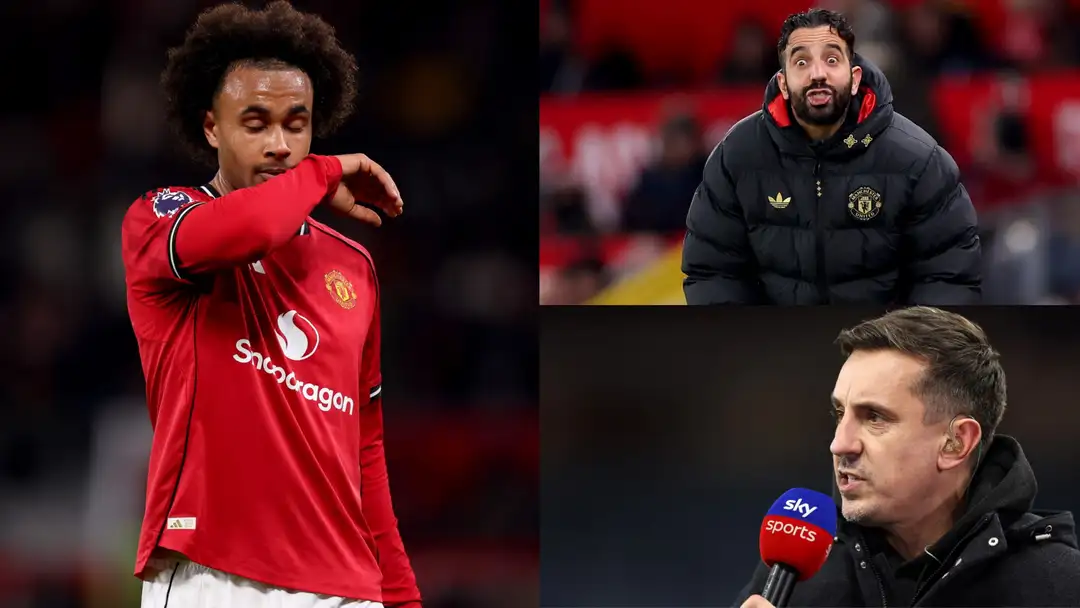
Manchester United’s frustrating 1-1 draw with bottom-of-the-table Wolves was barely over when the Sky Sports studio lit up, and at the centre of the storm was Ruben Amorim. More specifically, his decision to substitute goalscorer Joshua Zirkzee at half-time — a call Neville described as “bizarre” and, more damningly, simply “not right”.
United had the chance to build momentum after their Boxing Day win over Newcastle. Instead, they slipped back into uncertainty, dropping points at Old Trafford against a Wolves side rooted to the foot of the Premier League and desperate for anything resembling hope. For Neville, the result was worrying enough. The manner of it, and the tactical choices behind it, were even more alarming.
This was not a calm post-match analysis. This was frustration boiling over.
Manchester United become the third team to fail to beat Wolves
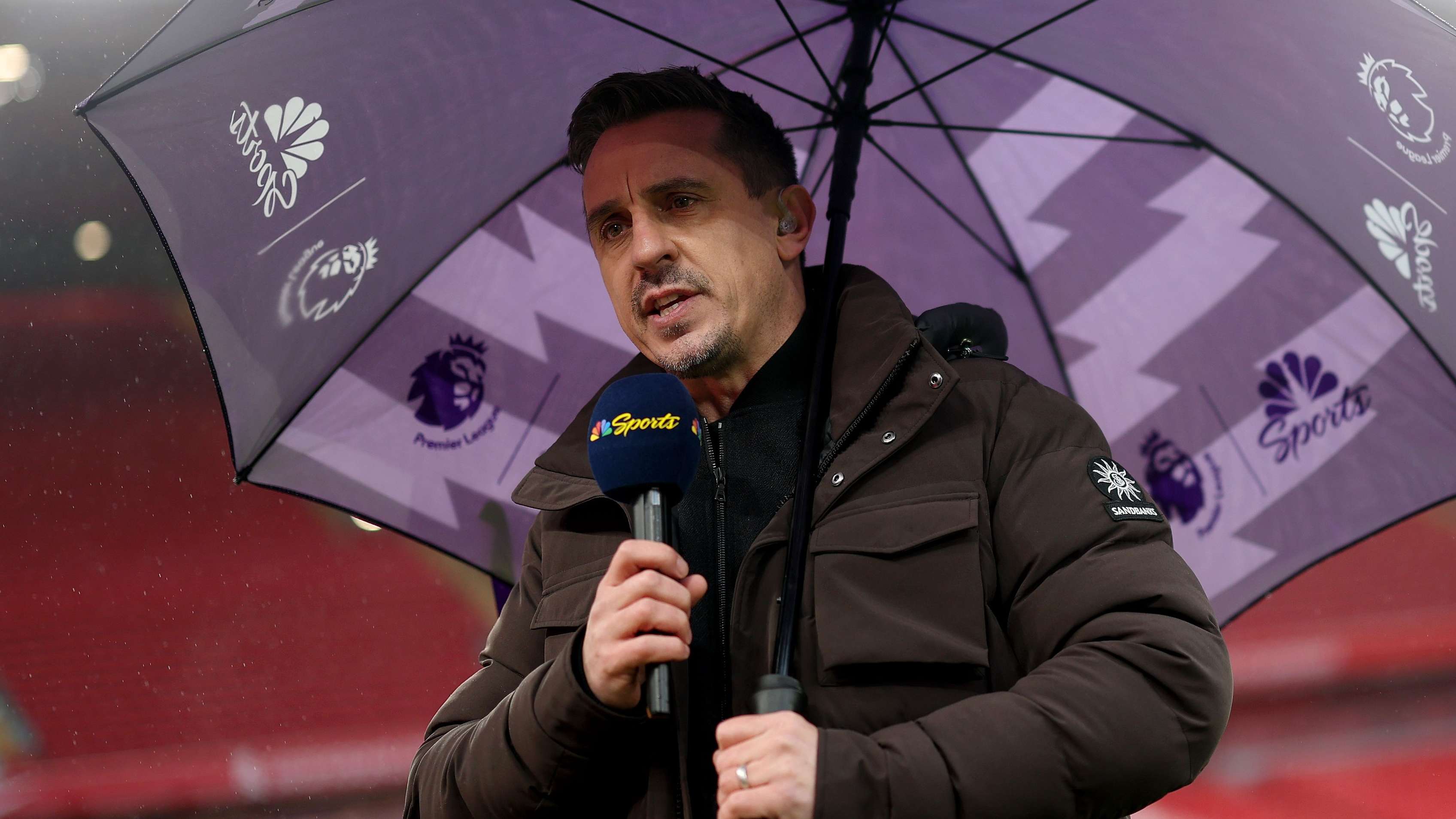
Liverpool FC v Manchester United FC – Premier League
On paper, this fixture looked straightforward. Wolves arrived in Manchester with just two points all season. Confidence was low, belief fragile, and survival already looking like a monumental task. United, meanwhile, were chasing consistency and quietly eyeing the top four.
The opening half seemed to follow the script. Joshua Zirkzee, who has endured his own scrutiny since arriving at Old Trafford, struck midway through the first half to give United the lead. It was his second league goal of the season and a moment that should have settled nerves.
But United failed to capitalise. The tempo dropped, control faded, and Wolves grew into the game. Just before the break, Ladislav Krejci rose unchallenged to head the visitors level, silencing the home crowd and shifting the mood inside the stadium.
What followed was a second half short on quality, urgency, and coherence. Despite home advantage and Wolves’ struggles, United could not find a winner. The final whistle confirmed an uncomfortable statistic: Manchester United had become only the third team all season to fail to beat the Premier League’s bottom club.
‘Zirkzee isn’t Cantona, but he needed to be there!’
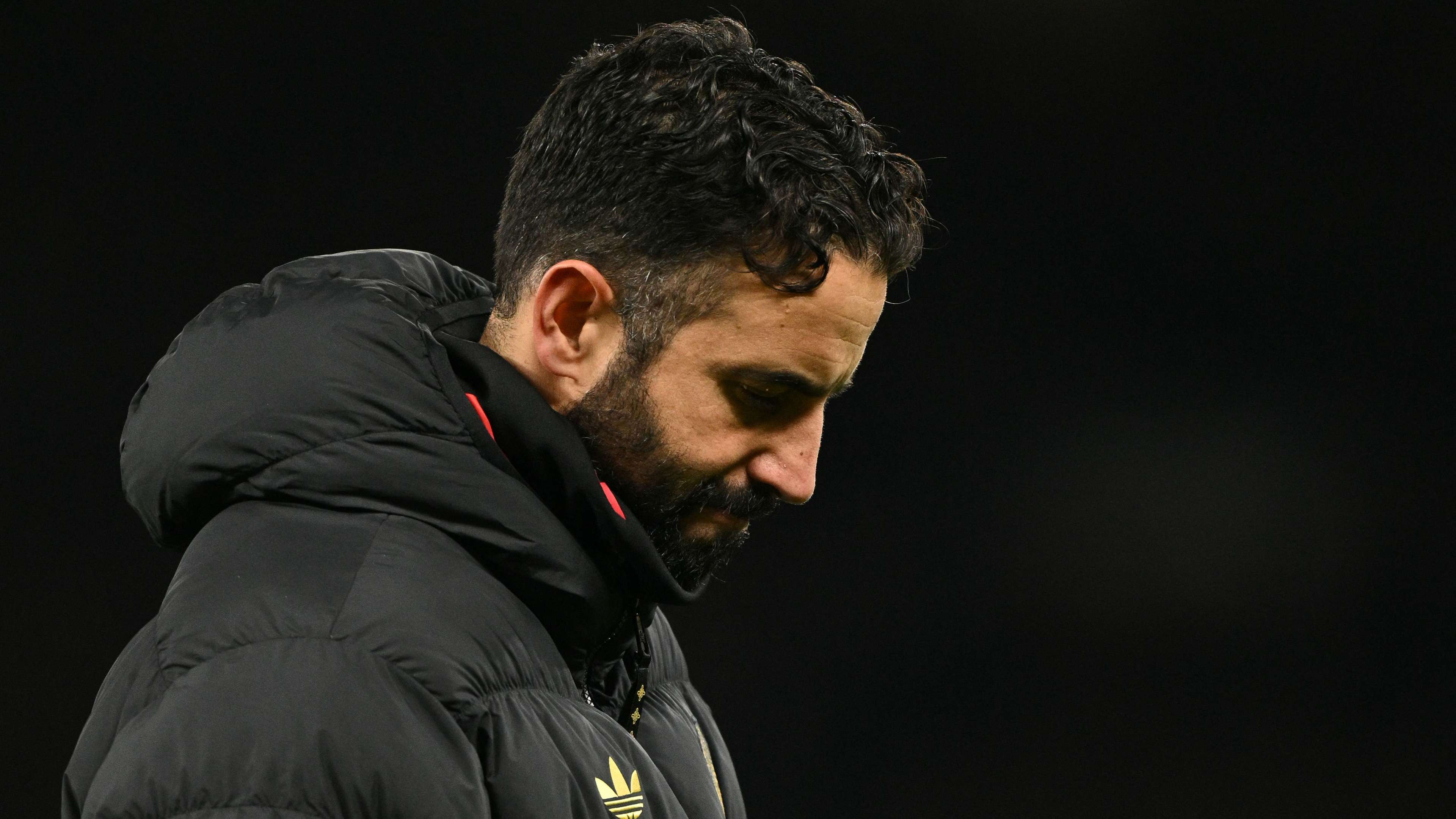
FBL-ENG-PR-MAN UTD-WOLVES
If the draw itself raised eyebrows, the half-time team sheet caused outrage.
Joshua Zirkzee — United’s goalscorer, their focal point, and one of the few bright spots — did not re-emerge after the interval. Instead, Amorim introduced youngster Jack Fletcher, a move that instantly drew criticism from Neville.
On Sky Sports, the former United captain was incredulous.
“They made Manchester United worse,” Neville said. “Every single substitution was bizarre. If Zirkzee wasn’t injured and that was a tactical substitution, it was a really poor one.”
Neville acknowledged Zirkzee is no club legend, but that wasn’t the point.
“Zirkzee isn’t Eric Cantona, by any stretch of the imagination, but he needed to be out there. For physicality, for presence, for experience. And he’d scored. You couldn’t take him off.”
Then came the line that summed up Neville’s disbelief.
“So I’m hoping he’s injured. I’m hoping he’s injured for Ruben Amorim.”
When it later emerged that Zirkzee’s substitution was not fitness-related, Neville’s response was immediate and blunt.
“That’s not right. That shouldn’t be happening.”
Ruben Amorim and the return of the complicated system
Much of Neville’s criticism centred not just on personnel, but on structure.
After experimenting with a 4-2-3-1 in the Boxing Day win over Newcastle — a system that appeared to bring clarity and balance — Amorim reverted to his favoured 3-4-3 against Wolves. The result, in Neville’s view, was predictable confusion.
“He doesn’t need to say ‘I haven’t changed because of the media’,” Neville said on his Sky Sports podcast. “Because then he’s telling us the media is in his head.”
Neville argued the reason for change was obvious.
“The performance levels with the 3-4-3 have been so poor and the results have been appalling. When I see that we go back to three at the back after five minutes, I’m thinking, no, Ruben, why have you done that?”
For Neville, it wasn’t stubbornness — it was overthinking.
“The manager has to look at that and think, I got that wrong. I complicated it.”
‘This isn’t right again’ – Neville spots trouble early
Neville’s frustration wasn’t limited to post-match analysis. During the game itself, he could already see problems emerging.
“This isn’t right again,” he said on commentary. “I’ve watched enough United over the last five or six weeks to know what looks right and what isn’t.”
He pointed to a system that felt awkward and unnatural for the players involved.
“Zirkzee on the right side having to chase back almost to right-back. Dalot as a right wing-back. Ayden Heaven at right centre-back. Dorgu over on the left where he hasn’t been playing well.”
To Neville, it all felt forced.
“All of it just isn’t as good as it was in the last couple of games where they played in different positions. And that’s what the fans are thinking inside this stadium.”
The concern wasn’t just aesthetic. It was practical.
“They’re playing against a team that are struggling, so you might get away with it. But that doesn’t mean it’s the right system. Because it’s not.”
Amorim admits United ‘struggled’ for fluidity
Ruben Amorim, to his credit, did not pretend everything was fine. Speaking after the match, the United boss admitted his side struggled throughout.
“We struggled for the whole game,” Amorim said. “We had a lack of creativity. The fluidity wasn’t there because there was a lack of connections.”
He acknowledged Wolves’ defensive approach made life difficult.
“They had more men behind the ball. When that happens, you have to work harder, have more imagination. We lacked that quality.”
However, Amorim was keen to explain — not apologise — for his decisions.
Why Joshua Zirkzee was substituted
Asked directly about Zirkzee’s withdrawal, Amorim offered a tactical explanation that did little to quiet the noise.
“We were running around trying to recover the ball,” he said. “They overloaded midfield and we were struggling. Sometimes you can attack better with fewer strikers.”
Amorim insisted the change was about balance.
“We played with three strikers — Cunha, Josh and Sesko — and sometimes that’s not the best way to attack well.”
The message was clear: the system, not the individual, was the issue. But for critics like Neville, that explanation only reinforced the sense of unnecessary complication.
A growing tension between vision and reality
This draw may not define Ruben Amorim’s Manchester United tenure, but it adds to a growing conversation. There is a visible tension between his tactical ideals and the reality of the squad at his disposal.
United have shown improvement in recent weeks. Performances had looked simpler, more cohesive. Against Wolves, that progress felt undone.
Neville’s criticism wasn’t personal. It was rooted in familiarity — the eye of someone who knows Old Trafford, knows pressure, and knows when things don’t quite fit.
As United head into 2026 with away trips to Leeds and Burnley, patience will be tested again. Amorim will argue that adaptation takes time. Neville, and many fans, will argue that some lessons should already be clear.
One thing is certain: decisions like the Joshua Zirkzee substitution will not pass quietly. Not at Manchester United. And certainly not when Gary Neville has a microphone.


There are no comments yet. Be the first to comment!