






























































































‘Angry’ Ruben Amorim Felt ‘Betrayed’ by Man Utd in Final Hours Before Savage Sacking
The Curtain Falls on Ruben Amorim’s Manchester United Era
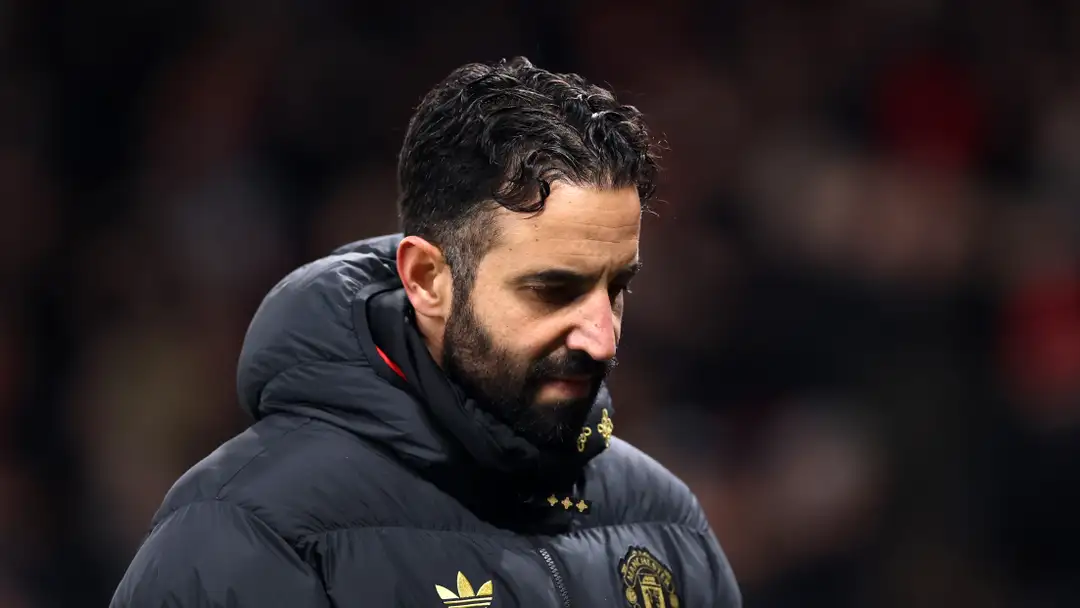
Ruben Amorim’s time at Manchester United came to an abrupt and dramatic end on Monday morning, leaving fans, players, and pundits alike stunned. The 40-year-old Portuguese manager, who joined Old Trafford with high expectations and a reputation for tactical ingenuity, was shown the door after less than two seasons in charge. While much of the media coverage focused on his explosive words during his final press conference, a closer look at his body language tells a far more revealing story — one of frustration, regret, and a deep sense of betrayal.
According to renowned body language expert Darren Stanton, Amorim’s final appearance in front of the press was a masterclass in non-verbal communication. Every glance, every facial twitch, and every subtle gesture seemed to convey a man who felt misled by the club hierarchy and abandoned in the most isolating of ways. Stanton’s analysis paints a portrait of a coach who wasn’t just angry — he was wounded, disillusioned, and profoundly disappointed in the organization he had trusted.
Thrown Under the Bus: Signs of Betrayal
Amorim’s final press briefing at Old Trafford was intended to address the pressing questions about team performance, transfers, and tactical decisions. However, it quickly became apparent that he was not just defending his team or his strategies; he was airing grievances about the way he felt treated by the club itself. Stanton notes that Amorim’s body language throughout the briefing suggested he felt “thrown under the bus” by the INEOS-led ownership.
“He isn’t pointing the finger at his players,” Stanton observed in an interview with OLBG. “What you see is a man who is being interrogated for issues that aren’t really his responsibility. It’s the look of someone who feels betrayed, misled, and ultimately abandoned by the very people who were supposed to support him.”
The coach’s verbal criticisms of Manchester United’s recruitment and strategic direction were just the tip of the iceberg. Beneath the surface, every movement and expression revealed a manager grappling with a sense of isolation and disillusionment. This was a man who had envisioned a project at Old Trafford that was vastly different from the reality he encountered.

Manchester United v Newcastle United – Premier League
Flashes of Contempt and Anger
The tension in the room became particularly palpable when questions turned to transfers and Amorim’s adherence to his favored 3-4-3 formation. While the manager attempted to maintain a professional composure, his face betrayed flashes of anger that went far beyond typical frustration. Stanton highlighted the intensity of Amorim’s expressions:
“His eyes were sharp, almost piercing. The eyebrows were down. It was a look that seemed to say, ‘I’ve told you what I know, now move on.’ He was clearly frustrated at being pressed repeatedly on topics he felt were beyond his control.”
Perhaps the most revealing moment came in a fleeting, almost imperceptible smile that appeared on one side of his face. Stanton identifies this as a “bilateral smile” — a subtle non-verbal cue often associated with contempt. In context, it suggested that Amorim had reached the limits of what he was willing to say, and that he saw the questioning as both unfair and futile. “It’s like he was saying, ‘I’ve said what I wanted to say, and now you’re just not listening,’” Stanton explained.
A Fatal Admission
Another telling moment came when a journalist pressed Amorim, prompting him to refer to the reporter as “very smart.” On the surface, this might have seemed like a casual compliment, but Stanton interprets it as a sign of vulnerability. It was an admission that the journalist had hit a sensitive nerve — a nerve exposed by the club’s failure to provide the support he expected.
“Calling the journalist very smart was Amorim’s subtle way of acknowledging that the questions were hitting too close to home,” Stanton said. “They were the wrong questions to ask at that moment because they touched on the raw emotions he was experiencing about his situation at the club.”
The emotional strain was visible in every furrow of Amorim’s brow. Stanton notes that these lines weren’t just signs of anger — they reflected inner turmoil, frustration, and regret. Amorim was grappling with disappointment not in his own performance necessarily, but in the environment he had entered and the unmet expectations of what he believed Manchester United would offer him.
The Physical Toll of Pressure
The relentless pressure of managing a club like Manchester United often takes a visible toll, and Amorim was no exception. Stanton observed that the physical manifestations of his stress — the tight lines on his forehead, the occasional clenched jaw, the tension in his posture — painted the picture of a man emotionally drained.
“This wasn’t just about losing matches or tactical disagreements,” Stanton said. “It was about a profound sense of regret and frustration at being misled by the very organization he was supposed to be a part of. You could see it in his body — every muscle, every movement told the story of a man who was carrying far more than just the responsibility for the team.”

Manchester United v Wolverhampton Wanderers – Premier League
Emotional Isolation and the End of a Relationship
Ultimately, the body language confirmed what the sacking later made official: the relationship between Ruben Amorim and Manchester United had broken down beyond repair. The sense of betrayal he felt, clearly visible in the hours leading up to the announcement, culminated in a dismissal that leaves both the club and the manager counting the cost of what could have been.
Stanton noted that the emotional isolation Amorim displayed was as significant as his anger. “He looked like a man mourning the project he thought he was signing up for,” Stanton explained. “He’s not grieving for himself — he’s grieving for what he expected the club to be and what it turned out to be. That’s a deep kind of disappointment that goes beyond standard professional frustration.”
Lessons in Leadership and Club Management
Ruben Amorim’s departure is a stark reminder of the challenges managers face when expectations clash with reality. It also sheds light on the human side of football management — the mental and emotional strain that comes from feeling unsupported or misled by leadership. For Manchester United, the question now is whether the club will learn from this episode, or continue a cycle of instability that has haunted them in recent years.
For Amorim, the experience is likely a mix of lessons and regrets. Despite the disappointment, he leaves behind a record that reflects ambition, tactical intelligence, and a commitment to principles — traits that, while not fully realized at Old Trafford, could yet define the next chapter of his career.
Final Thoughts
Watching Ruben Amorim’s final press conference, one could see a man wrestling with anger, betrayal, and emotional exhaustion. His words were sharp, but it was the subtle cues — the fleeting smiles, the furrowed brow, the controlled yet tense posture — that told the real story. In the end, Manchester United and Amorim parted ways not just because of results on the pitch, but because the underlying trust and communication that make any manager-club relationship work had eroded beyond repair.
As the dust settles, the football world is left reflecting on a saga that combined high expectations, public scrutiny, and very human emotions. Ruben Amorim’s Manchester United chapter may have ended, but the story leaves plenty of lessons about leadership, loyalty, and the invisible weight of emotional labor in the world of elite football.


There are no comments yet. Be the first to comment!