

















































































































































































































































































































‘It’s Immoral!’ – Bayern Munich Legend Karl-Heinz Rummenigge Demands Reforms to Halt the ‘Outrageous Influence’ Agents Exert on Players
Bayern Munich Legend Karl-Heinz Rummenigge Slams ‘Immoral’ Agent Power and Calls for Urgent Global Reforms
When a figure like Karl-Heinz Rummenigge speaks, European football tends to listen.
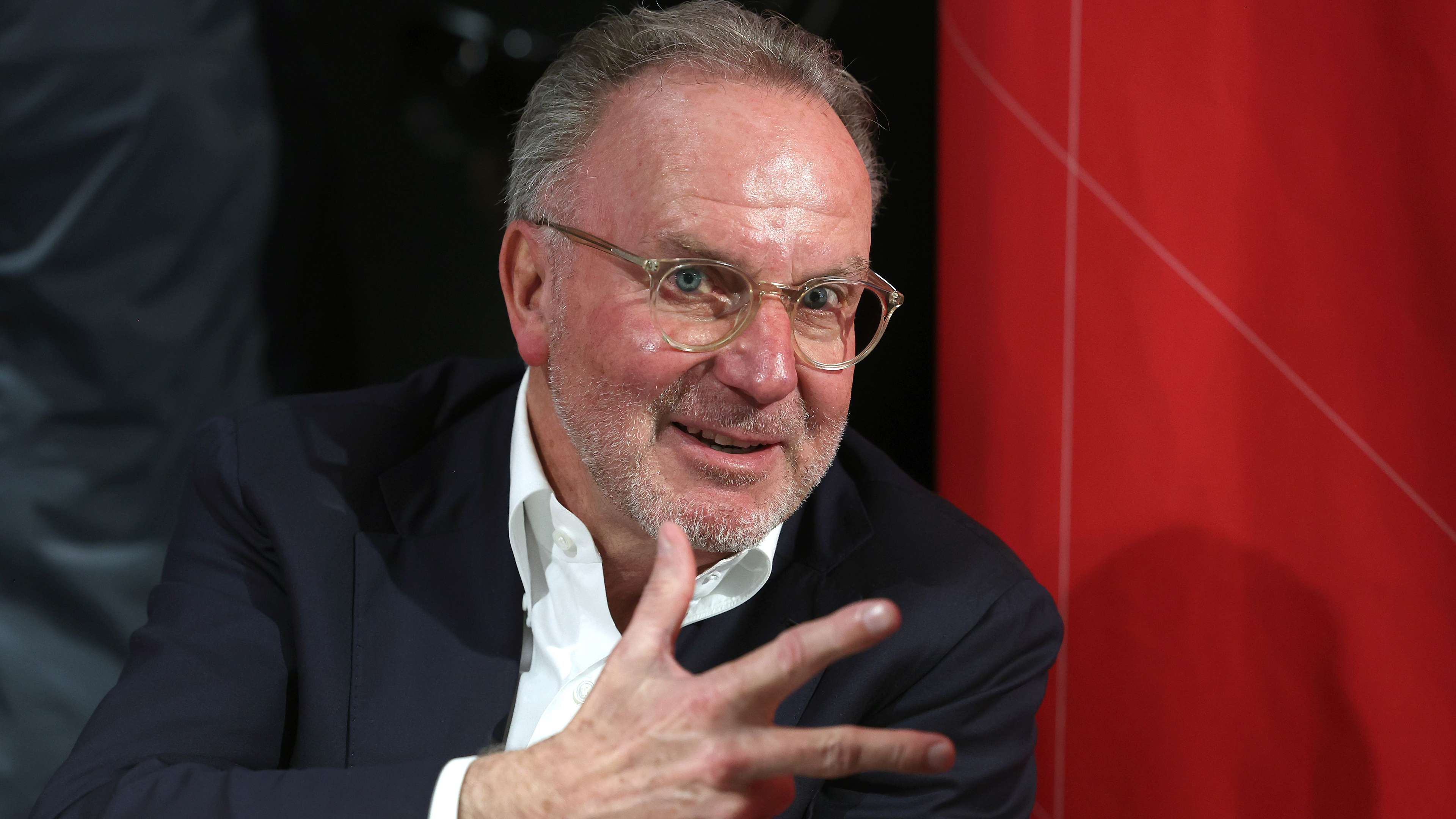
The former striker, two-time Ballon d’Or winner and long-serving CEO of Bayern Munich, has never been shy about defending the traditions and financial stability of the game. But his latest comments go further than polite concern. This time, Rummenigge has launched a full-blooded critique of what he sees as football’s most dangerous modern trend: the swelling power of player agents and the spiralling financial consequences that follow.
In an interview with FIFA, the 70-year-old did not dress up his words. Payments to intermediaries, he argued, have reached levels that are “immoral.” The influence agents now exert over players, negotiations and club strategy? “Outrageous.”
For a man who has witnessed football’s commercial transformation from the inside for decades, that language is telling.
“We Are Becoming More and More Dependent”
Rummenigge’s frustration is rooted in a belief that football is drifting away from sustainability.
“We need reforms because it cannot continue to this extent,” he said plainly. “We are becoming more and more dependent on agents who exert an influence on players that is outrageous by now.”
Dependency is a strong word. But in today’s market, it is difficult to deny that agents have become central power brokers. They negotiate contracts, orchestrate transfers, manage public narratives and often dictate timing. In some cases, they appear to wield leverage not only over players but over entire sporting strategies.
Rummenigge’s concern is not abstract. He sees a system where agent commissions are baked into transfer expenditure at staggering levels — fees that, in his view, distort the economics of the sport.
“We now have payments to agents in transfer expenditures that are, I would say, immoral,” he added.
That word — immoral — echoes loudly.
Joining the Bayern Chorus
Rummenigge is not alone in this stance. Fellow Bayern heavyweight Uli Hoeness has already declared open frustration with intermediaries, and former sporting director Matthias Sammer has also questioned the direction in which the game is heading.
This is not a fringe rebellion. It is a coordinated discomfort from some of Germany’s most influential football voices.
Bayern Munich have traditionally prided themselves on financial prudence. The club’s model — member-influenced, commercially strong but cautious — has long stood in contrast to the high-risk spending seen elsewhere in Europe. When figures like Rummenigge raise the alarm, it reflects not nostalgia, but institutional philosophy.
Sepp Maier’s 80th Birthday Special Exhibition Opening
The “Rat Race” for Elite Talent
Modern transfer windows increasingly resemble auctions. Clubs fear missing out on the next superstar. Social media amplifies expectation. Supporters demand marquee signings.
According to Rummenigge, this environment has produced what he bluntly described as a “rat race.”
Clubs, he argues, are now prepared to stretch financial logic — and sometimes ethical boundaries — simply to secure the players they believe will deliver success.
“And the clubs are obviously all ready to do everything so that at the end of the day they get the players that are demanded of them,” he explained.
The language is revealing: “do everything.”
In a hyper-competitive market, hesitation can mean irrelevance. Yet Rummenigge fears that the pursuit of competitive advantage has become self-destructive.
Transfer fees balloon. Agent commissions inflate further. Salaries skyrocket. And the cycle repeats.
His message to governing bodies is simple: intervene before the model collapses under its own excess.
Salary Explosion and the Growing Disconnect
It isn’t just intermediaries drawing criticism. Rummenigge also targeted the wage explosion sweeping elite football.
Top players now command salaries that would have been unimaginable even a decade ago. In isolation, such contracts reflect market forces and global commercial growth. But Rummenigge worries about the broader optics.
“We are entering higher and higher spheres that no person out there understands anymore,” he admitted.
Football, after all, depends on supporters. Ticket buyers. Television audiences. Families saving for matchday experiences.
When financial figures begin to feel detached from economic reality, resentment can quietly build. Rummenigge’s warning is less about jealousy and more about sustainability.
“At some point, this is no longer explainable to people,” he cautioned. “We have to be a bit careful in football that we don’t over-tighten the screw there.”
It’s a metaphor rooted in German pragmatism: turn the screw too far, and something eventually breaks.
Can Global Reform Actually Happen?
Calls for reform are not new. FIFA has previously attempted to introduce regulations aimed at limiting agent commissions and increasing transparency. Legal challenges followed. Implementation proved complex.
The difficulty lies in jurisdiction. Football is global. Regulations vary by country. Agents operate across borders. Restrictive policies in one league can push activity into another.
For meaningful reform, cooperation would need to extend across federations and continents. That requires political will — and alignment between clubs, leagues and governing bodies.
Rummenigge’s intervention may add pressure, but translating concern into policy remains a formidable task.
Bayern’s Immediate Focus: Der Klassiker
While philosophical debates swirl, Bayern Munich’s immediate attention lies on the pitch.
This weekend brings another edition of Der Klassiker against Borussia Dortmund — a fixture that rarely lacks intensity.
Bayern travel into the clash sitting top of the table with 60 points, eight clear of Dortmund on 52. The title race, while leaning toward Bavaria, is far from mathematically settled.
For players and coaching staff, conversations about agents and salary ceilings will fade once the whistle blows. Ninety minutes of rivalry football demand total focus.
Yet even here, Rummenigge’s concerns linger in the background. Der Klassiker itself has become a global commercial event, fuelled by broadcasting deals and marketing power. Financial growth has elevated the fixture’s reach — but also heightened the stakes attached to performance.
Tradition Versus Modern Reality
There is an undercurrent of generational tension in Rummenigge’s remarks.
He belongs to an era when contracts were simpler and negotiations more contained. Today’s players grow up in a digital marketplace, guided by professional representation from adolescence. Agents are not anomalies — they are foundational.
Some argue that agents protect players from exploitation and ensure fair market value. Others contend that unchecked commissions distort balance and inflate costs beyond reason.
Rummenigge does not deny the legitimacy of representation. His objection lies in scale and influence.
For him, the issue is not that agents exist — it is that they appear to be steering the sport’s financial engine.

RB Leipzig v FC Bayern Munchen – Bundesliga
A Warning From Within
Perhaps what makes Rummenigge’s critique resonate is its origin.
This is not an outsider criticising football’s wealth. This is a man who helped shape modern Bayern, negotiated multimillion-euro deals, and navigated Champions League boardrooms.
If he is concerned, it suggests the issue extends beyond casual frustration.
Football has always evolved. Television revenue transformed budgets. Global marketing expanded reach. Private ownership reshaped governance.
The agent boom is simply the latest phase.
The question is whether it is sustainable.
The Broader Conversation
Rummenigge’s comments may not immediately trigger reform, but they contribute to a growing conversation about football’s financial identity.
Should commissions be capped globally?
Should salary structures be more tightly regulated?
Can transparency measures restore trust?
These are complex questions without easy answers.
But ignoring them may prove riskier than confronting them.
Final Whistle: A Game at a Crossroads
As Bayern prepare for another high-stakes battle with Borussia Dortmund, the club’s legend has already fired a different kind of warning shot — one aimed not at rivals, but at the system itself.
“It’s immoral,” he said of certain payments.
In football, words like that rarely surface lightly.
Whether reform follows remains uncertain. What is clear is that voices from within the establishment are growing louder. And when someone with Karl-Heinz Rummenigge’s stature suggests the sport is over-tightening the screw, it may be wise to listen before it snaps.
For now, the ball keeps rolling. The transfer windows keep spinning. The agents keep negotiating.
But the debate about football’s financial soul has never felt more urgent.


There are no comments yet. Be the first to comment!