





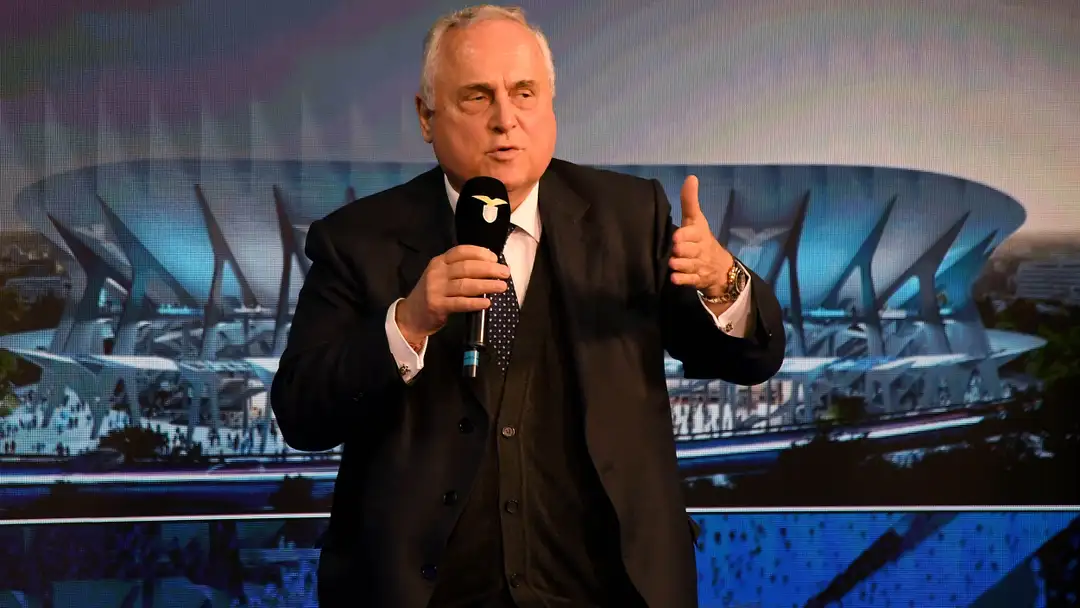
Lazio Flaminio Stadium Project Hits Administrative Delay as Key Document Still Missing
Lazio and the Flaminio Stadium: Services Conference Yet to Begin Amid Municipal Review Hold-Up
Lazio’s ambitious plan to breathe new life into the historic Flaminio Stadium was supposed to mark the beginning of a transformative chapter for both the club and the city of Rome. Instead, several weeks after the official unveiling at the Campidoglio, the process remains stuck at the starting line. The much-anticipated Services Conference — the decisive institutional step that will evaluate the redevelopment proposal — has yet to begin, slowed by bureaucratic procedures and one crucial missing document.
For a project that carries nearly €500 million in projected investment and represents one of the most significant stadium redevelopment initiatives in Italian football, the delay is not dramatic yet, but it is enough to raise eyebrows among observers, city officials, and supporters eager to see progress.
The situation reflects a familiar reality in Italian infrastructure projects: ambition often moves faster than administration.
Why Lazio’s Flaminio Stadium Project Is Still Waiting
When Lazio president Claudio Lotito formally presented the Flaminio redevelopment proposal to Rome’s municipal authorities, the expectation was that the evaluation phase would quickly follow. Instead, according to reports emerging from Italian media circles, the administrative machinery has paused before even entering its decisive stage.
The Services Conference — the institutional body tasked with examining every technical, urban, environmental, and economic aspect of the project — cannot begin until the document verification phase is fully completed. That phase, however, remains unfinished.
Municipal officials have requested additional integrations to the Technical-Economic Feasibility Plan (PFTE), effectively sending the club back to refine specific elements of the dossier. Until those additions are submitted and approved, the City Council cannot formally open proceedings.
It is not unusual for large-scale projects to require supplementary documentation. Authorities are obligated to scrutinize proposals thoroughly, especially when public interest, urban heritage, and financial sustainability intersect. Still, the delay underlines how finely balanced the process remains at this early stage.
For Lazio, the task is clear: provide the requested material as quickly as possible and keep the timeline intact.
A €500 Million Vision for the Flaminio Stadium
At the heart of the matter lies a bold investment plan. Lazio intends to commit just under €500 million to renovate and modernize the Flaminio Stadium, transforming an underused architectural landmark into a modern football venue aligned with contemporary standards.
The club has already submitted an extensive economic and financial plan, certified by the appropriate auditing bodies. Municipal offices received the documentation alongside the broader project proposal, suggesting that the financial backbone of the initiative is largely in order.
Yet certification alone does not guarantee approval.
Officials responsible for reviewing the project are reportedly examining every technical detail with particular attention. Given the scale of investment and the cultural significance of the Flaminio — originally designed by renowned architect Pier Luigi Nervi — authorities are proceeding cautiously.
From a municipal perspective, the redevelopment must balance modernization with preservation. From Lazio’s standpoint, the stadium represents independence, identity, and long-term economic growth.
Those two objectives must now align within the regulatory framework.
The Services Conference: A Crucial Step for Lazio and the Flaminio Stadium
Once the outstanding documentation is delivered and verified, the Services Conference can finally convene. That moment will effectively mark the real beginning of the approval process.
Under Italian regulations, the opening of the Conference triggers a structured timeline. A 60-day window follows, during which third parties are permitted to submit alternative proposals for the same site.
In theory, this ensures transparency and competition. In practice, insiders consider alternative bids highly unlikely given the advanced state of Lazio’s proposal and the complexity involved in preparing a rival project of comparable scale.
After the 60-day period concludes, the Conference will produce its final report. This document could include a declaration of public interest — a decisive milestone that would push the project forward politically and administratively.
The dossier would then move to the Capitoline Assembly, where Rome’s governing institutions would make the ultimate determination.
Only at that stage would the project truly shift from concept to reality.
Scepticism Emerges Despite Lazio’s Optimism
While Lazio officials remain confident, not everyone shares the same optimism. In recent days, sceptical voices have begun to surface within professional and institutional circles.
Among them is the vice-president of the Order of Architects, who has expressed reservations about whether the process will unfold as smoothly as the club anticipates. Concerns reportedly revolve around urban integration, architectural preservation, and the broader impact on the surrounding district.
Such criticism is not uncommon in stadium redevelopment debates across Europe. Modern football infrastructure projects increasingly face scrutiny not only for financial viability but also for environmental sustainability, urban planning compatibility, and cultural preservation.
For Lazio, managing perception may become almost as important as navigating bureaucracy.
What Happens Next in the Flaminio Stadium Timeline?
If Lazio successfully submits the missing documentation and the Services Conference begins without further interruption, the roadmap ahead is already defined.
Following a potential declaration of public interest and institutional approval, an agreement between Lotito’s company and the Municipality of Rome would be signed. That agreement would formalize responsibilities, timelines, and legal commitments on both sides.
Construction, however, would still not start immediately.
Regulations require additional procedural steps before work can commence. Two to three months after the agreement, a public tender process for construction would be launched. That phase alone is expected to last approximately 120 days, followed by roughly another month between the awarding of contracts and the physical start of construction.
In practical terms, even under the most optimistic scenario, ground-breaking remains some distance away.
Lazio’s Stadium Dream and the Bigger Picture
The Flaminio project is more than a renovation plan; it symbolizes Lazio’s long-term ambition to secure a modern home tailored to the club’s identity. For years, Italian clubs have struggled with outdated infrastructure compared to their European counterparts, where new stadiums have become engines of financial growth.
A successful redevelopment could strengthen Lazio commercially while revitalizing a historic Roman venue that has sat largely dormant.
But as the current delay demonstrates, stadium dreams in Italy are rarely straightforward. Between administrative oversight, public debate, and regulatory complexity, progress often unfolds in careful, incremental steps rather than sweeping momentum.
For now, Lazio waits — not for approval, but for the chance to begin the process itself.
And until that missing document arrives at City Hall, the future of the Flaminio Stadium remains paused in paperwork rather than construction.


There are no comments yet. Be the first to comment!