










Manchester United Summer Reset: Transfer Priorities Emerge as Casemiro Exit Signals New Era at Old Trafford
Manchester United Transfers, Casemiro Departure and the Four Summer Priorities Shaping the Premier League Giants
There are summers that feel routine at Manchester United — minor adjustments, squad trimming, another attempt to steady the ship. And then there are summers that signal something deeper, moments when the club quietly accepts that a cycle has ended and a new one must begin.
This upcoming transfer window appears firmly in the latter category.
With Casemiro preparing to leave Old Trafford and uncertainty surrounding several senior figures, Manchester United are reportedly outlining a four-part recruitment strategy designed not simply to strengthen the squad, but to reshape its identity. The plan reflects a growing realization within the club hierarchy: success in the modern Premier League demands balance — youth and experience, athleticism and leadership, depth and durability.
Behind the scenes, preparations are already underway for what could become one of the most defining windows of the post-Sir Alex Ferguson era.
A Strategic Overhaul at Manchester United
The driving force behind the rebuild comes from the club’s evolving leadership structure. With Omar Berrada and Jason Wilcox overseeing football operations, United’s recruitment department is shifting toward a more coordinated and long-term approach — one designed to avoid the reactive transfer policies that have defined previous years.
The objective is clear: construct a squad capable of sustaining a Champions League campaign while remaining competitive domestically.
According to reports, Manchester United have identified four priority positions:
- Two central midfielders
- A left-sided defender
- A centre-back
- A backup goalkeeper
At first glance, the list feels extensive. In reality, it reflects structural weaknesses that have become increasingly obvious over the course of the season.
Central midfield sits at the top of the agenda. Despite flashes of promise from Kobbie Mainoo and the industry of Manuel Ugarte, United’s engine room lacks specialist depth. Injuries and fixture congestion have repeatedly exposed how thin the options truly are.
Recruitment staff have therefore turned their attention toward Premier League-proven players — footballers capable of adapting instantly rather than requiring long development periods.
It’s a pragmatic shift. United are no longer chasing reputation alone; availability, tactical flexibility, and consistency now appear equally important.
Casemiro’s Exit and the End of an Era
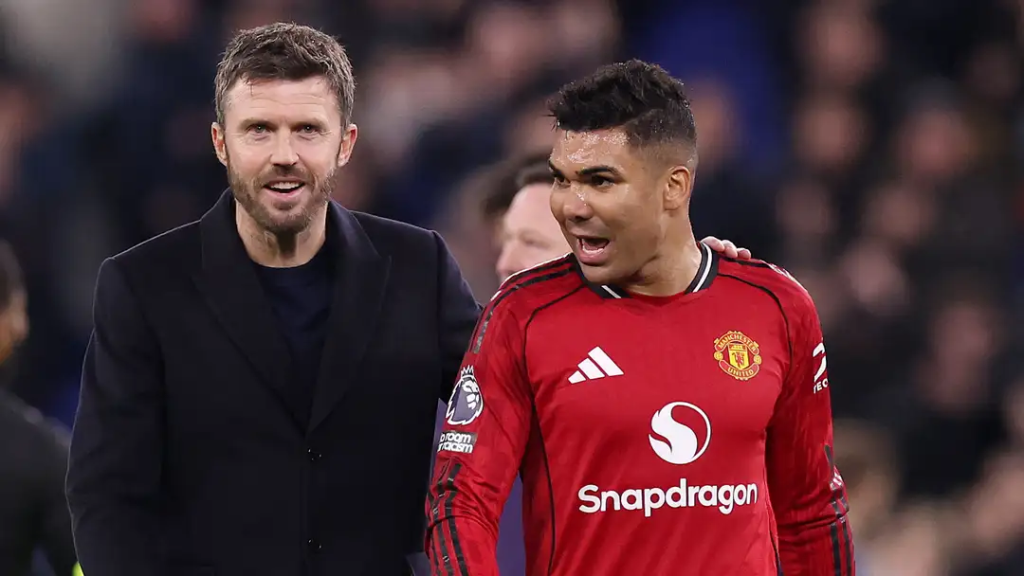
Every rebuild needs a symbolic moment, and Casemiro’s departure feels exactly that.
The Brazilian midfielder confirmed in January that he would leave at the expiration of his contract, bringing an end to a spell that delivered leadership, big-match moments, and unexpected goals during turbulent seasons.
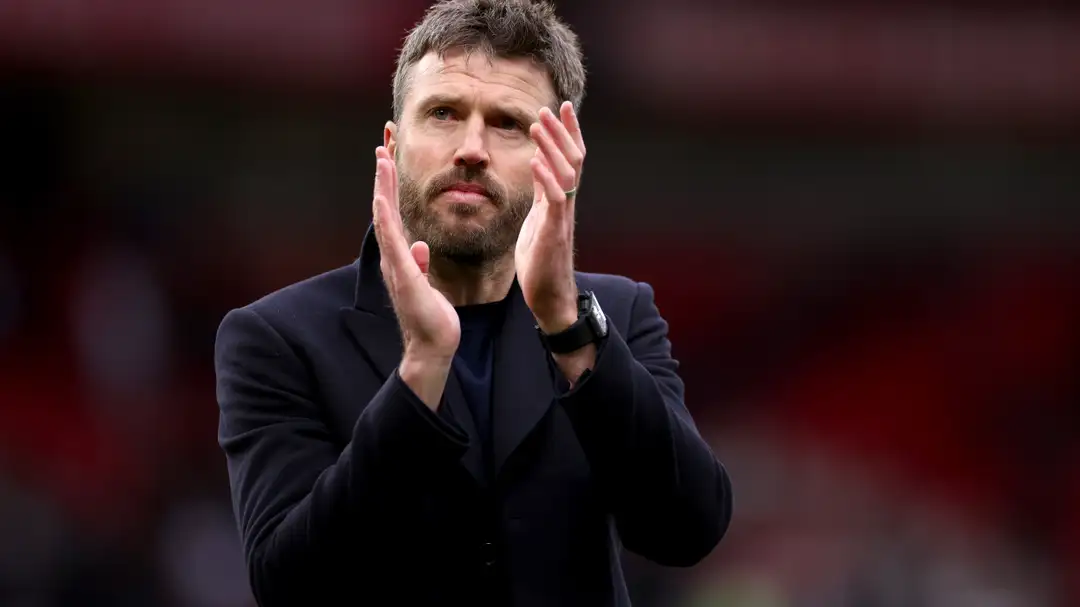
Interim head coach Michael Carrick addressed the situation with calm realism rather than sentimentality.
Once a decision like this is made, Carrick suggested, clarity replaces uncertainty. Players understand their roles, and planning becomes easier for everyone involved.
His comments also hinted at a broader philosophy guiding United’s rebuild: replacements do not have to mirror departures.
Rather than searching for a direct successor to Casemiro — an experienced defensive midfielder with identical qualities — United may choose a different tactical direction altogether. Modern midfield construction often relies on mobility, pressing intensity, and positional interchange rather than a single anchoring figure.
Carrick emphasized the importance of squad balance, leadership dynamics, and dressing-room chemistry alongside pure positional needs.
Casemiro, he noted, leaves behind not just performances but professionalism — qualities younger players have absorbed during his time at the club.
Yet football moves quickly. At Old Trafford, sentiment rarely slows evolution for long.
The Harry Maguire Question and Manchester United’s Defensive Dilemma
While Casemiro’s exit is confirmed, the future of Harry Maguire remains far less certain — and perhaps more complicated.
The veteran defender has quietly rebuilt his reputation this season, becoming a consistent presence under Carrick and even re-entering conversations around an England recall. However, his contract situation places United at a crossroads.
Renewal talks are reportedly ongoing, but no decision has been finalized.
The debate surrounding Maguire reflects a wider defensive problem. Injuries have repeatedly disrupted United’s back line, forcing constant reshuffles and preventing tactical continuity.
Lisandro Martínez has missed significant time since arriving at the club, while Matthijs de Ligt has been unavailable since November. The lack of reliability has convinced recruitment staff that defensive reinforcements are no longer optional — they are essential.
Equally concerning is the situation at left-back. Luke Shaw, though immensely influential when fit, faces ongoing durability concerns, particularly with the physical demands of European competition potentially returning next season.
As a result, signing a specialist left-sided defender has become one of the club’s top priorities.
The goal is clear: build a defense capable of surviving a full campaign without constant emergency adjustments.
Manchester United Transfers: Targeting Premier League Starlets
United’s recruitment focus also reveals a broader philosophical change — greater trust in emerging domestic talent.
Among the names linked most strongly is Crystal Palace midfielder Adam Wharton, whose composure and tactical intelligence have drawn admiration across the league. At 22, he represents exactly the type of profile United are seeking: young enough to grow, experienced enough to contribute immediately.
Champions League qualification could prove decisive in attracting players of that calibre. Currently sitting third in the Premier League, United understand that their league finish will directly influence transfer negotiations.
Financial considerations may also shape decisions. Reports suggest the club could avoid entering a costly bidding war with Manchester City for Nottingham Forest’s Elliot Anderson, whose wage expectations could complicate negotiations.
Alternative options include Bournemouth’s technically gifted Alex Scott and Brighton’s dynamic midfielder Carlos Baleba, both viewed as players capable of developing into long-term starters.
The emphasis is not on marquee headlines but on intelligent squad construction — footballers who can grow together rather than arrive as isolated solutions.
A Window That Could Define Manchester United’s Future
The final eight games of the season now carry significance beyond league position. Each result strengthens — or weakens — United’s negotiating power in the transfer market.
Champions League football would not only boost finances but also validate the club’s sporting direction, making Old Trafford a more attractive destination for rising stars.
Failing to qualify, however, could complicate recruitment and delay elements of the rebuild.
Either way, the upcoming summer feels like a turning point.
Manchester United are not merely replacing players; they are attempting to recalibrate the balance of an entire squad. Age profile, injury resistance, tactical flexibility, and leadership structure are all under review.
Casemiro’s departure may mark the end of one chapter, but internally it is being treated as an opportunity rather than a loss.
At a club defined by history yet desperate for stability, this transfer window could determine whether United are finally building toward a sustainable future — or preparing for another reset just a few years down the line.
For now, the plan is set. The priorities are clear. And at Old Trafford, a summer of change is already underway.


There are no comments yet. Be the first to comment!