















James Milner Exclusive: ‘Do You Go Until You Lose the Love for It?’ – Brighton Veteran Admits ‘Really Tough’ Decision Over Retirement Is Looming
James Milner Exclusive: A Football Man Still Fighting, Still Thinking, Still Asking the Hardest Question
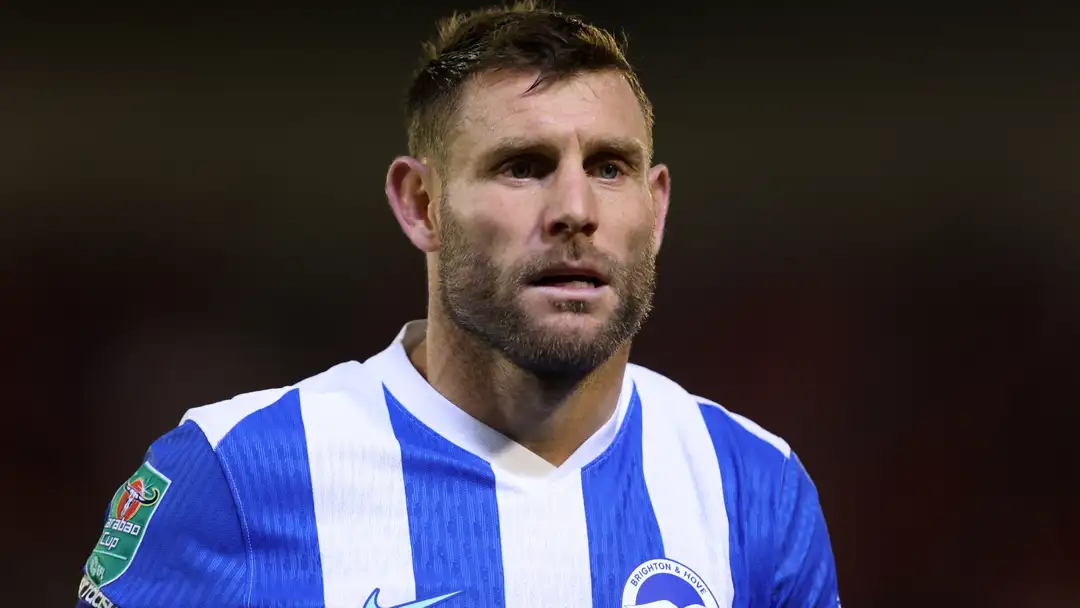
There are footballers who fade quietly, almost without anyone noticing. Then there are players like James Milner — the kind who seem to exist outside the usual rules of time, wear and tear, or modern football’s obsession with youth. At 40, with more than two decades of elite football behind him and a medal collection that would make most professionals jealous, Milner is still here. Still running. Still competing. Still setting standards. Still, somehow, looking like he belongs.
And yet, even for a player as relentless and as disciplined as Milner, the biggest question of all is beginning to creep closer.
When do you stop?
That is the heart of this story. Not whether James Milner can still play — because clearly he can. Not whether he still has the hunger — because every teammate, every coach, every fan who watches him knows that fire is still there. The real issue is more human than tactical, more emotional than physical. It’s the kind of question every great veteran eventually has to face, and Milner, with typical honesty, isn’t pretending to have the answer yet.
Speaking candidly, the Brighton veteran admitted that the decision over retirement is becoming a “really tough” one. It is not a dramatic farewell announcement, not a carefully staged goodbye, and not one of those grand speeches players sometimes make when they know the end is near. Instead, it feels exactly like James Milner himself: grounded, practical, thoughtful, and honest.
He knows the moment is coming. He just doesn’t know exactly when.
And maybe that’s what makes this so compelling. Because when a player like Milner starts openly asking, “Do you go until you lose the love for it?”, you can feel the weight of a career that has been built on discipline, sacrifice, and an almost stubborn refusal to slow down.
Brighton’s Veteran Still Has Fuel in the Tank
Let’s be clear: this is not a farewell tour. Not yet.
Milner may be 40, but he isn’t hanging around for sentimental reasons. He is still contributing at Brighton, still trusted in a competitive Premier League environment, and still proving that professionalism can stretch a career far beyond what most people think is realistic.
That alone says plenty.
In an era when football can be brutally quick to move on from older players, Milner has remained relevant because he has never relied on hype. He has survived because he understands the game, respects his body, and treats every training session like it matters. That is why he has entered the same rare conversation as names like Cristiano Ronaldo, Luka Modric, Zlatan Ibrahimovic, and Teddy Sheringham — players who pushed well beyond the expected shelf life of a top-level footballer.
But Milner’s longevity is not built on glamour. There’s no mystery to it. It’s work. Repetition. Standards. Sacrifice. The boring stuff, really — except in football, the boring stuff is often what separates the great pros from the rest.
He made his senior debut for Leeds United back in 2002 as a fearless teenager. Since then, he has done the full tour of elite English football: Newcastle, Aston Villa, Manchester City, Liverpool, and now Brighton. Everywhere he has gone, he has earned respect. Not because he’s flashy, not because he courts attention, but because managers trust him and teammates listen when he speaks.
That kind of reputation doesn’t happen by accident.
‘Really Tough’ Decision Over Retirement Is Looming
Still, time catches up with everyone eventually — even the players who seem built from something stronger than the rest.
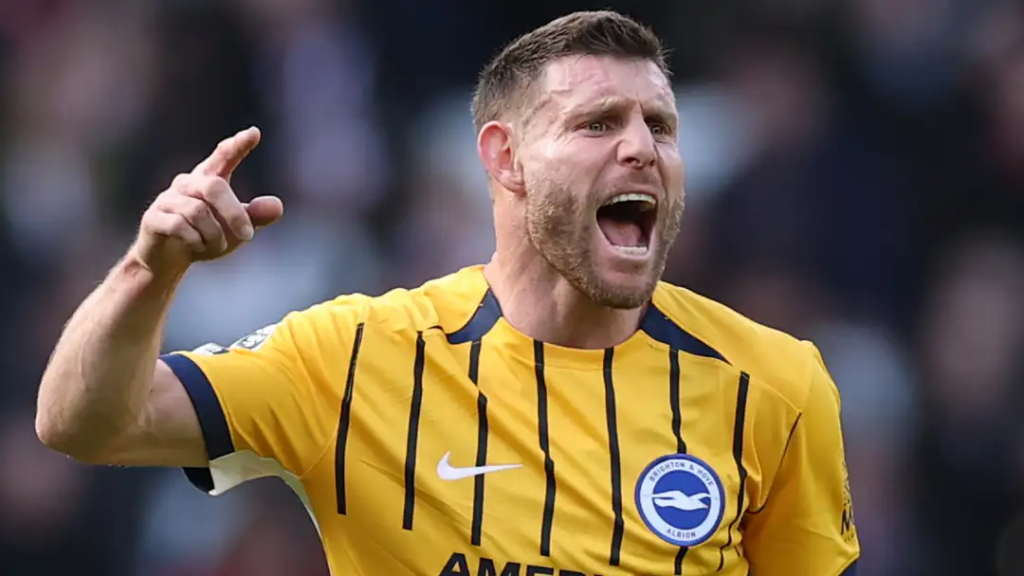
Milner’s current deal with Brighton is due to expire in the summer, and that naturally brings the retirement conversation into sharper focus. It’s no longer a distant thought. It’s real now. Close enough to touch.
And when asked about whether he intends to keep going as long as possible, Milner gave the kind of answer that only someone who truly understands the emotional side of football can give.
Not a cliché. Not a rehearsed answer. Just truth.
He admitted he’s undecided. That things can change quickly. That football, especially at his age, can shift from one month to the next. One year you’re wondering whether your body can hold up. The next, you’re back starting Premier League matches and helping your side win games.
That uncertainty is part of the challenge.
What makes retirement so difficult for a player like Milner is that the obvious signs aren’t necessarily there. He hasn’t lost the dressing room. He hasn’t completely lost his legs. He isn’t being carried. In fact, by his own admission, he still feels good physically and mentally. That’s what complicates things.
Because if you still feel useful, if you still feel sharp, if you still feel that buzz walking into training, how do you decide to stop?
That’s the central dilemma.
Do you keep going until the body says no?
Do you stop before the decline becomes obvious?
Do you wait until the love fades?
And what if the love never really does?
Those aren’t easy questions. And for someone who has spent nearly 25 years living the rhythm of professional football, they become even harder.
James Milner Exclusive: ‘Do You Go Until You Lose the Love for It?’
That one line — “Do you go until you lose the love for it?” — tells you almost everything about where Milner is right now.
This is not a player terrified of retirement. It’s a player wrestling with timing.
Footballers are often told to leave the game before the game leaves them. But that sounds a lot simpler than it is. Especially when you’ve spent most of your life in changing rooms, on training pitches, in team hotels, and under floodlights. Especially when the sport isn’t just your job, but your identity.
Milner’s comments reveal something a lot of fans forget: retirement isn’t always about ability. Sometimes it’s about meaning.
Can I still help?
Do I still enjoy the grind?
Am I still adding value?
Does the body recover the same way?
Do I still wake up hungry for it?
Right now, the answer seems to be yes — or at least mostly yes.
He’s been carefully managed at Brighton. The medical and sports science staff know exactly how to handle him. He isn’t being overcooked. He understands his body better than ever. That’s one of the hidden advantages older players have: they know when to push, when to rest, and when to listen.
And importantly, Milner still believes he is contributing. That matters to him more than anything.
He’s not the kind of player who wants to hang around as a mascot. He won’t stay just to collect a wage or enjoy the nostalgia. If he remains, it will be because he feels he can genuinely help the team — on the pitch and off it.
That’s very James Milner.
Brighton Benefit From More Than Just Minutes
At Brighton, Milner’s value goes far beyond statistics.
Of course, the numbers are still impressive. Few players in English football history can match his durability, and becoming the Premier League’s all-time leading appearance maker is no small thing. That record alone puts him in a special category. But numbers don’t fully explain what he offers.
Brighton’s dressing room is young, ambitious, and full of players still learning the demands of top-level football. That’s where Milner becomes invaluable.
He brings calm when games get frantic.
He brings perspective when younger players panic.
He brings standards when intensity drops.
And he brings credibility because he’s lived every kind of football experience imaginable.
For younger players, he’s the sort of senior pro you want around every day. Not because he talks all the time, but because he leads by example. The first in, the last out. Proper habits. No nonsense. No shortcuts.
That influence is hard to measure, but every manager values it.
Brighton have been inconsistent this season — ten wins, ten draws, ten defeats — which is about as balanced a campaign as you’ll see. They’re still in the mix for European qualification, though the margin for error is small. That means every remaining fixture matters, and players like Milner become even more important in that kind of run-in.
When things get tense, experience becomes a weapon.

Liverpool Reunion Adds Emotion to the Next Chapter
Next up? Liverpool at the Amex.
And for Milner, that fixture will always carry something extra.
His eight years at Anfield were among the most important of his career. He was part of a Liverpool side that restored itself to the top of English and European football, winning the Premier League and the Champions League, and becoming one of Jurgen Klopp’s most trusted lieutenants in the process.
He wasn’t always the headline name. That was never his role. But if you ask Liverpool supporters who truly understood that era, they’ll tell you the same thing: Milner mattered. A lot.
He brought edge, maturity, discipline, and selflessness. He played wherever needed. He did the ugly jobs. He gave younger stars the structure around them. He made teams function.
So yes, there will be emotion when Liverpool come to town. There always is with former clubs that shaped you.
But sentiment only lasts until kickoff.
Milner has built a career on total commitment, and if he plays against Liverpool, there will be no soft edges. No half-tackles. No nostalgia in the duels. He doesn’t work like that. He never has.
That’s part of why he’s lasted this long.
A Future in Coaching? Don’t Rule It Out
One thing Milner has quietly hinted at is a future in coaching.
It makes sense, doesn’t it?
Not in the loud, look-at-me way some former players approach punditry or management. More in the understated, intelligent, detail-oriented way that suits his personality. He sees the game clearly. He understands preparation. He knows what players need. And crucially, younger players seem to respond to him.
He’s already doing some of that now through projects like Specsavers’ Best Worst Team, where he’s been working with Warley FC, a grassroots side that endured a brutal campaign last season. The idea is simple but brilliant: take a struggling amateur team and give them access to elite-level advice, structure, and perspective.
And honestly, Milner feels made for that sort of role.
He understands football at every level. He knows what it’s like to be a kid dreaming. He knows what it’s like to be written off. He knows what it’s like to fight for places in elite squads. And he knows what it takes to stay relevant when younger, faster, flashier players are constantly coming through.
That knowledge is gold.
Whether he goes into first-team coaching, academy work, mentoring, or something a little less obvious, it would be a surprise if football didn’t keep him close.
The Real Legacy of James Milner
If retirement does come soon — whether this summer or a little further down the road — James Milner’s legacy is already secure.
Not because he was the most naturally gifted player of his generation. He wasn’t.
Not because he was the most glamorous. Definitely not.
His legacy is secure because he represents something that football sometimes forgets to celebrate enough: professional excellence.
He maximised everything.
He squeezed every ounce out of his talent.
He adapted.
He listened.
He learned.
He lasted.
In a sport obsessed with wonderkids and viral clips, Milner is a reminder that greatness can look different. Sometimes it looks like discipline. Sometimes it looks like versatility. Sometimes it looks like showing up every day for 20-plus years and never dropping your standards.
That’s not glamorous, but it’s rare.
And that’s why players, coaches, and fans respect him so deeply.
Conclusion: The ‘Really Tough’ Decision Is Coming, But Not Quite Yet
So where does this leave James Milner?
Somewhere in between.
Not retired.
Not done.
Not fading away.
But honest enough to admit that the conversation is real now.
The “really tough” decision over retirement is looming, and that much is undeniable. Yet if you listen closely to the way he talks, you get the feeling there is still unfinished business — not in terms of trophies or records, but in terms of contribution.
He still wants to help.
He still feels physically strong.
He still feels mentally engaged.
And maybe most importantly, he still sounds like a man who loves football.
That question — “Do you go until you lose the love for it?” — lingers because it’s not just rhetorical. It’s personal. It’s the kind of thing only a player at the end of a remarkable journey can ask with total sincerity.
And right now, the answer seems simple enough:
James Milner hasn’t lost the love for it yet.
So don’t be surprised if the old warrior keeps going a little longer.


There are no comments yet. Be the first to comment!