

















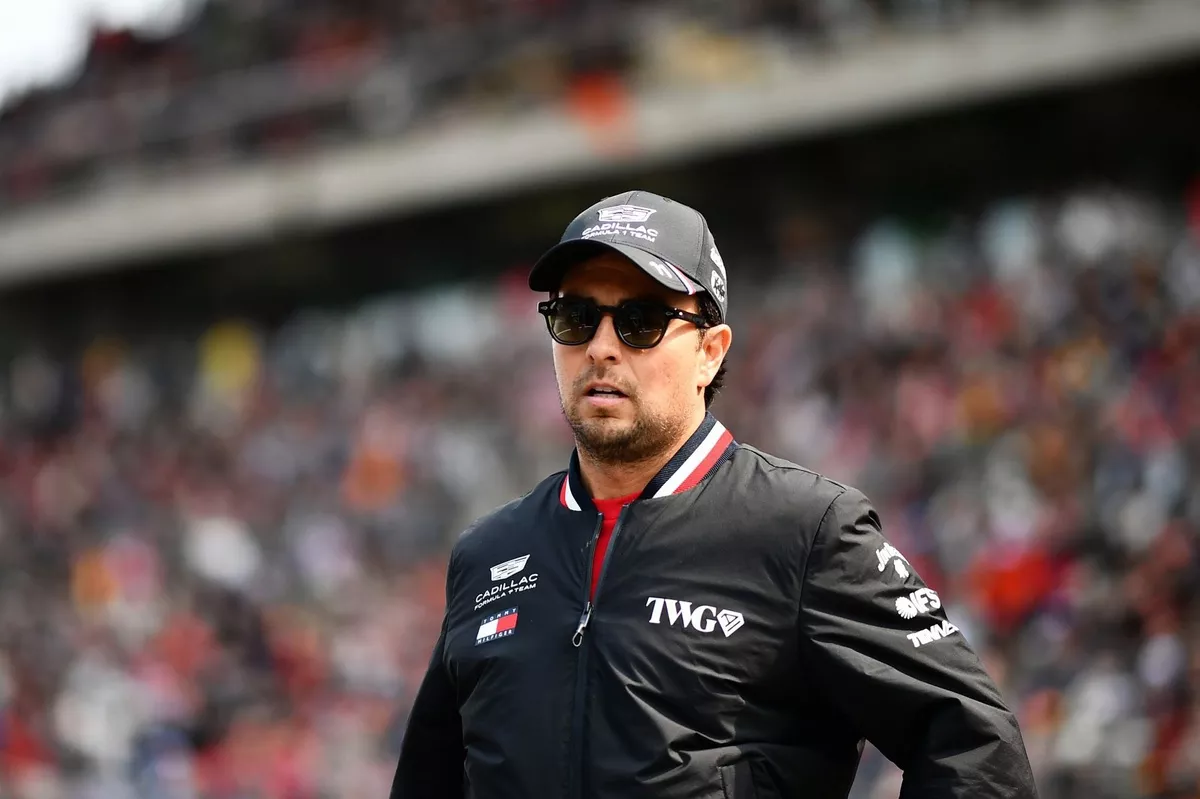
Sergio Perez called out for “audacious” move on Valtteri Bottas in China: “Not a good bit of driving”
Sergio Perez called out for “audacious” move on Valtteri Bottas in China as Jolyon Palmer says it was “not a good bit of driving”
Formula 1 has always had a way of turning even the smallest on-track flashpoint into a much bigger talking point, especially when a brand-new team is involved and both of its drivers are still trying to establish rhythm, hierarchy and trust. That was exactly the case at the Chinese Grand Prix, where Sergio Perez found himself under the spotlight after an aggressive first-lap move on his Cadillac team-mate Valtteri Bottas sparked criticism from former F1 driver Jolyon Palmer.
On the surface, it might have looked like a standard lap-one scrap — a driver trying to make up positions in the chaos of the opening corners, another trying to hold his line, and a team simply doing what every team does in Formula 1: racing. But the context made it feel very different. Cadillac are not Red Bull, Ferrari or Mercedes yet. They are a new team, still learning, still building, still trying to survive the brutal realities of modern F1. For a team in that position, every clean lap matters. Every kilometre matters. Every undamaged part matters.
That’s why Sergio Perez’s bold lunge on Bottas at Turn 3 didn’t just raise eyebrows — it triggered a much deeper debate about judgment, priorities and what a new entrant should really be focusing on during the opening phase of a season.
And when Jolyon Palmer labelled it an “audacious” move and flatly described it as “not a good bit of driving,” it summed up what a lot of people watching were probably already thinking.
Sergio Perez called out for “audacious” move on Valtteri Bottas in China as Cadillac’s priorities come under the microscope
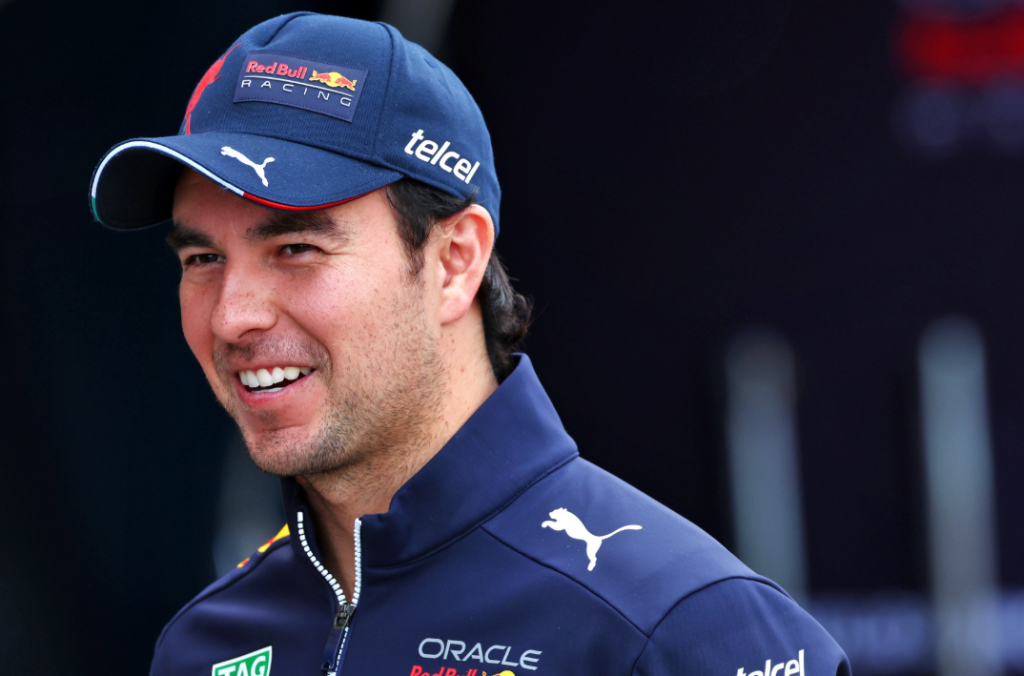
Cadillac’s arrival on the 2026 Formula 1 grid has naturally been one of the most fascinating stories of the season. As the championship’s 11th team, the American manufacturer came in carrying enormous attention, huge expectations and, perhaps most importantly, a mountain of work.
A fresh operation entering Formula 1 doesn’t just need speed. It needs reliability, correlation, systems, process, and above all, mileage. Lots of it.
That’s what made the Chinese Grand Prix such an important weekend for the team. After difficult qualifying results left Valtteri Bottas down in 19th and Sergio Perez all the way back in 21st, Cadillac’s realistic objective wasn’t to chase miracles. It was to finish, learn, collect data, and keep building a clearer picture of what their car can and cannot do over a full Grand Prix distance.
This is where Palmer’s criticism landed hardest.
From his point of view, a new team running near the back of the field should not be creating unnecessary risks in an intra-team fight, especially in the opening corners when visibility, tyre temperatures, braking references and pack compression all combine to make everything more volatile.
Instead of a measured opening lap, Cadillac got a mini civil war.
Sergio Perez, never known for lacking commitment in wheel-to-wheel situations, went for an optimistic move on Bottas into Turn 3. It was bold, maybe too bold, and definitely the kind of move that instantly splits opinion. Some fans will always admire the instinct to attack. Others will look at the circumstances and wonder what exactly there was to gain.
For Cadillac, that question matters more than usual.
Jolyon Palmer says Sergio Perez’s move on Valtteri Bottas in China was “not a good bit of driving”
Palmer did not exactly hide how he felt.
Speaking on F1 TV after the incident, the former Renault driver was openly critical of Sergio Perez’s decision-making, and he framed the issue less as a one-off racing mistake and more as a misunderstanding of what Cadillac’s race priorities should be at this stage of their F1 project.
His reaction was sharp, and honestly, not without reason.
In Palmer’s eyes, Cadillac should have approached the race almost like an extended test session. Not in the sense of giving up or cruising around, but in the sense of recognising the bigger picture. Starting from 19th and 21st, the chances of scoring meaningful points were slim to none unless chaos unfolded ahead. That meant the real value of the race was elsewhere: tyre degradation data, aero behaviour in traffic, brake temperatures in dirty air, energy deployment patterns, long-run balance, and the reliability feedback that only a full-distance race can provide.
That’s why the opening-lap move frustrated him.
His argument was simple: if you’re already at the back, there is no need to force a high-risk move on your own team-mate in a place where the margin for error is tiny. If the move goes wrong and one or both cars are damaged, the team loses far more than it gains. Even a broken front wing on a new car can ruin the quality of a race-long dataset. Worse still, contact between both cars could wipe out an entire afternoon of learning.
That is the kind of thing new teams simply cannot afford.
Palmer’s phrasing — “not a good bit of driving” — may have sounded blunt, but it cut to the heart of the matter. This wasn’t just about whether Sergio Perez technically had a gap. It was about race intelligence. About understanding the broader mission.
And in that context, his criticism felt pretty fair.
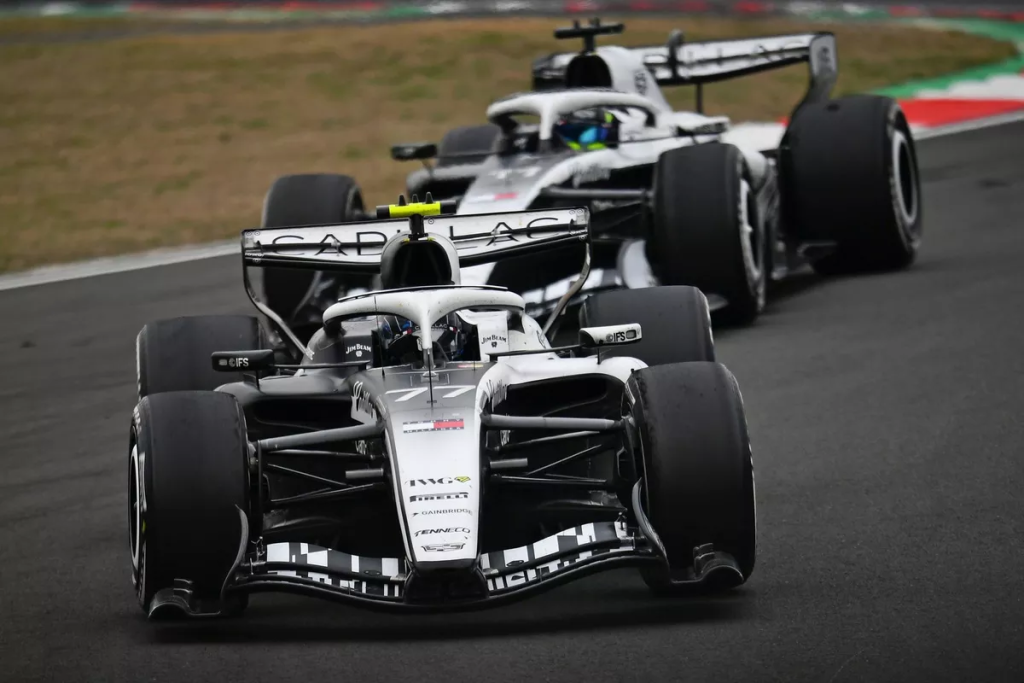
Why the Sergio Perez and Valtteri Bottas clash in China matters more for Cadillac than for an established F1 team
If this had happened inside an established midfield team, the reaction probably wouldn’t have been quite so intense.
Say two Alpine drivers or two Haas drivers got into a similar first-lap tangle at the back end of the grid. It would still be questioned, sure. Team-mate contact is never a good look. But there’s a difference between a team in year ten of its operation and a team in race two or three of its entire Formula 1 existence.
Cadillac are still in discovery mode.
Every race is part competition, part engineering exercise. They are learning how the car behaves in live conditions, how systems respond under stress, how race weekends unfold operationally, and how quickly they can react to changing variables. The data they collect now will shape development decisions weeks and months down the line.
That’s why Palmer’s “treat it like a practice session” comment, while a little dramatic on first hearing, actually makes sense when you unpack it. He wasn’t saying the drivers shouldn’t race. He was saying they should race smart.
There is a huge difference between being aggressive and being constructive.
Sergio Perez’s move looked like the former, not the latter.
The irony is that Cadillac ultimately got away with it. Both cars made it to the finish, and in Formula 1 that often softens criticism. Results can have a funny way of rewriting the narrative. If there’s no puncture, no retirement, no broken suspension, people move on quickly.
But survival does not automatically mean the decision was correct.
Sometimes the fact that a risky move didn’t end badly can actually hide the real issue.
Sergio Perez’s aggressive instincts remain a strength — but China showed why Cadillac need control, not chaos
To be fair to Sergio Perez, this kind of move is also part of what made him successful in Formula 1 for so long.
He has always been a combative racer. He sees gaps. He commits. He’s built a reputation over the years as one of the toughest drivers to fight in the midfield and, at his best, one of the smartest wheel-to-wheel racers on the grid. You don’t survive in Formula 1 as long as he has without that edge.
But every strength has a context.
What works in a podium fight doesn’t always work in a data-gathering race for a new team starting at the back.
That is the adjustment Cadillac may need from him.
At Red Bull, Sergio Perez often lived in a world where aggressive opening laps could turn a compromised Saturday into a strong Sunday. At Cadillac, especially this early, the calculation is different. The team is not asking for heroics every lap. It’s asking for discipline, clean execution, and maximum learning.
That may sound unglamorous, but it is exactly how serious teams are built.
Bottas, in many ways, seems naturally suited to that phase. He’s methodical, calm, and usually very measured in traffic. Sergio Perez brings a different energy — more instinctive, more opportunistic, sometimes more chaotic. In theory, that blend could work well for Cadillac over a season. One driver stabilises, the other pushes the limits.
But only if both understand when to switch gears.
China suggested that balance is still being found.
Valtteri Bottas was always likely to hit the apex — and that made Sergio Perez’s move even more questionable
One of Palmer’s most telling points was also one of the simplest.
Bottas was always going to be on the apex.
That matters because it gets beyond the emotional side of the debate and into the actual geometry of the corner. Turn 3 on lap one, with traffic around both cars, is not the kind of place where you can assume your team-mate is going to leave extra space just because you’ve thrown the nose in late.
Bottas had every right to take the natural line. He had cars around him. He had his own references to hit. And in a compressed opening-lap situation, the burden is usually on the attacking driver to make the move cleanly and decisively enough that the other car can reasonably react.
If the move arrives too late or from too far back, it stops being assertive and starts becoming speculative.
That’s where Sergio Perez drifted into trouble.
Even if he genuinely didn’t realise the car ahead was Bottas — and Palmer was asked exactly that — the criticism still stands. Palmer made that point clearly: if it wasn’t his team-mate, it still wasn’t a good move. The fact that it was his team-mate just made it worse.
And that’s probably the fairest way to judge it.
This wasn’t bad because of the badge on the other car. It was bad because the risk-reward ratio never really made sense.
Cadillac escaped the Chinese Grand Prix drama, but Sergio Perez and Valtteri Bottas now face an early test of trust
The good news for Cadillac is simple: they escaped.
No catastrophic damage. No double retirement. No garage meltdown. Both cars saw the chequered flag, and for a new team, that still counts for something.
But moments like this leave traces.
Team-mate dynamics in Formula 1 are delicate enough when everyone is fighting for podiums. In a start-up environment, they can become even more important. Trust between drivers matters. Engineers need confidence that both cars will bring back usable data. Strategists need predictability. The pit wall needs to know that internal battles won’t compromise the bigger objective.
That’s why this incident may matter more behind closed doors than it does publicly.
Cadillac will almost certainly review it in detail. Not just the onboard footage, but the intent behind it. What did Perez see? What did he think was possible? Was there a misunderstanding over positioning? Was it pure instinct? Or was it a sign that the team still hasn’t fully defined how hard its drivers are expected to race each other in the opening phase of the season?
Those are important questions.
Because if Cadillac want to move from novelty project to serious long-term competitor, they need structure as much as speed.
And structure begins with clarity.
Final verdict: Sergio Perez called out for “audacious” move on Valtteri Bottas in China — and the criticism feels justified
There are always two ways to read an incident like this.
One view says this is Formula 1. Drivers race. Perez saw a gap, went for it, and both cars survived. End of story.
The other view — and it’s the more convincing one here — says Formula 1 is also about judgment. It’s about knowing when aggression helps and when it simply creates risk for the sake of it.
That is why Jolyon Palmer’s criticism landed.
Calling Sergio Perez’s move on Valtteri Bottas in China “audacious” was accurate. Calling it “not a good bit of driving” was harsh, but justified. And in the context of Cadillac’s early-season reality, it was probably the kind of uncomfortable truth the team needed to hear.
For an established front-runner, a scrappy first-lap team-mate duel might be brushed off as hard racing.
For Cadillac, still learning what it means to be an F1 team at all, it felt like an unnecessary gamble.
The biggest positive is that they got away with it.
The biggest lesson is that they might not next time.
If Cadillac are smart, they’ll treat this as a warning shot rather than a crisis. Perez doesn’t need to stop being Perez — that edge is part of his value. But he may need to recalibrate what “racing hard” looks like in a team that currently needs clean miles more than highlight-reel lunges.
And that, more than the overtake itself, is the real story from China.


There are no comments yet. Be the first to comment!