















































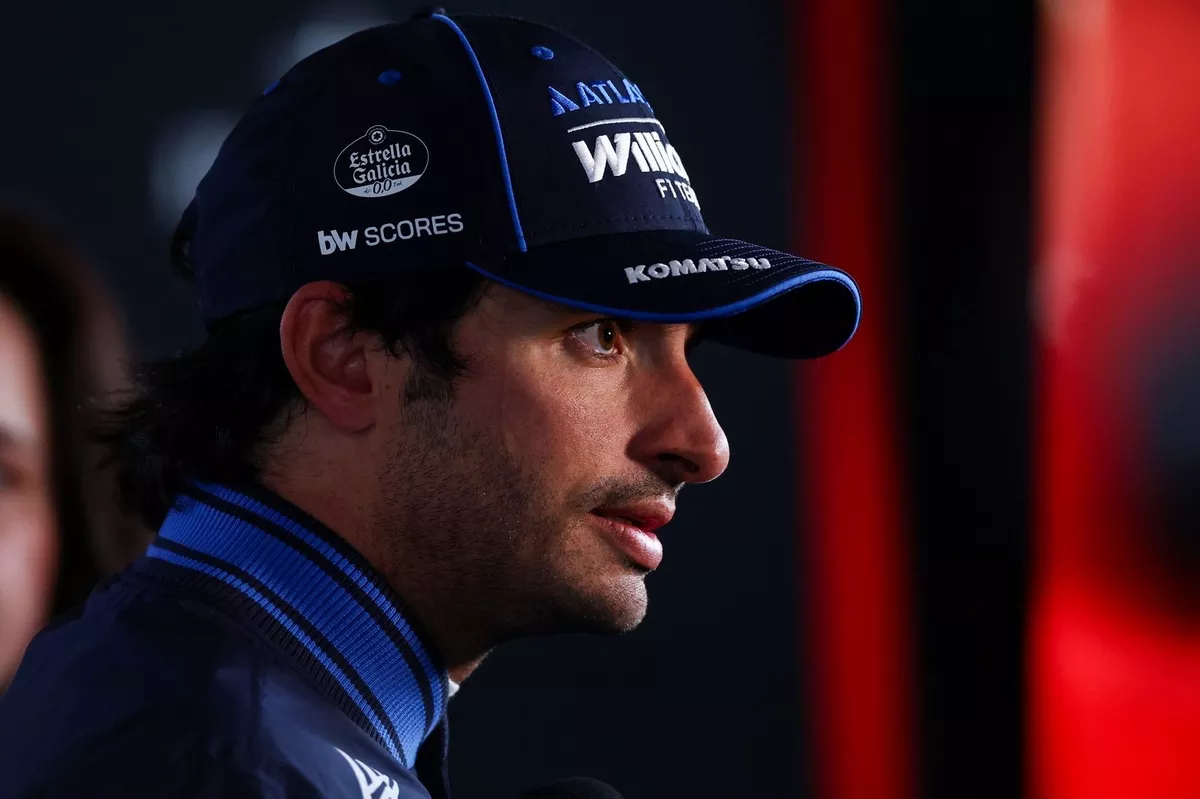
“We Know It’s Not Right” – Why Carlos Sainz Still Doesn’t Like F1’s New Era
“We Know It’s Not Right” – Why Carlos Sainz Still Doesn’t Like F1’s New Era as 2026 Rules Face Growing Scrutiny
Formula 1 has spent years selling the 2026 regulations as a bold step into the future.
Smaller, lighter cars. A fresh technical direction. A more modern balance between electrical power and internal combustion. A championship trying to look progressive without losing its identity. On paper, it all sounded sensible enough — maybe even exciting. F1 needed a new chapter, and the people in charge wanted this one to look smarter, cleaner and more in tune with where the automotive world is heading.
But as often happens in Formula 1, what looks elegant in a boardroom doesn’t always feel right at 300km/h.
Two races into the new era, the mood in parts of the paddock is already more uneasy than enthusiastic. There is curiosity, of course. There is still room for development. There is still patience in some corners. But there is also a growing sense that the 2026 formula, at least in its current form, is asking drivers to do things that simply do not feel like Formula 1.
And Carlos Sainz, never the loudest voice in the room but usually one of the more thoughtful ones, has now said out loud what a lot of people in the paddock seem to be thinking privately.
“We know it’s not right.”
That is a striking sentence. Not because it is dramatic, but because it sounds honest.
And honesty, at this stage of a major regulation overhaul, tends to matter more than spin.
Why Carlos Sainz Still Doesn’t Like F1’s New Era Despite the Promise of the 2026 Regulations
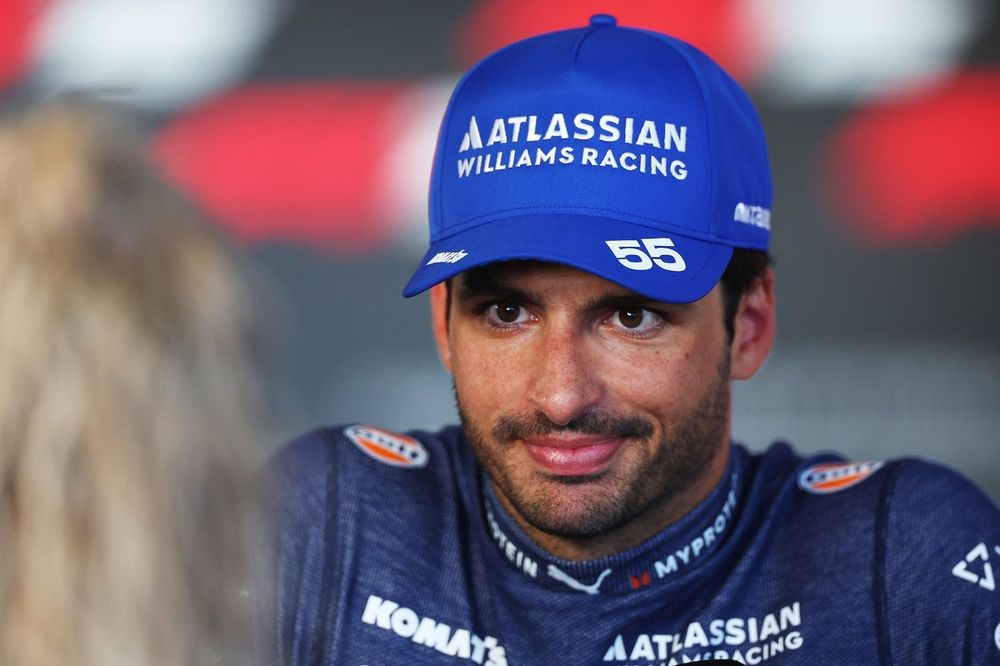
Sainz’s criticism of the 2026 package is not the kind of knee-jerk rant that can be dismissed as a frustrated driver moaning after a bad weekend.
It feels more considered than that.
The Spaniard has had a rough opening to the season with Williams, and yes, that inevitably colours how any driver feels about a new set of regulations. If the car is difficult, the adaptation is harder. If the results are poor, the frustrations arrive faster. But if you listen carefully to what Sainz is actually saying, this is not simply about his own discomfort or his own results.
It is about the nature of the racing.
It is about what these cars are asking drivers to do over a lap.
And more importantly, it is about whether what they are doing still resembles the version of Formula 1 that the sport should want to showcase.
That distinction matters.
Sainz was careful to say that on a circuit like Shanghai, the new rules were “not that bad.” That is a useful qualifier, because it shows he is not rejecting the entire concept out of hand. He can see that on some tracks — particularly those that are more energy-rich and allow more efficient harvesting — the system behaves in a more acceptable way. The cars still feel different from last year, certainly, but not in a way that completely breaks the illusion of what a Formula 1 lap should look and feel like.
But then he named the circuits that worry him.
Melbourne.
Monza.
Spa.
And suddenly the concern becomes much bigger.
Because those are not obscure venues tucked away in the calendar. Those are iconic Formula 1 tracks. Places where the identity of the sport should be obvious. Places where the fastest, most complete racing cars in the world are supposed to attack, not hesitate.
If the new era struggles there, that is not a side issue.
That is the issue.
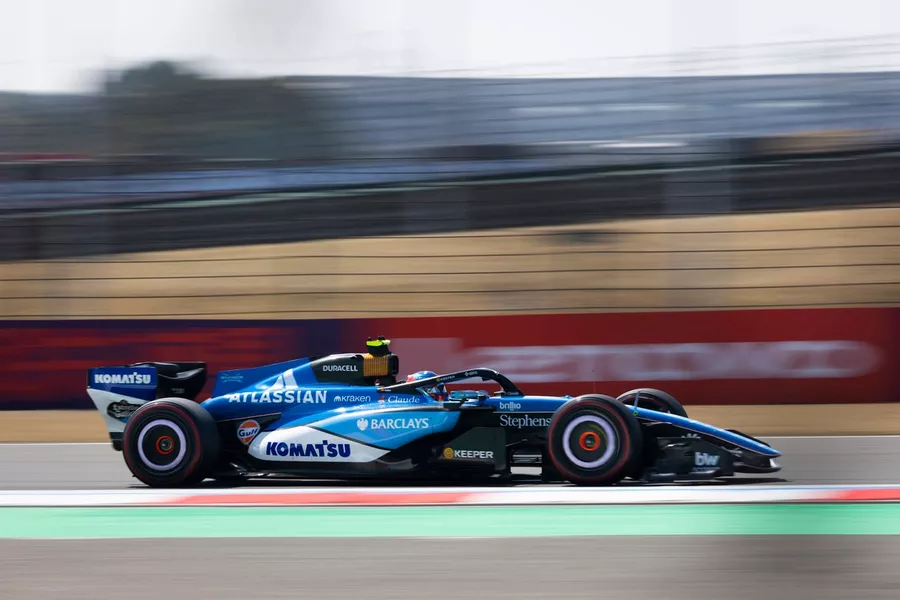
The Real Problem With F1’s New Era: It Doesn’t Always Look Like Formula 1
This is the heart of the debate.
The 2026 rules have not just changed the technical makeup of the cars. They have changed the visual and rhythmic feel of a lap. The move toward a near-even split between electrical power and internal combustion has created a new energy-management reality, and with it a driving style that many feel is awkward, over-managed and a little too artificial for the category.
Drivers now have to think more actively about battery state over the course of a lap. They are lifting and coasting more deliberately to recharge. They are juggling more switches, more systems, more energy deployment logic. They are not simply attacking the lap in the old instinctive sense; they are often shaping it around what the car will permit them to spend and recover.
That is not necessarily a bad thing in pure engineering terms.
But in sporting terms, and especially in visual terms, it can be a problem.
Formula 1 has always had management elements. Tyres, brakes, fuel, ERS, deployment strategy — none of this is new. Modern F1 has never been a pure “flat-out every metre” discipline. But there is a line between strategic complexity and something that begins to look compromised.
A lot of drivers seem to feel the 2026 cars are drifting too close to that line.
And Sainz was refreshingly blunt about it.
He said this version of Formula 1 is “very far” from the ideal he has in his mind. That is not a minor complaint about balance or a request for a setup tweak. That is a philosophical criticism of the formula itself.
When a driver of his experience says that, people should pay attention.
“We Know It’s Not Right” Is the Most Revealing Part of Carlos Sainz’s Criticism
Of everything Sainz said, one section stands out more than the rest.
He suggested that “the people at the top also see that and know that,” adding that when you look at the graphics and the way the sport is trying to present the new era, it feels as though Formula 1 is trying hard to sell something that everyone inside the system already understands is not quite right.
That is a loaded comment.
And a very interesting one.
Because it hints at a disconnect between the public presentation of the regulations and the private reality inside the paddock. F1, like any global sport, is always marketing itself. It has to. It has broadcasters, sponsors, manufacturers, commercial partners and a global audience to satisfy. New regulations are not just technical changes — they are products to be sold.
But if the product on track is creating visible discomfort among the people actually driving the cars, then no amount of slick graphics or clever storytelling can fully hide that.
Fans notice when cars look odd.
They notice when drivers are lifting earlier than expected.
They notice when overtaking feels strangely dependent on energy windows rather than raw racecraft.
They notice when the best drivers in the world sound unconvinced.
And Sainz’s point, essentially, is that the paddock knows this.
That is why his criticism feels important.
It is not just “I don’t like it.”
It is “we all know this needs work.”
Why Carlos Sainz Still Doesn’t Like F1’s New Era — and Why He May Not Be Alone
Sainz is not speaking in isolation.
Max Verstappen had already delivered the line that instantly spread through the paddock when he described the new rules as “Formula E on steroids.” That was classic Verstappen — sharp, provocative, and impossible to ignore. But behind the phrase was a serious point: the increasing dependence on energy recovery and management has started to alter the DNA of the category in ways some drivers do not find natural.
And the thing about drivers is this: they can usually feel a trend before everyone else does.
They know when a car is difficult but fundamentally exciting.
They know when a rule set is challenging in a rewarding way.
And they know when a formula starts to create behaviours that feel wrong for the sport.
Sainz appears to believe the 2026 package is closer to the third category.
That does not mean the concept is unsalvageable.
In fact, he explicitly said he hopes changes come soon and accepted that it was probably unrealistic to expect the FIA to “get it completely right at the start of the season.” That is a fair and mature point. New regulations are almost never perfect on day one. There are always unintended consequences. There are always circuits that expose flaws more brutally than others.
But the difference here is that the complaints are arriving early, and they are arriving from experienced drivers who understand what Formula 1 should feel like.
That is hard to dismiss.
The FIA and Formula 1 May Need Tweaks — Not a Full U-Turn
The good news, if there is some, is that no one serious is yet calling for total chaos.
At least not publicly.
The more realistic conversation is about targeted changes.
There have already been whispers and open suggestions around the paddock: revisiting energy allowances, adjusting harvesting demands, tweaking start procedures, smoothing deployment rules, and maybe finding ways to reduce the most exaggerated lift-and-coast patterns that make some laps look awkward. There is also the more romantic idea of a return to naturally aspirated engines, but that is not a short-term fix and, realistically, not something likely before the next major engine cycle around 2030 or 2031.
So for now, the challenge is more practical.
Can Formula 1 preserve the broad direction of the 2026 era while softening the parts that make it feel less like Formula 1?
That is probably the right question.
Because tearing up a regulation set after two races would be absurd.
But pretending there is no issue would be just as unwise.
Ayao Komatsu’s Warning Against a Knee-Jerk Reaction Is Sensible — Even If Sainz Has a Point
This is where the conversation becomes more balanced.
Haas team principal Ayao Komatsu has urged patience, and to be fair, he is not wrong.
He argued that the sport needs several different circuits before forming a proper opinion, and from a technical standpoint that is entirely sensible. China is not Melbourne. Suzuka is not Monza. Spa will reveal different things again. The cars will behave differently depending on layout, altitude, energy profile, braking demands and tyre sensitivity.
Two races is not enough for a final verdict.
Not in Formula 1.
And teams will also develop quickly. What looks ugly in round one may look more manageable by round five. Some of the current extremes may soften as engineers learn where the setup windows really are and as software strategies become more refined. Power unit mapping, battery use, deployment timing, harvesting efficiency — all of this can improve significantly once teams stop guessing and start understanding.
Komatsu’s call to avoid a knee-jerk reaction should be taken seriously.
But here is the thing: patience and criticism are not mutually exclusive.
Sainz can be right that the current formula does not look or feel correct.
Komatsu can also be right that the sport needs more evidence before changing it.
Those positions can coexist.
And in truth, they probably should.
What Suzuka and the Next Few Races Could Tell Us About F1’s New Era
The Japanese Grand Prix now feels more important than it might have a month ago.
Not because Suzuka alone will settle the argument, but because it is the kind of circuit that tends to reveal truth. If the 2026 cars look awkward there — if drivers are still having to shape laps in visibly unnatural ways, if the energy profile disrupts the rhythm of one of the most beloved tracks in the world — then the pressure for tweaks will grow quickly.
If, on the other hand, the cars look more convincing and the drivers sound more comfortable, the conversation may cool a little.
That is why the next few rounds matter so much.
F1 needs data.
The FIA needs evidence.
The teams need comparison points.
And the drivers need to know their concerns are being heard, not just politely noted.
Because one thing is already clear: this is not just a minor technical debate for engineers in a closed room. This is a discussion about the identity of the championship.
And that is why drivers like Sainz speaking openly matters.
Final Word: Carlos Sainz Still Doesn’t Like F1’s New Era — and Formula 1 Should Listen
Carlos Sainz has not launched a tantrum.
He has not declared the 2026 regulations a disaster.
He has not demanded an immediate rollback.
What he has done is arguably more useful than any of that.
He has described, in plain and thoughtful terms, why this new era does not yet feel like the Formula 1 he believes the sport should represent. He has acknowledged that some tracks mask the problem better than others. He has accepted that new rules take time. He has even left room for development to improve the picture.
But he has also said the uncomfortable part out loud.
“We know it’s not right.”
That sentence should linger.
Because when experienced drivers, across multiple teams, start expressing the same basic discomfort, the sport has a choice. It can dismiss the noise as early-season adjustment pain. Or it can treat it as what it probably is: a warning that the technical direction may need refinement before the audience fully turns on it.
The 2026 era is still young.
There is time to fix it.
There is time to improve the spectacle.
There is time to make these cars feel more like the category they are supposed to define.
But the sooner Formula 1 accepts that the concerns are real, the better chance it has of turning this ambitious new chapter into the one it hoped to write.
Because right now, Carlos Sainz is not just complaining.
He is saying what a lot of people in the paddock are already thinking.
And deep down, Formula 1 probably knows it too.


There are no comments yet. Be the first to comment!