

































Has Aston Martin Adrian Newey Project Really Failed? Inside the F1 Questions Shaping the 2026 Season
Aston Martin, Adrian Newey and the team principal debate — was this always the real plan?
Formula 1 rarely stands still, but even by its own chaotic standards, the past two years at Aston Martin F1 Team have felt unusually turbulent. Titles have changed, responsibilities have shifted, and leadership structures have evolved so frequently that even seasoned observers have struggled to keep pace.
So when fans ask whether the much-discussed “Adrian Newey team principal project” has failed, the answer is more complicated than a simple yes or no. In truth, what looks like confusion from the outside may actually be the inevitable growing pains of a team attempting one of the most ambitious transformations in modern Formula 1.
And as the championship heads to Suzuka for the Japanese Grand Prix — following a strikingly strong start to 2026 from Mercedes — the spotlight on Aston Martin’s long-term vision has only intensified.
Why Adrian Newey was never meant to be a traditional team principal
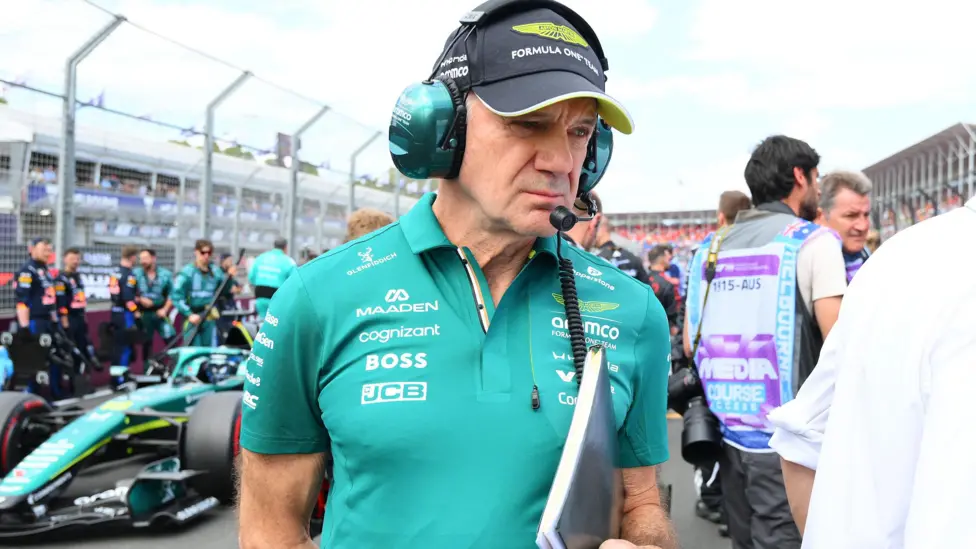
When Adrian Newey joined Aston Martin in March last year as managing technical partner and shareholder, expectations immediately skyrocketed. Few individuals in Formula 1 history carry comparable influence. His arrival signaled not just recruitment, but revolution.
Yet from the beginning, insiders understood something important: Newey was never supposed to function as a conventional team principal.
Running an F1 team involves endless operational demands — sponsor relations, budgets, staffing decisions, media obligations and corporate administration. Those responsibilities can easily consume the very creative energy that makes a designer like Newey invaluable.
Owner Lawrence Stroll wanted Newey focused where he delivers maximum impact: designing championship-winning cars.
Initially, that operational burden fell to Andy Cowell, whose reputation was built during two decades shaping Mercedes’ dominant hybrid-era power units. On paper, the partnership looked ideal — engineering management paired with design genius.
Reality proved more complicated.
The Cowell-Newey clash that reshaped Aston Martin’s structure
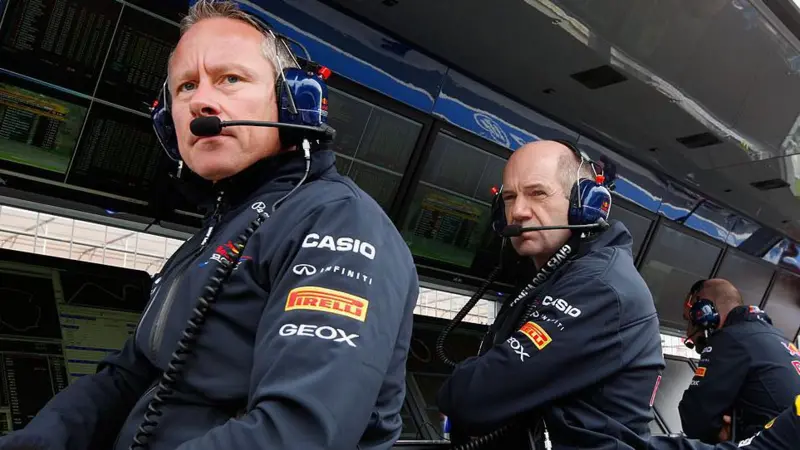
While details remain largely private, it became clear that Cowell and Newey struggled to align philosophically. Power dynamics inside elite F1 teams are delicate, and when two strong technical leaders share overlapping authority, friction is almost inevitable.
Ultimately, there was only likely to be one outcome.
Cowell was moved into a chief strategy role, allowing him to work more closely with Honda on engine development — an area crucial to Aston Martin’s future partnership.
The reshuffle left Newey effectively overseeing operations, though unofficially. Publicly, the team framed it as a planned evolution, announcing he would assume a team principal-style position from 2026.
Behind the scenes, however, Aston Martin still believed someone else should eventually handle day-to-day leadership — precisely to free Newey from administrative distractions.
In other words, the project did not fail. It simply revealed its limitations sooner than expected.
The search for stability — and why leadership keeps changing
Aston Martin’s constant personnel adjustments reflect a broader truth about Formula 1: success is built on stability, yet transformation often requires disruption.
Stroll’s ambition is unmistakable. Massive investment has gone into facilities, personnel and partnerships. With expectations rising, patience naturally shortens when progress stalls.
After a breakthrough 2023 season under technical director Dan Fallows, development momentum faded. The team struggled to evolve its car effectively through 2024, slipping backward relative to rivals.
Leadership changes followed logically, even if collectively they created an impression of instability. Earlier team principal Mike Krack had overseen progress but not sustained competitiveness, prompting further restructuring.
Each decision made sense individually. Together, they created the sense of a revolving door.
That dynamic explains Aston Martin’s interest in experienced managerial figures such as Jonathan Wheatley — someone capable of running operations while allowing Newey to concentrate purely on performance engineering.
Audi’s parallel reshuffle shows a wider F1 trend
Aston Martin are not alone in undergoing leadership turbulence. Audi F1 Team has experienced similarly rapid restructuring ahead of its 2026 entry.
Internal tensions between executives slowed early investment into the Sauber infrastructure, raising concerns about readiness for Audi’s official arrival. Eventually both Andreas Seidl and Oliver Hoffmann exited leadership roles, clearing the way for a new structure led by Mattia Binotto.
Initially, a dual-leadership model paired Binotto with Wheatley — a setup many insiders doubted from the outset. Formula 1 history rarely favors shared authority at the top.
When Wheatley later pursued a return to the UK, Audi streamlined its hierarchy again, reinforcing a single-command structure.
The lesson is familiar: teams searching for competitiveness often experiment before settling on stability.
Mercedes surge sets the competitive benchmark
While Aston Martin reorganizes internally, Mercedes have quietly delivered the season’s early statement.
Victories from George Russell in Melbourne and Shanghai, followed by teenage sensation Kimi Antonelli claiming his first grand prix win in China, have established the Silver Arrows as early contenders.
Their success highlights precisely what Aston Martin hopes to achieve — a clear structure, defined leadership and technical cohesion translating into results on track.
The contrast underlines why Stroll continues to refine his organization aggressively.
Red Bull uncertainty adds intrigue to the 2026 landscape
Meanwhile, Red Bull Racing faces its own questions. Reliability problems linked to its new power-unit program have complicated the start of the season for Max Verstappen.
A strong qualifying performance in Australia suggested competitive pace, but struggles in China exposed balance and reliability concerns. With only two races completed, conclusions remain premature — yet prolonged issues could reignite speculation surrounding Verstappen’s long-term future.
The shifting competitive order makes Aston Martin’s long-term planning even more critical.
Sustainable fuel: Formula 1’s quiet revolution
Beyond team politics, 2026 also marks a technological milestone as Formula 1 adopts fully sustainable fuels.
These carbon-neutral fuels are produced using atmospheric carbon capture or biomass sources, creating a circular emissions process where the carbon released during combustion equals the carbon previously extracted.
In theory, the innovation could transform road transport. Billions of internal-combustion cars remain globally, and sustainable fuel offers a potential bridge between traditional engines and electrification.
The challenge remains cost — current estimates place production around €300 per litre, far from commercial viability. But as with hybrid technology a decade ago, F1’s experimentation could eventually reshape everyday mobility.
Cadillac’s slow but sensible beginning
New entrants Cadillac Formula One Team have adopted a deliberately cautious approach to expectations.
Early performance shows the car several seconds off the pace in qualifying, yet simply achieving operational stability represents progress for a team built almost entirely from scratch.
Led by team principal Graeme Lowdon and technical figures like Nick Chester, Cadillac’s goal is credibility first, competitiveness later — a long-term philosophy Aston Martin itself once followed.
So, has the Aston Martin Newey project failed?
Not really.
If anything, Aston Martin’s situation reflects a team still searching for the optimal structure to maximize one of Formula 1’s greatest technical minds. The idea was never to turn Adrian Newey into a corporate executive; it was to build an organization around his strengths.
The adjustments now taking place suggest refinement rather than collapse.
Formula 1 success rarely arrives instantly. The dominant teams — Mercedes, Red Bull, even Ferrari during peak eras — required years of organizational stability before championships followed.
Aston Martin’s challenge is reaching that stability before impatience undermines progress.
As the season moves forward and the paddock heads into a five-week pause after Japan, one truth remains clear: the Newey era has not failed.
It has only just begun to reveal what it really is.


There are no comments yet. Be the first to comment!