


























Inside Borussia Dortmund Power Shift: Matthias Sammer Opens Up on Sebastian Kehl Exit and BVB’s New Direction
Matthias Sammer Reveals Why Borussia Dortmund and Sebastian Kehl Had to Part Ways
Change at Borussia Dortmund is rarely quiet. Even in a club accustomed to transition, the recent departure of sporting director Sebastian Kehl has sparked intense discussion across German football, not only because of who left — but because of what the decision says about BVB’s evolving identity.
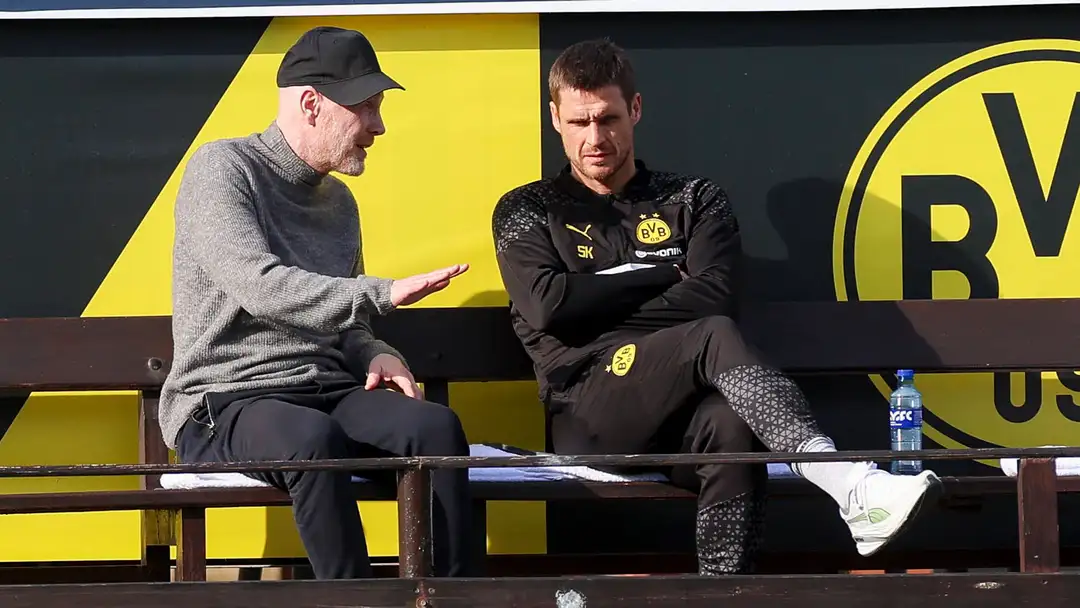
When Matthias Sammer speaks, people inside the Bundesliga listen carefully. The former Dortmund player, coach, and now external consultant remains one of the club’s most influential voices, even without holding a formal executive title. So when Sammer publicly supported the decision for Borussia Dortmund and Sebastian Kehl to go their separate ways, it immediately signaled that deeper issues had been simmering behind the scenes.
Speaking candidly on Sky’s Sammer & Basile – the Hagedorn Talk, the 58-year-old offered rare insight into the internal dynamics that ultimately led to Kehl’s exit — and his words painted a picture of a leadership structure that had simply stopped functioning smoothly.
“I think it was the right decision,” Sammer explained. “The two sides were no longer on the same page. So it’s only logical.”
It was a diplomatic sentence, but what followed revealed far more.
Tensions Behind the Scenes at Borussia Dortmund
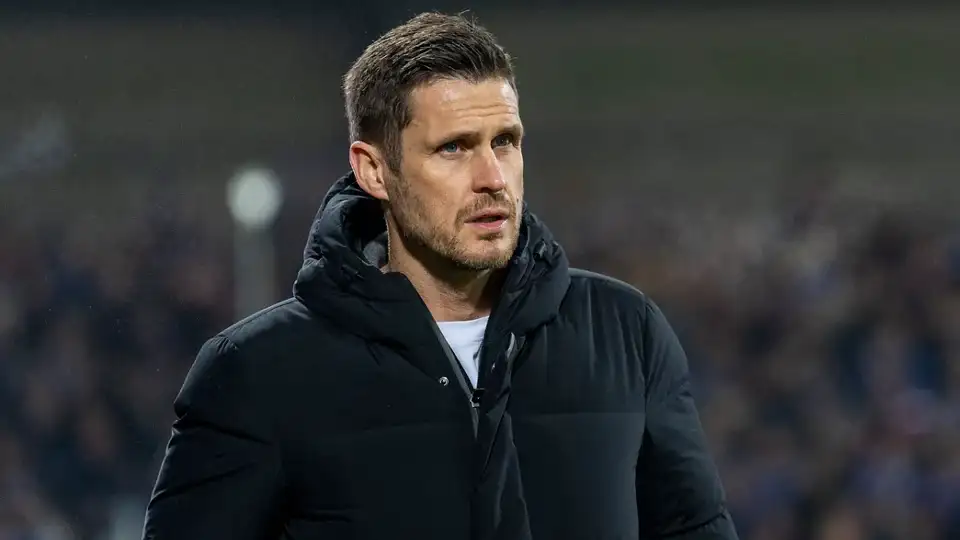
Sammer hinted that disagreements within Borussia Dortmund’s leadership were no longer minor professional differences but had grown into ongoing friction. Carefully choosing his words, he admitted that relationships at executive level had become strained.
“I believe — and I say this respectfully — that they’d been at each other’s throats a bit,” he said.
Those remarks echoed reports from German media suggesting “irreconcilable differences” inside the BVB boardroom. At the center of the tension was Kehl’s working relationship with sporting director Lars Ricken, a dynamic shaped by decisions made more than a year earlier.
The roots of the conflict reportedly trace back to spring 2024, when Ricken replaced long-time CEO Hans-Joachim Watzke in a reshuffled leadership structure. Kehl, a former Dortmund captain who had gradually climbed the club’s hierarchy, was widely believed to have ambitions of stepping into that senior role himself.
For a figure so closely tied to Borussia Dortmund’s modern history, the disappointment was understandable. Kehl had invested years into building his executive career at the club, and sources suggested the new structure created overlapping responsibilities and differing visions for recruitment and long-term planning.
Sammer, however, framed the situation less as personal conflict and more as an unavoidable reality of elite football management.
“Points of friction happen,” he said. “Sometimes it’s simply the way things go.”
A Separation Seen as Necessary for Both Sides
What stood out in Sammer’s comments was the absence of blame. Rather than portraying Kehl’s departure as a failure, he described it as a necessary reset — beneficial for both Borussia Dortmund and the outgoing sporting director.
“The club has the opportunity to make a change,” Sammer noted. “It is important to part ways with dignity and grace.”
That sentiment reflects Dortmund’s traditional emphasis on continuity and respect for former players who transition into leadership roles. Kehl, after all, remains a respected figure among supporters, having spent over a decade representing BVB on the pitch.
Yet modern football leaves little room for emotional decisions. When strategic visions diverge, even club legends can become casualties of structural change.
What Comes Next for Sebastian Kehl?
Despite leaving Dortmund, few expect Sebastian Kehl to remain unemployed for long. His reputation across German football remains strong, and speculation about his next destination has already begun.
One possibility attracting attention is Hamburger SV, where Kehl has been linked with a potential leadership role replacing Stefan Kuntz. Rumours first surfaced earlier in the year and have regained momentum following his departure from BVB.
Sammer believes Kehl’s future remains bright but offered a piece of personal advice that sounded almost paternal.
“Sebastian will find a good position,” he said. “But he should take a breather now.”
After years of pressure inside one of Germany’s most scrutinized clubs, stepping away temporarily may indeed prove valuable before the next challenge begins.
Nils-Ole Book: Borussia Dortmund’s Bold New Appointment
While much attention has focused on Kehl’s exit, Borussia Dortmund are equally eager to shape the narrative around their future — and that future now includes Nils-Ole Book.
Sammer was emphatic in his praise for the new appointment, describing the decision as both courageous and strategically sound.
“When I put everything together, I said: Lars, it’s a fantastic idea,” Sammer revealed. “Not just good — fantastic. It’s bold, it’s a challenge, but it’s analytical.”
Book arrives with a growing reputation as one of Germany’s most innovative football executives. During his time at SV Elversberg, he helped transform a modest regional club into one of the country’s most compelling success stories.
Since joining Elversberg in 2017, Book oversaw a remarkable rise from the fourth tier to the brink of Bundesliga promotion, largely through intelligent scouting and player development rather than financial strength.
Among his most notable discoveries were Fisnik Asllani, who later moved to TSG Hoffenheim, and Younes Ebnoutalib, whose transfer generated significant profit for the club. Those successes strengthened Book’s reputation as a talent identifier capable of operating efficiently within financial constraints — a skill Dortmund increasingly value.
A New Era Begins at BVB
Book officially begins his role immediately, signing a contract that runs until 2029. Dortmund leadership have made it clear that he was their preferred candidate from the outset.
Lars Ricken openly praised the appointment, highlighting both professional expertise and personality fit as decisive factors.
Dortmund’s decision signals a subtle but meaningful shift. Rather than relying solely on established internal figures, the club appears ready to embrace fresh perspectives and data-driven planning — an approach increasingly common among Europe’s top clubs.
The timing is critical. Borussia Dortmund face a demanding run of Bundesliga fixtures that could shape their season’s trajectory, including clashes against VfB Stuttgart, Bayer Leverkusen, and TSG Hoffenheim.
On-field results will inevitably influence how quickly supporters embrace the new leadership structure.
Stability Through Change
For Borussia Dortmund, the Kehl episode represents more than a personnel change; it is a reminder of how delicate balance can be within modern football organizations. Success requires alignment from boardroom to dressing room, and once that alignment fades, change becomes unavoidable.
Matthias Sammer’s unusually open comments offered fans a rare glimpse behind the curtain — confirmation that even well-run clubs face internal struggles invisible from the stands.
In the end, Dortmund’s leadership chose evolution over continuity. Whether that decision proves visionary or risky will only become clear over time.
But one thing is certain: at Borussia Dortmund, the next chapter has already begun, shaped by new voices, renewed ambition, and the belief that sometimes moving forward means letting familiar figures step aside.


There are no comments yet. Be the first to comment!