












































































































































‘Part of being an England player’ – Jordan Henderson reacts to Ben White boos as Wembley wrestles with the Qatar shadow
Jordan Henderson says Ben White boos are ‘part of being an England player’ – but fans still do not know the full Qatar picture
Ben White’s return to the England set-up was always likely to come with noise. At Wembley, it came with plenty of it.
For a player absent from the national team picture for so long, and for reasons that have never been fully explained in public, White’s comeback under Thomas Tuchel was never going to pass quietly. But even by England standards, this was an odd, emotional, and at times uncomfortable evening. A goal off the bench should have been the clean headline. Instead, it became a night shaped by jeers, old questions, and a reminder that in English football, the story is rarely allowed to stay on the pitch for very long.
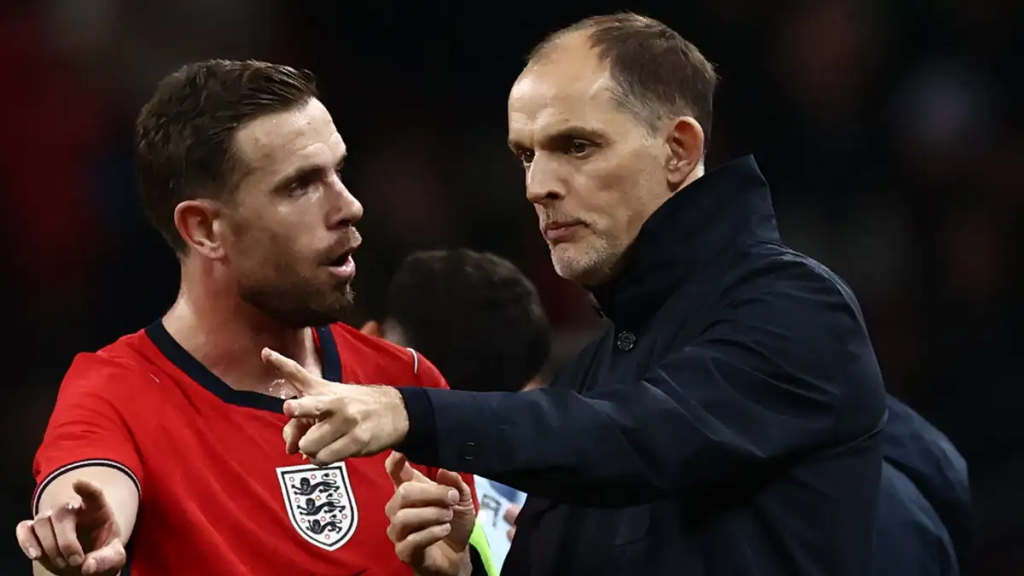
As sections of the Wembley crowd booed White during the Three Lions’ 1-1 draw with Uruguay, Jordan Henderson was one of the first senior voices to step forward and defend his team-mate. And in doing so, he said something that cut through the usual post-match noise: most people, he argued, still do not know the full story behind White’s controversial exit from the 2022 World Cup in Qatar.
That matters. It matters because in modern international football, narratives harden quickly. A player disappears, rumours fill the gap, and before long, the public starts reacting to a version of events that may or may not be true. Henderson, who has been around England long enough to understand exactly how these things spiral, was blunt in his assessment. Some supporters, he suggested, may not even fully know why they are booing.
And honestly, he may have a point.
Ben White’s England return under Tuchel was supposed to be about football
There was a time when Ben White looked like a player who would be a fixture in England’s plans for years.
Comfortable on the ball, tactically flexible, capable of playing at centre-back or right-back, and polished enough to thrive in high-possession systems, he always looked like the sort of modern defender international managers tend to trust. But football careers, especially at international level, do not always move in straight lines. White’s abrupt departure from the 2022 World Cup camp in Qatar changed the tone of his England story almost overnight.
Since then, the facts have remained frustratingly incomplete in public.
What we know is that White left the tournament early for personal reasons. What followed was a long period away from the squad, during which he remained unavailable for selection across the rest of Gareth Southgate’s tenure. That alone created a vacuum. And football, particularly in England, never leaves a vacuum unfilled for long.
So when Thomas Tuchel, now tasked with refreshing the national team, brought White back into the fold as an injury replacement for Jarell Quansah, there was already tension in the air. Tuchel clearly saw a football reason to reintegrate him. England, after all, benefit from having defenders with White’s profile. But the manager also knew there was emotional baggage attached to the return.
When White stepped onto the pitch in the 69th minute, that baggage became audible.
The boos were there. Not deafening, perhaps, but clear enough to be impossible to ignore.
That is what made the moment so strange. Here was a player making a long-awaited comeback for his country, under a new manager, in a fresh chapter — and yet the soundtrack was resentment rather than welcome. It was a reminder that in international football, forgiveness is often slower than form.

Jordan Henderson reacts to Ben White boos with the voice of experience
If there was one player in that England squad well placed to speak about public scrutiny, it was Jordan Henderson.
He has lived enough of it. He has been criticised, questioned, doubted, and at times made into a lightning rod for wider debates that stretch far beyond football itself. So when he moved quickly to defend White after the match, it did not feel like a token act of solidarity. It felt like the response of someone who genuinely understands how brutal the national team spotlight can be.
“As team-mates we are always there to support,” Henderson said. “I have been through it myself, but that is part and parcel of being an England player.”
That line — part of being an England player — says a lot. It is both a truth and an indictment.
Because yes, scrutiny comes with the shirt. So does expectation. So does the pressure of representing a football nation that dissects every gesture, every interview, every rumour, every substitution. But there is a difference between scrutiny and assumption. Henderson’s wider point was more important than the soundbite: people are often reacting to fragments, not facts.
“Some of the fans probably don’t even know why they are booing,” he said. “They listen to what is being said in the media, and a lot of the time what the media says isn’t true.”
That is a strong claim, but not an unreasonable one.
England players have long been shaped by public narratives they do not fully control. Once a version of events becomes widely repeated, it becomes sticky. Even if it is incomplete. Even if it is unfair. Even if those inside the camp know the reality is more complicated. Henderson made it clear that White’s situation belongs in that category.
“Not many people know the ins and outs of what happened in Qatar,” he added, “and it is for us to deal with internally.”
That last part matters too. Internally. In other words: not every dressing-room issue needs to become a public trial.
The Qatar withdrawal still hangs over Ben White, whether he likes it or not
This is the uncomfortable truth at the centre of the whole story: Ben White may have returned to the England squad, but he has not yet escaped Qatar.
Until White publicly explains his side — if he ever chooses to — the 2022 World Cup withdrawal will continue to follow him. That may be unfair, but it is the reality of how these things work. Supporters do not like ambiguity. Media cycles do not reward silence. And when a player steps away from a World Cup environment under unclear circumstances, the speculation tends to become part of the biography.
That is why Tuchel’s pre-match comments were interesting.
The England manager suggested it would be “necessary” for White to “clear the air” with squad members who were present in Qatar. On the surface, that sounds sensible. A new manager wants clarity. A dressing room wants trust. International football is built on short windows, so emotional tension cannot be allowed to linger too long.
But it also underlined something important: even inside the camp, this is not a closed book.
White has yet to comment publicly in any detailed way, and that has created a strange dynamic. His football has continued at a high level with Arsenal. His club reputation remains strong. But internationally, he has become a player who is judged as much by what people think happened as by what they have actually seen.
That is a difficult place to live as a footballer.
And perhaps that is why Henderson’s intervention felt necessary.
Henderson urges England fans not to let the media write the dressing-room story
One of the more telling parts of Henderson’s reaction was not just that he defended White — it was how he defended him.
He was not pleading for sympathy. He was not demanding applause. He was essentially warning people against treating media narrative as established truth.
“The media can spin things in certain ways, which isn’t always the truth,” Henderson said, “and then fans can pick up on that and think it is the truth.”
That line will resonate with plenty of players, not just White.
International football is especially vulnerable to this because access is limited and speculation thrives in the gaps. Players come and go in short camps. Reporters piece together fragments. Former players add opinions. Social media amplifies the loudest version. Suddenly, the dressing room has a public storyline attached to it before the squad has even had a chance to settle internally.
Henderson knows that cycle. He has seen it. He has probably been hurt by it.
And in White’s case, it is easy to see how the story hardened. A player leaves a World Cup. Rumours swirl. He stays away from future camps. Silence continues. By the time he returns, some fans are no longer responding to the footballer in front of them — they are responding to a version of him built from headlines, whispers, and half-remembered debates.
That does not make the boos right. It does explain how they happen.
Ben White answered the noise in the best way possible: with a goal
For all the off-field drama, there was still football played at Wembley. And for White, the football part actually went rather well.
Coming off the bench after months away from the England environment, he scored. That should have been the dominant image of the night. A recalled player, under pressure, stepping into a tense atmosphere and delivering an important contribution. In most countries, that is the kind of comeback that gets framed as redemption.
In England, it became a subplot.
Still, within the camp, there was a clear determination not to lose sight of what mattered. Henderson made sure of that.
“It is really difficult when that happens, so it is important for us to make sure he is OK, which I am sure he is,” he said. “I was delighted he got on and got a goal, which is the most important thing.”
That last sentence was not accidental. Henderson was trying to pull the story back to the pitch.
Because if White is to rebuild his England relationship properly, that is where it has to happen. Not in rumour management. Not in whispered explanations. Not in social media battles. On the pitch. Through performances. Through consistency. Through making himself useful enough that the football becomes louder than the noise.
And on this evidence, he made a decent start.
Thomas Tuchel now has a delicate England balancing act on his hands
For Tuchel, this situation is more complex than it might first appear.
On one hand, he has inherited a talented defender who can improve the squad. On the other, he has inherited unresolved history. That means every White selection, every substitution, every press conference answer now carries extra weight. Tuchel is not just managing a player. He is managing the temperature around him.
That requires care.
The new England boss clearly believes White can contribute. Otherwise, he would not have recalled him. But now comes the harder part: integrating him without allowing the story to overshadow the group. If White is accepted internally and keeps performing, the issue will gradually cool. If there is even a hint of tension, the narrative will roar back to life.
That is why Henderson’s public support was so valuable. Dressing rooms often communicate through these moments. A senior player speaks, and the message lands both inside and outside the camp: he is one of us, we back him, move on.
Whether the crowd follows that lead is another matter.
Part of being an England player — but not all of it
Henderson is right that criticism is part of being an England player. It always has been. The shirt carries history, emotion, and sometimes irrationality. Players are adored one month and doubted the next. That is the deal.
But that cannot be the whole story.
Being an England player should also mean being judged fairly. It should mean leaving room for context. It should mean recognising that supporters do not always know the “ins and outs,” as Henderson put it. And in White’s case, that phrase may be the truest thing said all night.
Because until the full Qatar picture is known — and maybe it never will be — much of the reaction around him will remain built on assumptions.
What Wembley saw was not just a defender returning from exile. It was a player carrying the weight of an unfinished story. The boos told you that. Henderson’s defence confirmed it.
And maybe that is the real takeaway from this strange, messy, very England sort of evening.
Ben White came back. He scored. He was booed. His team-mates stood by him. The manager now has work to do. The fans, perhaps, do too.
For now, Henderson has said what needed saying: not everyone outside the camp knows what really happened in Qatar. Until they do, perhaps a little less certainty — and a little more patience — would not go amiss.


There are no comments yet. Be the first to comment!