















































































































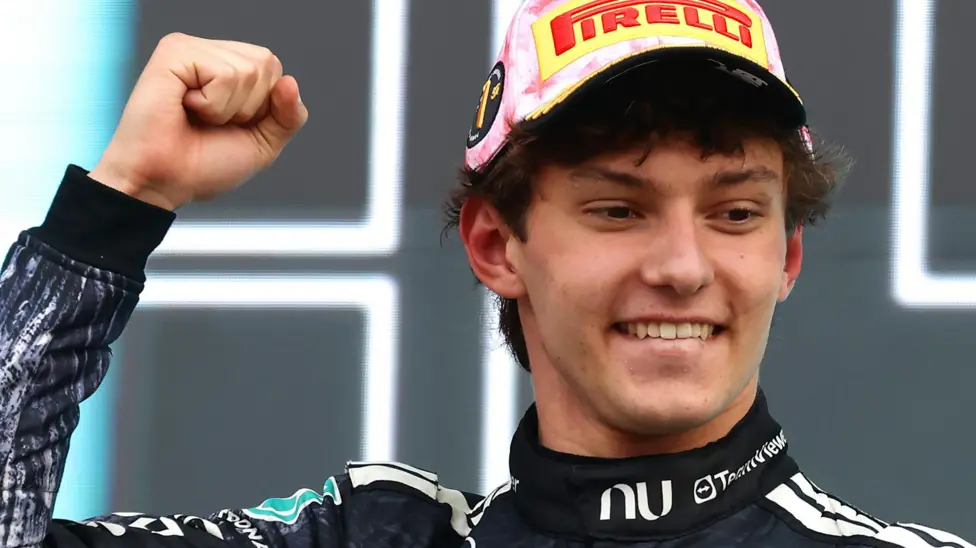
Kimi Antonelli Makes History: Youngest Championship Leader After Dramatic Japanese Grand Prix Victory
Antonelli Wins Japanese Grand Prix as Safety Car Drama Reshapes Title Race
Formula 1 has a habit of producing defining moments when least expected, and at Suzuka, Kimi Antonelli experienced the kind of race that can transform a promising rookie season into a genuine championship story. The 19-year-old Italian claimed victory at the Japanese Grand Prix — his second win in succession — and in doing so became the youngest driver in Formula 1 history to lead the world championship.
It was not a straightforward triumph built purely on dominance. Instead, it was a race shaped by strategy, circumstance, and a perfectly timed slice of fortune delivered by a mid-race safety car. Yet while luck opened the door, Antonelli’s composure and raw pace ensured he walked through it like a future champion.
By the chequered flag, the Mercedes youngster stood atop the podium ahead of McLaren’s Oscar Piastri and Ferrari’s Charles Leclerc, while team-mate George Russell could only watch in frustration as another opportunity slipped away.
A Race Turned Upside Down by One Moment
For much of the opening phase, Antonelli did not look like a race winner. In fact, his afternoon began poorly.
A sluggish launch off the line dropped him toward the back of the leading group, allowing Piastri to seize early control while Leclerc and Lando Norris surged forward. Russell initially appeared to be Mercedes’ strongest contender, quickly carving his way into contention and applying pressure on the McLaren ahead.
Piastri and Russell traded blows in an intense early duel. Russell briefly grabbed the lead into the chicane on lap eight, only for Piastri to reclaim position almost immediately down the pit straight. The McLaren driver then began settling into a rhythm that suggested victory was within reach — provided strategy played out cleanly.
Behind them, Antonelli quietly recovered, managing tyres and maintaining contact without forcing unnecessary risks. It was a mature drive that hinted he understood the race would come back to him.
That patience proved decisive.
The Crash That Changed Everything
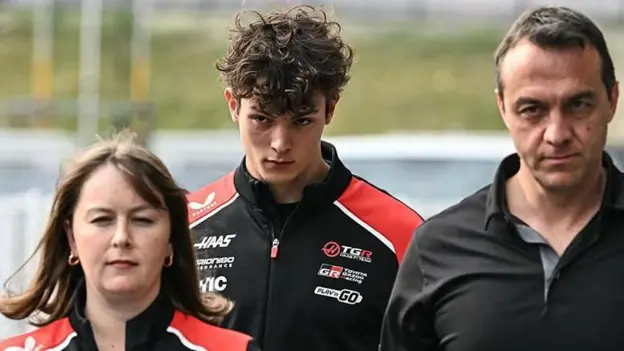
The pivotal moment arrived on lap 22, deep into the technical flow of Suzuka’s Spoon Curve.
Oliver Bearman, battling Alpine’s Franco Colapinto for 17th place, approached the corner carrying significant overspeed. As Colapinto drifted slightly toward the centre of the track, Bearman attempted evasive action, dipping onto the grass on the inside line.
At nearly 191mph, control vanished instantly.
The Haas spun violently across the circuit before slamming into the barriers with a massive 50G impact. The crash silenced the crowd momentarily as debris scattered across the run-off area.
Bearman climbed out visibly shaken, limping and clutching his knee before being escorted to the medical centre. Fortunately, scans later confirmed only a knee contusion, though the incident inevitably triggered a safety car.
And that was the moment the race changed entirely.
How the Safety Car Handed Antonelli the Advantage
Timing in Formula 1 can be everything — and Antonelli’s strategy suddenly looked inspired.
Russell immediately grasped what had happened, his radio message — a stunned “unbelievable” — capturing the emotional swing inside the Mercedes garage.
From that moment on, the race belonged to the teenager.
Antonelli Shows Champion’s Pace After Restart
If critics were tempted to label the victory fortunate, Antonelli quickly silenced them after the restart.
He accelerated away cleanly, building a comfortable margin while chaos unfolded behind him. Piastri managed to hold second, but a fierce battle erupted among the Ferraris, Russell, and Lewis Hamilton.
Antonelli, meanwhile, looked completely untroubled.
Lap after lap, his pace remained consistent and controlled — not reckless, not defensive, simply efficient. It was the drive of someone far older than 19.
“It feels pretty good,” Antonelli said afterwards. “It’s too early to think about the championship, but we are on a good way.”
His honesty reflected both excitement and restraint. Even he seemed aware that Formula 1 momentum can shift quickly.
Piastri’s Resurgence Offers McLaren Hope
Although denied victory, Oscar Piastri left Japan encouraged.
After failing to start the opening two races of the season, McLaren finally delivered a competitive performance, and the Australian looked capable of winning on merit before the safety car intervention.
His confidence grew visibly during the race, even telling his team he believed victory was possible if he remained ahead through pit stops.
Second place ultimately felt bittersweet — a reminder of what might have been — yet it also marked McLaren’s first podium of the 2026 season.
“Turns out we’re all right when we actually get to start,” Piastri joked afterwards, summing up the team’s relief.
Russell’s Frustrating Afternoon Unravels
For George Russell, the race became a catalogue of small setbacks that compounded into a lost podium.
After the restart, energy management issues cost him momentum, allowing Hamilton to slip past. Later, an unexpected battery recharge phase reduced acceleration at a crucial moment, enabling Leclerc to overtake.
Russell fought back fiercely, briefly reclaiming position late in the race, but Leclerc responded with a bold move around the outside of Turn One — a manoeuvre that ultimately secured Ferrari’s podium finish.
Fourth place leaves Russell trailing Antonelli by nine points in the championship standings, an uncomfortable position for a driver widely tipped as the pre-season favourite.
Battles Throughout the Field Add Drama
Elsewhere, the race delivered compelling midfield action.
Lewis Hamilton and Lando Norris engaged in an entertaining late duel, repeatedly swapping positions as differing battery deployment phases created shifting speed advantages. Norris eventually secured fifth place with two laps remaining.
Pierre Gasly produced a strong drive to finish seventh for Alpine, holding off an unusually uncompetitive Red Bull driven by Max Verstappen. Liam Lawson and Esteban Ocon completed the top ten.
Further back, Aston Martin finally achieved a small breakthrough simply by reaching the finish. Fernando Alonso, racing shortly after becoming a father, crossed the line in 18th after fending off Valtteri Bottas’ Cadillac entry.
However, performance concerns remain significant, with much of Aston Martin’s deficit now attributed to chassis limitations rather than engine performance alone.
Antonelli Leads the Championship — But Bigger Tests Await
Antonelli’s victory sends Formula 1 into an unexpected five-week break with a new championship leader and a shifting competitive landscape.
The cancellations of the Bahrain and Saudi Arabian Grands Prix — prompted by geopolitical tensions in the Middle East — have created an unusual pause in momentum. Teams now face a long period of analysis before racing resumes in Miami.
For Antonelli, the timing could be both blessing and challenge. Momentum pauses, but so does pressure.
He now leads the world championship at just 19 years old — a statistic that feels almost surreal in modern Formula 1.
The next chapter begins at the Miami Grand Prix in early May, where expectations will inevitably rise. One fortunate race can spark a story; sustaining success is what defines champions.
For now, though, Suzuka belongs to Kimi Antonelli — the youngest title leader the sport has ever seen, and perhaps the start of Formula 1’s next great era.


There are no comments yet. Be the first to comment!