























































































































































































2026 World Cup Under the Spotlight: Travel Bans, Ticket Prices and Political Tensions Cloud USA, Mexico and Canada Tournament
The World Cup has always promised escape — a rare global moment when borders blur, rivalries unite crowds, and football becomes a shared language spoken everywhere at once. Yet as anticipation builds for the 2026 World Cup in the USA, Mexico and Canada, excitement is unfolding alongside an unusual level of anxiety.
On the pitch, qualification campaigns have delivered the drama fans crave. Smaller nations have written history, traditional powers have rediscovered belief, and emotional celebrations have reminded everyone why the tournament still carries unmatched magic. But away from football itself, serious questions continue to gather momentum.
With the tournament fast approaching, concerns surrounding Donald Trump’s travel bans, soaring ticket prices, political instability, security fears, extreme conditions and even international conflict have turned what should be a celebration into one of the most debated World Cups in modern history.
The Magic of World Cup Qualification Meets Growing Uncertainty
Recent qualification matches offered unforgettable reminders of why the World Cup matters so deeply. Curacao stunned observers by becoming the smallest nation ever to qualify after grinding out a historic draw in Kingston against Jamaica. Haiti secured its first appearance in half a century despite being unable to host matches at home due to ongoing instability.
Europe delivered its own share of theatre. Scotland ended decades of absence with a chaotic, emotional victory over Denmark that felt almost cinematic — overhead kicks, stoppage-time drama and celebrations that shook Hampden Park long into the night.
Elsewhere, the Republic of Ireland briefly ignited dreams with shock performances that electrified supporters across the continent, even if their journey ultimately ended short of qualification.
These moments should represent the dominant narrative ahead of a World Cup. Instead, they feel overshadowed by uncertainty surrounding the tournament itself.
Donald Trump’s Travel Bans Raise Questions Over World Cup Accessibility

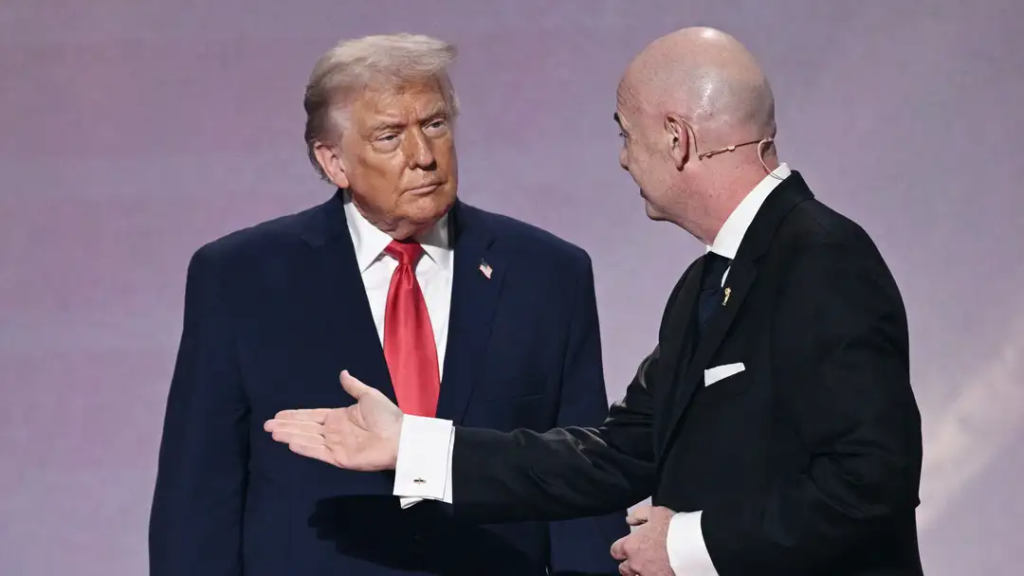
When FIFA president Gianni Infantino declared that “the world is welcome in America,” the message aligned perfectly with football’s global identity. The 2026 World Cup was marketed as the most inclusive edition ever, expanded to 48 teams and spread across three host nations.
Reality, however, appears more complicated.
The United States will host 78 of the tournament’s 104 matches, making entry into the country a crucial issue for millions of supporters. Immigration policies linked to Donald Trump’s “America First” agenda have made visa approvals significantly more difficult for citizens from several nations.
Supporters from countries such as Senegal and Ivory Coast reportedly face stricter requirements, while fans from Iran and Haiti risk being unable to attend matches altogether. The introduction of the Visa Bond Pilot Program has added another layer of difficulty, potentially requiring travellers from certain nations to deposit up to $15,000 simply to secure entry.
For a tournament built on global participation, the possibility that thousands of supporters may be excluded has sparked growing criticism.
Football thrives on atmosphere. Without travelling fans, the World Cup risks losing part of its soul.
Sky-High Ticket Prices Spark Fan Backlash Ahead of the 2026 World Cup

Even for supporters able to travel, attending matches may remain financially out of reach.
Ticket pricing has quickly become one of the tournament’s most controversial topics. FIFA attempted to soften criticism by releasing limited numbers of lower-cost tickets priced around $60 for selected supporters. Fan organisations, however, argue the gesture barely addresses deeper concerns.
Football Supporters Europe has accused FIFA of aggressive pricing policies, claiming the cheapest publicly available ticket for the 2026 final costs more than seven times the equivalent seat at the 2022 tournament.
Dynamic pricing models — common in American sports but unfamiliar to many football fans — have intensified frustration. Prices fluctuate depending on demand, meaning supporters often face rapidly increasing costs without warning.
Critics also point to resale policies that charge fees to both buyers and sellers, effectively allowing organisers to profit twice from secondary transactions.
FIFA maintains that revenues are reinvested into global football development. Yet many supporters feel priced out of an event historically defined by accessibility rather than exclusivity.
Playing Conditions in the USA Raise Sporting Concerns
Beyond politics and finances, there are genuine sporting worries about how matches will unfold.
Last year’s Club World Cup served as a rehearsal of sorts, revealing potential challenges linked to American venues. Players and coaches openly criticised pitch quality in several stadiums, arguing surfaces were not always suited to elite football.
Weather conditions presented even greater challenges.
Summer heat across parts of the United States forced cooling breaks during matches, with some players reporting dizziness and exhaustion. Managers described training sessions as nearly impossible under extreme temperatures.
FIFA’s solution — mandatory hydration breaks during every match — has divided opinion. Some welcome the focus on player welfare, while others suspect commercial motivations, as additional pauses create more advertising opportunities for broadcasters.
Thunderstorms present another unpredictable factor. Safety regulations require games to stop if lightning is detected nearby, leading to lengthy delays during previous tournaments held in the country.
For fans accustomed to football’s uninterrupted rhythm, such interruptions could dramatically alter the viewing experience.
ICE Involvement and Security Concerns Create Unease
Perhaps the most sensitive issue surrounding the tournament involves domestic security policies within the United States.
The involvement of U.S. Immigration and Customs Enforcement (ICE) as part of the World Cup’s security framework has triggered political debate and public concern. Critics fear enforcement operations could create anxiety among immigrant communities attending matches or fan festivals.
Lawmakers have proposed legislation aimed at preventing immigration raids near World Cup venues, arguing that fear and uncertainty could undermine the spirit of the competition.
Supporters groups warn that fans should feel safe celebrating football, not worried about legal enforcement actions while attending games.
Balancing security with inclusivity will likely become one of the tournament’s defining challenges.
Drug Cartel Violence Adds Pressure on Mexico’s Hosting Role
Security discussions extend beyond the United States.
Recent outbreaks of cartel-related violence in Mexico — particularly following clashes involving the Jalisco New Generation cartel — have raised questions about fan safety in host cities. Guadalajara, scheduled to stage multiple World Cup matches, sits at the centre of these concerns.
Mexican authorities insist preparations are robust, announcing plans to deploy tens of thousands of security personnel, including soldiers and police officers, to protect visitors.
FIFA leadership has publicly expressed confidence in these measures, though international observers continue monitoring the situation closely.
For Mexico, a country with deep World Cup heritage, successful organisation carries enormous symbolic importance.
War on Iran Casts a Shadow Over the 2026 World Cup
The most troubling uncertainty, however, lies far beyond stadiums.
Escalating conflict involving Iran has introduced geopolitical tension into a tournament meant to unite nations. Rising oil prices linked to regional instability could significantly increase travel costs for supporters worldwide, complicating logistics for fans already facing financial barriers.
More alarmingly, Iranian officials have questioned whether participation is even possible amid ongoing military conflict. Iran is scheduled to play group matches in the United States, creating a politically delicate scenario.
FIFA insists football should remain separate from global disputes, emphasizing the World Cup’s role as a unifying event. Yet the possibility that a qualified nation might withdraw due to war represents a stark reminder that sport does not exist in isolation from world events.
A World Cup at a Crossroads
The 2026 World Cup promises scale unlike anything football has seen before — more teams, more matches, and a continent-spanning celebration across the USA, Mexico and Canada.
But ambition has brought complexity.
Travel restrictions, ticket affordability, climate challenges, political tensions and global conflict have combined to create an atmosphere unlike any previous tournament buildup. The football itself still holds the power to unite billions, as qualification drama has already proven.
Whether this World Cup becomes a triumph or a cautionary tale may depend less on what happens during ninety minutes on the pitch and more on how organisers navigate the world surrounding it.
Because for all the talk of expansion and spectacle, the essence of the World Cup remains simple: it belongs to everyone.
The coming months will determine whether 2026 truly lives up to that promise — or struggles under the weight of forces far bigger than football.


There are no comments yet. Be the first to comment!