






















































































































































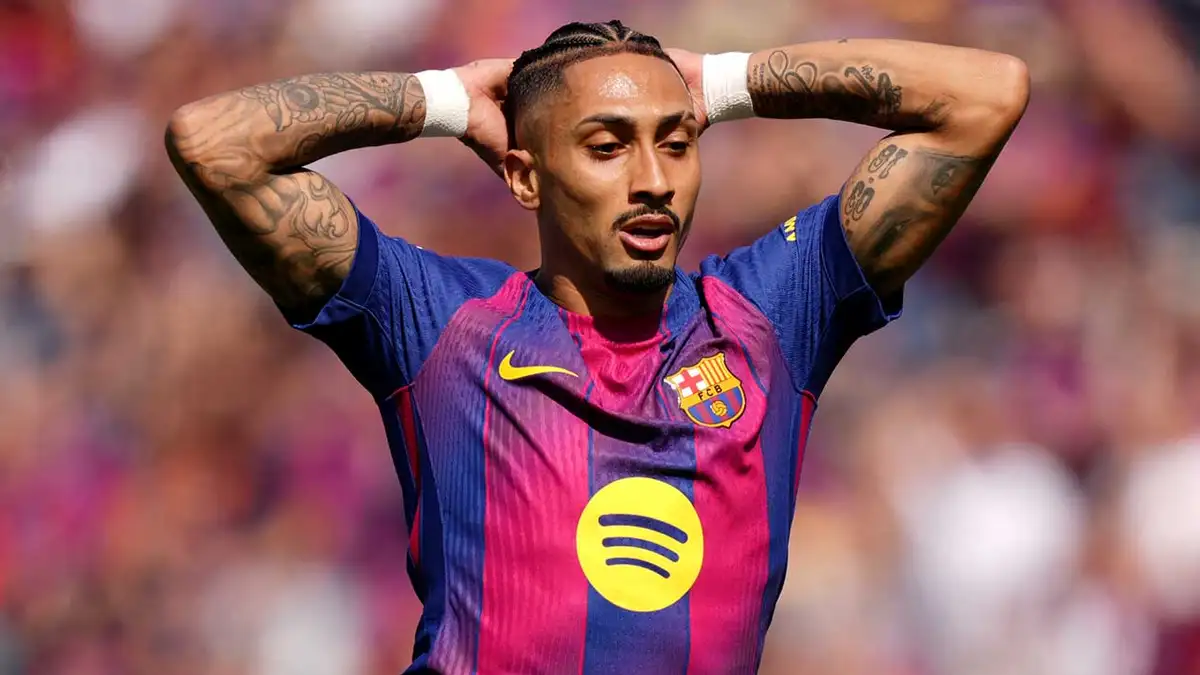
Barcelona will complain to FIFA over Raphinha injury with compensation to be paid to La Liga champions
Barcelona will complain to FIFA over Raphinha injury as compensation offers little comfort to La Liga champions
Barcelona are preparing to make their frustration known, and honestly, it is not difficult to understand why.
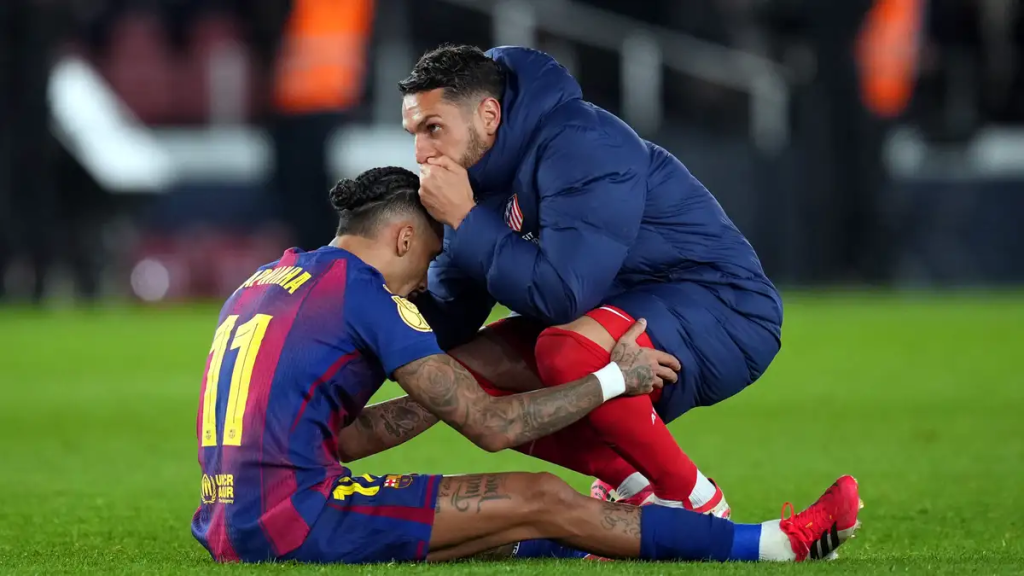
At the worst possible moment of the season, with the margins tightening in both Spain and Europe, the Catalan side have been hit by the kind of blow every elite club dreads during the international break. Raphinha, one of the team’s most influential attacking players and one of the sharpest performers in recent weeks, has returned from Brazil duty with a hamstring injury that is expected to keep him out for around five weeks. In practical terms, that means a long list of matches missed, a major tactical headache for Hansi Flick, and a sense inside the club that a carefully balanced run-in has suddenly been thrown off course.
Now, according to reports in Spain, Barcelona will complain to FIFA over the situation, with compensation set to be paid to the La Liga champions under the governing body’s protection scheme. Yet while that compensation may tick a bureaucratic box, nobody at the club is likely to view it as a real solution. Financially, it is something. Competitively, it changes almost nothing.
And that, more than anything, explains the mood.
Because in modern football, there are few things that irritate clubs more than losing a key player in a non-competitive international fixture played thousands of miles from home. It is the sort of scenario that sparks the same old argument every single season: who really pays the price when the calendar becomes too crowded, the travel too demanding, and the risk too obvious?
This time, Barcelona feel they know the answer.
Barcelona furious after Raphinha injury during Brazil duty forces them to complain to FIFA
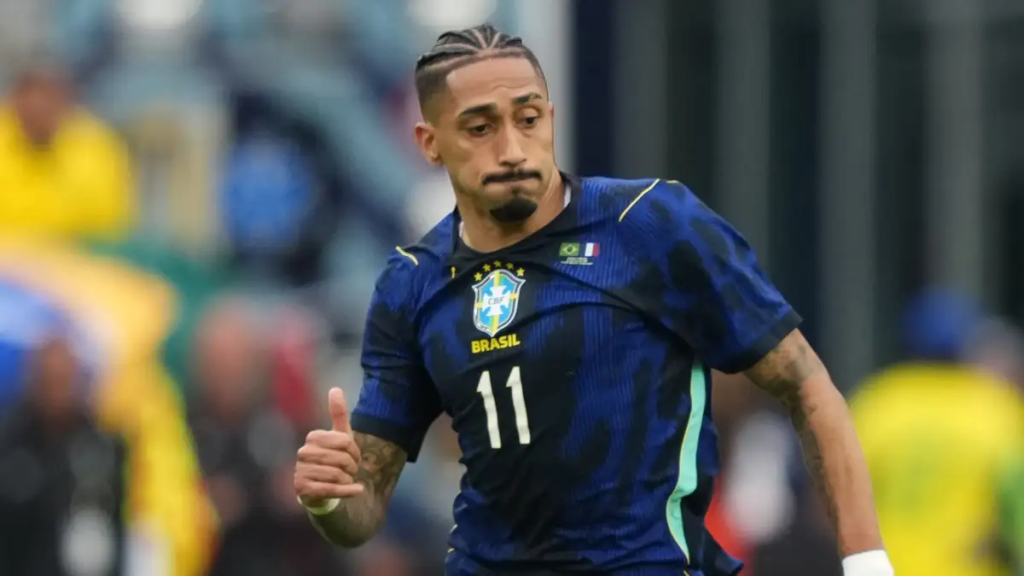
The injury itself reportedly came during Brazil’s 2-1 friendly defeat to France in Foxborough, a match that, in the grand scheme of things, offered little competitive value but has now produced enormous consequences for Barcelona. By the time Raphinha returned to Catalonia and underwent further checks, the diagnosis was enough to send alarm bells ringing inside the club.
A right hamstring problem. Roughly five weeks out.
That timeline might sound manageable on paper. In the middle of a season, five weeks is a nuisance. In late spring, when league titles, European ties and momentum all hang in the balance, five weeks can feel like a season inside a season.
Barcelona’s anger is not just about the injury itself. It is about context. It is about timing. It is about the fact that one of their most reliable wide threats has broken down while representing his country in a friendly, not in a World Cup qualifier, not in a Copa América knockout tie, not in a match that carried unavoidable stakes.
That distinction matters emotionally, even if it does not change the medical report.
Inside elite clubs, these situations always create a particular kind of resentment. There is a sense of helplessness to them. Managers and sporting departments spend months building rhythm, managing workloads, rotating carefully, monitoring data, and trying to keep their key players fresh. Then an international break arrives, players cross continents, play heavy minutes, and return with muscle injuries that derail carefully laid plans.
From Barcelona’s perspective, this is exactly that kind of scenario.
So yes, the decision to complain to FIFA is partly procedural. But it is also symbolic. It is the club making clear that they are not willing to just shrug and accept the damage.
Compensation to be paid to La Liga champions, but Barcelona know money does not replace Raphinha
There is, of course, a formal mechanism in place for cases like this.
Under the FIFA Club Protection Programme, clubs can receive compensation when a player suffers an injury while on international duty and is ruled out for more than 28 consecutive days. Raphinha’s projected recovery period appears to exceed that threshold, which means Barcelona qualify for an indemnity payment.
Based on the current estimates, the compensation figure could land somewhere around €144,000, roughly £125,000 or $166,000.
On the surface, that sounds tidy enough. In practice, it is almost laughably small when measured against the footballing cost.
That is not to dismiss the principle of the scheme. FIFA introduced it for a reason, and clubs do deserve some level of protection when their employees are injured while fulfilling international obligations. But the reality is that no compensation package can truly account for what a player like Raphinha means during the decisive stretch of a campaign.
You can insure a salary. You cannot really insure chemistry.
You can reimburse part of the absence. You cannot recreate a player’s timing, confidence, pressing intensity, understanding with team-mates or ability to turn a difficult match with one sharp movement in the final third.
That is the part these programmes never really capture.
For Barcelona, the reported payout is little more than administrative consolation. It may cover a sliver of the financial burden. It will not cover the tactical void. It will not help Flick when he sits down to plan for a Champions League quarter-final without one of his most dangerous attackers. And it certainly will not make the dressing room feel any better when a key figure disappears just as the pressure is peaking.
That is why the compensation, while technically relevant, feels secondary.
The real issue is competitive damage.
Raphinha injury leaves Hansi Flick facing a brutal reshuffle in Barcelona’s most important weeks
If there is one thing managers hate at this stage of the season, it is being forced into reactive decisions.
Hansi Flick has built much of Barcelona’s recent attacking rhythm around players who can stretch games, press aggressively and contribute in front of goal. Raphinha has given him all of that and more. His form heading into the international break was not merely solid; it was explosive. He looked like a player entering that dangerous late-season zone where confidence becomes contagious and every touch in the final third carries threat.
That is why the timing hurts so much.
Raphinha was not just available. He was in rhythm.
And rhythm, especially for wide forwards, is precious.
When a winger is flying, it changes everything for a side chasing trophies. Full-backs hesitate. Opponents drop deeper. Midfielders find easier passing lanes. Transition moments become more dangerous. Pressing from the front becomes sharper. Even when the winger is not scoring, the fear he creates alters the game.
That is what Flick loses here.
The German coach now has to rethink not just one position, but the entire balance of his attack. Depending on who steps in, Barcelona may lose verticality, direct running, defensive work rate, or final-third decisiveness. It is rarely a clean swap. Replacing a player is one thing. Replacing his exact mix of qualities is something else entirely.
And this is where injuries like this become more than squad news.
They become strategic disruptions.
Flick will have options, of course. Elite clubs always do. But options are not the same as continuity. The difference between a natural starter and a forced alternative can be the difference between controlling a tie and chasing one.
That is especially true in Europe.
Barcelona will complain to FIFA because Raphinha’s absence could define their Champions League campaign
If there is a single reason this injury feels so severe, it is the fixture list.
Barcelona are entering the kind of period that shapes seasons and defines managers. The Champions League quarter-finals are looming, and the margin for error is brutally small. According to the current timeline, Raphinha is certain to miss both legs of the quarter-final clash against Atletico, scheduled for April 8 and April 14.
That alone is enough to make the club furious.
Quarter-finals are not just big games. They are identity games. They are where depth gets tested, where coaches are judged, and where one missing piece can completely alter the tactical map. Lose a rotation player and you adjust. Lose one of your most productive attackers, and suddenly the entire tie feels different.
Against elite opposition, those details are magnified.
A winger who can carry the ball 30 yards under pressure, pin a defender back, or punish one lapse in concentration can be the difference between staying alive and going out. And when you are facing a side as tactically disciplined and emotionally hardened as Atletico, every individual weapon matters.
If Barcelona progress, the problem may not end there.
Depending on how recovery goes, Raphinha could also miss the first leg of a potential semi-final, and perhaps even more if the timeline slips. Muscle injuries are tricky enough on their own. Hamstrings do not always obey the neat deadlines printed in early reports. Clubs will naturally be cautious, especially with a player whose game relies so heavily on sharp movement and acceleration.
That uncertainty is another reason the mood is tense.
Because five weeks in a medical note can quickly become six on the pitch.
And by then, the season can look completely different.
La Liga champions now face a domestic squeeze without one of their sharpest attacking weapons
It is not just Europe where the loss bites.
Barcelona are also staring down a crucial run of league fixtures, with the title race still demanding focus and consistency. Protecting a lead at the top of La Liga sounds reassuring when written in headlines, but anyone who follows Spanish football closely knows how fragile those advantages can become in April.
This is the month where dropped points suddenly carry double weight.
The games come quickly. Legs get heavy. Rotation becomes less about preference and more about survival. Teams lower in the table fight like their lives depend on it. Every away ground feels tighter. Every missed chance feels louder. And if you are missing a player capable of turning stale matches into wins, the pressure multiplies.
Raphinha has often been that kind of player.
Not always the headline act, perhaps, but very often the accelerator. The player who keeps an attack honest. The runner who drags a back line into uncomfortable territory. The finisher who punishes moments when matches begin to drift. That type of contribution is hard to quantify neatly, but coaches know exactly what it means when it disappears.
Flick will need others to step forward now. That is the reality.
Maybe a younger option grabs the opportunity. Maybe another forward shifts wide and finds form. Maybe Barcelona discover a different attacking shape that compensates for the loss. Football has a way of forcing invention when comfort disappears.
But it would still be dishonest to pretend this is not a significant blow.
It is.
And if points are dropped in the next few weeks, this injury will inevitably be part of the post-mortem.
Why Barcelona’s complaint to FIFA is about more than compensation or paperwork
From the outside, some will inevitably roll their eyes at the idea of a formal complaint.
This is football, after all. Injuries happen. International duty is part of the game. Clubs benefit from having elite internationals because it boosts profile, marketability and player prestige. That argument is not wrong.
But it is also incomplete.
What Barcelona are really pushing back against is the wider ecosystem that keeps asking more of players while offering clubs very little meaningful control. Travel across time zones. High-intensity friendlies. Expanding calendars. Minimal recovery windows. A growing expectation that the elite will simply absorb the damage because that is the cost of being elite.
At some point, clubs push back.
And when they do, it is rarely just about one player.
Raphinha is the trigger here, but the frustration runs deeper. It is about a system where the financial compensation for losing a key player during a decisive phase feels almost performative compared to the sporting consequences. It is about the imbalance between the risk taken and the support offered. And it is about the fact that, once again, a club with major ambitions feels it is paying the real price for a problem created elsewhere.
That is why this complaint matters, even if nothing dramatic comes of it.
Because sometimes clubs complain not because they expect a revolution, but because silence feels worse.
Barcelona will complain to FIFA, but the real question is how La Liga champions survive without Raphinha
In the end, Barcelona can file paperwork. They can receive compensation. They can make their displeasure public. They can underline how unfair the timing feels and how frustrating it is to lose a major player in a friendly on another continent.
All of that may be justified.
But none of it changes the central challenge.
Raphinha is out, and Barcelona now have to navigate the most delicate stretch of the season without him.
That is the story that matters.
For Hansi Flick, this is now a test of squad depth, tactical flexibility and emotional control. For the dressing room, it is a moment that will demand maturity. For the club’s supporters, it is another reminder that titles are not only won through brilliance, but through surviving the moments when the script suddenly goes wrong.
And that is exactly what this feels like: a script gone wrong at the worst possible time.
The compensation will come, yes. The complaint to FIFA will be made. The formalities will be handled.
But for Barcelona, the real cost of the Raphinha injury cannot be measured in euros.
It will be measured in missed runs, altered plans, nervy nights, and maybe — if things go badly — in the matches that slip away while one of their sharpest attackers watches from the sidelines.
That is why the frustration is real.
That is why the anger feels justified.
And that is why, even with compensation set to be paid to the La Liga champions, nobody inside Barcelona will feel remotely compensated at all.


There are no comments yet. Be the first to comment!