

































































































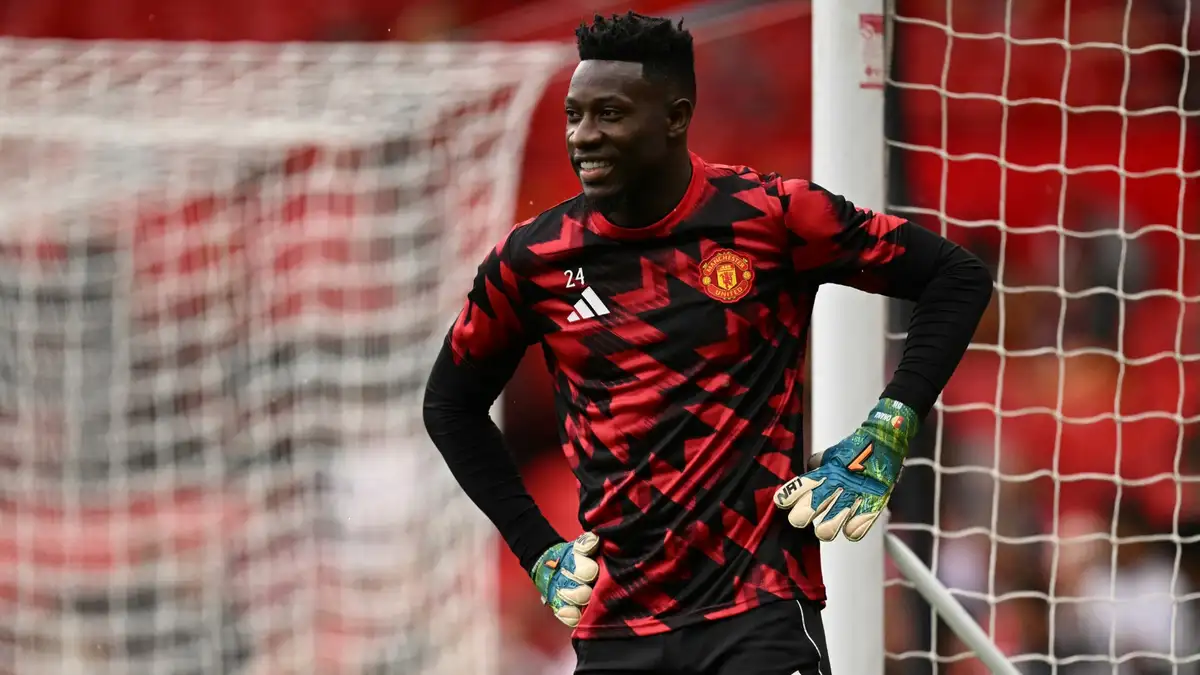
Revealed: Man Utd Will Face Major Andre Onana Issue If Michael Carrick Guides Club Back Into Champions League
Revealed: Man Utd, Andre Onana and Michael Carrick’s Champions League Return Could Create a Major Summer Problem
For a club like Manchester United, success is supposed to solve problems.
Qualify for the Champions League, finish strong in the Premier League, steady the atmosphere around Old Trafford, and suddenly the mood shifts. The noise quiets down. The optimism returns. The summer starts to look like an opportunity instead of a repair job.
But football rarely works that neatly.
Sometimes, the very thing that should feel like progress opens the door to a fresh headache. And right now, Man Utd appear to be staring at exactly that kind of awkward contradiction — one involving Andre Onana, a returning loan spell, a rising wage bill, and the possibility that Michael Carrick guiding the club back into the Champions League could actually make an already difficult situation even harder to manage.
It sounds strange at first.
After all, Champions League football is the target. It is the financial boost, the prestige, the recruitment tool, the benchmark. It should make everything easier, not more complicated. Yet in Onana’s case, qualification for Europe’s elite competition may trigger a chain reaction that leaves United in an uncomfortable position: a goalkeeper they may not fully want to keep, a contract they may struggle to move, and a wage packet that suddenly becomes far less attractive to any club considering a deal.
That’s the problem.
And it’s not a small one.
Because this is not just about a fringe player returning from a quiet loan spell. This is about a goalkeeper who once arrived at United with genuine fanfare, who came with a strong reputation from Inter Milan, and who was expected to modernise the position with his distribution, composure and high-level European pedigree. Instead, his United story has drifted into uncertainty, and now the club may have to make a decision that is as much about finances as football.
The timing could hardly be more awkward.
Michael Carrick has brought stability and belief back into the conversation. United, by all accounts, are moving in the right direction again. A top-four finish no longer feels like fantasy. The squad looks more organised, more coherent, and far less emotionally chaotic than it did not so long ago. But if that resurgence ends with a return to the Champions League, one unintended consequence could be the reactivation of salary clauses that complicate their summer planning.
And in a summer where every pound matters, especially for a club trying to reshape its squad without tripping over its own wage structure again, that matters a lot.
Man Utd face a major Andre Onana issue if Michael Carrick secures Champions League football
This is where the story really sharpens.
Andre Onana’s current situation at Manchester United is not simply about form or preference. It’s about the kind of contract mechanism that can quietly become a major transfer obstacle overnight.
During United’s absence from European competition, Onana’s salary was reduced — a move that helped make his season-long loan to Trabzonspor more manageable. In practical terms, it created breathing room. It lowered the short-term burden. It also made the player a slightly easier proposition for another club to take on, even if only temporarily.
That arrangement, however, was always tied to United’s circumstances.
And if Michael Carrick succeeds in guiding the club back into the Champions League, that reduced wage reportedly disappears.
In other words: the salary returns to its original level.
That may sound like a normal contractual detail, but in football terms it changes everything.
A higher wage immediately narrows the pool of interested clubs.
It makes a permanent transfer more difficult.
It makes another loan more complicated.
It increases the likelihood that United would need to subsidise part of the salary.
And perhaps most importantly, it chips away at the club’s flexibility in a summer where flexibility is supposed to be one of Carrick’s biggest advantages.
That is why this is being described as a major Andre Onana issue.
Because the problem is not just whether United want to keep him.
The real problem is whether they can move him cleanly if they decide they don’t.
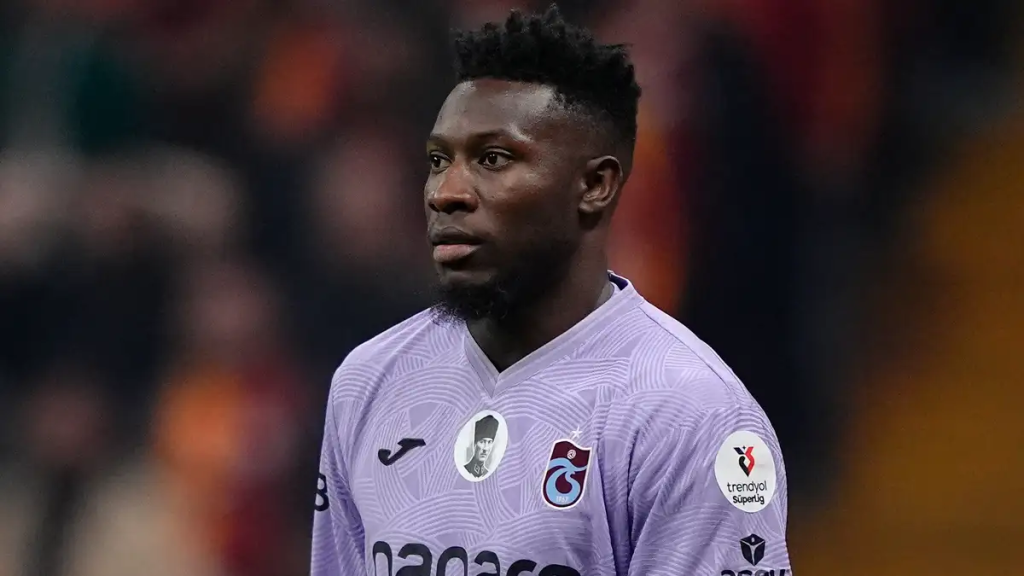
Why Andre Onana’s contract could become a real financial burden for Manchester United
The modern transfer market is full of these strange half-football, half-accounting situations.
A player’s value on the pitch matters, of course, but so does the salary attached to him. In many cases, the wage packet becomes the first thing buying clubs study, especially when the player is approaching 30, has two years left on his deal, and is not entering the market from a position of obvious upward momentum.
That is exactly where Andre Onana now sits.
He still has two years remaining on the contract he signed after arriving from Inter Milan in 2023. On paper, that should give Manchester United some protection. A player under contract for multiple seasons is not supposed to be an urgent problem. There should be leverage there.
But leverage in football only works when the market likes the player’s total package.
And that package includes wages.
If Onana’s salary jumps back up as a result of a Champions League return, the club may find themselves in the uncomfortable middle ground that so many big clubs know too well: a player who still has a recognisable name, still believes he belongs at the top level, but whose cost makes him less attractive than his reputation alone might suggest.
That’s when transfer negotiations get messy.
A club in Turkey or elsewhere in Europe might like the idea of taking Onana.
They might rate his experience.
They might see value in his profile.
But once the salary lands on the table, enthusiasm can cool very quickly.
And if there is no option or obligation to buy built into the current Trabzonspor arrangement, then United cannot simply point to a pre-agreed exit route and move on. He returns to Old Trafford. The file reopens. The internal discussions begin again.
Do they sell at a lower fee just to remove the wage?
Do they loan him again and cover part of the salary?
Do they keep him as depth and accept the cost?
None of those options feels ideal.
That is what makes this such a classic modern Manchester United problem — not catastrophic, but expensive enough to interfere with smarter planning.
Michael Carrick’s revival at Old Trafford may be creating a smarter team — but also a harder decision
One of the more intriguing parts of this whole situation is the irony.
If Michael Carrick had failed to steady the ship, the Onana issue might actually have been easier to manage.
No Champions League.
No wage spike.
Lower salary.
Potentially simpler exit.
That’s the strange twist.
The better Carrick does, the trickier the Onana file becomes.
Of course, no one at United would trade away a top-four finish just to make one goalkeeper’s contract easier to shift. That would be absurd. But it does underline how interconnected squad-building has become at elite clubs. A good season doesn’t just raise revenue and improve morale — it can also reactivate old contractual obligations, performance clauses, and wage escalators that suddenly affect recruitment plans.
And Carrick, if he remains the man driving this rebuild, will need a summer with clarity.
That means deciding quickly which players are central, which players are expendable, and which players fall into that dangerous middle category where the club wants change but the market may not cooperate.
Onana feels very much like that third category.
He is not an obvious write-off.
He is not completely out of the picture.
But he is also not the clean, easy answer in goal anymore.
That’s especially true if the club’s hierarchy already feel they have found a better immediate fit elsewhere.
Andre Onana wants to fight for his place — but Manchester United may already be moving on
This is where the human side of the story matters.
Because while the financials and squad planning point in one direction, Andre Onana himself reportedly sees things rather differently.
By all indications, the Cameroon international is not mentally preparing for a quiet exit. He is not treating this like a career winding-down phase. Instead, he is said to be keen on returning for pre-season, rejoining the group, and fighting for his place.
And honestly, that is not a shocking stance.
Goalkeepers often have longer careers.
Confidence can swing quickly.
One strong pre-season, one good run of games, one managerial decision, and the picture can change.
From Onana’s perspective, there is probably a perfectly reasonable argument: he has top-level experience, he has played big European football, he knows the pressure of major clubs, and he still believes he has enough quality to compete in the Premier League.
That kind of self-belief is not unusual.
In fact, for elite players, it’s almost required.
But belief alone doesn’t decide squad hierarchy.
And that is where the issue becomes uncomfortable.
Because even if Onana returns motivated, ready, and determined to prove a point, Manchester United’s internal plans may already be drifting elsewhere. The club are expected to hold talks before the end of May to clarify his role, which suggests this is not a minor housekeeping matter. It’s a real decision point.
Those conversations will matter a lot.
Because if the club see him as surplus, they need to be honest.
If they see him as a possible No.2, they need to know whether he would accept that.
And if they genuinely think there is still a route back into contention, then Carrick has to decide whether that is a football solution or simply a temporary compromise created by market limitations.
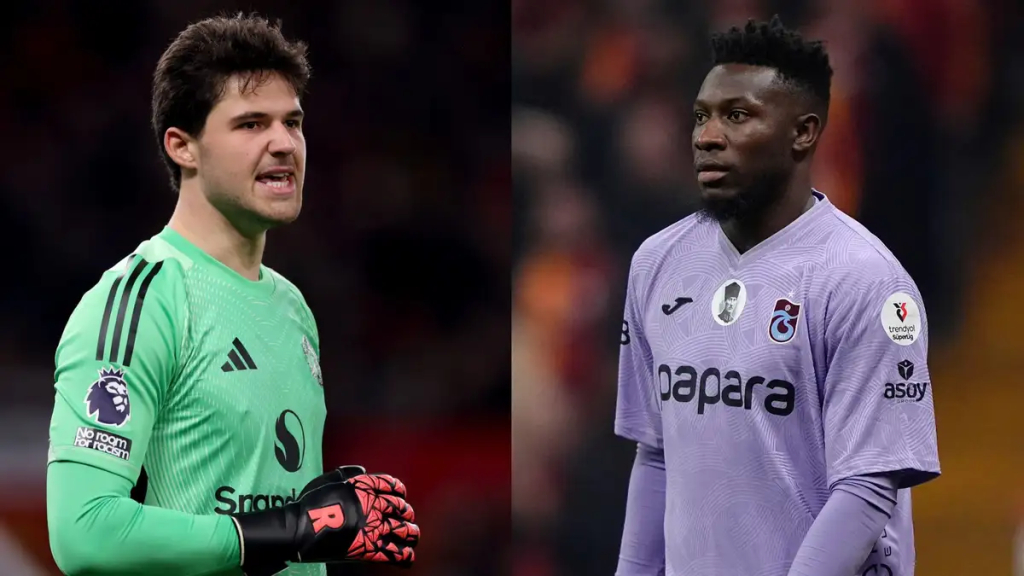
Senne Lammens’ rise has made the Andre Onana situation even more complicated
The biggest football reason this story feels so significant is simple:
Senne Lammens.
United have reportedly been delighted with the Belgian since his arrival from Royal Antwerp, and the sense around the club is that he is expected to continue as No.1 next season. That changes the entire context of the Onana conversation.
If there were no clear first-choice goalkeeper in place, Onana’s return would at least come with a natural competitive opening. Pre-season could become a genuine battle. Carrick could let form decide it. The coaching staff could assess the dynamics and make a clean sporting call.
But if Lammens has already secured the number one jersey, then Onana’s path narrows dramatically.
Suddenly, he is not returning to reclaim a vacant role.
He is returning to challenge an incumbent the club currently trust.
That is much harder.
And from the club’s perspective, it may make even less sense to carry a relatively expensive goalkeeper on a restored Champions League-level salary if he is not expected to start. That is not how efficient squads are built. Not in a summer where there will likely be pressure to strengthen multiple positions, manage the wage bill carefully, and avoid old mistakes.
This is where the financial and sporting sides finally collide.
Onana wants a chance.
The club may prefer Lammens.
Carrick needs clarity.
And the Champions League, ironically, may make the most obvious exit route less realistic.
Man Utd’s Andre Onana dilemma is exactly the kind of problem successful clubs still hate
There’s something very Manchester United about this story.
Not in the chaotic sense people love to mock, but in the modern elite-club sense: even when things start going right, the details can still get complicated fast.
If Michael Carrick finishes the job and drags Man Utd back into the Champions League, it will rightly be seen as a major achievement. It will change the mood around the club. It will strengthen the project. It will make Old Trafford feel like a serious place again.
But it may also hand the club a major Andre Onana issue they would rather not be dealing with.
A returning loanee.
A wage that rises sharply.
No automatic permanent exit clause.
A player who still wants to stay and fight.
A new first-choice goalkeeper already emerging.
A summer budget that could be squeezed if they are forced to subsidise another move.
That is not a disaster.
But it is exactly the sort of situation smart clubs hate, because it steals time, energy, and money from more important decisions.
And that’s really the point here.
This is no longer just about whether Andre Onana can still play.
It’s about whether Manchester United can solve the problem cleanly.
If they can, Carrick’s first proper summer gets simpler.
If they can’t, then one of the unintended side effects of a successful season may be an expensive, awkward goalkeeping puzzle waiting at the door the moment pre-season begins.
And in football, those are often the problems that linger longest.


There are no comments yet. Be the first to comment!