


















Gennaro Gattuso’s Resignation Confirmed as Italy Boss Follows Gigi Buffon and Italian FA President Out the Door After World Cup Failure
Italy’s World Cup failure triggers total collapse as Gennaro Gattuso’s resignation is confirmed
Italian football has seen dark nights before.
It has seen tactical crises, dressing-room fractures, federation feuds and the sort of national soul-searching that only seems to happen when the Azzurri stumble on the biggest stage. But even by those standards, this latest collapse feels especially brutal. Not just because Italy’s World Cup failure is now official. Not just because the four-time world champions will miss the biggest tournament in football for a third straight time. But because the fallout has become something much bigger than a defeat.
It has become a full institutional breakdown.
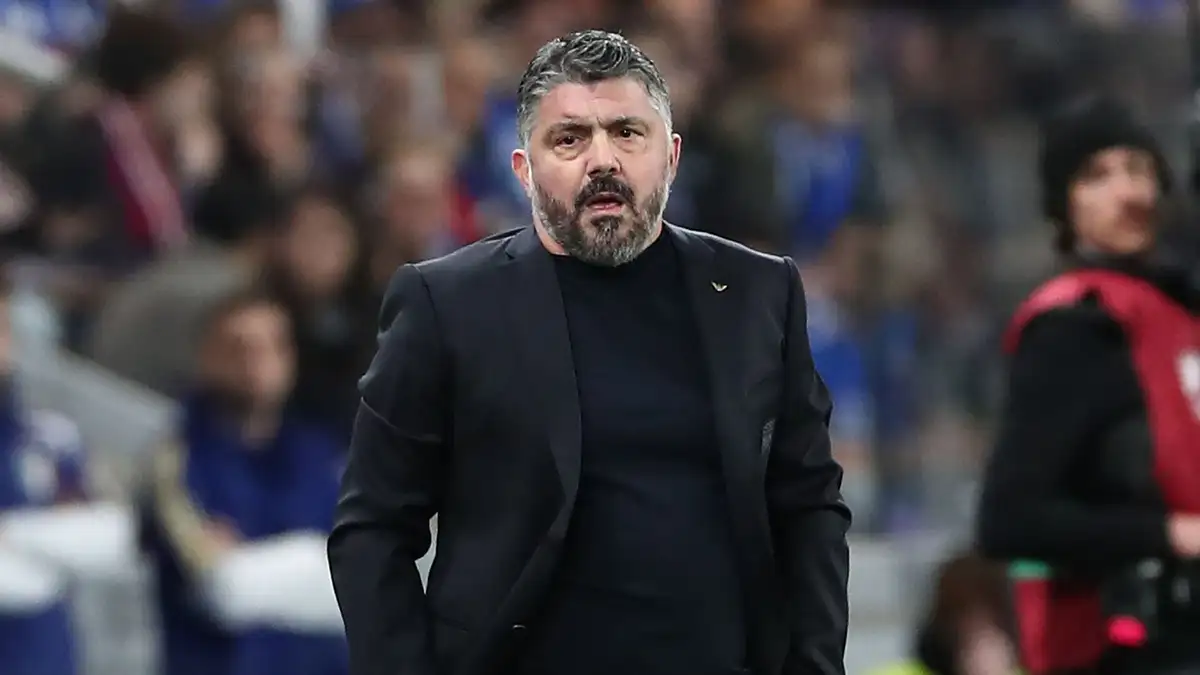
Gennaro Gattuso’s resignation confirmed as Italy boss follows Gigi Buffon and Italian FA president out the door after World Cup failure is the headline, but the truth behind it is even heavier. This is not simply the departure of one under-pressure coach. It is the unraveling of an entire hierarchy in the space of a few devastating days. A chain reaction. A football nation looking at itself in the mirror and seeing confusion, regret and the kind of emptiness that no proud shirt ever wants to feel.
The defeat to Bosnia-Herzegovina in the play-off final was the final blow. The result itself was catastrophic enough, confirming that Italy will not be at the 2026 World Cup. But what has happened since has transformed a sporting disaster into a leadership crisis of extraordinary scale. First came the resignation of FIGC president Gabriele Gravina. Then the departure of Gianluigi Buffon, one of the most beloved figures in the history of Italian football and, until now, a central voice in the national team structure. And now, inevitably perhaps, Gattuso has followed.
Three exits. Three symbolic pillars gone.
And suddenly, the national team is not just searching for a new coach.
It is searching for direction, authority, credibility and, maybe most urgently of all, identity.
Gennaro Gattuso’s resignation confirmed as Italy boss after a reign that ended before it ever truly began
In a way, there is something painfully fitting about how Gennaro Gattuso’s time as Italy boss has ended.
Short. Emotional. Fierce in effort, but ultimately overwhelmed by reality.
Gattuso lasted just nine months in the job. That in itself tells you how unstable the situation had become. National team football can move quickly, of course, but nine months is barely enough time to build habits, let alone heal structural problems that have been festering for years. And yet by the end, even Gattuso — a man whose entire career has been built on defiance, fight and raw conviction — seemed to understand that this was bigger than him.
His resignation, reportedly agreed mutually, was framed as an act of responsibility rather than surrender. That matters. Because for all the frustration around the result, there is little sense that Gattuso was trying to protect his position at all costs. If anything, his farewell carried the tone of a man who knew the shirt had to come before the man wearing the suit on the touchline.
“With a heavy heart,” he said, “having failed to achieve the goal we set ourselves, I consider my time as coach of the national team to be over.”
It was a line that landed exactly as it should have: simple, painful, honest.
Gattuso also called the Azzurri jersey “the most precious asset in football,” and that phrase will resonate in Italy. Because whatever people think of his tactical choices, his selections, or whether he was ever the right man for the role, nobody doubts what the national team means to him. He was never going to leave with cold corporate language. This was always going to sound like a football man speaking from the gut.
And in truth, that may be why his exit feels sadder than surprising.
He was brought in to restore edge, spirit and clarity.
Instead, he inherited drift, pressure and a mountain that proved too steep.
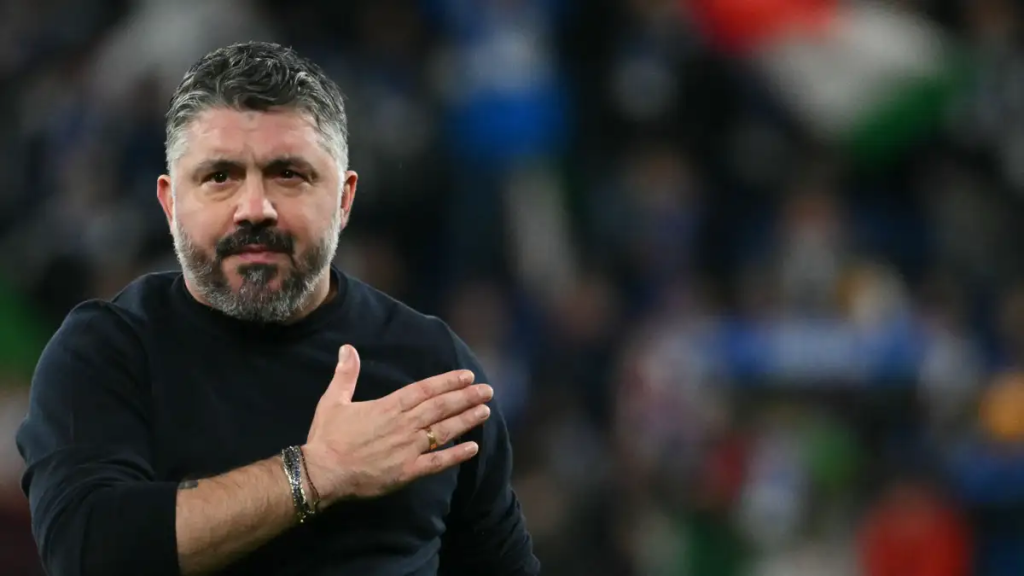
Gigi Buffon and Italian FA president follow Gattuso out the door after World Cup failure leaves Azzurri stunned
If Gennaro Gattuso’s resignation was the emotional headline, the bigger story may actually be the scale of the collapse around him.
Because this is not one man paying the price for failure.
This is an entire chain of command disintegrating in public.
Gabriele Gravina, as FIGC president, was always likely to come under immense pressure after another World Cup disaster. In a country where football remains a cultural force far beyond the pitch, missing one World Cup is traumatic. Missing two is unthinkable. Missing three in a row is something close to a national sporting scandal. Whether fairly or not, leadership was always going to be held accountable.
And once Gravina stepped aside, the mood shifted instantly.
The door had opened.
Then came Gianluigi Buffon.
That one hits differently.
Buffon is not just a former player. He is not just a World Cup winner or a legendary goalkeeper. He is, for many Italians, part of the emotional architecture of the national team itself. He represents memory. Greatness. Pride. Continuity. Seeing him walk away from his role as delegation chief tells you just how deeply this failure has cut.
His statement was raw, and in places genuinely moving.
He admitted that resigning immediately after the Bosnia-Herzegovina defeat had felt like an urgent instinctive act, something that came from “deep within.” He spoke of tears, of pain, of sharing that heartbreak with supporters. That is not the language of a man making a cold administrative decision. That is the language of someone who feels personally wounded by what the shirt has become.
And perhaps the most striking part was his honesty about the central objective.
The mission was clear: get Italy back to the World Cup.
“We didn’t succeed.”
No spin. No excuses. No hiding behind process.
Just failure, named plainly.
That is rare in modern football, and maybe that is why Buffon’s exit feels so heavy. It carries the sadness of someone who believed he could help repair something sacred and has had to admit, publicly, that he couldn’t.
Hierarchy collapses after play-off disaster and Italy now face the deepest identity crisis in modern times
This is where the story becomes more serious than a simple coaching change.
Because when the Italy national team hierarchy collapses after a play-off disaster, what remains is not just a vacancy list. What remains is a vacuum.
Who is making the next decision?
Who is defining the sporting project?
Who is trusted by the public?
Who is rebuilding the relationship between the national team and a fanbase that has now been asked to absorb the humiliation of a third consecutive World Cup absence?
That is not a small repair job.
That is a reconstruction.
And this is where Italian football has to be brutally honest with itself. The problem did not begin with Gattuso, and it certainly does not end with him. Managers have changed. Systems have changed. Generations of players have come and gone. Yet the recurring theme remains the same: a national team with moments of quality but without a stable long-term direction, a federation too often reacting rather than leading, and a football culture still trying to reconcile its glorious past with a much messier present.
There is enough talent in Italy to be better than this. Nobody seriously doubts that.
But talent alone is not enough anymore.
The international game has changed. Development pathways matter more. Federation planning matters more. Cohesion matters more. The best national teams are not simply built on history and shirt weight. They are built on alignment — from youth structure to senior identity, from technical staff to federation leadership.
Right now, Italy look miles away from that.
Gattuso bids a heavy-hearted farewell, but the next appointment may define the next decade
If there is one thing Gattuso’s exit does, it forces Italy to confront the next move with unusual clarity.
The next appointment cannot just be emotional.
It cannot just be symbolic.
It cannot simply be another familiar face handed the job because the shirt once meant everything to him.
That has happened too often in international football, and not just in Italy.
The next coach has to be more than a legend or a motivator. He has to be a builder. A strategist. Someone capable of imposing structure on chaos and giving a fractured national setup a football identity that survives more than one qualifying cycle.
That is why the early talk around names like Antonio Conte feels so inevitable.
Conte, publicly backed by Alessandro Del Piero, would certainly bring authority. He would bring intensity. He would bring standards. And perhaps most importantly, he would bring a kind of controlled ferocity that Italian football still respects deeply. If the mission is to restore discipline, reconnect with the old edge of the Azzurri, and drag a drifting system back toward elite habits, you can understand why his name jumps straight to the front of the conversation.
But even that would only be the start.
Because whoever takes the job will need more than tactical acumen.
He will need a functioning federation around him.
And right now, that is not guaranteed.
Italy must now rebuild around the Nations League, but the shadow of World Cup failure will not disappear
Football moves on, even when supporters don’t feel ready for it.
The calendar doesn’t stop.
That means Italy will soon have to pivot toward the UEFA Nations League, whether emotionally prepared or not. And while that competition can offer a route back to rhythm, confidence and maybe a sense of renewed purpose, nobody should pretend it erases what has happened.
It won’t.
The shadow of another World Cup failure will hang over every squad list, every press conference, every tactical experiment and every federation announcement for months — maybe years.
That’s just reality.
For the players, there will be pressure. For the new coach, there will be scrutiny. For whoever steps into the federation leadership, there will be suspicion until results change.
And maybe that is healthy.
Because Italy should not be allowed to shrug this off as a bad night or a cruel play-off. This is now a pattern. A dangerous one. A country with one of the richest football histories on earth cannot keep treating global absence as a temporary glitch.
At some point, repeated failure stops being a surprise.
It becomes the new standard unless someone changes it.
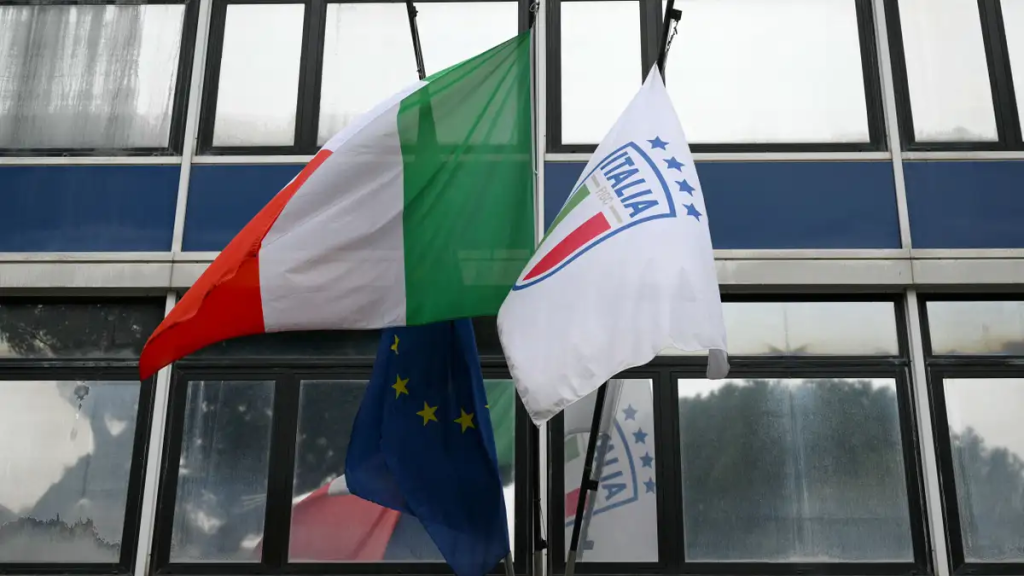
Final word: Gennaro Gattuso’s resignation confirmed as Italy boss, but this is about far more than one man
In the end, Gennaro Gattuso’s resignation confirmed as Italy boss follows Gigi Buffon and Italian FA president out the door after World Cup failure because the damage was simply too deep for one departure to absorb.
This was never going to end with just the coach.
Not after another play-off collapse.
Not after another lost World Cup.
Not after the entire country watched one of football’s proudest national teams miss the biggest stage for a third consecutive time.
Gattuso leaves with dignity, even in failure.
Buffon leaves with heartbreak.
Gravina leaves under the weight of accountability.
And Italy, for now, are left with questions.
Big ones.
Who leads next?
Who coaches next?
Who fixes the culture?
Who gives the Azzurri back their future?
That is the real story now.
Because this is no longer only about who walked out the door.
It’s about whether anyone inside Italian football truly knows how to rebuild what has fallen apart.


There are no comments yet. Be the first to comment!