



























































































































































Water Bottles & Gut Instinct: Penalty-Saving Secrets Revealed by Ex-Nottingham Forest Goalkeeper as Mark Crossley Explains How He Would Thwart Ivan Toney & Bruno Fernandes
Former Nottingham Forest goalkeeper Mark Crossley reveals penalty-saving secrets, from water bottles to gut instinct, and explains how he would try to thwart Ivan Toney and Bruno Fernandes
There are some footballers you listen to a little more carefully when they talk about pressure. Mark Crossley is one of them.
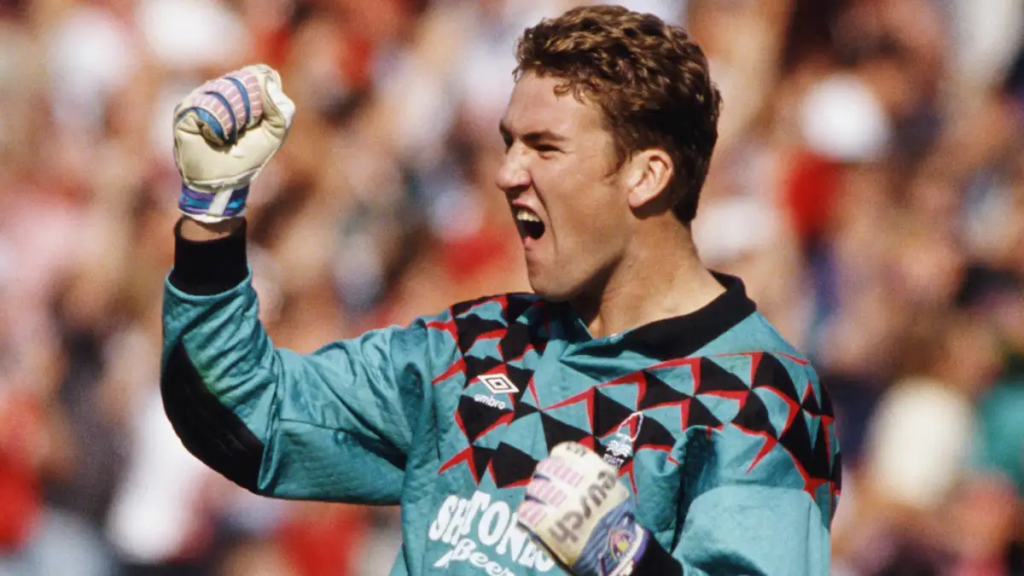
The former Nottingham Forest goalkeeper is not just another ex-pro offering textbook analysis from the comfort of a studio chair. He lived the chaos of the penalty box. He felt the noise, the delay, the nerves, the silence before the strike and the eruption after the save. This is, after all, the man still celebrated as the only goalkeeper ever to deny Matt Le Tissier from the penalty spot — a statistic that remains one of English football’s great trivia gems. He also famously kept out Gary Lineker in the 1991 FA Cup final, another moment that underlines just how comfortable he was when the game narrowed to a duel from 12 yards.
So when Crossley speaks about penalties, it is worth paying attention.
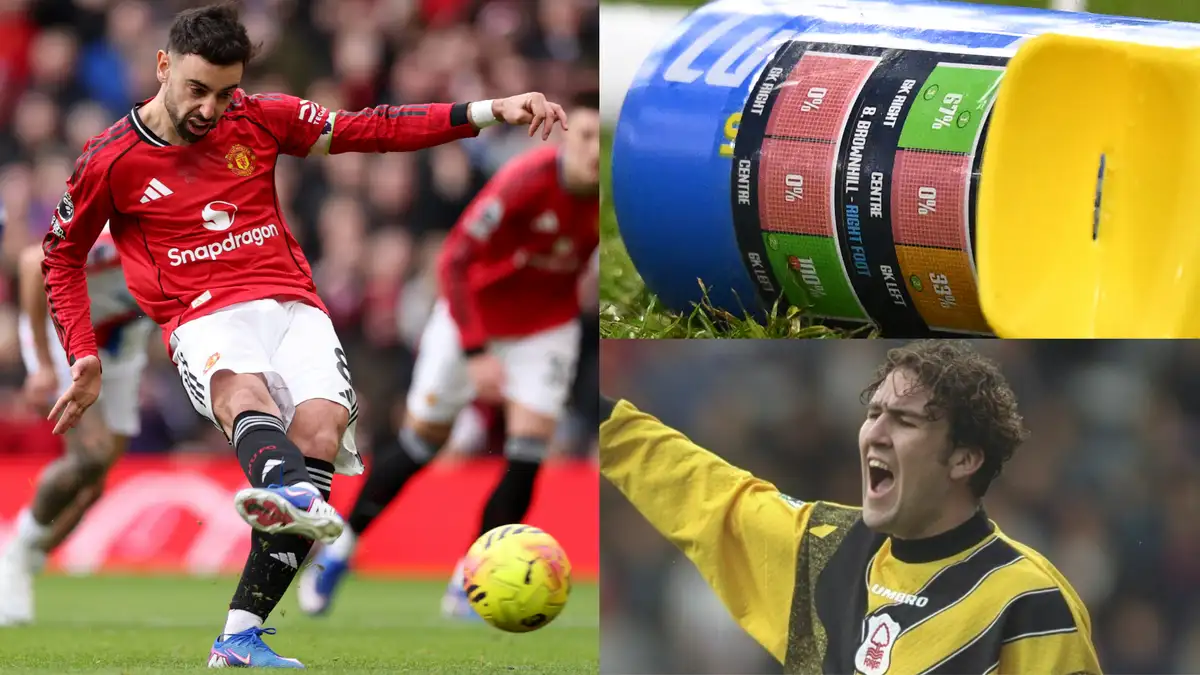
In an era where goalkeepers walk into shootouts carrying water bottles covered in coded instructions, data points and pre-match research, the modern art of penalty saving has become part science, part theatre and part psychological warfare. Yet according to Crossley, for all the technology and preparation now available, the oldest weapon in the book still matters most: instinct.
Speaking exclusively while helping put together a Bally Bet All-Stars veterans squad, Crossley lifted the lid on the subtle mind games, old-school tricks and split-second reads that shaped his reputation as one of the most reliable penalty stoppers of his generation. And when the conversation turned to modern specialists like Bruno Fernandes and Ivan Toney — two players renowned for their delayed run-ups and cool-headed execution — Crossley’s answer was classic, candid and rooted in the sort of streetwise goalkeeping that no spreadsheet can fully teach.
The former Nottingham Forest goalkeeper who mastered the mind game before water bottles became the norm
Long before laminated notes and bottle labels became a familiar sight in major finals, Crossley had already developed his own penalty-saving playbook.
It was not written down. It was not dressed up as innovation. It was simply built on understanding the taker, unsettling the rhythm and trusting the moment.
Crossley’s thinking was straightforward. If the penalty taker wants to place the ball and hit it quickly, then the goalkeeper’s first job is to make sure that does not happen. That battle begins before the run-up even starts.
As Crossley explained, he learned by studying elite penalty takers around him in training. Working with the likes of Stuart Pearce and Teddy Sheringham, he asked a simple question: what does a top penalty taker want? The answer, in his words, was always the same — they want to set the ball down and take the kick immediately.
From there, the goalkeeper’s strategy almost writes itself.
Delay everything.
Take a drink. Adjust the gloves. Walk to the post. Ask the referee to check the placement of the ball. Break the rhythm. Stretch the moment. Let the taker stand there with his thoughts for a few extra seconds. Those few seconds matter. They can invite doubt. They can force overthinking. They can make a polished routine feel just a little less automatic.
That is where Crossley always believed the save really began.
And it is a wonderfully old-school insight. Before the analytics, before the specialist coaches, before every penalty could be clipped and reviewed in high definition, there was still one universal truth: a penalty is not just a technical act. It is emotional. It is human. It is vulnerable.
Crossley understood that better than most.
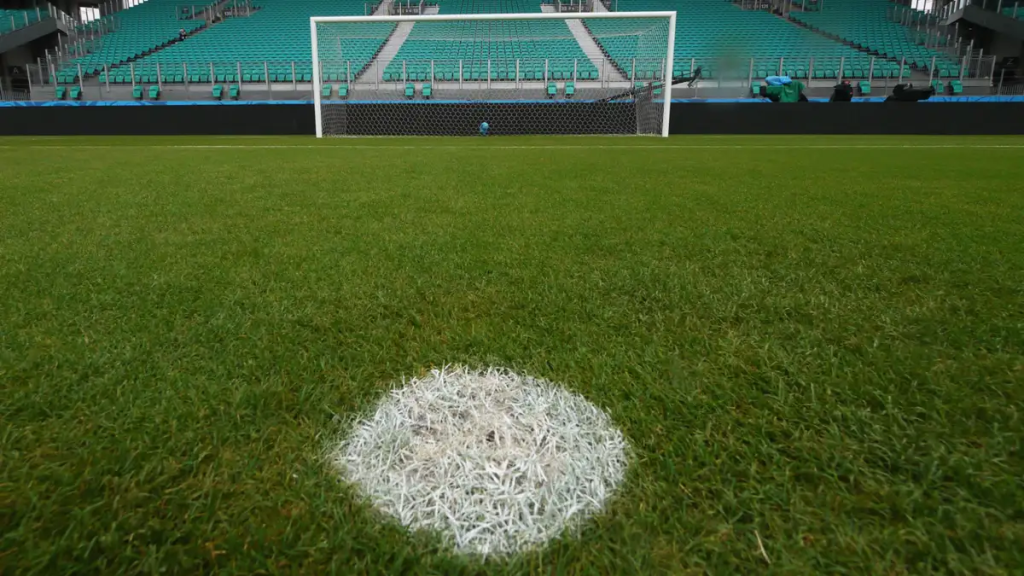
Gut instinct over gimmicks: the real penalty-saving secrets revealed by Mark Crossley
For all the tricks, though, Crossley insists the decisive factor often comes at the very last instant.
Instinct.
That was his word, and it is the one that runs through his whole philosophy.
He described himself as a goalkeeper who made his decision late, relying on what he saw, what he felt and what his body told him in the split second before the strike. There was no rigid formula. No pre-programmed commitment. Just a final read.
He also admitted something refreshingly honest: he was technically stronger diving to his right than to his left. That natural preference shaped some of his decisions. It was not superstition. It was self-awareness.
That right-sided strength helped produce the save against Le Tissier, a moment still etched into football folklore. But Crossley also pointed out that instinct can overrule habit. In the 1991 FA Cup final against Lineker, he went left. Not because of a plan written before kick-off, but because something in the moment told him that was the side.
That kind of honesty is rare and valuable.
Modern football often loves certainty. Systems. Patterns. Repeatable behaviours. But penalties do not always respect tidy frameworks. Crossley’s view is a reminder that goalkeeping, at its best, still contains an irreducibly personal element. There is technique, yes. There is preparation, absolutely. But there is also feel.
And feel, especially in a shootout, can be everything.
How Mark Crossley says he would try to thwart Ivan Toney and Bruno Fernandes from 12 yards
If Crossley was still playing today, he would have no shortage of difficult customers to deal with from the spot. Among the most fascinating are Ivan Toney and Bruno Fernandes, two modern masters of the delayed approach.
Both are experts in forcing the goalkeeper to reveal his hand first.
Their run-ups are not simply about style. They are calculated. They pause, they hesitate, they scan, and they wait for the slightest movement. A dropped shoulder, a leaning foot, a twitch of the hips — that is often all they need.
So how would Crossley handle it?
With deception of his own.
His answer was beautifully simple. He said he would wait for eye contact. That moment, he believes, often tells you something. Many takers will glance at the goalkeeper during the run-up, consciously or subconsciously. For Crossley, that was a cue.
Then comes the bluff.
He said he would feign to go one way — just enough to sell the idea — and then switch and dive the other. It is a tiny act of theatre, but in a duel where milliseconds matter, that fake movement can alter the taker’s final choice.
Against penalty takers like Fernandes and Toney, who pride themselves on reading the goalkeeper, Crossley’s method is almost a counter-trap. If they are waiting for you to move, then perhaps you move in a way designed to mislead.
It is not foolproof, of course. Nothing is, especially against elite takers. But it is rooted in the same broader principle that defined his approach throughout his career: do not let the striker control every variable.
If they want certainty, give them uncertainty.
If they want rhythm, give them disruption.
If they want a clean read, show them a false picture.
That, in essence, is how Crossley believes he would try to thwart both Ivan Toney and Bruno Fernandes.
Why Crossley is not sold on the hop, skip and jump penalty trend
Crossley’s view on the modern stuttering run-up is exactly what you would expect from a seasoned former goalkeeper with a traditional streak.
He does not love it.
The now-familiar hop, skip and delayed strike used by several modern penalty specialists has become one of the defining visual features of spot-kicks in the contemporary game. Some call it clever. Some call it icy composure. Others find it irritating. Crossley seems to sit somewhere between amused and unconvinced.
From his perspective, if you are a taker, the objective should be brutally simple: choose your corner and hit it hard into the bottom edge of the net. No theatrics, no dancing, no extra layers.
His logic is entirely goalkeeper-centric — and that is what makes it so interesting.
At 6ft 5in, Crossley says the last thing a goalkeeper wants is a penalty drilled low into the corner. Mid-height efforts, even powerful ones, give a big keeper a chance if he guesses correctly. But the low corner? That is the hardest ball to reach cleanly. It takes away the frame, the wingspan and the recovery.
In other words, if a taker truly wants to be ruthless, forget the performance and focus on placement.
Of course, modern takers would argue that the stutter is part of the placement. It is a mechanism to force the keeper into an early move, making the finish easier. Fernandes and Toney, in particular, have built elite reputations using that method.
Still, Crossley’s skepticism is revealing. It reflects the eternal tension in penalties: is the kick won by superior technique, or by superior nerve? His answer seems to be that the cleanest technique still wins in the end — provided the taker has the courage to commit.
Do water bottles really matter in penalty drama? Crossley gives his verdict
The “water bottle era” of penalty saving has changed the optics of the shootout.
Now, fans almost expect to see a goalkeeper glance down at a bottle before each kick, as if consulting a cheat sheet before an exam. Arrows. Names. Habits. Preferred corners. Last-minute reminders. The bottle has become a prop, a data hub and, perhaps just as importantly, a psychological signal to the taker that the goalkeeper is informed.
Crossley has seen it evolve, and he acknowledges the value.
He recalled the first time he truly noticed the tactic: Brice Samba’s now-famous use of a water bottle during Nottingham Forest’s Championship play-off semi-final win over Sheffield United in 2022. At first, Crossley wondered what he was doing. Then it clicked. Research. Preparation. Goalkeeping coaching in its most visible modern form.
And to be fair, it worked.
Since then, similar moments have become part of football’s mainstream imagery. Jordan Pickford’s bottle notes during England’s penalty shootouts have drawn widespread attention, while even mind games around the bottle itself have entered the spotlight — such as Hannah Hampton tossing Spain goalkeeper Cata Coll’s bottle away during the 2025 Women’s European Championship final, a wonderfully mischievous act that underlined just how psychological these situations can become.
But Crossley stops short of calling the bottle a magic solution.
His argument is balanced. Yes, the research helps. Yes, studying a taker’s last 10 penalties can reveal patterns in body shape, approach angle and preferred side. Yes, modern goalkeeping coaches can prepare far more thoroughly than in previous eras.
However, he believes the best players can still change their minds late.
That, to him, is the key limitation.
You can gather all the data in the world, but if a taker spots movement and adjusts at the final second, the pre-match plan can be instantly outdated. Crossley even referenced Matt Le Tissier admitting that, on the one penalty he missed against him, he saw the goalkeeper feint and altered his intention at the last moment — only failing to execute it perfectly.
That is why Crossley remains loyal to instinct, even while respecting the bottle.
His conclusion is sensible and very much in keeping with modern football: use every edge available. If the goalkeeper and goalkeeping coach can gain something from the bottle, then use it. In a shootout, especially, there is no such thing as too much preparation.
But do not confuse information with certainty.
Bally Bet All-Stars, Forest legends and a fitting return to the City Ground
Away from the tactical talk, Crossley is also lending his voice and personality to a project that feels genuinely in tune with the spirit of the game.
As part of Bally Bet’s All-Stars initiative, the former Nottingham Forest goalkeeper has been tasked with helping assemble the first-ever All-Stars Vets squad — a celebration of long-serving grassroots players who have spent years giving everything to local football without always receiving the recognition they deserve.
It is a smart and rather heartwarming concept.
These are the characters who keep Sunday football alive. The reliable centre-half with taped ankles. The midfielder who still fancies himself. The goalkeeper who swears he could have gone pro if not for his knee. Every grassroots setup has them. They are football’s hidden lifeblood.
Crossley, a man who has always carried a relatable, no-frills charm, feels like a natural fit to lead that sort of selection.
He will be supported by other familiar Nottingham Forest figures as the squad takes shape, before the All-Stars receive a proper top-flight experience at the City Ground later this spring. There, they will trade local pitches for the big stage and line up against a side of hand-picked Forest legends in what promises to be a celebration not just of nostalgia, but of football culture itself.
And really, that ties neatly back into Crossley’s entire penalty philosophy.
Because beneath the stories of Le Tissier, Lineker, Ivan Toney, Bruno Fernandes and water bottles, there is something refreshingly timeless about the way he sees the game. Football can modernise. It can gather data. It can overanalyse every pause, every step, every eye movement.
But in the end, there is still room for instinct. Still room for personality. Still room for a goalkeeper buying a few seconds, reading the room and trusting his gut.
That is what made Mark Crossley such a memorable penalty saver.
And judging by the way he talks about it now, that part of him has not changed one bit.


There are no comments yet. Be the first to comment!