





Arsenal Fear Another Martin Odegaard Injury Blow After “Horror Movie” Moment in Champions League Win
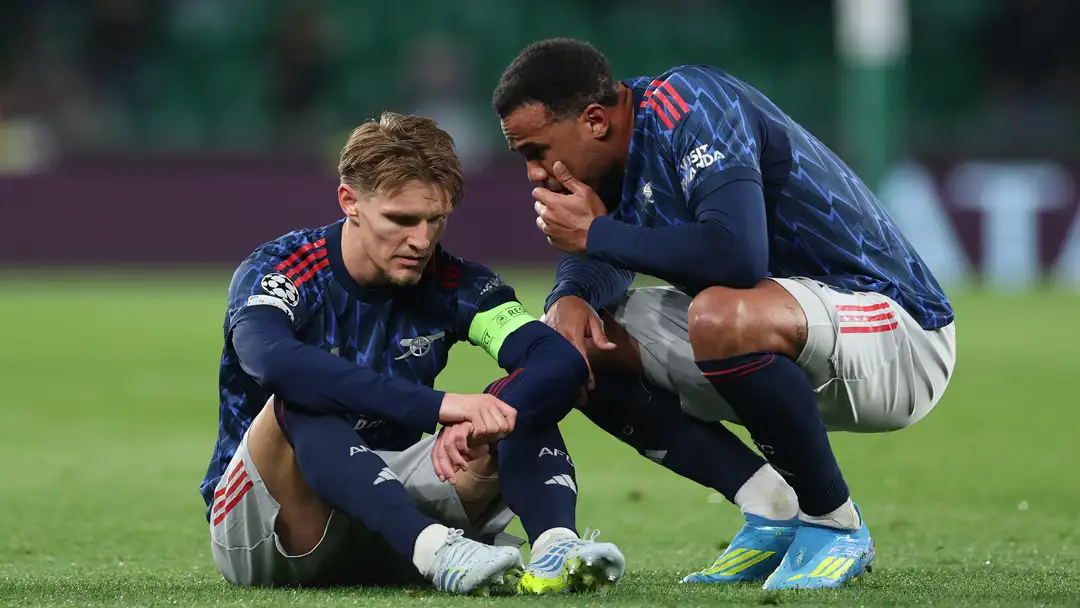
Arsenal should have been celebrating a statement Champions League victory in Lisbon. Instead, the conversation after the final whistle revolved around one worrying image: Martin Odegaard walking slowly off the pitch, surrounded by medical staff, leaving supporters fearing the worst.
The Gunners secured a dramatic first-leg win against Sporting CP, sealed by a late Kai Havertz goal, but the result quickly became secondary. The sight of Arsenal’s captain forced off with another apparent injury cast a shadow over an otherwise positive European night — and reignited concerns about the Norwegian playmaker’s increasingly interrupted season.
At a stage of the campaign where every match carries enormous weight, the possibility of losing Odegaard again feels, for many connected with Arsenal, like a nightmare returning at the worst possible time.
Martin Odegaard Injury Concern Overshadows Arsenal Champions League Success
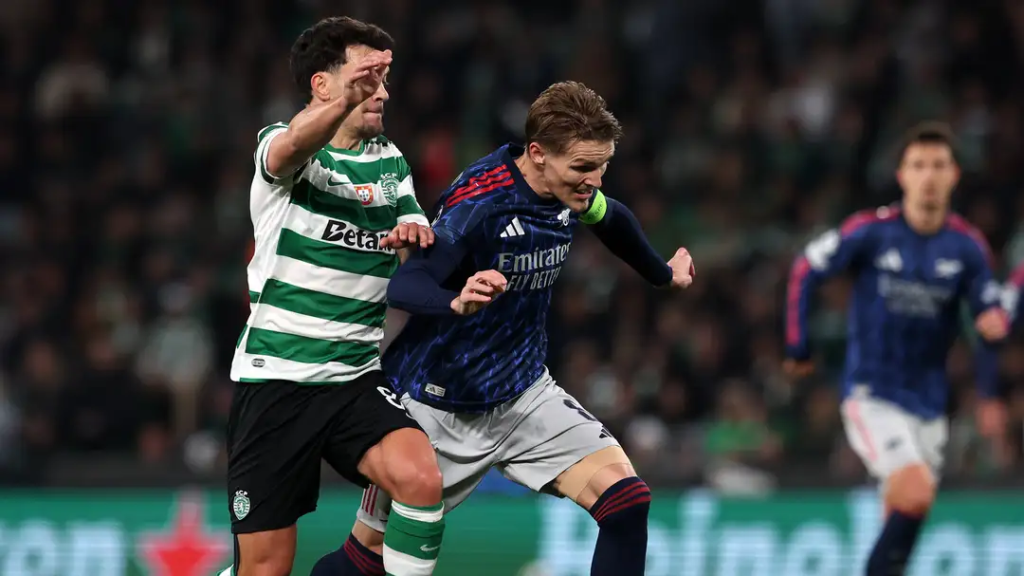
For much of the evening in Portugal, Odegaard looked like himself again — sharp in possession, constantly scanning for passing lanes, and dictating Arsenal’s tempo between the lines. His movement helped stretch Sporting’s midfield structure, allowing Arsenal to control long phases of the match.
Then came the moment that changed the mood entirely.
Around the 70th minute, Odegaard suddenly went down and required medical attention. There was no heavy collision, no obvious impact — which, in many ways, made the situation more unsettling. Players and fans alike tend to fear injuries that appear without clear cause.
After several minutes of treatment, the Arsenal captain was unable to continue and was substituted, leaving visible anxiety on the faces of teammates and coaching staff.
Kai Havertz eventually replaced him and went on to score a dramatic 90th-minute winner, but celebrations felt restrained. Everyone inside the stadium understood the larger question looming over the result: how serious was the Martin Odegaard injury?
A Stop-Start Season Raises Arsenal Anxiety
The concern surrounding Odegaard is not just about one incident. It is about a pattern.
The Norwegian international has already endured a difficult campaign physically, missing more than four months of action and over twenty matches due to various setbacks. Each return has been followed by cautious optimism, only for another issue to interrupt his rhythm again.
Earlier in the year, an injury sustained during the north London derby against Tottenham halted his momentum just as Arsenal were entering a crucial phase domestically. After weeks of recovery, he only recently returned to competitive action, appearing in the FA Cup before earning a starting role in Lisbon.
That context explains why Tuesday night’s incident felt particularly alarming. Arsenal were finally beginning to rebuild continuity around their captain — tactically and emotionally — only for uncertainty to resurface.
For Mikel Arteta’s side, Odegaard is not simply another midfielder. He is the team’s creative compass, pressing leader, and emotional reference point.
When he is missing, Arsenal play differently.
“Like a Horror Movie” – Reaction in Norway Intensifies Concern
Back in Norway, reaction to the images from Lisbon was immediate and emotional. Former international defender Jesper Mathisen described watching the moment unfold as deeply unsettling, comparing the broadcast to “a horror movie.”
The phrase quickly spread across Scandinavian media, perfectly capturing the collective anxiety felt by supporters preparing for upcoming international commitments, including World Cup qualification fixtures.
From Norway’s perspective, Odegaard represents far more than a club star. He is the centerpiece of the national team’s ambitions, the player around whom tactical identity is built.
Seeing him clutch his leg — especially after a season already filled with injuries — triggered understandable panic.
Yet there was at least a small reason for optimism. Cameras later showed Odegaard celebrating with teammates after the final whistle, suggesting the issue might not be as severe as first feared. Still, until medical assessments are completed, uncertainty remains.
The Physical Toll of an Early Career
Another discussion has quietly resurfaced alongside the latest injury scare: whether Odegaard’s unusually early professional career is beginning to take a physical toll.
Few players enter senior football as young as he did. Breaking into the professional game at just 15 years old meant years of elite-level demands arriving earlier than for most players of his generation.
Former Norway international Kjetil Rekdal recently suggested that such an early start can sometimes lead to accumulated physical strain later in a career. According to Rekdal, repeated interruptions may not simply be bad luck but the natural consequence of long-term wear and tear.
Modern football’s intensity — packed schedules, high pressing systems, and minimal recovery time — only amplifies those risks.
For Arsenal, managing Odegaard’s workload may now become as important as tactical preparation itself.
Arsenal’s Tactical Challenge Without Their Captain
If Odegaard were to miss time again, Arteta would face a familiar but complicated puzzle.
The Norwegian’s role in Arsenal’s structure is uniquely demanding. He connects midfield and attack, leads pressing triggers, and provides positional intelligence that allows others — particularly wide attackers — to flourish.
Without him, Arsenal often rely more heavily on transitional attacks rather than controlled buildup. While players like Havertz and Declan Rice offer different strengths, replicating Odegaard’s creative balance is extremely difficult.
Ironically, Arsenal demonstrated resilience by winning in Lisbon despite losing their captain. Havertz’s late goal showcased squad depth and belief — qualities essential for teams competing on multiple fronts.
But depth cannot fully replace leadership.
What Comes Next for Arsenal and Martin Odegaard?
Attention now turns toward Arsenal’s upcoming Premier League fixture against Bournemouth and, more importantly, the Champions League second leg at the Emirates Stadium.
Medical evaluations over the next few days will determine whether Odegaard’s substitution was precautionary or indicative of another extended absence. Arteta is likely to proceed cautiously, aware that rushing his captain back could risk longer-term consequences.
The timing could hardly be more delicate. Arsenal remain firmly in contention domestically while also chasing European progress. Losing their creative leader during this stretch would force adjustments not only tactically but psychologically.
Yet the team’s reaction in Lisbon offers encouragement. Even amid concern, they found a way to win — a trait increasingly associated with mature sides competing for major honours.
Hope Mixed With Uncertainty

Football seasons are often defined by moments no tactical plan can predict. Injuries, especially to key players, shape narratives as much as goals or victories.
For Arsenal, the latest Martin Odegaard injury scare sits somewhere between fear and hope. The images looked worrying. The reactions were emotional. But the early signs after the match suggested the situation might not be catastrophic.
Until confirmation arrives, supporters will wait anxiously, replaying that moment again and again — the kind of scene that briefly freezes celebration and replaces joy with concern.
Because Arsenal’s ambitions this season remain alive on multiple fronts.
And as Tuesday night reminded everyone, those ambitions look very different depending on whether their captain is on the pitch — or watching from the sidelines.


There are no comments yet. Be the first to comment!