








Grand National Shock as Nick Rockett Withdrawn from Aintree Showpiece
Nick Rockett Withdrawn from Grand National Leaves Aintree Field Wide Open
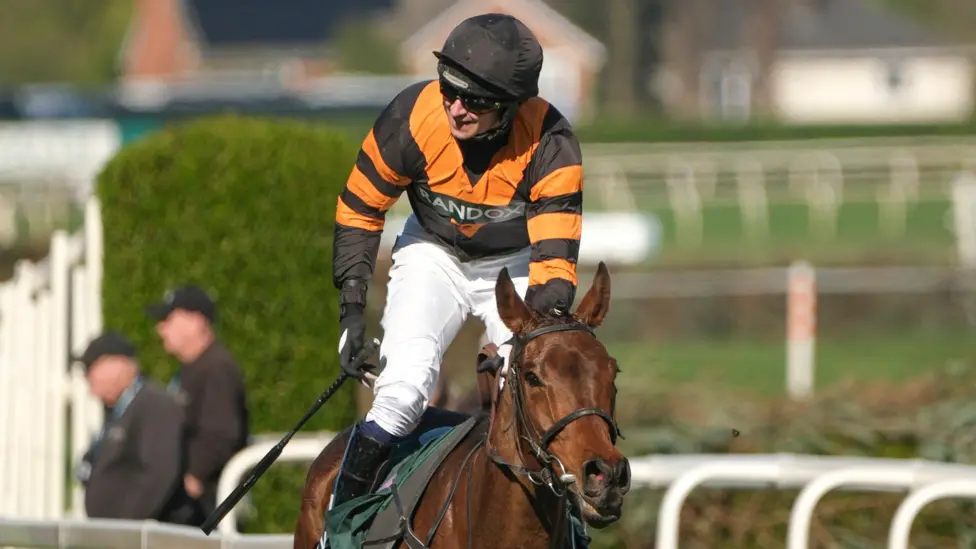
The Grand National rarely unfolds without drama, but few expected one of the biggest talking points of this year’s race to arrive before a single fence had been jumped. Last year’s hero, Nick Rockett, has officially been withdrawn from the Grand National at Aintree, delivering a late twist to the narrative of racing’s most famous steeplechase.
Connections confirmed that the Willie Mullins-trained runner was taken out after being reported to be coughing, a precautionary decision that immediately reshaped both the betting landscape and the emotional tone surrounding Saturday’s race.
For many racing fans, the withdrawal feels like the removal of a central character just days before the sequel begins.
Nick Rockett’s victory twelve months ago was one of those Grand National stories that linger — a triumph built on patience, resilience and perfectly judged riding. The possibility of a repeat success had added an extra layer of intrigue to this year’s renewal. Now, that storyline disappears, replaced by uncertainty and opportunity for the rest of the field.
A champion forced to step aside
Horse racing often balances romance with realism, and the decision to withdraw Nick Rockett underlined the sport’s uncompromising priority: welfare first.
Reports of the horse coughing were enough for connections to make the cautious call. In a race as demanding as the Grand National — four miles, thirty fences, and relentless pressure from start to finish — even the slightest physical concern can become decisive.
Trainer Willie Mullins, renowned for his meticulous preparation, has built a reputation on knowing when not to run a horse as much as when to run one. Pulling a defending champion from the race is never easy, particularly when expectations are high, but the decision reflects the long-term thinking that has defined his success.
Jockey Tom Bellamy had been preparing to guide Nick Rockett in an attempt to secure back-to-back victories, a feat that would have elevated both horse and rider into rare Grand National history. Instead, Bellamy now watches from the sidelines as circumstances beyond anyone’s control intervene.
First reserve Pied Piper steps into the Grand National spotlight
With Nick Rockett withdrawn, first reserve Pied Piper moves into the field, gaining an unexpected opportunity to compete on racing’s grandest stage.
The Grand National has always been a race where late entrants can become unlikely heroes. Horses that barely make the starting lineup sometimes thrive amid the chaos and endurance test unique to Aintree.
For Pied Piper’s connections, the call-up represents both excitement and pressure. Preparation shifts instantly from hopeful waiting to full-scale readiness. Every detail — travel, tactics, and strategy — must now accelerate toward Saturday’s 16:00 BST start.
Such late changes are part of the National’s unpredictable charm. The race has long rewarded adaptability, and newcomers frequently embrace the chance to write their own chapter in its history.
Mullins stable still dominates the narrative
Despite losing last year’s winner, Willie Mullins remains at the centre of attention heading into the race. The Irish trainer continues to wield remarkable influence over the field, with eight runners now representing his powerful stable.
Among them, I Am Maximus has emerged as the 7-1 favourite, carrying significant expectations as Mullins seeks another triumph in a race he has increasingly made his own.
The horse will once again be partnered by Paul Townend, who rides him in the Grand National for the third consecutive year. Familiar partnerships often matter in marathon contests like this one, where trust between horse and jockey becomes essential over Aintree’s iconic fences.
Townend himself has unfinished business. Twelve months ago, he finished second behind Nick Rockett at odds of 33-1 — part of an extraordinary result that saw Mullins-trained runners claim the first three places.
That dominance reinforced the trainer’s growing reputation as a master of targeting the Grand National, once considered a race difficult for Irish yards to conquer consistently.
Patrick Mullins’ earlier decision now takes on new meaning
Interestingly, Patrick Mullins — who rode Nick Rockett to victory last year — had already chosen to partner Grangeclare West in this year’s race before the withdrawal announcement.
At the time, the decision raised eyebrows. With the defending champion returning, many assumed loyalty would guide the jockey back aboard. Instead, Mullins opted for a different stablemate, a choice that now appears almost prophetic.
Such decisions highlight the complexity within elite racing stables, where multiple contenders present varying strengths depending on ground conditions, stamina demands and race pace expectations.
Now, without Nick Rockett in the lineup, attention naturally shifts toward the remaining Mullins runners, each carrying the stable’s hopes of maintaining dominance at Aintree.
The unique challenge of the Grand National
The Grand National remains unlike any other race in the calendar. Thirty-four runners will line up on Saturday, facing a contest that blends endurance, bravery and tactical intelligence.
Modern safety improvements have altered the race’s profile, yet its essence remains unchanged. Horses must conserve energy early, jump accurately under pressure, and still find enough stamina for the gruelling run-in after four demanding miles.
The absence of a defending champion subtly changes the psychology of the race. Without a proven winner to measure against, the field feels more open, encouraging bold riding decisions and ambitious strategies.
Trainers and jockeys often speak about the National as a race that chooses its winner rather than simply rewarding the favourite. Experience helps, but unpredictability remains its defining feature.
A wide-open Grand National awaits at Aintree
As race day approaches, the conversation inevitably turns from what has been lost to what might now be possible.
Nick Rockett’s withdrawal removes a familiar storyline but injects fresh intrigue into the contest. Punters reassess form guides, analysts reconsider pace scenarios, and rival trainers sense opportunity.
For fans, the emotional element cannot be ignored. The defending champion’s absence creates a sense of unfinished business — a reminder of how fragile sporting narratives can be.
Yet the Grand National thrives on reinvention. Every year produces new heroes, unexpected performances and moments that linger long after the final fence.
At 16:00 BST on Saturday, thirty-four horses will charge toward racing immortality at Aintree. Among them will be favourites carrying expectation, outsiders chasing dreams, and late entrants seizing unexpected chances.
Nick Rockett will not be there to defend his crown, but his withdrawal has only intensified anticipation for what comes next — another unpredictable chapter in the enduring story of the Grand National.


There are no comments yet. Be the first to comment!