





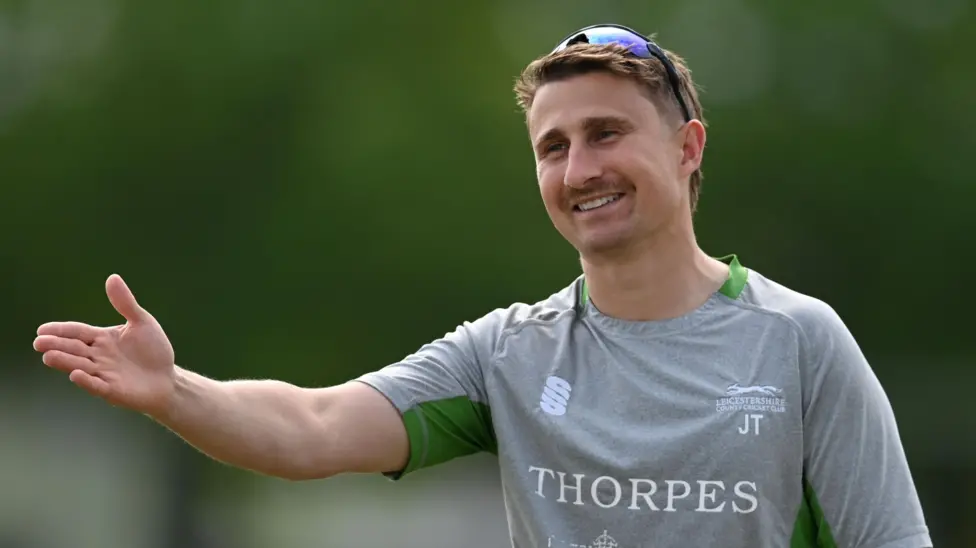
“I Should Have Died”: James Taylor Reflects on 10 Years Since His Forced Retirement
“I Should Have Died” – James Taylor’s Harrowing Story 10 Years After Forced Retirement
There are moments in sport that stop everything. Not because of a last-minute winner or a record-breaking performance, but because life itself intervenes in a way that makes everything else feel small. For James Taylor, that moment came ten years ago—on what should have been just another routine pre-season day.
Instead, it became the day that ended his career, and very nearly his life.
Now, a decade on from his forced retirement, Taylor speaks about that experience with a mix of honesty, disbelief, and a kind of quiet gratitude that only comes from surviving something you weren’t supposed to.
“I should have died,” he says, not for effect, but as a simple statement of fact.
The day everything changed for James Taylor
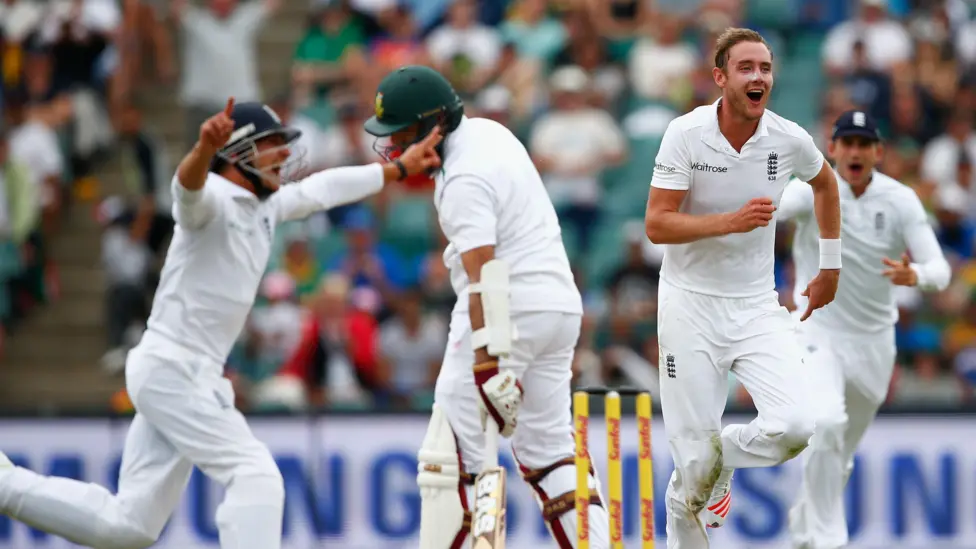
At the time, Taylor was in a good place professionally. He had worked relentlessly to establish himself in England’s Test side, had just come through a demanding tour of South Africa, and was beginning to look like a permanent fixture in the team.
On that pre-season day, he was doing nothing extraordinary. A few throw-downs before play. The kind of repetition elite athletes go through thousands of times without thinking.
Then something felt off.
What followed was not a sudden collapse, but something far more unsettling—a gradual, terrifying breakdown of his body over several hours. Driving back to Nottingham, Taylor sensed something was seriously wrong, but even then, the reality hadn’t fully hit.
By the time he got home, things had escalated dramatically.
His body was shutting down. His heart was racing uncontrollably. He was physically unable to function, crawling instead of walking, struggling to breathe, battling waves of nausea.
“I was grey and cold but sweaty too,” he recalls. “I couldn’t move properly. I couldn’t even get up the stairs.”
It was a slow-motion emergency, one that could easily have ended very differently.
A diagnosis that ended a career overnight
The diagnosis came quickly once he reached hospital: arrhythmogenic right ventricular cardiomyopathy (ARVC), a rare and serious heart condition that disrupts the heart’s rhythm.
In Taylor’s case, his heart rate had reached a staggering 265 beats per minute—completely out of sync, dangerously unstable. Doctors later told him that most people would lose consciousness within minutes under those conditions.
He had somehow remained conscious for hours.
“They said what my heart went through was like running five or six marathons,” he explains.
For a professional athlete at the peak of his career, the reality hit hard and fast. This wasn’t something that could be managed on the side. This wasn’t an injury you could rehab and return from.
This was the end.
Within six days, his retirement was officially announced. At just 26 years old, a career that had taken years of sacrifice to build was over in an instant.
The cruel timing of Taylor’s forced retirement
What made it even more painful was the timing. Taylor had just broken through at international level. He had scored his first hundred for England, cemented his place in the Test team, and was beginning to look like a long-term solution in the middle order.
There were even whispers about future leadership roles. He was respected, disciplined, and quietly effective—exactly the kind of cricketer teams build around.
And yet, even lying in a hospital bed, barely aware of how close he had come to death, his mind was still on cricket.
“I told the doctor, just get me ready for three weeks’ time,” he admits, referring to an upcoming Test at Lord’s.
That moment says everything about elite athletes—the refusal to let go, even when the body has already made the decision for you.
But the doctor’s response was blunt. This wasn’t about recovery timelines. This was about survival.
Emotional fallout and learning to let go
When the reality finally sank in, it hit hard. Taylor speaks openly about breaking down in front of journalists when discussing his retirement.
It wasn’t just about losing a job. It was about losing an identity, a purpose, something he had dedicated his life to.
“All the hard work, all the graft—it just hit me,” he says.
There’s something particularly cruel about having a career taken away just as it begins to flourish. For Taylor, the frustration wasn’t just what he had lost, but what might have been.
Yet over time, perspective began to shift.
Life after cricket: rebuilding with purpose
In the years following his forced retirement, Taylor didn’t disappear from the game. Instead, he found new ways to stay connected—first as a commentator, then as a selector for England.
He was part of a setup that helped build one of the most successful white-ball teams in the world, culminating in a World Cup victory in 2019. It was a different role, but one that still allowed him to contribute at the highest level.
Later, he returned to coaching, working with Leicestershire, the county where his journey had begun.
Along the way, he also discovered new passions. Golf became a serious pursuit, and within a few years, he had developed into a scratch player—a testament to the same focus and discipline that had defined his cricket career.
But perhaps the biggest change has been internal.
A different outlook on life
Today, Taylor speaks about life with a noticeably calmer tone. The intensity that once drove him as a player has been replaced by perspective.
“Things just don’t stress me the same way anymore,” he says.
It’s not that he cares less—it’s that he understands what really matters.
Having lived through a moment where survival was not guaranteed, the small frustrations of sport and life no longer carry the same weight. Results, performances, even disappointments—they’re all part of the game, but they’re not everything.
“I’ve had 10 years I shouldn’t have had,” he reflects. “That makes you grateful.”
The importance of speaking out
One of the most powerful parts of Taylor’s story is not just what happened, but how he has chosen to talk about it. He openly acknowledges the role that friends, family, and conversation played in helping him process everything.
In elite sport, where mental resilience is often equated with silence, that honesty matters.
“It’s important to speak to people you trust,” he says. “Don’t keep it in.”
It’s a simple message, but one that carries weight—especially coming from someone who has lived through both the highest highs and the most abrupt endings.
A story bigger than cricket
Ten years on, James Taylor’s story is no longer just about a career cut short. It’s about survival, adaptation, and finding meaning beyond the boundaries of sport.
Yes, there’s still a sense of what might have been. That never fully disappears. But it sits alongside something else now—a recognition that life itself is the bigger prize.
“I should have died,” he says again.
But he didn’t.
And everything that has come since—the second career, the new passions, the quieter perspective—that’s the part of the story that matters most.


There are no comments yet. Be the first to comment!