


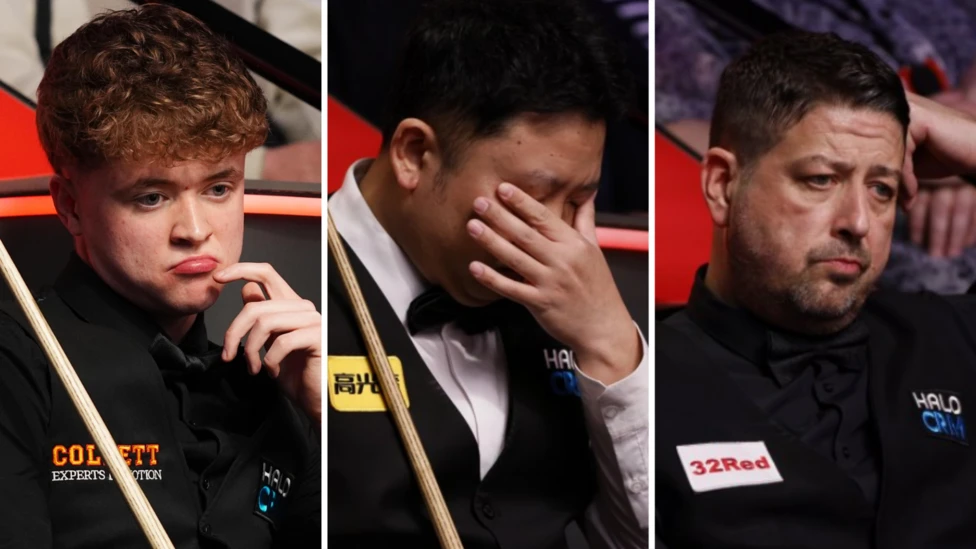
Crucible Pressure Feels “50 Times Worse Than a Driving Test” as Snooker Stars Face the Ultimate Sheffield Test
There are sporting arenas that create nerves, and then there is the Crucible.
For almost half a century, Sheffield’s famous theatre has been the stage where snooker careers are made, broken, revived and sometimes painfully exposed. Players talk about ranking finals, Masters nights and big-money deciders with respect, but when the World Snooker Championship begins, the conversation changes.
Because Crucible pressure is different.
The lights are hotter, the silences louder, and the chair can feel like the loneliest place in sport. Even the game’s biggest names admit it. When world number one Judd Trump says the tension inside the Crucible cannot be replicated anywhere else, people listen.
And when former champion Shaun Murphy compares the experience to being “50 times worse than a driving test,” it tells you everything about the mental strain elite players carry in Sheffield.
Crucible Pressure Turns Snooker Into a Mental Endurance Battle
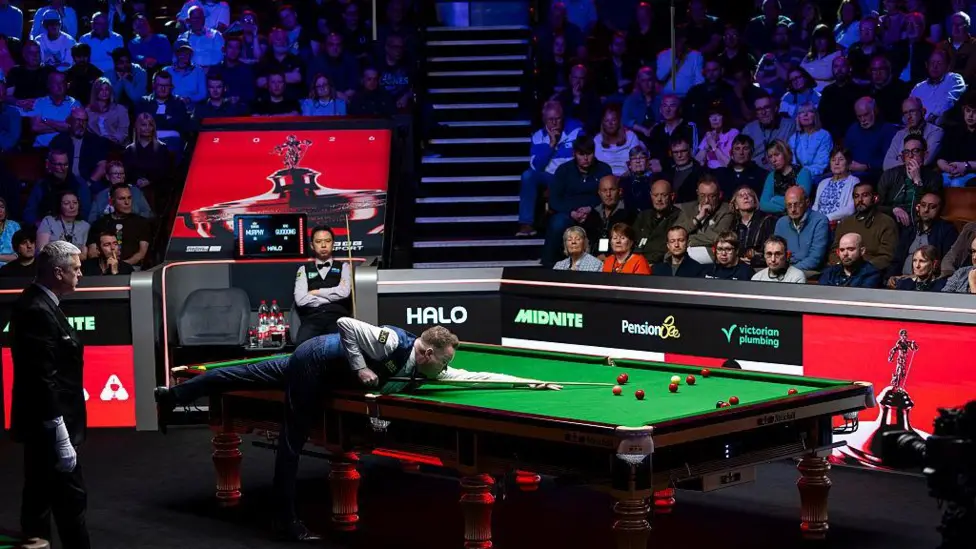
The World Snooker Championship is not simply about potting balls and building breaks. It is a marathon of concentration spread across 17 draining days. Players must handle long sessions, shifting momentum, public scrutiny and the knowledge that one poor hour can end a season’s work.
Unlike many sports, snooker gives competitors too much time to think.
That can be dangerous.
There are no constant sprints, no tackles, no physical collisions to distract the mind. Instead, players sit in silence while opponents score, knowing they cannot intervene. They wait, watch and try not to unravel internally.
At the Crucible, that tension is amplified because of the theatre’s unique design. Fans are close enough to hear every breath, every muttered word, every sigh of frustration. Players feel every stare, every reaction, every movement in the room.
It is intimate, historic and unforgiving.
Shaun Murphy’s Driving Test Comparison Captures Crucible Pressure
Murphy knows exactly what pressure feels like in Sheffield. He won the world title in 2005 and has spent years returning to the sport’s biggest stage carrying expectation.
But even experience does not remove nerves.
After edging Fan Zhengyi 10-9 in a dramatic deciding-frame victory, Murphy described the feeling of sitting helplessly while waiting for one final chance as far worse than any ordinary stressful life moment.
Calling it “50 times worse than my driving test” may sound humorous on the surface, yet it captures something real. Anyone who has sat through a driving test understands nerves, but multiply that by a global audience, career stakes and no escape route, and you approach Crucible reality.
The chair becomes a psychological trap.
Why the Crucible Chair Can Be the Worst Seat in Sport
When players are not at the table, they wait in full view of the audience beside the very opponent causing their pain.
That alone makes the Crucible unusual.
There is no dugout, no bench, no locker room. You sit beside your rival, often only inches away, saying nothing, pretending calm while internally calculating scenarios.
Former world champion Neil Robertson once described how strange it felt sitting next to Stephen Hendry in his prime, sensing the Scot’s cold intensity from point-blank range.
That is another layer of Crucible pressure. You are not only fighting the scoreboard; you are sharing space with the person controlling it.
For younger or less experienced players, that atmosphere can be suffocating.
Crucible Pressure Forces Players to Master Their Own Minds
Performance coaches who work in snooker often describe the sport as one of the purest mental tests in elite competition.
A missed red can linger for twenty minutes. A bad safety shot can replay in the mind for an entire interval. A careless session can become tomorrow morning’s burden.
That is why breathing routines, reset habits and emotional control are so important.
Players often use small rituals: slow breathing, cue cleaning, towel adjustments, mental keywords, fixed routines before shots. These are not random habits. They are anchors designed to stop panic taking over.
Ali Carter offered a perfect example recently. After falling 4-0 behind in brutal fashion, he admitted he felt angry enough to leave the venue entirely. Instead, he regrouped and won the next five frames in the same session.
That swing was not technical. It was mental.
What Players Really Think About Under Crucible Pressure
Fans often assume players remain fully focused every second. The truth is far messier.
Some admit they think about dinner. Others think about football scores, golf mistakes, travel plans or what takeaway to order after the session.
Mark Williams has joked that his mind can drift almost anywhere while sitting in the chair. Kyren Wilson has spoken about debating spice levels on a future meal while matches continue around him.
And then there is the random soundtrack problem.
Robertson once explained that songs can get stuck in a player’s head mid-match, turning concentration into chaos. Imagine needing one frame-winning pot while an unwanted tune loops endlessly in your brain.
That is snooker’s strange beauty. Outwardly calm, inwardly chaotic.
Why Crucible Pressure Makes Champions Different
Talent gets players to Sheffield. Nerve control keeps them there.
Many gifted cueists have arrived with huge reputations only to freeze under the theatre lights. Others with less natural flair have built careers on resilience, patience and emotional discipline.
That is why former champions are so respected. Winning seven matches across more than two weeks requires technical excellence, but also recovery from mistakes, poor sessions and momentum swings.
You cannot win the world title without suffering at some point.
Every champion has had moments in that chair, praying for a miss.
The Crucible Still Holds a Unique Power Over Snooker
Modern sport has changed dramatically. Bigger arenas, louder music, faster presentation and endless digital noise dominate most major events.
Yet the Crucible remains stubbornly itself.
Compact. Tense. Traditional. Merciless.
It does not need pyrotechnics or giant screens to create drama. One missed black can shake the room harder than a stadium goal. One clearance can silence a thousand people instantly.
That is why players still speak about the venue with awe.
No matter how many titles they win elsewhere, Sheffield asks deeper questions.
Crucible Pressure Is Why Fans Keep Coming Back
Supporters return every year because they know something real happens there. Masks slip. Confidence cracks. Nerves show. Courage matters.
You see elite athletes stripped of noise and excuses, left alone with decisions and execution.
That is rare in modern sport.
Murphy’s comparison to a driving test may raise a smile, but underneath it sits the truth: pressure is personal, uncomfortable and impossible to fake your way through.
At the Crucible, everyone feels it.
Some survive it.
A few master it.
And that is why the World Snooker Championship still feels like the sport’s greatest stage.


There are no comments yet. Be the first to comment!