





































Aryna Sabalenka Hits Back at Dubai Withdrawal Criticism After Indian Wells Triumph
Dubai Withdrawal Criticism “Ridiculous” Says Aryna Sabalenka as Debate Over Tennis Schedule Intensifies
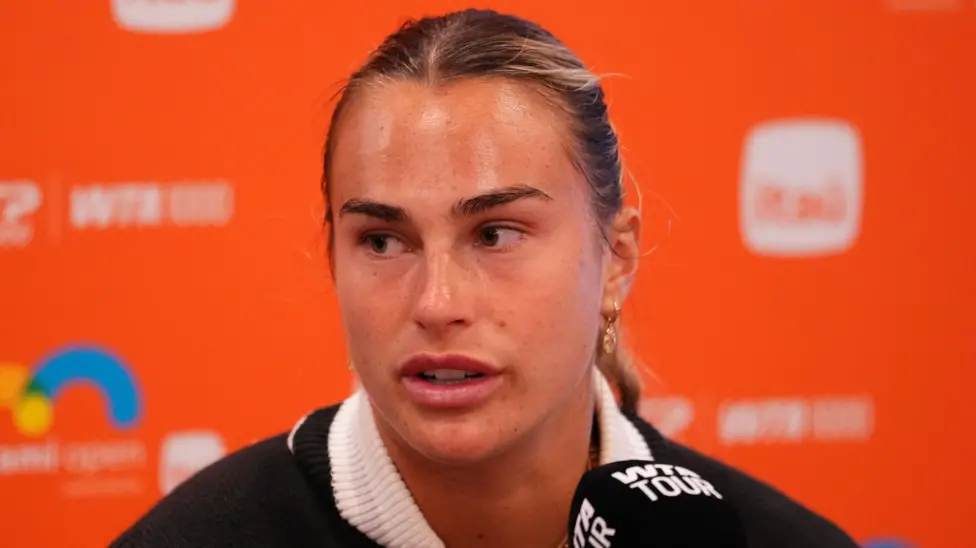
Tennis rarely pauses long enough for controversy to settle before the next storyline arrives, but Aryna Sabalenka has made sure the conversation surrounding her withdrawal from the Dubai Championships is far from over. Fresh off lifting the Indian Wells trophy, the world number one used her return to the spotlight not only to celebrate victory but also to address criticism she believes crossed a line.
Speaking candidly ahead of the Miami Open, Sabalenka described the backlash following her late pull-out from the Dubai event as “ridiculous,” accusing tournament officials of prioritising commercial interests over player wellbeing. Her comments have reignited a broader debate that has quietly simmered for years — whether tennis’ relentless calendar is pushing elite players beyond sustainable limits.
The Belarusian’s words were not delivered in anger so much as exhaustion, reflecting a growing sentiment among top players who feel increasingly squeezed between physical demands and commercial expectations.
Aryna Sabalenka and the Dubai Withdrawal Controversy
The controversy began in mid-February when Sabalenka and then-world number two Iga Swiatek withdrew from the WTA 1000 tournament in Dubai just two days before the event began. For organisers, the loss of two global stars represented a major promotional setback. For players, however, the decision was rooted in long-term planning.
Dubai tournament director Salah Tahlak publicly suggested that both players should face ranking-point penalties — comments that immediately drew attention across the tennis world.
Sabalenka did not respond immediately at the time. Instead, she waited until returning to competition, choosing a moment of success to explain her perspective.
“I don’t think he showed himself in the best way possible,” she said, clearly disappointed rather than defensive. Her criticism went beyond a single remark; it touched on what she sees as a systemic problem within professional tennis.
According to Sabalenka, tournaments often focus on ticket sales and visibility without acknowledging the physical toll endured by players navigating an 11-month season.
The frustration was evident when she admitted she may reconsider playing the Dubai event in the future — a striking statement considering the tournament’s prestige within the WTA calendar.
For a player who has consistently supported global events throughout her career, the comment felt less like a threat and more like a warning sign of mounting fatigue within the sport.
Indian Wells Success Gives Sabalenka a Perfect Response
If Sabalenka needed validation for her scheduling decision, her performance at Indian Wells provided it emphatically.
The Belarusian claimed the title on Sunday, marking her first tournament victory since falling short in the Australian Open final earlier this year. The triumph served as both a sporting statement and a personal reassurance that prioritising recovery had been the correct choice.
She explained that her team deliberately built rest periods into her schedule this season — a strategy designed to preserve peak performance for the biggest tournaments rather than chasing constant appearances.
“Going into this season, we decided to prioritise my health,” she said. “To make sure we have gaps where I can reset and recharge.”
In modern tennis, where marginal physical advantages can determine outcomes at the highest level, such planning has become increasingly necessary. Players now travel across continents almost weekly, shifting surfaces, climates, and time zones with little recovery time.
Sabalenka’s Indian Wells victory therefore felt symbolic. It wasn’t just a trophy; it was proof that selective scheduling can extend performance rather than diminish commitment.
The Growing Debate Over Tennis Scheduling
Sabalenka’s comments struck a chord because they echoed concerns raised repeatedly by players across both tours.
The tennis calendar stretches across nearly the entire year, leaving limited opportunities for rest, rehabilitation, or technical development. Injuries, visible strapping, and fatigued performances have become common sights on tour — realities Sabalenka believes are directly linked to scheduling pressures.
“I feel like the scheduling is going crazy,” she said, noting how difficult it has become for players to consistently deliver high-quality matches while maintaining physical health.
Her argument is supported quietly by many within the locker room. Players rarely skip tournaments lightly; ranking systems and sponsorship obligations often make absence costly.
Two-time Grand Slam champion Coco Gauff publicly backed Sabalenka’s stance, emphasising that withdrawals should not automatically be interpreted as disrespect toward events.
Gauff noted that both Sabalenka and Swiatek had supported the Dubai tournament many times in the past, suggesting their absence was professional rather than personal.
Her defense reflected growing solidarity among players navigating the same demanding schedule.
Miami Open Looms as Sabalenka Shifts Focus
With controversy addressed and confidence restored, Sabalenka now turns her attention to defending her Miami Open title — another demanding stop in the Sunshine Double that tests both endurance and adaptability.
Momentum is clearly on her side. Winning Indian Wells not only reinforced her status as world number one but also demonstrated her ability to peak physically after carefully managing her workload.
The Miami courts, however, offer little forgiveness. Heat, humidity, and a deep field ensure every match becomes a physical examination.
For Sabalenka, the challenge now is balancing competitive ambition with the philosophy she has openly defended — protecting longevity over short-term expectations.
Katie Boulter’s Miami Breakthrough Adds Another Storyline
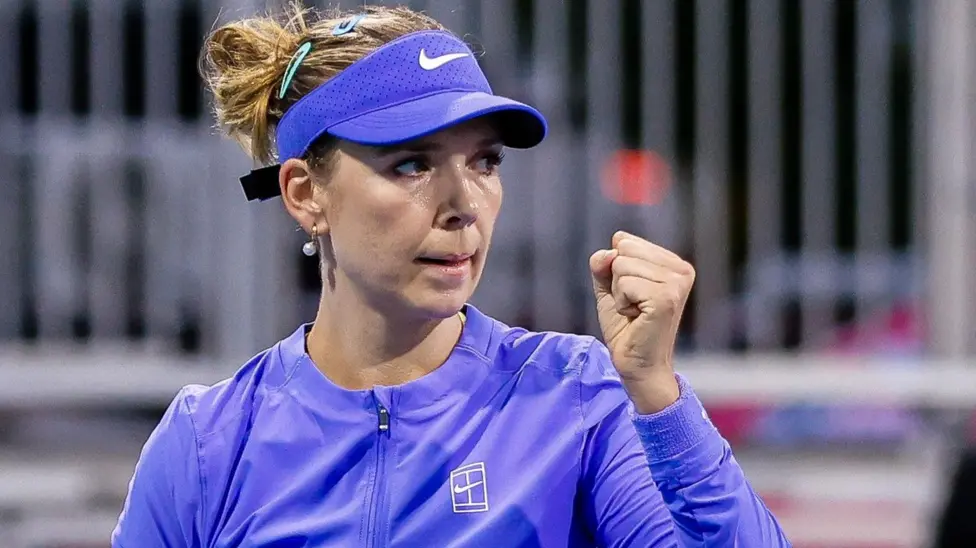
While Sabalenka dominated headlines, the Miami Open also delivered encouraging news for British tennis through Katie Boulter, who began her campaign with an impressive first-round victory.
Boulter defeated Spain’s Jessica Bouzas Maneiro 7-6 (11-9), 6-4 in a tightly contested match that demanded resilience as much as shot-making. The British player saved six set points during a dramatic first-set tie-break after trailing heavily — a turnaround that showcased growing confidence.
Having recently won the Ostrava Open and climbed back inside the world’s top 70 following a difficult ranking drop, Boulter appears to be rediscovering momentum at the right moment.
She described the match as physically and mentally demanding, acknowledging the quality of her opponent while highlighting the aggressive tennis required to secure victory.
Next, she faces Danish world number 16 Clara Tauson, a matchup that promises another stern test but also an opportunity to continue her upward trajectory.
A Wider Moment for Tennis Reflection
Sabalenka’s criticism may fade from headlines in the coming weeks, replaced by match results and new rivalries. Yet the issues she raised are unlikely to disappear.
Professional tennis stands at a crossroads between commercial expansion and athlete sustainability. As tournaments grow and global audiences expand, the pressure on players inevitably increases.
The question is no longer whether the schedule is demanding — everyone acknowledges that reality. The debate now centers on how much strain elite athletes can realistically endure without compromising performance or health.
Sabalenka’s remarks, delivered in the glow of victory rather than defeat, carry added weight precisely because they come from a position of strength.
She is not complaining from the sidelines. She is winning — and still warning that something needs to change.
For now, the world number one moves forward, trophy in hand and eyes on Miami. But her message lingers: in a sport defined by endurance, even the strongest players eventually need space to breathe.


There are no comments yet. Be the first to comment!