














































































































































Barcelona Hit by Raphinha Injury Blow Ahead of Champions League Clash with Atletico Madrid
Raphinha Set to Miss Barcelona vs Atletico Madrid Champions League Quarter-Final After Devastating Hamstring Injury
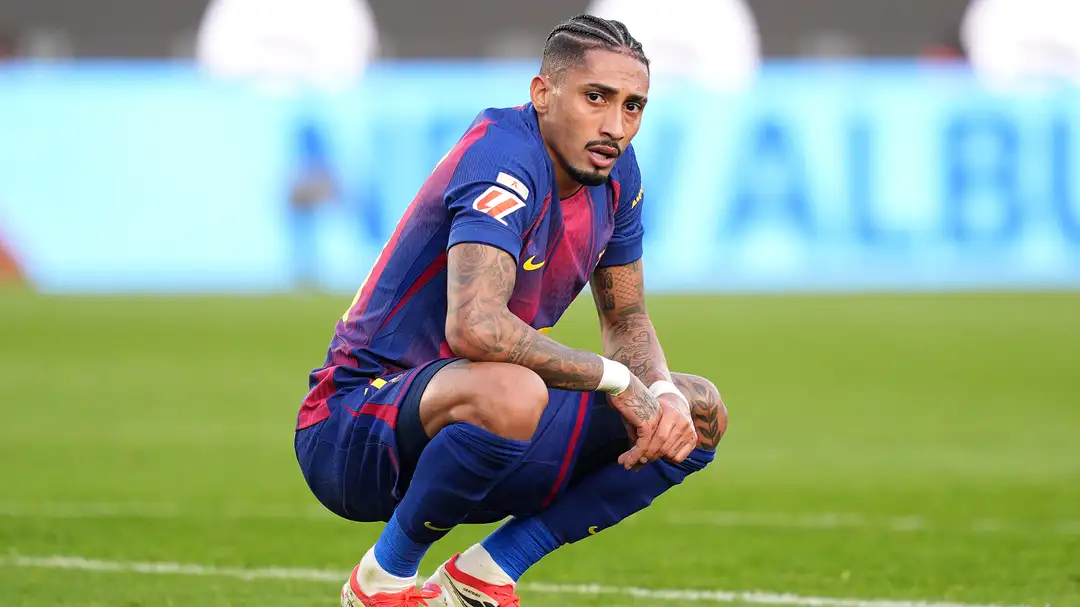
Barcelona’s preparations for one of the defining moments of their season have suffered a major setback after confirmation that Raphinha will miss both legs of the Champions League quarter-final tie against Atletico Madrid. The Brazilian winger, who has been one of the most influential figures in Hansi Flick’s revitalised Barcelona side, now faces several weeks on the sidelines following a hamstring injury sustained during international duty.
What initially appeared to be a precautionary substitution has turned into a significant problem for both club and country — and perhaps a decisive turning point in Barcelona’s European ambitions.
A Massive Blow for Barcelona and Hansi Flick’s Tactical Plans
Few players have embodied Barcelona’s attacking identity this season quite like Raphinha. Under Hansi Flick, the Brazilian has evolved from a dynamic wide option into a central pillar of the team’s offensive structure. His relentless pressing, vertical running, and improved decision-making in the final third have made him indispensable.
That is precisely why news of his injury landed so heavily in Catalonia.
Barcelona confirmed that the 29-year-old will be unavailable for at least five weeks, immediately ruling him out of both Champions League fixtures against Atletico Madrid — scheduled for April 8 and April 14 — as well as several crucial domestic matches.
For Flick, the timing could hardly be worse. The German coach has built a system reliant on wide forwards who can stretch defensive lines while contributing aggressively in transition. Raphinha has executed that role almost perfectly this season, delivering 19 goals and eight assists across 31 appearances in all competitions.
Numbers alone, however, only tell part of the story. His tactical discipline and defensive work rate have allowed Barcelona to maintain balance between attack and control — a balance Flick has worked tirelessly to establish since arriving at the club.
Removing that element forces an immediate rethink.
How the Injury Happened During Brazil vs France Friendly
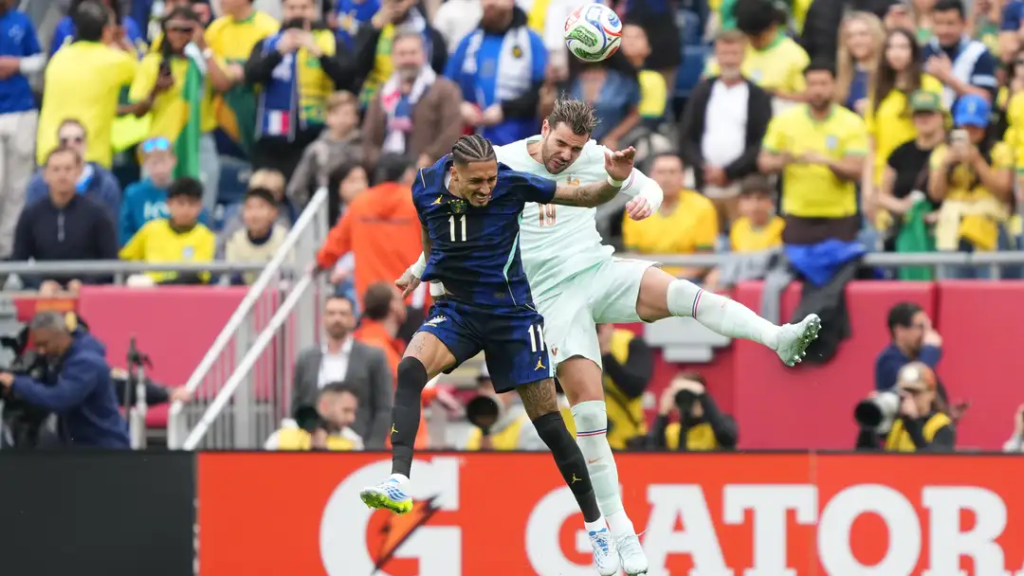
The injury occurred far from Camp Nou, during Brazil’s international friendly against France in Boston. Raphinha began the match brightly, showcasing sharp movement and attacking intent that caused problems for the French defence early on.
But toward the end of the first half, signs of discomfort began to appear.
The winger was substituted at half-time in Brazil’s eventual 2–1 defeat, initially described by national team staff as a precautionary decision. Brazil head coach Carlo Ancelotti downplayed concerns in his post-match comments, suggesting the change was simply to avoid risk.
At the time, there was cautious optimism.
Subsequent medical examinations, however, revealed a right hamstring injury more serious than first believed. Tests conducted by the Brazilian Football Federation confirmed muscle damage, prompting an immediate return to Barcelona for further evaluation and treatment.
The club’s official statement later confirmed supporters’ fears: a recovery period of approximately five weeks.
Barcelona Confirm Recovery Timeline and Treatment Plan
Barcelona moved quickly to clarify the situation, releasing a detailed medical update outlining the next steps in Raphinha’s rehabilitation.
According to the club, the player will now begin a structured recovery program designed to manage muscle healing while preventing recurrence — a crucial consideration with hamstring injuries, which are notoriously delicate for explosive attackers.
The estimated timeline effectively ends any hope of participation in the Champions League quarter-final against Atletico Madrid. Even a faster-than-expected recovery would leave little margin for match fitness ahead of such high-intensity fixtures.
The absence also impacts Barcelona’s La Liga campaign, where every point matters as the title race tightens.
Currently holding a four-point advantage over Real Madrid, Flick’s side face a demanding run of fixtures immediately after the international break, including domestic encounters that mirror their European opponents.
In short, the schedule offers no breathing room.
Why Raphinha Has Been So Important to Barcelona This Season
Raphinha’s importance extends beyond goals and assists. This season has arguably been the most complete of his career, showcasing maturity and consistency that were sometimes questioned during earlier stages of his Barcelona tenure.
Under Flick, his role has expanded tactically. Rather than remaining glued to the touchline, he frequently drifts inside to create overloads, combining with midfield runners and allowing full-backs to push higher up the pitch.
His pressing intensity has also become a defining feature. Barcelona’s improved defensive transitions often begin with Raphinha leading the press, forcing turnovers high up the field.
That contribution is difficult to replace with a single player.
Flick now faces several tactical dilemmas:
- Whether to promote a younger winger into the starting lineup
- Adjust formation to compensate for lost width
- Or redistribute attacking responsibility among central players
Each option carries risks, especially against an Atletico Madrid side known for tactical discipline and defensive organisation.
Atletico Madrid Tie Suddenly Becomes Even More Complicated
The Champions League quarter-final against Atletico Madrid was already expected to be a finely balanced contest defined by small margins.
Diego Simeone’s teams thrive on exploiting weaknesses, and Barcelona’s forced reshuffle could provide exactly the kind of instability Atletico look to punish.
Without Raphinha’s pace stretching the flank, Barcelona may find it harder to break compact defensive blocks — an area where Atletico traditionally excel. The Brazilian’s absence also removes a reliable outlet during counterattacks, potentially allowing Atletico to press higher without fear of being exposed in behind.
European knockout ties often hinge on moments rather than dominance. Losing a player capable of producing decisive actions in tight spaces changes the emotional and tactical dynamic of the tie entirely.
Brazil Also Feel the Loss as Ancelotti Reflects
Brazil head coach Carlo Ancelotti expressed disappointment following confirmation of the injury, particularly given Raphinha’s strong performance before being forced off.
“I think Raphinha played very well,” Ancelotti said after the match. “He had some muscle discomfort at the end of the first half and we had to substitute him.”
The Italian coach highlighted the winger’s movement and attacking contribution, noting how effectively he combined with teammates despite the eventual defeat.
For Brazil, the injury disrupts preparations ahead of upcoming international fixtures. For Barcelona, it represents a far greater long-term concern.
What Comes Next for Barcelona and Raphinha?
Attention now shifts toward recovery timelines and squad adaptation.
Barcelona’s medical staff will prioritise a cautious rehabilitation process, aiming for a return in early May — a stage of the season where domestic and European ambitions could still hang in the balance.
For Flick, the coming weeks will test squad depth and tactical flexibility. Successful teams are often defined not only by their stars but by how they respond when those stars are unavailable.
Raphinha, meanwhile, faces a frustrating period watching from the sidelines just as Barcelona enter the most decisive phase of their campaign.
In football, timing is everything. And for both player and club, this injury has arrived at the worst possible moment — just as Barcelona were preparing to chase European glory against Atletico Madrid on the Champions League stage.


There are no comments yet. Be the first to comment!