










































































































































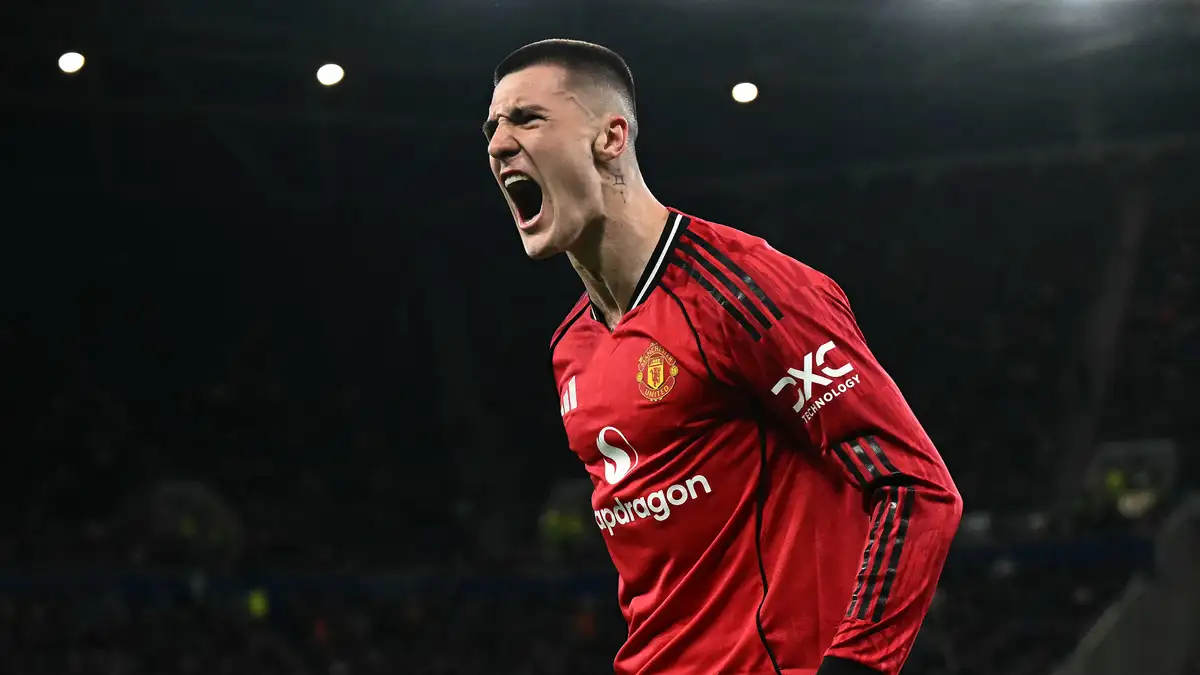
Benjamin Sesko: Not a ‘Super-Sub’ — a Super Striker Deserving More Than a Tag
“I Don’t Like It!” — Benjamin Sesko’s Agent Fires Back at the ‘Super-Sub’ Label as Manchester United’s Striker Stakes His Claim
There are labels in football that flatter on the surface and diminish underneath. “Super-sub” is one of them.
It sounds complimentary. It carries a certain romance, too — the idea of a game-changing forward arriving off the bench to tilt a contest in his side’s favour. But for players trying to establish themselves as complete No. 9s, it can also become a trap. A shorthand. A way of boxing in a striker whose game, and whose value, stretches far beyond the final 20 minutes.
That is exactly the frustration now bubbling up around Benjamin Sesko at Manchester United.
The Slovenian forward has been one of United’s sharpest attacking weapons in the opening months of 2026, and yet much of the conversation around him has centred on one phrase: super-sub. It is the kind of tag that spreads quickly once television pundits get hold of it, especially when a player repeatedly changes matches from the bench. Sesko has done that often enough to make the description feel convenient.
His camp, however, clearly believe convenience is the problem.
Speaking with visible irritation, Sesko’s representative Elvis Basanovic made it known that he is not interested in hearing his client reduced to an impact substitute, even if the numbers from the bench are impressive. In his view, the nickname undersells a striker who has already shown he can deliver in multiple roles, in multiple game states, and under multiple kinds of pressure.
If anything, Basanovic’s message was simple: stop calling him a specialist, and start recognising him as a fully-formed centre-forward.
Benjamin Sesko and the ‘Super-Sub’ Debate: Why Manchester United’s Striker Deserves the ‘Super Striker’ Tag
There is a reason this debate has caught fire.
When Sesko arrived at Old Trafford, he did not come as a low-risk project or a squad curiosity. He arrived with expectation. Heavy expectation. The kind that follows young strikers with elite physical tools, a rising continental reputation, and a transfer fee that invites instant judgment. For a club like Manchester United, where every attacking signing is measured against history before he has even unpacked his bags, that pressure is amplified even further.
It has taken time, but the signs now are that Sesko has genuinely found his rhythm.
Under Michael Carrick, United’s attack has started to look more coherent, and Sesko has emerged as a major reason why. Since the turn of the year, he has been ruthless in front of goal, producing seven Premier League strikes in 2026 and giving United a different kind of threat: direct, mobile, aggressive, and increasingly composed when the key moment arrives.
Yet because a significant portion of that damage has come as a substitute, the broader picture has been blurred by the easiest narrative available.
Basanovic clearly wanted to correct that.
His response was not just emotional; it was statistical. And to be fair, the numbers support the argument.
“If you ask me about this name [Super-sub], I don’t like it,” he said. “I like ‘super striker’ much more. I think Benjamin is a super striker. He has started 13 games this year, coming off the bench in 13 games. He scored half of his goals when he started the game and half when he came off the bench. We can see that he is a complete striker and Benjamin is someone who deserves the name ‘super striker’.”
That is not the quote of an agent trying to create drama for the sake of it. It is the quote of someone pushing back against a narrative he feels is becoming lazy.
And honestly, he may have a point.
A true super-sub, in the classic sense, is often a player whose qualities are particularly suited to tiring defences — explosive pace, chaos, unpredictability, one moment of sharpness. Useful? Absolutely. But usually there is also an implied limitation: maybe he is not trusted from the start, maybe he is not complete enough to lead the line for 90 minutes, maybe he is more of a tactical weapon than a central pillar.
That implication does not sit neatly with what Sesko has shown.
He has not merely been effective late in games; he has been productive across different usage patterns. He has started matches. He has entered difficult ones. He has scored in both contexts. And perhaps most importantly, he has looked increasingly like a striker whose all-round game is maturing rather than narrowing.
That matters.
Sesko’s profile has always suggested more than just a poacher. He is tall, yes, but not static. He can run in behind. He can attack space early. He can pin centre-backs physically without becoming easy to read. He is improving with his back to goal. And in a league where the best forwards are often those who can mix penalty-box instincts with transitional threat, he is beginning to look like a proper Premier League striker.
That is why the phrase “super-sub,” while catchy, feels too small.

The Bigger Picture at Manchester United: Why Michael Carrick May Be Protecting, Not Limiting, Benjamin Sesko
This is where the conversation gets more interesting.
Because while Basanovic is right to defend his player, there is also a strong argument that Michael Carrick’s handling of Sesko has been sensible rather than dismissive.
At top clubs, selection is not always a simple meritocracy played out in public. Sometimes it is about rhythm, load management, recovery data, opponent profiles, and the long-term protection of an expensive asset. Particularly with young forwards, and especially in the Premier League, there is a constant balancing act between development and overexposure.
That may well be what is happening here.
Sesko’s recent fitness concerns have not been a secret, and it would make complete sense if United’s coaching and sports science staff have chosen to manage his minutes carefully. There is a huge difference between being “on the bench because the manager doesn’t trust you” and “on the bench because the club wants to preserve your sharpness while building you up.”
From the outside, both can look similar. Inside the dressing room, they are worlds apart.
Using Sesko as an impact option may have offered several advantages all at once. It has allowed him to attack tired defences with maximum explosiveness. It has reduced the physical burden of constant 90-minute outings. It has protected him from the relentless scrutiny that follows every expensive United striker during rough patches. And, crucially, it has helped keep his confidence high because his contributions are directly influencing results.
That is not mismanagement. If anything, it looks like modern squad planning.
United’s staff will be fully aware that the real objective is not simply squeezing out one purple patch in spring 2026. The bigger aim is shaping Sesko into a leading striker for the 2026–27 season and beyond. If that means rotating his starts, controlling his workload, and introducing him strategically while he settles into the demands of English football, it is hard to argue with the logic.
And the results, at least so far, suggest it is working.
Why the ‘Super-Sub’ Label Can Be Dangerous for a Young Striker
Football language has a funny way of sticking.
A nickname gets repeated on television, printed in headlines, turned into social clips, and before long it starts shaping how a player is perceived — sometimes more than the actual performances. That can be useful when the branding helps. It can also become restrictive when it narrows a player’s identity.
For a 22-year-old striker, that matters more than people think.
Once a forward is widely viewed as a bench specialist, every selection decision gets interpreted through that lens. If he starts, it becomes “Can he do it from the first whistle?” If he is left out, it reinforces the old label. If he scores late, the cliché grows stronger. The player ends up fighting both opponents and a storyline.
That is likely why Basanovic reacted so strongly.
He understands the market. He understands how reputations are built. And he understands that strikers, maybe more than any other outfield players, are often judged by simplistic categories: clinical or wasteful, mobile or static, star or squad player, starter or super-sub.
Sesko is at the stage of his career where those labels can shape perception across clubs, coaches, and even national-team conversations. If he is truly viewed as a long-term starting No. 9 — and Manchester United almost certainly signed him with that in mind — then his representatives will naturally want that image protected.
In that sense, this was not just an emotional outburst. It was brand management. Smart brand management, actually.
Manchester United’s Top-Four Push Gives Benjamin Sesko an Immediate Opportunity
There is also a practical reason this discussion matters right now.
Manchester United are not coasting through the final weeks of the season. They are in a proper fight.
Sitting third in the Premier League on 55 points from 31 matches, they are only a point clear of Aston Villa, and that margin is slim enough to make every remaining fixture feel loaded. Champions League qualification is very much in their hands, but it is not secured. A strong finish is still required, and in those kinds of run-ins, the difference between finishing third and slipping into a more uncomfortable position often comes down to one striker getting hot at the right moment.
Sesko looks capable of being that striker.
Whether Carrick continues to use him as a rotational starter or as a bench weapon, the reality is simple: United need his goals. They need his movement. They need the unpredictability he brings when matches become stretched. They also need, at some point, to answer the question his agent is now asking publicly — is he a useful option, or is he the option?
The upcoming meeting with Leeds United at Old Trafford on April 13 suddenly carries a little more intrigue because of that.
If Sesko starts and scores, the “super-sub” conversation takes a hit.
If he comes off the bench and scores again, the debate gets louder.
Either way, the spotlight is not leaving him now.
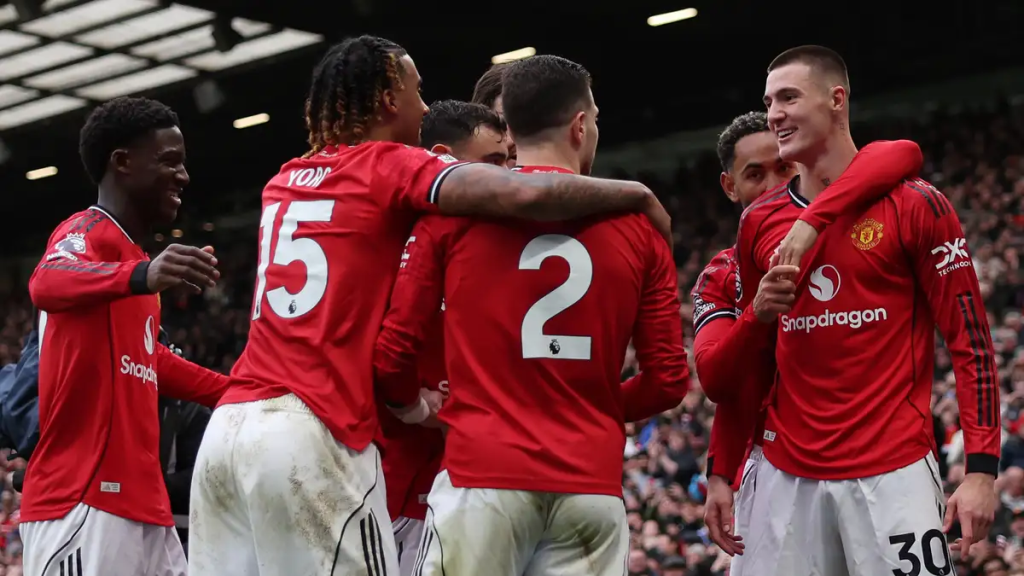
Final Word: Benjamin Sesko Is Forcing Manchester United to Reframe the Narrative
In truth, this is one of those football arguments where both sides can claim some ground.
Yes, Benjamin Sesko has been devastating as an impact substitute. That part is undeniable. The label did not appear from nowhere, and no one should pretend the role has not suited him. He has changed games, rescued momentum, and delivered exactly what managers dream of from the bench.
But Basanovic is right about something important: that role should not become the whole story.
A striker who has started as many matches as he has come off the bench, and who has split his goals evenly between both situations, is not simply a “super-sub.” He is a striker proving he can produce regardless of the script. That is a different thing entirely.
And maybe that is the real takeaway here.
Manchester United may have found a useful game-changer in the short term. But they may also be building something more valuable: a modern centre-forward who can influence matches in different ways while still growing into the complete package.
If the last few months are anything to go by, Sesko is no longer just auditioning for a larger role. He is actively demanding it — with his performances first, and now with his camp making sure the message lands publicly as well.
“Super-sub” makes for a neat headline.
“Super striker” may end up being the more accurate one.


There are no comments yet. Be the first to comment!