




















































































































































































































































































































































































































































































Bond, Bagpipes & Controversial Canadians: Why Curling Is Must-Watch Drama at the Winter Olympics
On the surface, it doesn’t quite scream Saturday night spectacle.
Eight men. Sixteen stones. A sheet of ice. The repetitive thud of granite colliding and the urgent shouts of “Hard!” echoing around an arena.
And yet, as the clock ticks toward 18:05 GMT and the gold medal match begins live on the BBC, millions will tune in. Phones in hand. Pints paused mid-air. Group chats lighting up. Because this isn’t just any fixture. This is Team GB versus Canada in an Olympic final. And when it comes to curling, that means something.
High in the Dolomites, in the elegant Alpine setting of Cortina, Bruce Mouat’s rink will chase history against their oldest rivals. Eleven days of tension, controversy, drama and—yes—the occasional lull have led to this. The sport some lazily dismiss as “ice bowls” is about to take centre stage.
If you’re wondering whether to dedicate your evening to it, here’s why curling is must-watch television.
A 102-Year Wait: Can Team GB Finally Rewrite Men’s Curling History?
Curling first appeared at the Winter Games in 1924. That was the last time British men stood atop the Olympic podium. Back then, only three teams competed. A different era. A different world.
The women struck gold in 2002 and again in 2022, carving their own chapters into British sporting folklore. But the men have flirted with glory without fully embracing it. Two podium finishes since 1924. Silver heartbreak in Beijing four years ago when Sweden edged them out. A painful final defeat at Sochi 2014 to a Canadian team skipped by Brad Jacobs.
And here’s the twist: Jacobs is back.
Among the British players he denied that day were Michael Goodfellow and Greg Drummond—now part of Team GB’s coaching set-up. David Murdoch, another beaten finalist from Sochi, now works as Canada’s high-performance director. The threads between these two nations are tightly woven.
Earlier in this tournament, Canada beat Britain in the round robin. That result lingers in the background like a bad omen. Or perhaps it’s just fuel.
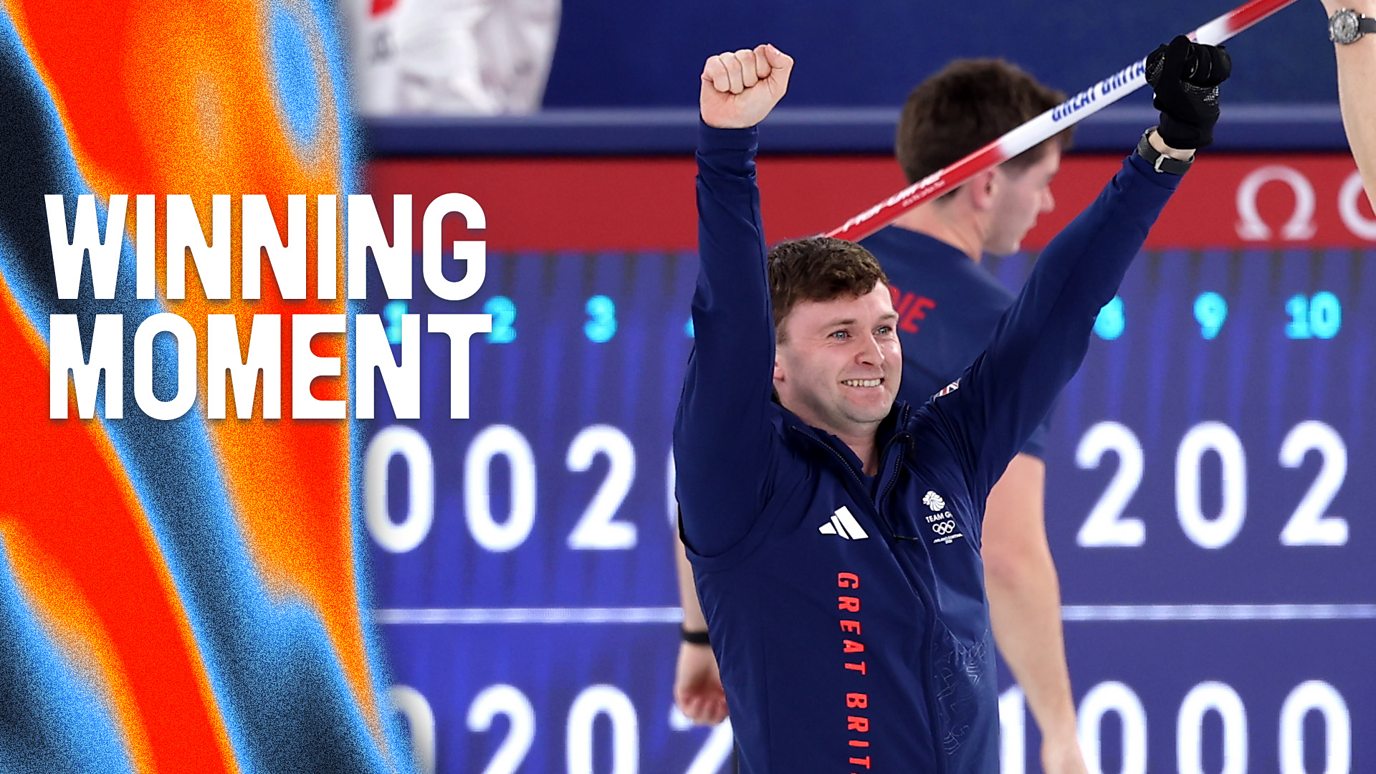
For Bruce Mouat and his rink, this isn’t just about gold. It’s about closing a century-long gap. It’s about rewriting the record books. It’s about ensuring that when people talk about British curling, they mention more than just the women’s triumphs.
The weight of 102 years rests quietly on those sliding stones.
Bond, Bagpipes & Controversial Canadians: Why Curling Is Must-Watch Beyond the Ice
Let’s be honest—Canada have provided more than their fair share of intrigue in Cortina.
There have been accusations. Murmurs of gamesmanship. Heated exchanges across the ice. Claims of illicit filming. Even lingering debates about whether a certain finger placement strayed from the acceptable into the questionable.
At one point, the narrative felt less Winter Olympics and more Cold War thriller.
The temperature has cooled slightly as the medal rounds approached, but Canada carry themselves with a swagger that fits the pantomime villain role rather neatly. They are unapologetically confident. Proud. Occasionally prickly.
And that edge adds flavour.
Sport thrives on rivalry, and this one is rich. Britain versus Canada isn’t just another fixture—it’s tradition. It’s familiarity. It’s knowing exactly what the other side will bring and still being unable to stop it.
Then there’s the venue.
The Cortina Curling Stadium is a charming relic of Olympic history. Originally built as an open-air arena for the 1956 Games, it blends old wooden bleachers with a modern shell. It even played host to scenes in the 1981 James Bond film For Your Eyes Only, where 007 found himself entangled with ice hockey players in suitably dramatic fashion.
It feels cinematic because it is.
When the noise cascades down from those stands, it rattles the ice. During the semi-final, one enterprising British supporter reportedly smuggled bagpipes into the arena—hidden inside a baby’s pram to bypass security. When they rang out, the effect was unmistakable. Scotland met the Alps in a swirl of tartan and granite.
Will the pipes make a return for the final? Hard to say. But the kilt-clad contingent will be there, voices primed, ready to roar Mouat and company toward history.
The Allure of Curling: From “Ice Bowls” to Prime-Time Theatre
Every Olympic cycle, the same pattern unfolds.
For three years and 50 weeks, curling occupies a quiet corner of the sporting landscape. Appreciated by its devoted following, largely overlooked by the rest. Then the Games arrive—and suddenly, it’s everywhere.
At first, it’s background viewing. Something on in the pub while waiting for ski jumping. A curiosity sandwiched between figure skating and snowboarding.
Then, almost imperceptibly, it hooks you.
You start noticing the nuance. The delicate draw that settles inches from the button. The ferocity of sweeping that can alter a stone’s destiny by centimetres. The tactical chess match unfolding end by end.
Office chatter shifts. Instead of debating VAR decisions, colleagues argue about hammer advantage. In pubs, strangers dissect shot selection. Social media lights up with slow-motion replays of perfectly weighted takeouts.
By the time the knockout rounds begin, you’re invested.
The semi-final win over Switzerland peaked at 3.4 million viewers on the BBC. That’s not niche. That’s mainstream.
And here’s the secret: curling is compelling because it blends tension and precision like few other sports. There’s nowhere to hide. One misjudged release. One under-swept stone. One tactical error—and momentum swings violently.
As the gold medal match approaches, heart rates spike. Palms sweat. Groans echo with every near miss. Roars erupt with every perfectly executed shot.
It’s theatre. Pure and simple.
Old Rivals, New Stakes: Team GB vs Canada in Cortina
Bruce Mouat’s rink has matured since Beijing. The silver medal still stings, but it sharpened rather than shattered them. There’s a calmness now. A belief forged in previous disappointment.
Canada, meanwhile, arrive battle-hardened and unapologetic. Their path to the final has been eventful, but they are here on merit. Skilled. Ruthless. Experienced.
The round-robin meeting proved they can edge Britain. But finals are different creatures. The margins shrink. The noise grows louder. Every end feels heavier.
And don’t underestimate the psychological element. Familiarity breeds intensity. These teams know each other’s rhythms, strengths and tendencies. That knowledge adds layers to the tactical battle.
Will Mouat opt for aggression early, seeking to unsettle Canada? Or will he trust patience, allowing the match to unfold before striking? Will Jacobs lean into the villain narrative, embracing the hostility? Or will he let his stones do the talking?
The beauty of curling is that it unfolds gradually. Unlike the frenetic pace of downhill skiing or the explosive chaos of ice hockey, it builds. End by end. Shot by shot.
The tension accumulates.
And when the final stone slides, everything—102 years of waiting, days of controversy, nights of noise—will condense into a single moment.
Why You Should Watch
Because history might be made.
Because rivalry adds spice.
Because controversy fuels narrative.
Because bagpipes in an Alpine arena deserve appreciation.
Because curling, against expectation, delivers drama that seeps under the skin.
On Saturday night, when granite meets ice in Cortina, don’t dismiss it as background noise. Settle in. Let the rhythm take hold. Feel the incremental rise of tension.
You might start watching out of curiosity.
You’ll likely stay because you can’t look away.
And if Team GB finally end that 102-year wait, you’ll be glad you were there to see it.


There are no comments yet. Be the first to comment!