






































































































































































Christian Pulisic Left ‘Shocked’ as USMNT Kit Confusion Overshadows Belgium Friendly Defeat
International friendlies are supposed to provide clarity — a chance to experiment, sharpen tactics, and build rhythm ahead of major tournaments. Instead, the United States men’s national team walked away from their meeting with Belgium in Atlanta with more questions than answers, after what Christian Pulisic described as a “strange” situation that simply “can’t happen” at international level.
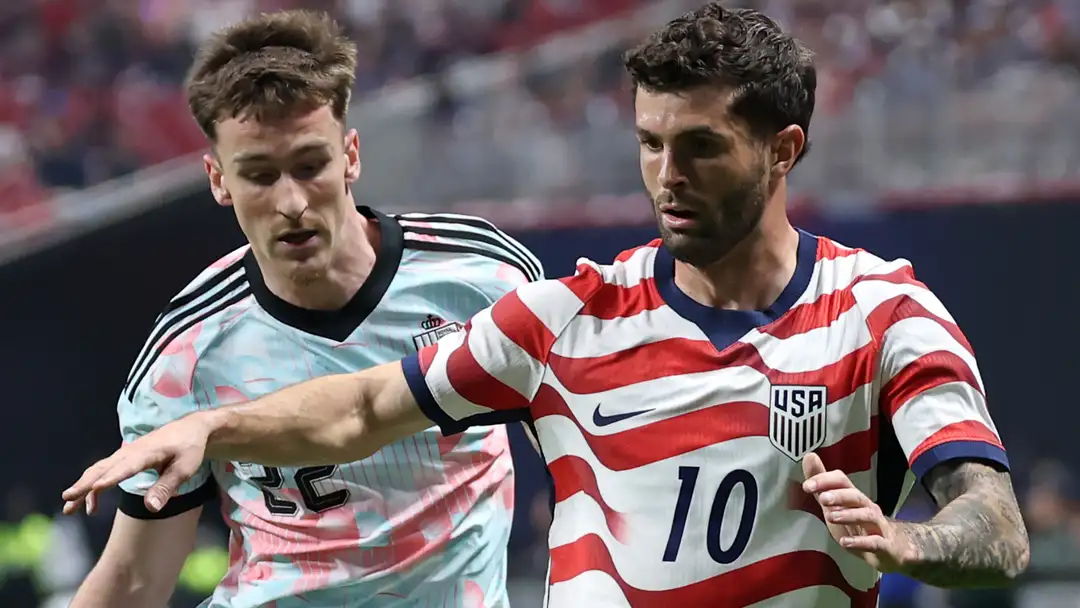
Mauricio Pochettino’s USMNT suffered a heavy 5–2 defeat at Mercedes-Benz Stadium, but the scoreline only told part of the story. Long before Belgium seized control in the second half, confusion on the pitch had already unsettled players on both sides, triggered by a surprising kit clash that many inside the American camp believe should never have been approved.
For a squad preparing to host a World Cup on home soil this summer, the night served as an uncomfortable reminder that even small details can have outsized consequences.
Christian Pulisic Questions ‘Strange’ USMNT vs Belgium Kit Decision
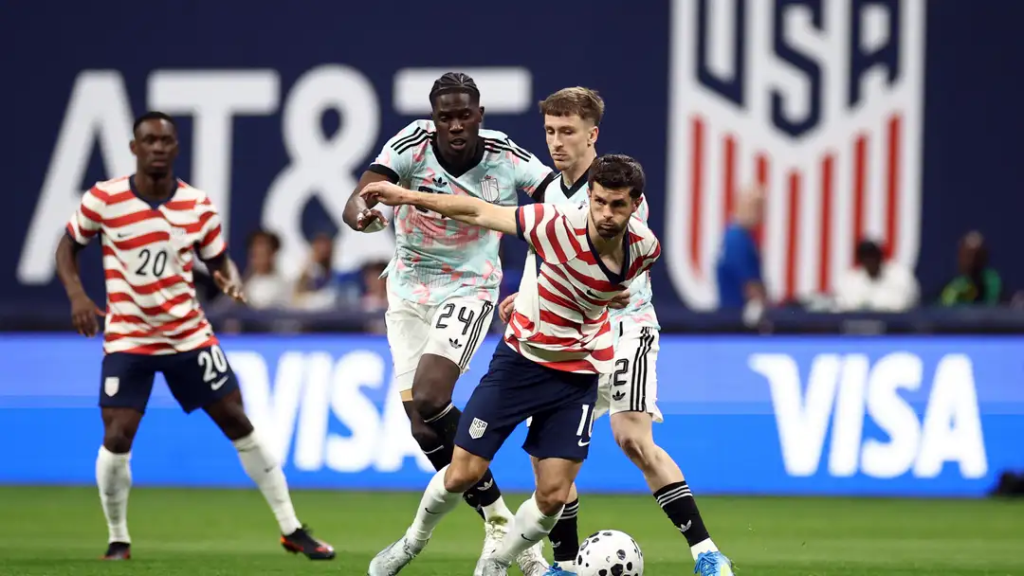
The evening was meant to showcase a new chapter for the U.S. national team. Facing elite European opposition, the Americans debuted their new home jersey — a bold design featuring red-and-white wavy horizontal stripes inspired by the national flag, paired with blue shorts.
Belgium, meanwhile, opted for their away strip: predominantly white shirts accented with soft pink and light blue tones, combined with white shorts. On paper, match officials determined the two kits were sufficiently distinct.
On the field, however, reality told a different story.
Players quickly discovered that distinguishing teammates from opponents required far more concentration than usual. Under stadium lights and at game speed, the visual similarities between the shirts created hesitation — a subtle disruption that professional footballers rarely experience at international level.
Pulisic, the team’s captain and creative heartbeat, did not hide his disbelief afterwards.
“It’s not an excuse at all,” he told reporters, careful to acknowledge the defeat on sporting merit. “But that can’t happen. That was a bit strange.”
His tone was measured rather than angry, yet the message was unmistakable. At the highest level of the game, visual clarity is fundamental. Split-second decisions rely heavily on instinct — and instinct depends on instantly recognizing movement and colour.
When that recognition falters, rhythm disappears.
USMNT Second-Half Collapse Against Belgium Raises Bigger Concerns
For 45 minutes, the United States competed well. The sides went into halftime level at 1–1, with Pochettino’s team showing flashes of the aggressive pressing and vertical attacking play the Argentine coach has tried to implement since taking charge.
Then came the collapse.
Belgium found space with increasing ease, exploiting defensive gaps as the American structure loosened. Five goals conceded ultimately reflected deeper tactical and concentration issues, but several players suggested the visual confusion contributed to hesitation during key moments.
Pulisic explained how difficult it became to make quick decisions.
“A lot of times you get the ball and you look up, you can’t really lock in on something,” he said. “You base it off the colour of the shirt — that’s how it works. And when it’s very similar, it’s difficult.”
In modern football, where transitions happen in seconds, even a fraction of doubt can derail an attacking move or delay defensive reactions. Players rely on peripheral vision almost as much as direct sight; when colours blur together, automatic patterns suddenly require conscious thought.
That extra moment can be costly — and against a technically sharp Belgian side, it proved decisive.
Match Officials Defend Decision Despite USMNT Frustration
According to U.S. Soccer representatives, the kit selection process followed established protocol. Officials confirmed that a multi-layered review took place prior to kickoff, including communication between both federations and approval from referees.
Images of both uniforms were reportedly sent to match officials ahead of time, followed by a coordination meeting in which potential conflicts were discussed. Referees were given additional opportunities to review the kits on match day and raised no objections.
From an administrative perspective, procedures were followed.
From the players’ perspective, the system failed.
Pulisic revealed that the issue only became obvious once warm-up tops were removed shortly before kickoff — a moment that reportedly left players visibly surprised.
“Everyone was a bit shocked,” he admitted.
The disconnect highlights a recurring tension in football between theoretical assessments and real-world experience. What looks distinct in photographs or meeting rooms may appear entirely different under match conditions.
Weston McKennie Echoes Christian Pulisic Concerns After Belgium Loss
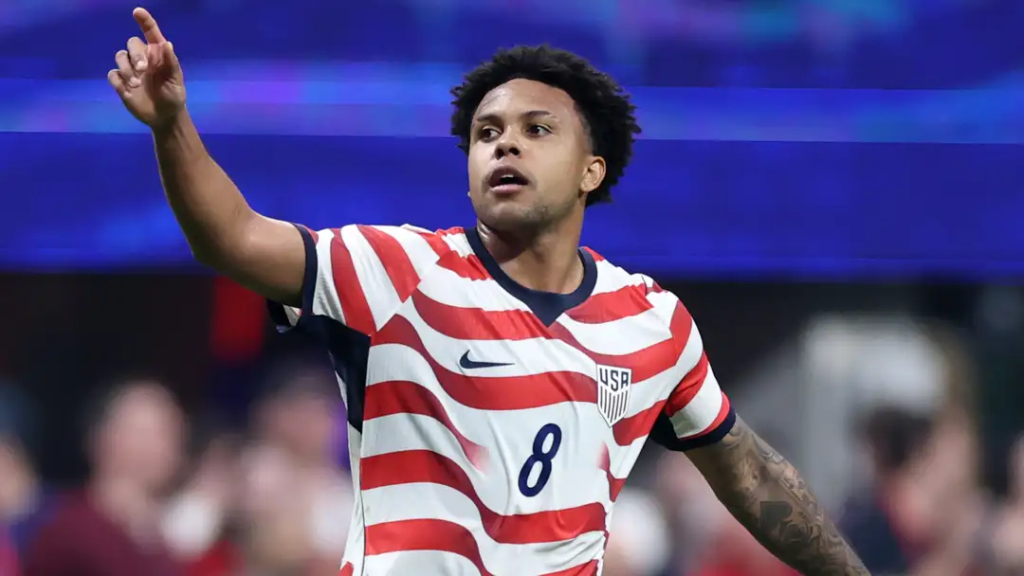
Midfielder Weston McKennie, fresh off signing a contract extension with Juventus, echoed Pulisic’s comments while also refusing to use the situation as an excuse.
“I won’t put that at all as an excuse,” McKennie said. “But definitely it was a little bit difficult.”
His explanation offered a player’s perspective rarely heard publicly.
“When you do a quick glance to tell which was which, it was almost like a 50-50 thing,” he explained. “You had to maybe take a little more time on the ball before making a decision.”
That extra touch — normally harmless — can disrupt tempo and allow defenders to recover. Against top international opposition, hesitation becomes vulnerability.
Belgium capitalised ruthlessly.
Mauricio Pochettino’s USMNT Facing Key Lessons Before World Cup
Beyond the unusual circumstances, the match exposed broader challenges facing Mauricio Pochettino’s evolving squad.
The defeat ended a five-game unbeaten run and served as a sobering checkpoint ahead of a World Cup that will place enormous expectations on the host nation. Pochettino has emphasized adaptability and mental resilience since his appointment, but Atlanta demonstrated how quickly momentum can shift.
Friendly matches often reveal weaknesses more honestly than competitive fixtures because experimentation removes safety nets. Rotations, tactical adjustments, and unfamiliar combinations are part of the process — yet clarity and communication remain essential foundations.
If anything, the evening underlined how fine margins remain at international level.
Portugal Test Awaits USMNT After Christian Pulisic’s ‘Shocked’ Reaction
The United States will remain in Georgia for their next friendly against Portugal, offering an immediate opportunity to respond. The Portuguese side will be without Cristiano Ronaldo, who continues to manage an injury, though his absence does little to reduce the challenge.
For Pulisic and his teammates, the focus now shifts toward restoring confidence and sharpening execution rather than dwelling on controversy.
Friendlies rarely linger long in memory, but lessons learned within them often shape tournament performances months later.
And perhaps that is the lasting significance of this strange night in Atlanta.
The result hurt, the confusion frustrated players, and questions linger about officiating decisions. Yet the experience may ultimately serve as a valuable reminder: preparation for a World Cup extends beyond tactics and fitness. Every detail matters — even the colour of a shirt.
As Pulisic made clear, such situations should never define a match again.
Because at international level, clarity is not a luxury.
It’s a necessity.


There are no comments yet. Be the first to comment!