









Inside the 2026 T20 World Cup: Trends and Tactics Set to Shape the Tournament
Roll up, roll up. The 2026 T20 World Cup is almost here, and while it feels like only yesterday that India were lifting the trophy in Barbados, the shortest format never stands still. This latest edition, co-hosted by India and Sri Lanka and kicking off in Colombo, promises more runs, more sixes and more tactical twists than ever before.
T20 cricket has always been about innovation, but the last couple of years have accelerated that evolution. From bold batting calls to the rethinking of death-overs bowling, the game is being played at breakneck speed — both literally and strategically. Before the first ball is bowled, it’s worth taking a step back to examine the trends and tactics to look for at the 2026 T20 World Cup, because they may well decide who goes deep into the tournament and who goes home early.
Could the 2026 T20 World Cup Be the Tournament of the ‘Retired Out’?
Once seen as a last-resort embarrassment, the ‘retired out’ is quickly becoming an accepted — even smart — tactical move in T20 cricket. The law has always been there, but 2025 was the year teams truly embraced it.
There were 26 instances of batters retiring out in international and domestic T20s last year. That figure represents almost half of all such dismissals in the history of the format. It has already happened again this year, including twice in the Big Bash and a remarkable moment in New Zealand’s Super Smash, where Northern Districts retired out two batters in the same innings.
The T20 World Cup has already dipped its toe into these waters. England were involved when Namibia’s Nikolaas Davin walked off in the 2024 group stage to make way for David Wiese. At the time, it felt shocking. Now, it feels inevitable.
With strike-rates climbing and margins getting thinner, teams may be less patient with batters who chew up deliveries without scoring quickly. If conditions demand instant acceleration, don’t be surprised if the 2026 T20 World Cup becomes the tournament where retiring out goes fully mainstream.
Spinners at the Death: A Tactical Shift Gaining Momentum
For years, the death overs belonged almost exclusively to fast bowlers. Yorkers, slower balls and hard lengths were the accepted formula. But that orthodoxy is being challenged — and the numbers back it up.
Not since 2013 have spinners bowled as much at the death as they did in 2025. Across T20s between full-member nations, spinners delivered 24% of balls in the final five overs last year. Crucially, they did so with success.
Spinner economy rates at the death have dropped significantly over the past two years, down to 7.68 runs per over. In 2025, they were actually more economical than seamers in the same phase.
Afghanistan lead the way, unsurprisingly, with more than half of their death-over deliveries bowled by spinners. India and Sri Lanka follow closely, while England’s increasing use of spin late in innings has flown under the radar. Under Harry Brook’s leadership in The Hundred, spinners have bowled over 40% of death deliveries — more than double the figure seen during Jos Buttler’s captaincy.
Expect this trend to feature heavily at the 2026 T20 World Cup, particularly on slower Sri Lankan surfaces.
Scoring Rates Hit New Highs in the Run-Up to the 2026 T20 World Cup
No trend defines modern T20 cricket more clearly than relentless scoring. But even by recent standards, 2025 was extraordinary.
For the first time in history, the average strike-rate across all men’s T20s surpassed 130. The jump from the previous year was dramatic — more than eight runs per 100 balls. Six-hitting followed the same trajectory, with one maximum struck every 17.4 deliveries last year. In 2021, that figure stood at 23.1.
Sixes are now hit more than twice as often as they were in the format’s first season back in 2003.
The IPL’s impact player rule has played a part, effectively allowing teams to field an extra batter. But the trend is mirrored in international cricket, suggesting a broader shift in mindset rather than a competition-specific quirk.
The message for teams at the 2026 T20 World Cup is clear: par scores are rising, and conservative batting plans are increasingly outdated.
Match-Ups Matter — But Not Like They Used To
“Match-up” has become one of the most overused words in modern cricket. Data-driven strategies dictate which bowler faces which batter, often based on handedness and spin direction.
The traditional logic says batters struggle most against spin that turns the ball away from them. Yet when you look at the elite level, that theory is beginning to unravel.
Most of the top-ranked T20 batters in the world now boast strong records against their supposed negative match-ups. India’s Abhishek Sharma, the leading T20 batter globally, averages over 43 and strikes at more than 180 against off-spin despite being left-handed. England’s Phil Salt and Jos Buttler both score freely against left-arm spin.
Even among bowlers, the trend holds. Rashid Khan, Varun Chakravarthy and Adil Rashid show minimal variation in effectiveness against right and left-handers.
At the 2026 T20 World Cup, match-ups will still matter — but execution, skill and adaptability matter more.
Left-Handers, Right-Handers and Gambhir’s Blueprint
Another quiet but significant shift is the growing prevalence of left-handed batters. In 2025, lefties faced 35% of all deliveries in T20s between full-member nations — the highest figure ever recorded.
This is no accident. Right-left combinations disrupt lengths, complicate boundary protection and reduce the impact of spin match-ups. No team has embraced this more than India.
Under Gautam Gambhir, left-handers have faced more than half of India’s deliveries since the start of 2024 — a huge jump from the Rahul Dravid era. England, by contrast, have been slow to adapt, though the inclusion of Ben Duckett, Jacob Bethell and Sam Curran for this World Cup hints at a change in thinking.
England’s Powerplay Blueprint at the 2026 T20 World Cup
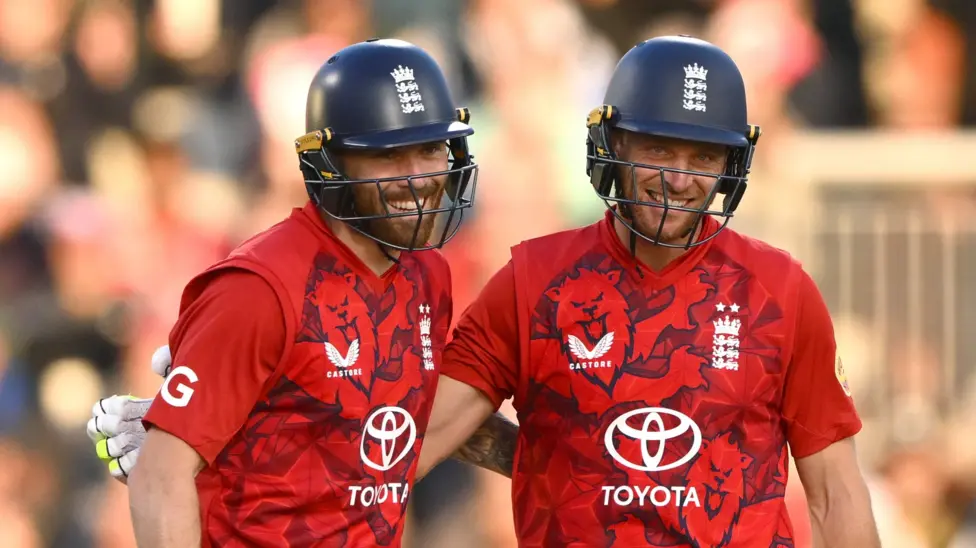
If England are to contend seriously, their powerplay approach will be crucial — and it hinges on Phil Salt and Jos Buttler.
Salt is the aggressor. Since the start of 2024, he has struck at nearly 150 in the first two overs, among the fastest starters at this World Cup. Buttler, by contrast, often begins quietly, striking at just over 100 early on.
But the dynamic flips by the end of the powerplay. Once set, Buttler explodes, striking at over 170 in overs five and six. Salt remains aggressive, but Buttler often finishes the phase even faster.
It’s a deliberate, complementary strategy — one that could define England’s fortunes at the 2026 T20 World Cup.
In a tournament shaped by fine margins, these evolving trends may be the difference between lifting the trophy and watching from home.


There are no comments yet. Be the first to comment!