


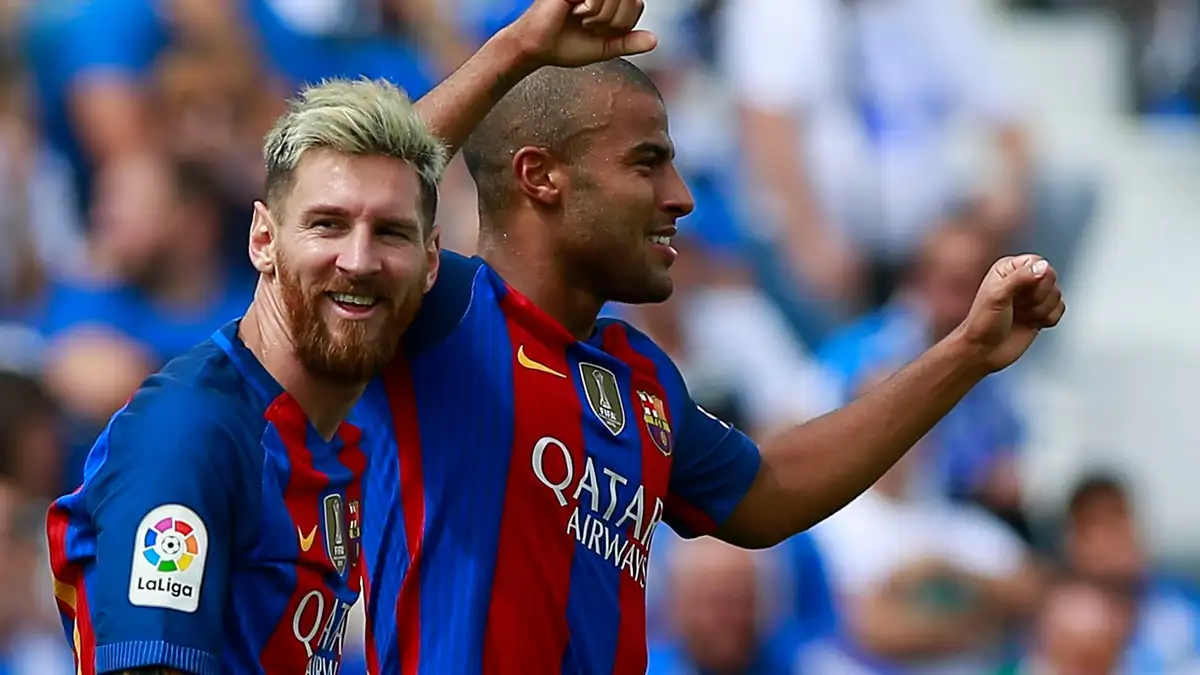
Barcelona treble winner announces retirement at age of 32 in emotional video
Barcelona treble winner Rafinha Alcantara says goodbye to football at just 32 after long battle with injuries
There are football retirements that feel inevitable, and then there are those that land with a quiet sadness. The announcement from Rafinha Alcantara belongs firmly in the second category. A Barcelona treble winner, a player raised inside one of the most famous football families in the modern game, Rafinha has officially brought his professional career to an end at the age of 32.
The former Barcelona, PSG and Brazil midfielder confirmed his decision in an emotional video shared across his social media channels, finally closing the door on a career that has been defined as much by what might have been as by what was achieved. For months, even years, there had been uncertainty around his future. Now, with honesty and calm reflection, Rafinha has chosen to step away.
Born into football, burdened by expectation from day one
Rafinha’s story was never going to be a simple one. Football was not just his profession, it was his inheritance. He is the son of Mazinho, a World Cup winner with Brazil in 1994, and the younger brother of Thiago Alcantara, one of the most technically gifted midfielders of his generation. From a young age, comparisons followed him everywhere.
Unlike Thiago, whose career flowed with elegance from Barcelona to Bayern Munich and later Liverpool, Rafinha’s path was more uneven. The talent was obvious. A left-footed midfielder with vision, intelligence and a natural understanding of space, he looked tailor-made for Barcelona’s philosophy. Coaches trusted him. Teammates respected him. But football, cruel as it can be, never allowed him the continuity required to truly flourish.
He arrived at La Masia as a teenager and progressed steadily through the ranks. In November 2011, he made his senior debut for Barcelona, a moment that felt like the beginning of a long and glittering future at the Camp Nou. In reality, it would mark the start of a career constantly interrupted by physical setbacks.
A fragmented Barcelona career despite treble-winning glory
Rafinha spent nine years officially on Barcelona’s books, yet that number hides the fractured nature of his time at the club. Across those seasons, he made just 90 senior appearances for the Blaugrana. For a midfielder so highly rated in his youth, that statistic tells its own story.
His peak came during the 2014–15 season, one of the most iconic campaigns in Barcelona’s history. Under Luis Enrique, the Catalan giants swept all before them, winning La Liga, the Copa del Rey and the Champions League to complete a historic treble. Rafinha played 36 matches across all competitions that season, contributing with maturity and discipline in a squad filled with superstars.
That season should have been the launchpad. Instead, it became the high point. In September 2015, just as he was establishing himself, Rafinha suffered a serious knee injury that sidelined him for more than six months. It was the first of several devastating blows to his body and, ultimately, his career.
An emotional farewell message from Rafinha
In his retirement video, Rafinha spoke with a softness that reflected years of internal struggle. There was no bitterness, no anger, just acceptance.
“After some time away from the pitch and following a long recovery, the time has come to make something important public. I have made the decision to retire,” he said.
“A little over a year ago, I suffered a knee injury which, unfortunately, prevents me from returning to compete at the highest level. It was hard to accept that I couldn’t continue.”
He went on to thank those who stood by him during the hardest moments: “Thank you to my family for always being there, to everyone for the love and support. Thank you, football, for making me who I am. Goodbye.”
It was a message that resonated deeply with fans who understood the emotional toll of a career cut short not by lack of ability, but by a body that refused to cooperate.
Barcelona’s tribute to a treble winner
Although more than six years have passed since Rafinha last wore the Barcelona shirt, the club did not forget him. Shortly after his announcement, Barcelona posted a public tribute, thanking him for representing the club “with pride and commitment” and wishing him well in the next chapter of his life.
The image attached to the message was telling: Rafinha holding the La Liga trophy from the 2014–15 season. It was a reminder that, despite everything, his name is etched into one of the greatest teams the club has ever assembled. Not every career is measured purely in longevity. Some are defined by moments, and Rafinha’s contribution to that treble side will always matter.
Luis Enrique, trust, and cruel timing
Few coaches believed in Rafinha as strongly as Luis Enrique. The two worked together at Barcelona B, during Rafinha’s loan spell at Celta Vigo, and later with the first team. Under Enrique, Rafinha enjoyed freedom and responsibility, often being trusted in big matches.
That trust made the timing of his injuries even more painful. The first serious knee problem in 2015 was followed by more setbacks. Yet Rafinha showed resilience, returning to feature on one of the most iconic nights in Champions League history: Barcelona’s astonishing 6–1 comeback against PSG in 2017. He started that match, a testament to how highly he was still regarded when fit.
But the body continued to betray him. A meniscus issue soon followed, and in November 2018, a second cruciate ligament injury effectively ended his Barcelona career. By then, the cycle of recovery and relapse had become relentless.
Brief revivals and the search for stability
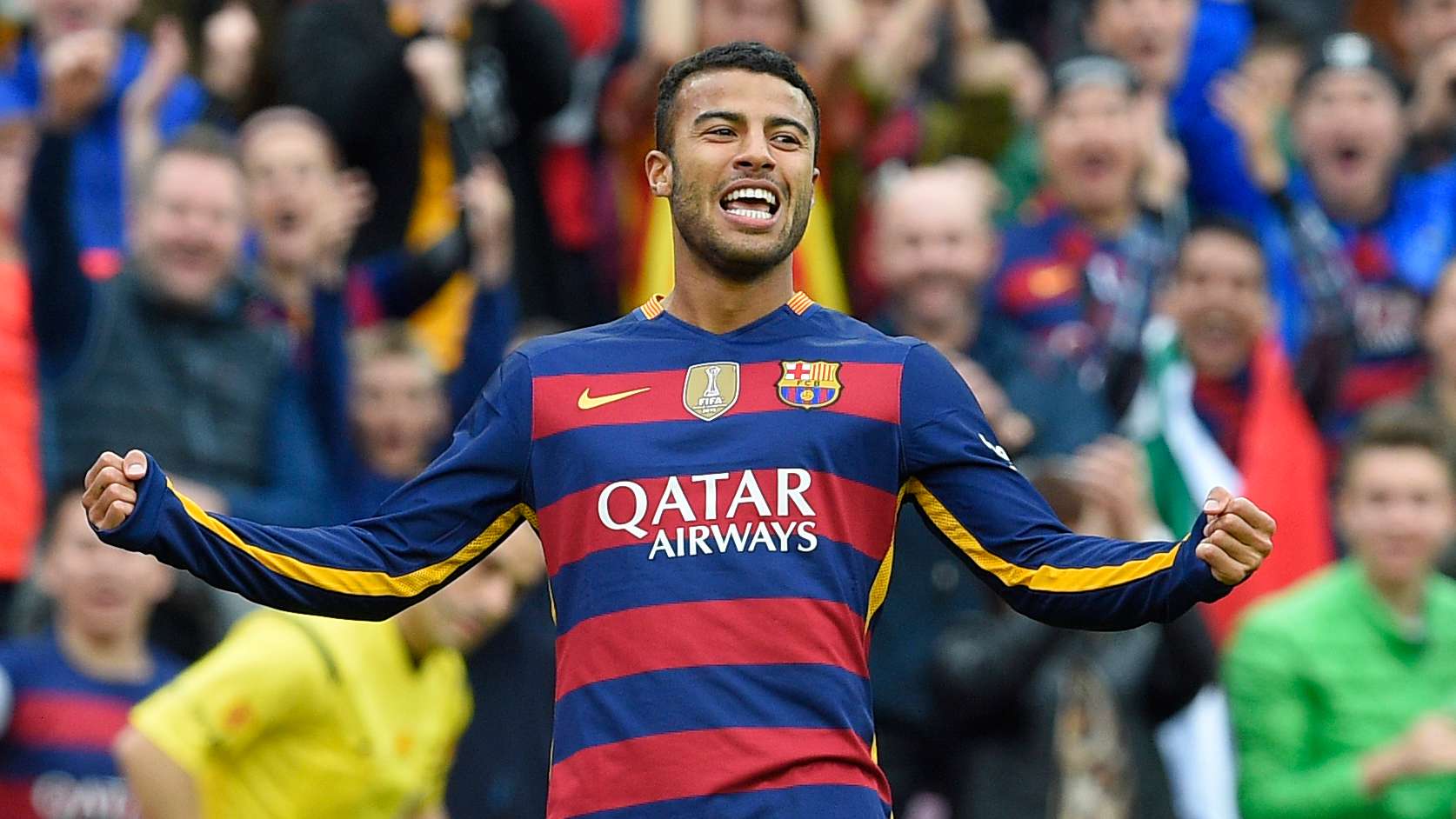
FBL-ESP-LIGA-BARCELONA-ESPANYOL
The latter years of Rafinha’s career were defined by attempts to find rhythm elsewhere. Loan spells at Inter Milan and Celta Vigo provided glimpses of his quality. At Inter, he showed composure and intelligence in midfield. At Celta, he looked comfortable and influential. Yet the pattern remained the same: promising starts, followed by physical setbacks.
A permanent move to Paris Saint-Germain in 2020 felt like a chance to reset. Instead, injuries followed him to France. Later, a move to Qatari side Al Arabi offered a less intense environment, but even there, a serious knee injury brought everything to a halt. After more than a year on the sidelines, the conclusion became unavoidable.
A career defined by resilience, not regret
It would be easy to frame Rafinha’s retirement as a story of unfulfilled potential, but that would miss the full picture. He won major trophies. He played for elite clubs. He shared dressing rooms with some of the greatest players of his era. More importantly, he fought relentlessly to return every time his body failed him.
Retiring at 32 is early by modern standards, but it does not diminish what he achieved. If anything, it highlights the mental strength required to keep going as long as he did.
What comes next for Rafinha Alcantara?
Rafinha has not yet outlined his plans for life after football. Given his background, a future in coaching, mentoring or football development would feel natural. Raised in the game, shaped by La Masia, and guided by elite coaches, he carries a wealth of knowledge that could benefit the next generation.
For now, though, the focus is on closure. The emotional video was not just an announcement; it was a release. A chance to finally step away from the cycle of hope and disappointment that had defined the final years of his career.
A quiet goodbye, but a lasting legacy
Football often celebrates the loud exits, the grand farewells, the packed stadiums. Rafinha’s retirement was different. It was understated, reflective, and deeply human. Yet his place in Barcelona’s treble-winning history ensures he will not be forgotten.
For a Barcelona treble winner announcing retirement at 32, the sadness is understandable. But so too is the pride. Rafinha Alcantara may be stepping away from the pitch, but his journey, marked by talent, resilience and dignity, will continue to resonate long after the final whistle.


There are no comments yet. Be the first to comment!