







France and the Six Nations Defence: Why Les Bleus Still Look the Team to Beat
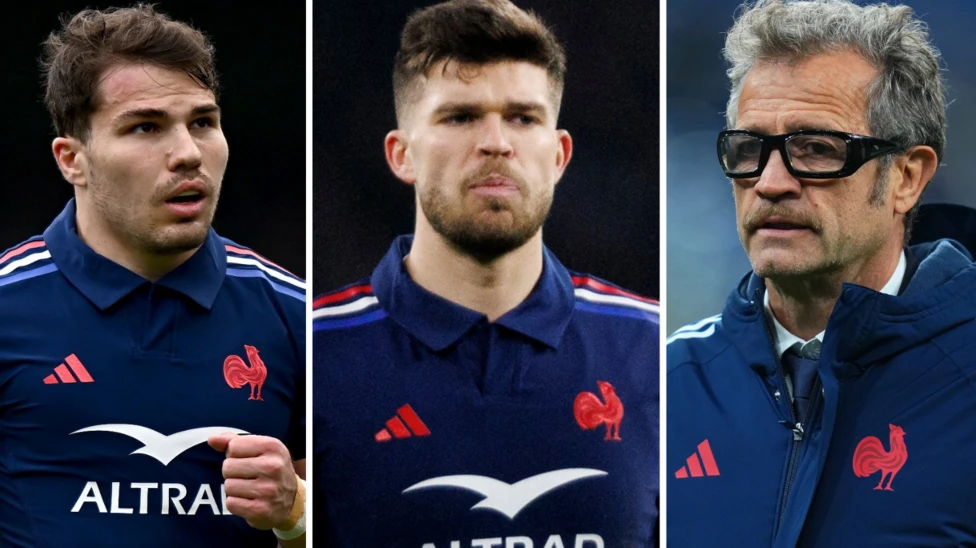
France arrive at the new Six Nations campaign with a familiar label attached to them: favourites. As reigning champions, packed with world-class talent and led once again by the inspirational Antoine Dupont, France’s Six Nations defence feels less like a bold ambition and more like an expectation. Three home games, a forward pack built for dominance and a backline overflowing with pace and imagination only add to that sense of inevitability.
And yet, scratch beneath the surface and the picture is far more nuanced. Like Ireland, their opening opponents in Paris, France’s build-up has been anything but smooth. Squad changes, notable absentees and unresolved selection debates have created intrigue just as anticipation builds for the Stade de France curtain-raiser. As the tournament gets under way, the question is not simply whether France can defend their title — but how convincingly they can do it.
France’s Six Nations Defence Begins Amid Change
On paper, Fabien Galthié still has one of the most intimidating squads in world rugby. Dupont is fit again. The pack remains physically imposing. The outside backs are capable of scoring from anywhere. Yet much of the pre-tournament discussion in France has centred not on who is involved, but on who is not.
Galthié raised eyebrows when he named a 42-man group that omitted Grégory Alldritt, Gaël Fickou and Damian Penaud — three players who have been central to France’s recent success. Penaud, in particular, has been synonymous with French attacking flair. His 40 tries in 59 caps include four against Ireland, and his appetite for scoring has often defined France’s Six Nations campaigns.
There is no denying his defensive shortcomings, but losing such a natural finisher inevitably changes the complexion of the French backline. The upside, however, is opportunity. Theo Attissogbe, still only 21, steps in on the right wing. Injuries have disrupted his club season with Pau, yet his Six Nations pedigree is already established after three tries in two appearances last year.
On the opposite flank, Louis Bielle-Biarrey remains one of the most lethal wide men in Europe. Eighteen tries in 17 games this season underline his form, and even without Penaud, France look more than capable of hurting teams out wide.
Experience Lost, Youth Gained in Midfield
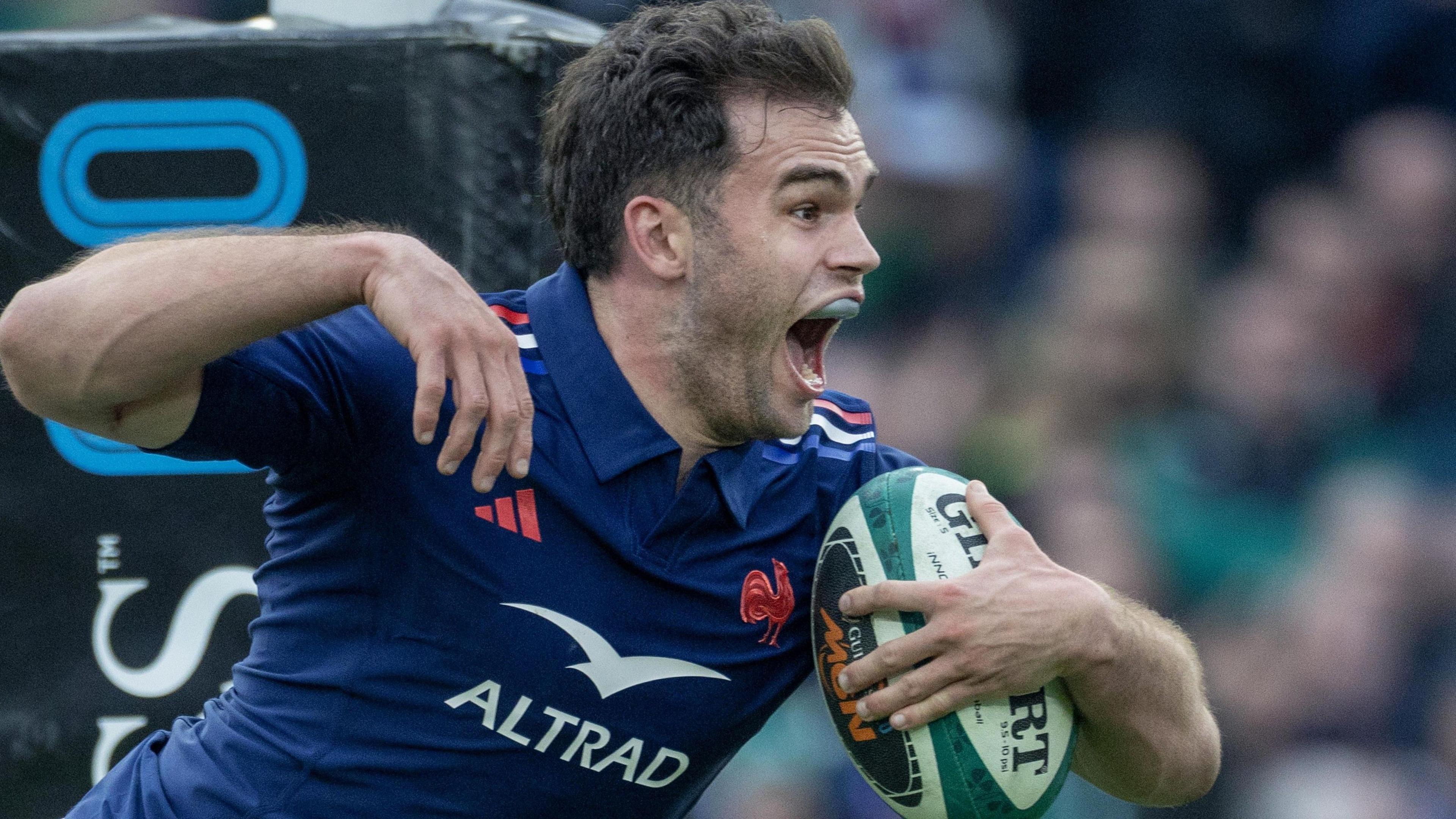
Damian Penaud pictured scoring against Ireland last year
Gaël Fickou’s absence is arguably the most emotionally significant. With 98 caps, he has been the glue in France’s midfield for years — defensively astute, tactically sharp and calm under pressure. Losing that experience would worry most teams, but France are blessed with depth.
Yoram Moefana and Nicolas Depoortere, both of Bordeaux, start against Ireland. At 25 and 23 respectively, they represent the next generation of French midfield talent. Their familiarity at club level could be a quiet strength in such a high-stakes opener.
Behind them, Kalvin Gourgues offers something different again. The Toulouse youngster has been electric this season and brings versatility across the backline. His inclusion on the bench hints at a future cornerstone of the French setup.
Alldritt Out, Jelonch In: A Shift in the Back Row
Grégory Alldritt’s omission was particularly striking given his leadership role last year when Dupont was injured. In his absence, Anthony Jelonch gets a chance to re-establish himself. Remarkably, he has not started a Six Nations game in three years and has not worn the number eight shirt since the 2023 World Cup.
Jelonch brings aggression, work rate and edge — qualities France value deeply — but his reintegration underlines a broader theme of transition within the squad. This is not quite the settled, finished product France appeared to be 12 months ago.
Prop Concerns Cast a Shadow Over France’s Six Nations Defence
While the headlines focus on backs and captains, the most pressing concern may lie in the front row. The absence of Uini Atonio, forced into retirement due to a heart condition, leaves a significant hole at tight-head prop. Thibaud Flament is also unavailable, missing the Ireland match to support his wife during fertility treatment.
Dorian Aldegheri steps in, but his Six Nations experience is limited. As French rugby analyst Paul Eddison points out, tight-head remains an area opponents will target.
“France definitely have an issue at prop,” Eddison explains. “Atonio was hugely popular and incredibly important. They’re still working out who fills that role long-term.”
Ireland, incidentally, face similar issues, which may blunt the impact in the opening fixture. But over the course of the tournament, France’s depth at prop will be tested.
The Jalibert–Dupont Axis Under the Spotlight
Perhaps the most fascinating subplot of France’s Six Nations defence is the renewed partnership between Antoine Dupont and Matthieu Jalibert. With Romain Ntamack injured, Jalibert gets the nod at fly-half — a decision loaded with history.
Despite his obvious talent, Jalibert’s relationship with Galthié has been complicated. He famously refused a bench role in November 2024 and was dropped midway through last year’s Six Nations. Yet his form for Bordeaux this season has been impossible to ignore.
This will be only the second time Dupont and Jalibert have started together since the 2023 World Cup. The chemistry remains a work in progress, but the potential is mouth-watering.
“Jalibert is ridiculous on his day,” says Eddison. “The key is making sure he gets ball in hand. If that happens, France become even more dangerous.”
Dupont’s all-round brilliance should, in theory, make the partnership work. If it clicks, France’s attack could reach another level entirely.
Young Guns Ready to Announce Themselves
Beyond the established stars, France’s bench tells its own story. Kalvin Gourgues, Lenni Nouchi and Nicolas Depoortere are all products of a conveyor belt that continues to churn out elite talent.
Nouchi, captain of France’s 2023 Under-20 world champions, has already amassed significant Top 14 experience with Montpellier. Depoortere, meanwhile, has been scoring tries for fun alongside Moefana at Bordeaux.
“This could be the year everyone realises just how good Depoortere is,” Eddison notes. “He’s a silky runner and understands Moefana’s game perfectly.”
Can France Deliver on Expectation?
All of which brings us back to the central question. How are France shaping up for their Six Nations defence? The answer is: impressively, but not flawlessly.
They still possess arguably the strongest squad in the tournament. They still have Dupont, still have home advantage, and still have the attacking weapons to dismantle anyone. But they are also evolving, testing combinations and managing vulnerabilities.
If France do retain their title, it may not be through dominance alone, but through adaptability. And with the World Cup only 18 months away, that might be exactly the test they need.


There are no comments yet. Be the first to comment!