























































































Harry Brook Apologises After Nightclub Incident as England Scrutinise Team Culture
England cricket rarely lacks drama, but the timing of the latest controversy involving Harry Brook has made it particularly uncomfortable. Just as the dust settles on a bruising Ashes defeat, revelations about an off-field incident in New Zealand have reignited debate around discipline, leadership and culture within the England camp.
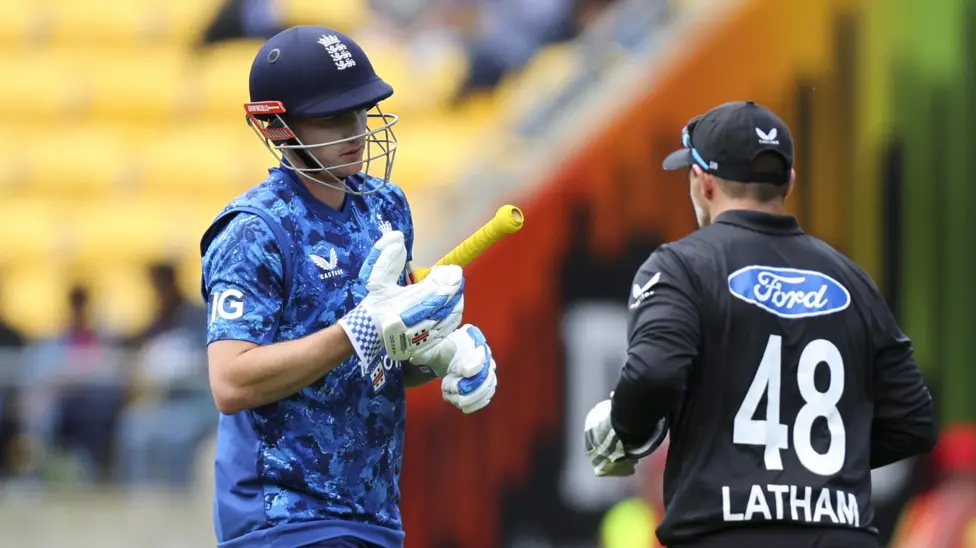
Brook, England’s white-ball captain and Test vice-captain, has issued a public apology after being involved in an altercation with a nightclub bouncer on the eve of a one-day international in Wellington. While the 26-year-old has avoided losing the captaincy, the incident has left a mark — not just on his reputation, but on a touring party already under intense scrutiny.
Harry Brook Incident Adds to England’s Off-Field Concerns

Highlights: Australia beat England on day five to seal 4-1 Ashes win
Details of the episode emerged via a report in the Telegraph, revealing that Brook was struck by a bouncer after being refused entry to a nightclub the night before the third ODI against New Zealand. That match, played the following afternoon, saw England stumble badly at the top of the order — slumping to 31-4, with Brook dismissed for just six.
Although England eventually lost by only two wickets, the optics were damaging. The fact the incident occurred less than 24 hours before an international fixture raised serious questions about professionalism, especially given Brook’s leadership role within the squad.
The England and Wales Cricket Board (ECB) responded swiftly behind closed doors. Brook has reportedly been fined around £30,000 and placed on a final warning regarding his future conduct. Crucially, however, he has retained his role as white-ball captain and is set to lead England into the upcoming T20 World Cup and the limited-overs tour of Sri Lanka.
Brook Issues Public Apology and Accepts Responsibility
In a carefully worded statement, Brook did not attempt to downplay the seriousness of the situation. Instead, he offered a full apology, acknowledging the embarrassment caused to both himself and the England team.
“Representing England is the greatest honour of all, which I take seriously, and I am deeply sorry for letting down my team-mates, coaches and supporters.”
Brook went on to stress that he had reflected on the lessons learned, highlighting responsibility, professionalism and the standards expected of those representing their country. The tone of the apology suggested a player keen to move forward, aware that trust will need to be rebuilt over time rather than instantly restored.
The ECB echoed that sentiment in its own statement, confirming the matter had been handled through a “formal and confidential disciplinary process” and that the player had acknowledged his conduct fell below expectations.
Ashes Fallout Intensifies Focus on England Team Culture
The timing of the revelation could hardly be worse. England’s 4-1 Ashes defeat in Australia was already being viewed as a tour where standards slipped both on and off the field. Accusations of a lax team culture had followed the squad throughout the series, most notably after a controversial mid-tour break in Noosa.
During that four-night stay — which followed two nights in Brisbane — some England players were reported to have spent up to six consecutive days drinking. Brook was photographed in a Noosa bar, while footage of team-mate Ben Duckett appearing intoxicated was also circulated on social media.
Compounding matters further, on the same night as the Wellington altercation, Brook and young batter Jacob Bethell were filmed drinking, with the video later shared online. While England director of cricket Rob Key later clarified that his initial “informal warning” related to the social media clip rather than the nightclub incident itself, the overall picture painted was one of blurred boundaries.
Rob Key and ECB Leadership Under Pressure
Before the fourth Ashes Test, Rob Key admitted he had spoken to both Brook and Bethell about their behaviour in New Zealand, while also confirming that England’s conduct in Noosa would be reviewed. At the time, Key suggested the incident did not warrant formal sanctions, a stance that has since been questioned.
Former England captain Michael Vaughan has been among the most vocal critics. Speaking to BBC Sport, Vaughan suggested the revelation of Brook’s behaviour only reinforced broader concerns about England’s culture.
“It doesn’t surprise me,” Vaughan said. “For it to have broken on the back of losing 4-1 in Australia, on the back of what happened in Noosa, on the looseness of the players on the pitch — it tells you that whole culture around the team, the group and the ECB needs to change.”
Vaughan went further, pointing the finger not just at players, but at the governing body’s leadership.
“The highest level of management of the ECB need to look at themselves in the mirror,” he added. “They were clearly trying to brush that under the carpet because the Ashes were coming up.”
Leadership Question Marks After Brook Disciplinary Issue
One of the most contentious aspects of the situation is Brook’s status as a leader. He was appointed England’s white-ball captain last year and promoted to Test vice-captain ahead of the Ashes, replacing Ollie Pope. Vaughan questioned whether the ECB acted decisively enough when the issue first arose.
“When the captain of England has a disciplinary issue, you have got to deal with it there and then,” Vaughan said. “I have been around the block for many years and it generally always comes out.”
In Vaughan’s view, delaying action only magnified the fallout, turning a private disciplinary matter into a public debate months later — and at the worst possible moment.
Performance Dip Adds to Pressure on Brook
Brook’s on-field form during the Ashes has also been underwhelming. The normally destructive batter managed 358 runs across 10 innings without registering a century, struggling to impose himself in conditions that previously suited his attacking style.
That context matters. When results are strong, off-field indiscretions are often forgiven more quickly. When performances dip and defeats mount, scrutiny becomes relentless.
What Comes Next for Harry Brook and England?
For now, Brook remains in place as England’s white-ball leader, trusted to front the side in the T20 World Cup and beyond. His apology has been accepted, but the warning is clear: another misstep could have far more serious consequences.
More broadly, the ECB has confirmed a full review of the Ashes tour, with chief executive Richard Gould stating that “behaviour” will be a key area of focus. Whether that leads to structural changes, tighter discipline, or a rethink of how England balance freedom with responsibility remains to be seen.
What is certain is that the Harry Brook nightclub incident has become a symbol of a wider issue — one that England cannot afford to ignore if they are to rebuild credibility, consistency and success on the international stage.


There are no comments yet. Be the first to comment!