


































Heat, Luck and Survival: How Jannik Sinner Escaped the Melbourne Furnace at the Australian Open
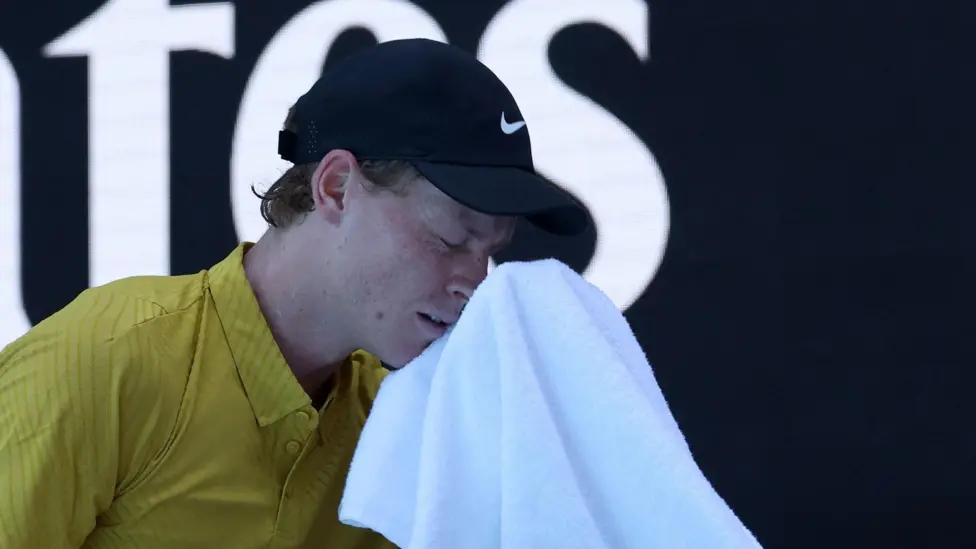
Jannik Sinner has built his reputation on precision, composure and relentless baseline control. But under the brutal Melbourne sun, even the calmest minds can fray. As temperatures surged towards 40C at the Australian Open, Sinner found himself fighting not just an inspired opponent, but his own body. In the end, luck, timing and the tournament’s heat rule combined to keep his title defence alive.
This was not the sort of victory that makes highlight reels. Instead, it was a raw, uncomfortable battle played on the edge of physical collapse — and one that perfectly captured how unforgiving Melbourne Park can be in extreme conditions.
Jannik Sinner and the Australian Open Heat: A Match on the Brink
Sinner’s third-round clash with American qualifier Eliot Spizzirri, ranked outside the world’s top 80, was meant to be routine. On paper, it was a mismatch. On court, in suffocating heat, it became something else entirely.
By the middle of the match, Sinner’s ambition of winning a third consecutive Australian Open title looked dangerously close to ending. The Italian struggled with cramp, his movement laboured, his usually fluent footwork reduced to short, cautious steps. Spizzirri, sensing vulnerability, played freely and fearlessly, pushing the top seed to places he did not want to go.
When Sinner later admitted, “I got lucky with the heat rule,” it did not feel like false modesty. It felt like honesty.
The Moment Everything Changed Under the Heat Rule
The pivotal moment came early in the third set. With the match locked at one set apiece, Sinner fell behind 3-1 and looked physically spent. Between points, he bent forward, hands on knees, searching for breath. From the stands, the signs were obvious: this was a player in trouble.
Then, almost theatrically, the Australian Open heat stress scale hit level five — the maximum reading. Play was suspended. The roof on Rod Laver Arena was ordered to close.
Within seconds, the dynamic of the match shifted.
Sinner limped off court and disappeared into the locker room, grateful for the enforced break. Spizzirri stood courtside, shaking his head in disbelief, knowing momentum had slipped from his grasp. The rules were applied correctly, but sport does not always feel fair in the moment.
Eight minutes later, the match resumed under a closed roof, cooler air circulating around the stadium. The temperature dropped significantly. So did the pressure on Sinner’s body.
Why the Australian Open Heat Rule Matters
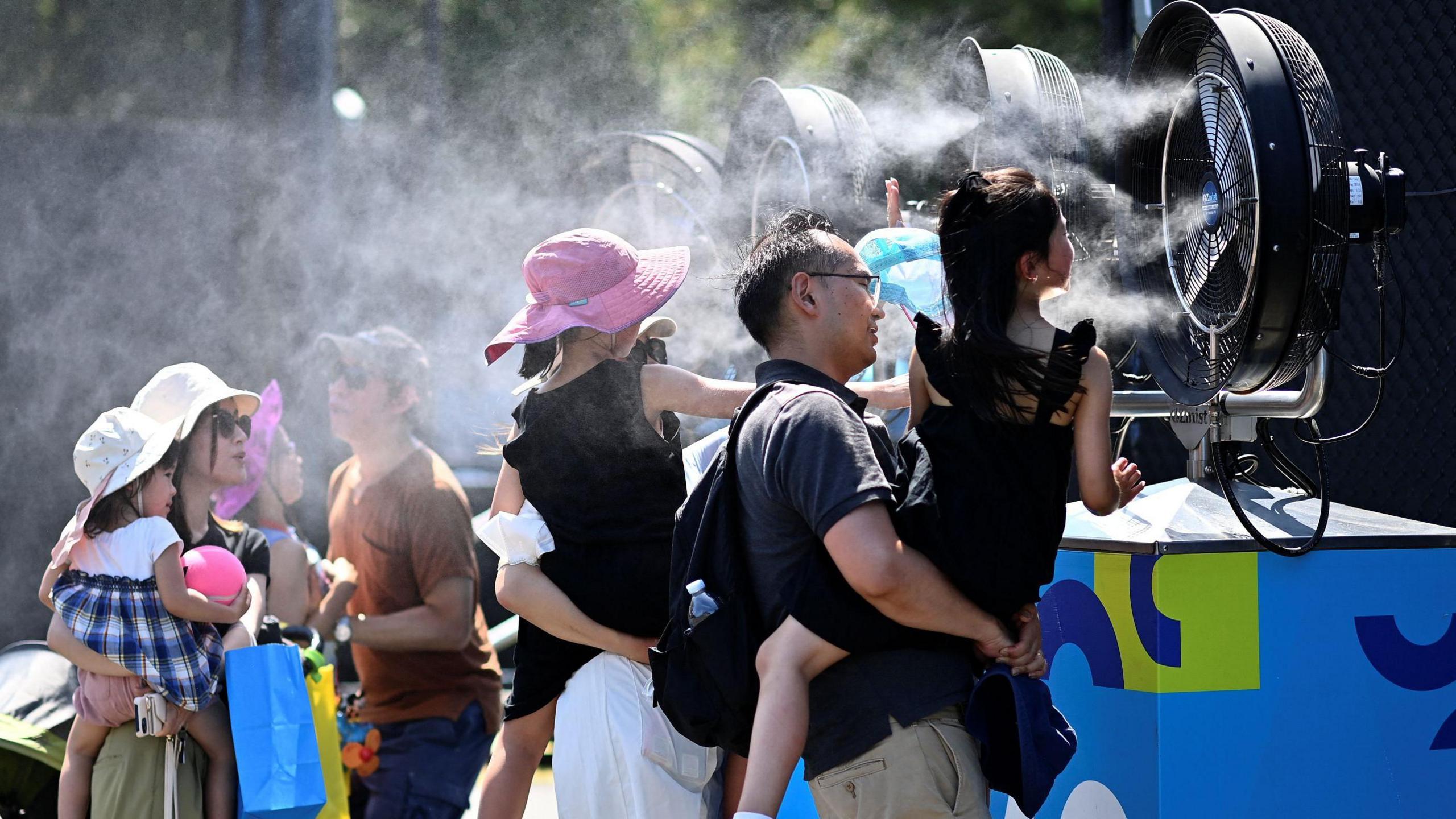
Fans stay cool at the Australian Open
The heat rule at the Australian Open exists for moments exactly like this. Unlike other Grand Slams, Melbourne uses a heat stress scale that factors in air temperature, humidity, wind speed and radiant heat from the sun.
When the scale reaches five, matches on show courts are paused at the end of an even-numbered game. The roof is closed, and climate control systems bring conditions back to a playable level.
In Sinner’s case, that intervention likely saved his tournament. He has openly struggled with extreme heat in the past, and his red hair and pale complexion have become almost symbolic of his battles with Melbourne’s conditions.
Once play resumed, Sinner immediately broke back. His movement was still cautious, but the panic had faded. The ball came off his racket with more authority. By the time he claimed the third set, the match had turned completely.
From Survival to Control: Sinner Takes Advantage
By the fourth set, played in a far more manageable 26C, Sinner looked like a different player. He still avoided sitting down at changeovers, conserving energy, but his timing was sharper and his shot selection more assertive.
Spizzirri, who had been brave and aggressive, suddenly found himself defending again. The Italian’s depth and weight of shot began to tell, and the American’s resistance slowly faded.
When Sinner finally closed out the match 4-6, 6-3, 6-4, 6-4, the relief was written all over his face. A small puff of the cheeks at the net said more than any celebration could. This was escape, not dominance.
A Scorching Day at Melbourne Park
Sinner was not the only one affected by the conditions. Saturday was one of the most punishing days Melbourne Park has seen in recent years. Almost 100,000 fans were warned to take precautions, with tournament organisers rolling out every possible cooling measure.
Mist tunnels, hydration stations and shaded areas were in constant use. Ball kids altered their routines, crouching on their feet rather than touching the court to avoid burning their palms. Rotations were shortened to 45 minutes, with longer breaks between shifts.
Outside courts were abandoned entirely once the heat peaked, while matches under roofs continued in relative comfort. It was a stark reminder that, at the Australian Open, the weather is always an opponent.
Players React to the Melbourne Heat
Many of the top players were quick to acknowledge how demanding the conditions were. Defending women’s champion Madison Keys admitted she was relieved to play early, getting on and off court before the heat became unbearable.
Jessica Pegula described the conditions as tough but familiar, while Aryna Sabalenka spoke about constant adjustments to strings, tactics and expectations as the weather swung wildly.
British junior Hollie Smart was less fortunate, forced to retire with cramp — a reminder that extreme heat does not discriminate.
Was Jannik Sinner Really “Lucky”?
In a strict sense, yes. The timing of the heat rule intervention could not have been better for Sinner. A few minutes later, and he may have been too far gone physically to recover.
But luck alone does not explain his escape. Sinner still had to reset mentally, seize the moment and execute under pressure. Plenty of players receive breaks; not all capitalise on them.
What this match showed is that championship runs are rarely smooth. Sometimes they are built on narrow escapes, uncomfortable truths and a little help from external forces.
The Bigger Picture for Sinner’s Australian Open Campaign
If Sinner does go on to lift the trophy again, this match will be remembered as the turning point — the day he survived rather than sparkled. Grand Slams often hinge on moments like these.
Melbourne’s heat will return. More tests await. The question now is whether Sinner can manage his body better as the tournament progresses, or whether fortune will be required again.
For one suffocating afternoon, though, Jannik Sinner was the biggest winner in the Melbourne heat — not because he played his best tennis, but because he endured when it mattered most.


There are no comments yet. Be the first to comment!