

















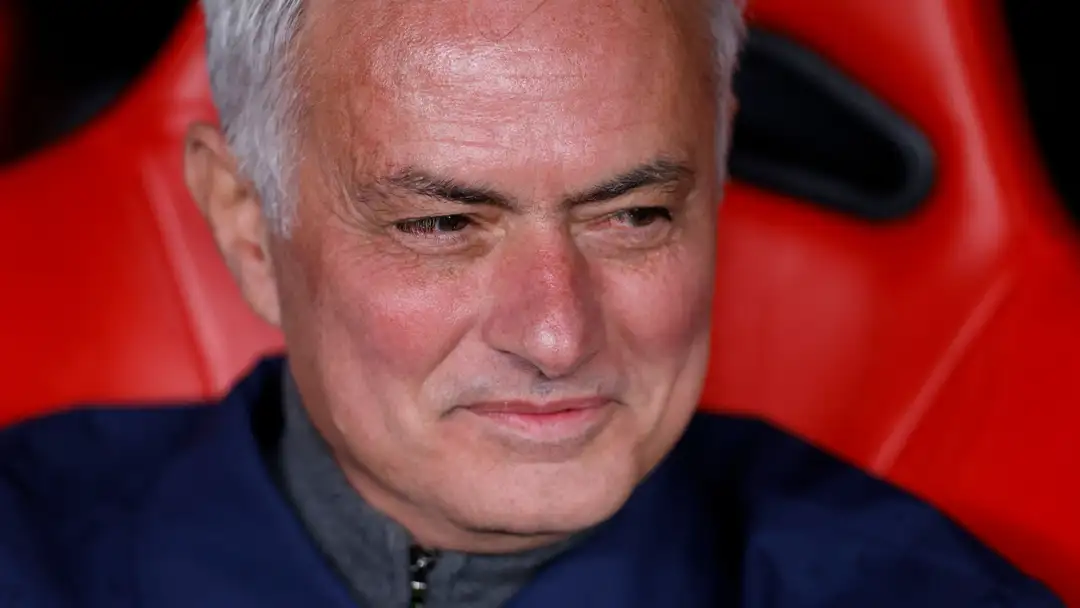
Jose Mourinho Expected to Be Offered Portugal Job After 2026 World Cup
Jose Mourinho, Portugal and a Long-Awaited Reunion After the 2026 World Cup
For years, it has felt like an inevitability rather than a possibility. Jose Mourinho, the most decorated and outspoken coach Portugal has ever produced, leading his country at a major international tournament. According to growing reports in Portugal and abroad, that moment may finally arrive after the 2026 World Cup in the United States, Canada and Mexico.
The expectation is that Mourinho will be offered the Portugal national team job once Roberto Martinez’s contract expires at the conclusion of the global tournament. The Portuguese Football Federation (FPF) are believed to be lining up the 63-year-old as their preferred candidate, viewing him as the ideal figure to usher in a new era — one built around experience, authority and national pride.
While Mourinho is currently back on familiar ground at Benfica, the pull of the national team has never been stronger. And crucially, this is not just federation-driven speculation. Mourinho himself has openly admitted that managing Portugal at a World Cup is one of the final great ambitions of his career.
Mourinho to Leave Benfica in the Summer?
Mourinho’s return to Benfica last September was one of the most emotional moves of his long and winding career. The club where he once learned his trade welcomed him back on a two-year deal, hoping that his winning mentality could steady a side searching for direction both domestically and in Europe.
However, ESPN reports that the FPF are already positioning themselves to move once Martinez steps aside after 2026. The plan would see Mourinho leave Benfica at the end of his contract or potentially earlier, depending on timing and negotiations.
If that scenario plays out, Benfica would be left with a significant vacancy — and a familiar name is already being mentioned as a possible successor. Ruben Amorim, recently sacked by Manchester United, is widely viewed as the most natural replacement. Amorim spent nine years at Benfica as a player and remains highly respected in Portugal following a trophy-laden spell at Sporting CP, where he established himself as one of Europe’s brightest coaching minds.
For Benfica supporters, the idea of Mourinho departing may feel unsettling. But there is also a sense that his second spell was never meant to be a long-term project. Rather, it feels like a final domestic chapter before one last, deeply personal challenge.
‘I Want to Unite a Country Around a Team’
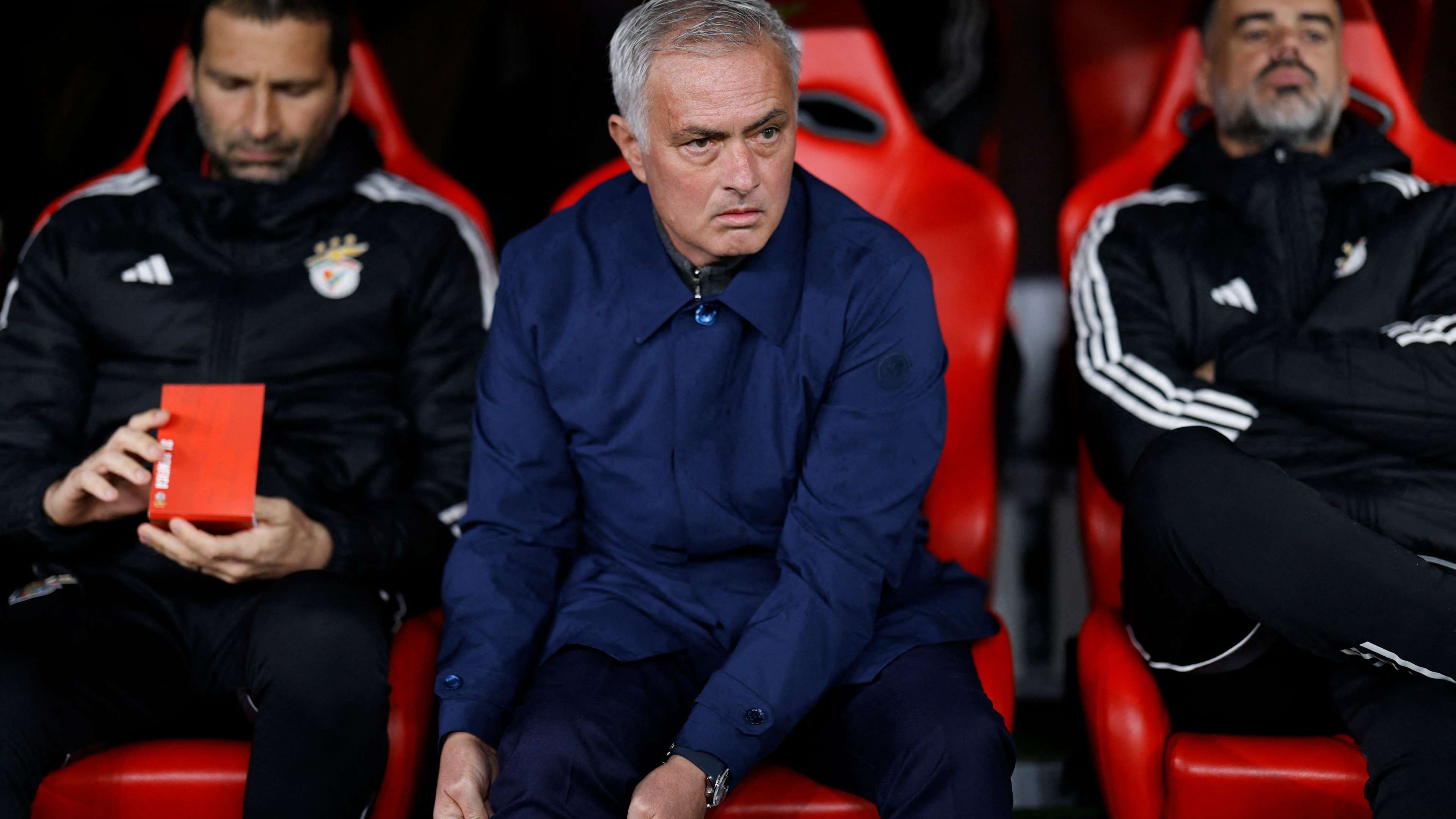
FBL-EUR-C1-BENFICA-REAL MADRID
Mourinho has never hidden his desire to step into international management — but only on his own terms.
Back in January last year, while still in charge of Fenerbahce, he laid his cards on the table in an interview with Corriere Dello Sport. His words were striking, not just for their ambition, but for their emotional weight.
“I want to play a European Championship or a World Cup and unite a country around a team, as I have already done many times with the clubs,” Mourinho said. “I want to do it for football and what this sport represents. It will be incredible.”
That idea — of uniting a nation — goes to the core of Mourinho’s self-image. At Porto, Inter, Chelsea and Real Madrid, he didn’t just build teams; he created siege mentalities, collective identities, and a sense of belonging that extended far beyond the dressing room.
Later, in August, Mourinho doubled down on those sentiments when addressing links with the Brazil national team. Speaking to Sporty Net, he made it clear that Portugal comes first — and perhaps only.
“My destiny, in terms of internationals, is to play in a World Cup with the Portuguese national team,” he said. “I never considered coaching the Brazilian national team. My first experience has to be with Portugal.”
He went on to explain that while he feels a connection to countries like Brazil, England and Italy, the emotional bond with Portugal is different.
“My first experience with the national team has to be mine.”
Few quotes have summed up Mourinho’s motivations more clearly.
Why the Portugal Job Makes Sense for Mourinho
From the FPF’s perspective, Mourinho represents something Roberto Martinez never fully managed to embody: authority rooted in shared identity.
Martinez has overseen a period of relative stability, but questions have persisted about whether he is the right man to lead Portugal through a generational transition. The current squad remains rich in talent, but expectations are always sky-high, and patience is thin.
Mourinho, by contrast, would arrive with instant credibility. He understands Portuguese football culture, the media landscape, and the pressure that comes with wearing the national crest. He also knows many of the senior players personally, having coached or competed against them at club level.
At this stage of his career, the day-to-day grind of club management appears to interest him less than legacy. A World Cup with Portugal would offer Mourinho the chance to redefine how he is remembered — not just as a serial winner, but as a national figure.
Mixed Results at Benfica but a Taste of the Old Mourinho
On the pitch, Mourinho’s second stint at Benfica has been anything but straightforward.
Domestically, results have been inconsistent. Benfica have exited both domestic cup competitions and currently sit seven points behind Liga Portugal leaders FC Porto. Frustration boiled over recently, culminating in a tense confrontation between Mourinho and a group of supporters at the training ground — a reminder that his relationship with fans has always been intense, for better or worse.
Yet just when doubts began to grow, Mourinho delivered a moment straight from his greatest hits.
In the Champions League, Benfica produced a stunning late surge to reach the knockout stage playoffs, defeating Real Madrid 4-2 in a dramatic final league-phase fixture. The match had everything — chaos, defiance, and pure theatre.
The moment that will live longest in memory, though, came deep into stoppage time. Goalkeeper Anatoliy Trubin surged forward and scored a remarkable goal in the eighth minute of added time, sealing qualification in a scene that felt almost scripted.
It was vintage Mourinho. Against a former club. Against the odds. With the entire football world watching.
Mourinho Responds to Real Madrid Links
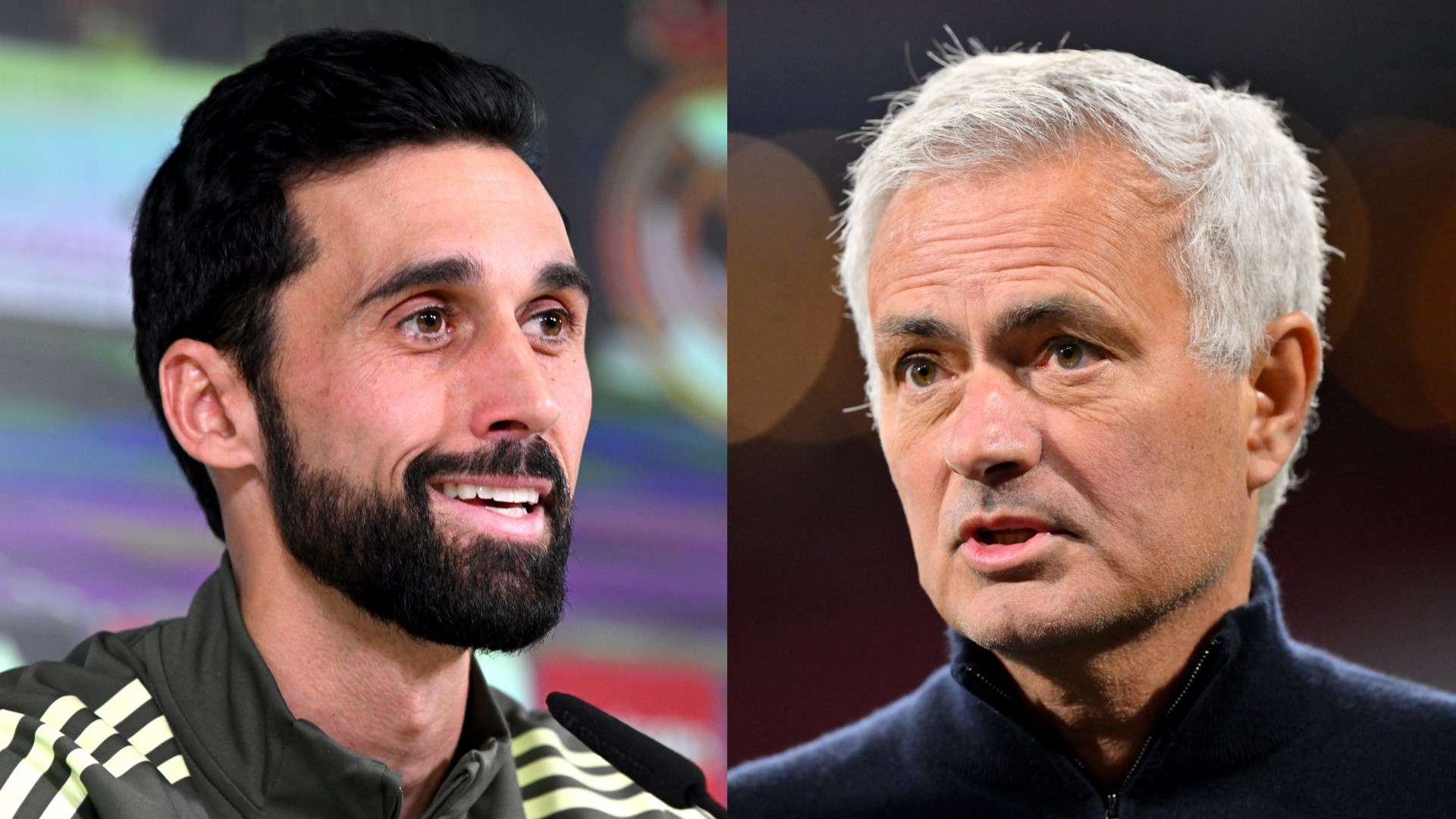
Alvaro Arbeloa Jose Mourinho
Success in Europe has, unsurprisingly, reignited speculation about another potential homecoming — this time to Real Madrid.
With Alvaro Arbeloa currently leading the first team, reports in Spain have claimed that club president Florentino Perez sees a reunion with Mourinho as his “ultimate goal”. The two enjoyed a complicated but ultimately productive relationship during Mourinho’s first spell at the Bernabeu.
Mourinho, however, has been quick to pour cold water on those rumours.
Speaking to Sport TV last month, he dismissed the speculation in typically blunt fashion.
“Don’t count on me for soap operas,” he said. “There are good soap operas, but they’re very long; you miss one or two episodes and then you lose track. Don’t count on me, because I don’t watch soap operas.”
It was a classic Mourinho line — humorous, cutting and final.
That said, fate has ensured that Mourinho and Real Madrid will cross paths again soon enough. Benfica have been drawn against the Spanish giants in the Champions League playoffs, with the first leg set to take place in Lisbon on February 17.
Before that, Benfica face a tricky domestic test away at Santa Clara, a match that may offer another insight into how much fight remains in Mourinho’s current project.
After 2026, the Moment Feels Right
If the reports are accurate, everything appears to be aligning for Jose Mourinho and Portugal after the 2026 World Cup.
Martinez’s contract will be up. Mourinho will be nearing the end of his Benfica deal. And Portugal’s golden generation, led by a mix of experienced stars and emerging talents, will be entering a crucial phase.
For Mourinho, it may be the perfect final act — a chance to channel decades of experience into one focused mission, without the distractions of club politics and transfer windows.
For Portugal, it would be a statement of intent. A declaration that they want not just to compete, but to impose themselves on the world stage under a manager who thrives on pressure.
It may not be beautiful. It may not be quiet. But if Jose Mourinho does take charge of Portugal after 2026, one thing is certain: it will never be boring.


There are no comments yet. Be the first to comment!