

































































































Manchester United £2bn New Stadium Plans Stalled as Sir Jim Ratcliffe Rejects £400m Land Price
Talks Over Key Rail Freight Terminal Reach Deadlock
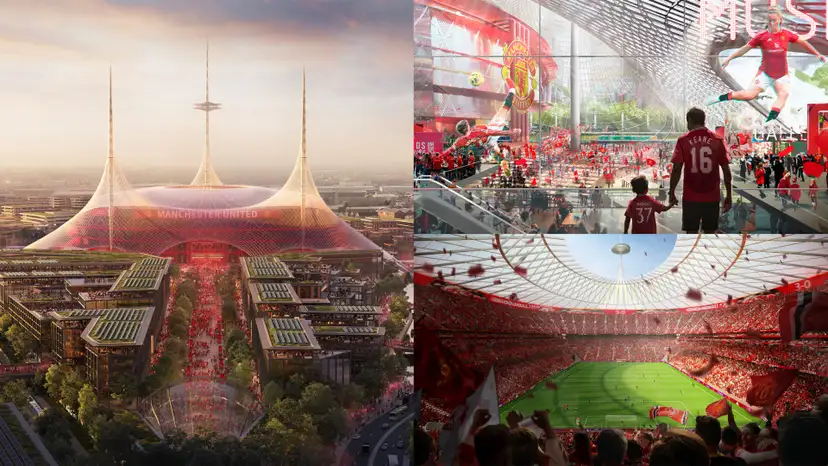
Manchester United ambitious plans to build a state-of-the-art 100,000-seater stadium—envisioned by Sir Jim Ratcliffe as the “Wembley of the North”—have hit a major stumbling block. The project, which is intended to sit alongside the club’s historic Old Trafford home, has been stalled by a deadlock in negotiations over a crucial piece of land currently used as a rail freight terminal.
According to The Guardian, discussions with Freightliner, the company that owns the terminal, have reached an impasse due to a staggering valuation gap. Freightliner are reportedly willing to relocate their operations to St Helens, but they are demanding a £400 million ($531m) payout to vacate the site. United, however, value the land at somewhere between £40m and £50m ($66m), leaving a £350m gulf between the two parties’ positions.
“Over a Barrel”
A source quoted by The Guardian claims Freightliner “have United over a barrel” in the talks. While the company is not opposed to moving, they are under no pressure to do so quickly and are seemingly in no rush to lower their asking price.
The impasse leaves United with three options:
-
Increase their offer to meet Freightliner’s demands.
-
Wait it out in the hope that the company reduces its price.
-
Scale back the stadium project so that the freight terminal land is no longer required.
None of these choices are straightforward, particularly given the tight timeline the club has set for itself.
Target Date in Jeopardy
United had been aiming to have the new stadium ready by 2030, with preliminary works due to start at the end of this year. However, the standoff with Freightliner means those start dates will almost certainly need to be revised.
The project’s scope is vast: club officials believe it could create 92,000 jobs and attract 1.8 million visitors annually. The proposed stadium, with its planned 100,000 capacity, would be the largest in the UK and one of the largest football venues in the world.
Financial Concerns Rising

The club’s projections estimate the stadium itself will cost around £2bn ($2.7bn) as part of a wider £4.2bn ($5.6bn) regeneration plan. That figure includes surrounding infrastructure and development aimed at transforming the area into a sporting and entertainment hub.
However, industry insiders have already suggested that the final bill could be closer to £3bn ($4bn) for the stadium alone, with total project costs potentially spiralling well beyond the current forecasts. In large-scale developments of this nature, cost overruns are common, and any delay in land acquisition will likely add further financial pressure.
Ratcliffe Vision Under Threat
For Sir Jim Ratcliffe, who took control of football operations at United earlier this year, the new stadium is a central piece of his vision for the club’s future. Dubbed the “Wembley of the North,” the venue is meant to project Manchester United’s ambition both domestically and internationally, while also serving as a catalyst for economic growth in the region.
The Freightliner land is critical to delivering the full project as designed, offering the necessary footprint for the stadium, fan facilities, and surrounding commercial developments. Without it, the club would be forced to consider a scaled-down version of the plan—something Ratcliffe and his team are keen to avoid.
Balancing Prestige with Practicality
The stand-off poses a difficult strategic question: should United pay over the odds for the land to secure the prestige and capacity of the original vision, or should they compromise and adapt the design to fit a smaller site?
While a 100,000-seat venue would be unprecedented in English club football, it also represents a significant risk if costs spiral and revenue projections fall short. Balancing ambition with financial prudence will be one of the key challenges facing Ratcliffe and United’s board in the months ahead.
Wider Implications for Old Trafford’s Future
The uncertainty also extends to Old Trafford itself. While the current plan is to build the new stadium next to the existing one, a scaled-back project could open the door to more extensive renovations of the historic ground instead.
Some supporters are deeply attached to Old Trafford’s history and would prefer an upgraded version of the current stadium rather than a complete move. However, others see the chance to build a modern, world-class arena as an opportunity too good to pass up.
What Happens Next?
For now, all eyes are on the negotiations with Freightliner. The deadlock may ultimately be resolved through political or regional mediation, particularly if the project is framed as a significant boost to local employment and tourism.
If an agreement cannot be reached, the club will have to make a strategic decision about whether to press ahead with a reduced plan or delay the project in the hope of securing the land at a lower cost.
Final Word
Manchester United’s dream of unveiling a £2bn, 100,000-seat “Wembley of the North” by 2030 is now facing its first major test. The gap between their valuation and Freightliner’s asking price is vast, and the longer the dispute drags on, the greater the risk to the timeline, the budget, and the scope of the project.
For Sir Jim Ratcliffe, the coming months will be a test of negotiation and vision. The outcome will not only shape the club’s physical home for decades to come but also signal to fans, rivals, and investors how serious United are about building a future worthy of their history.


There are no comments yet. Be the first to comment!