


































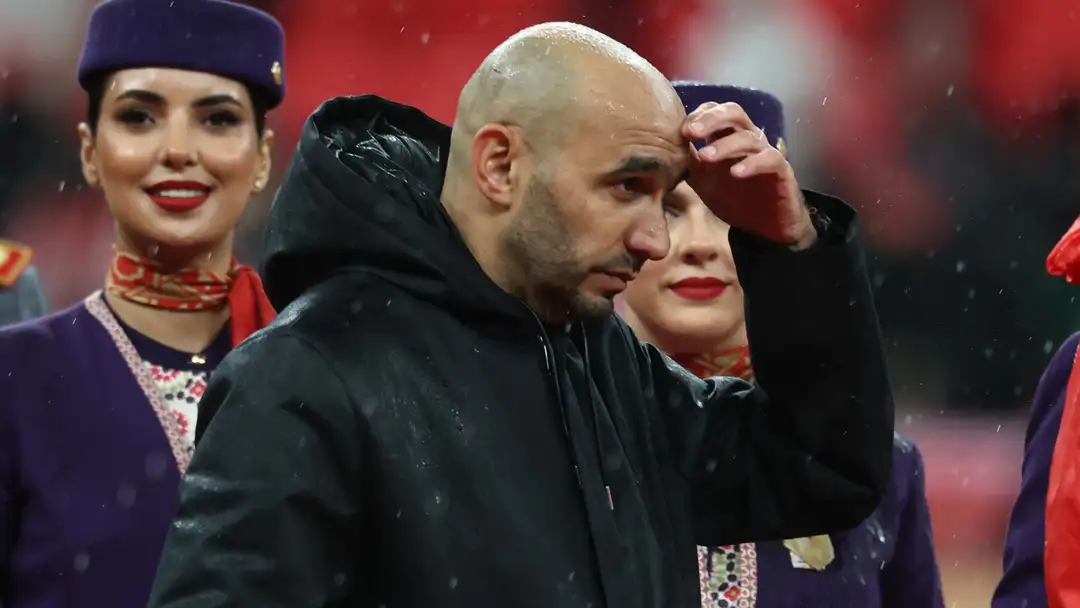
Morocco Legend Walid Regragui Offers Shock Resignation as Manager Following AFCON Final Controversy
Bombshell decision leaves Atlas Lions reeling just four months before the World Cup
Walid Regragui has never been a man for half measures. From the moment he took charge of Morocco and reshaped the national team’s identity, everything he did carried conviction, intensity and emotion. That is precisely why the news of his shock resignation offer has landed so heavily across Morocco, Africa and the wider footballing world.
Just four months before the start of the 2026 World Cup, the Morocco legend has reportedly told the Royal Moroccan Football Federation (FRMF) that he is ready to step aside. The timing could hardly be more dramatic. A nation that has spent the last four years dreaming bigger than ever now finds itself staring into uncertainty, wondering whether the man who made those dreams possible is about to walk away.
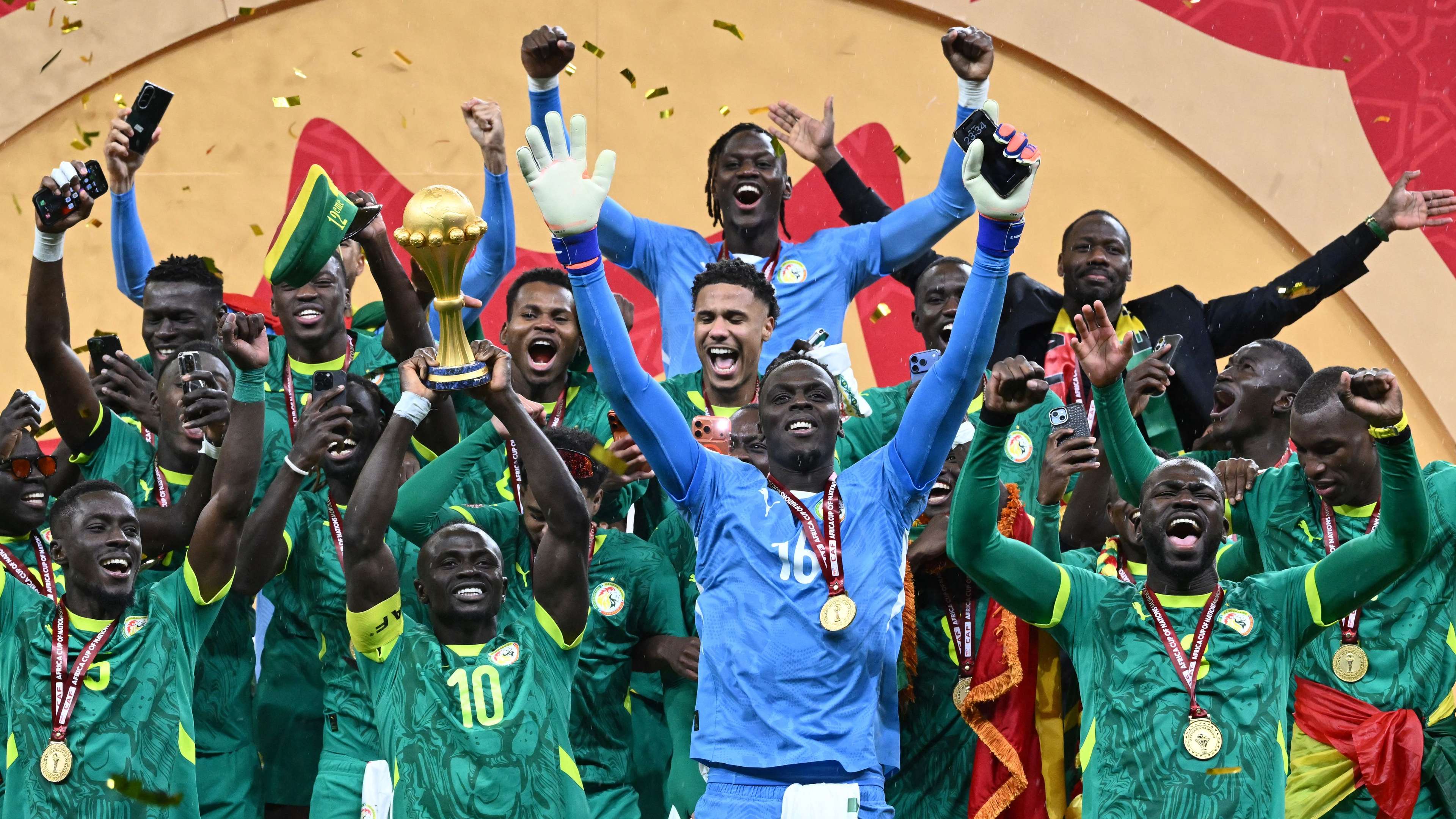
Regragui’s decision follows the heartbreak of the AFCON final defeat to Senegal, a match that was not only painful in sporting terms but also clouded by controversy, tension and raw emotion. For many, it feels unthinkable that Morocco could head into a World Cup without the architect of their golden era. Yet those close to the coach insist this is not an impulsive act, but the result of deep mental exhaustion and long reflection.
Regragui’s bombshell ahead of the 2026 World Cup
The news broke like a thunderclap. Reports emerging from France and Morocco suggested that Regragui had formally offered his resignation, informing the FRMF of his intention to step down immediately. If accepted, it would leave Morocco scrambling for answers with the World Cup in North America looming large on the horizon.
Since 2022, Regragui has been more than just a manager. He has been a symbol of belief, unity and pride. Under his leadership, Morocco became the first African nation to reach a World Cup semi-final, defeating Spain and Portugal along the way and earning global admiration for their discipline, resilience and tactical clarity.
That success fundamentally changed expectations. Morocco were no longer underdogs enjoying a fairytale run; they were contenders. With that shift came relentless pressure. Every squad selection, every tactical tweak, every result has been examined under a microscope ever since.
The recent Africa Cup of Nations was supposed to be another step forward, a chance to finally lift a continental trophy that has eluded Morocco since 1976. Reaching the final felt like confirmation that the team remained on the right path. Losing it, especially in the manner they did, appears to have taken a profound toll on the man in charge.
Mental exhaustion and the pain of the AFCON final
FBL-AFR-2025-MATCH 52-SEN-MAR
According to reports from Foot Mercato, Regragui’s resignation offer is rooted in cumulative mental fatigue rather than a single moment of disappointment. Those around him describe a coach who has been running on emotional adrenaline for years, carrying not only the tactical burden of the team but also the hopes of an entire nation.
The AFCON final defeat to Senegal, decided by a narrow 1-0 margin, cut particularly deep. Morocco believed this was their moment. The squad was experienced, battle-hardened and hungry. Regragui himself had spoken openly about wanting to crown his project with a major trophy before the World Cup.
Instead, the final was overshadowed by refereeing decisions that sparked anger among players, staff and supporters. The aftermath was tense. Emotions spilled over. For Regragui, who has always invested himself fully in every moment, it felt like a breaking point.
Insiders suggest he left the stadium that night emotionally drained, questioning whether he still had the energy to push the group through another high-pressure cycle. Leading a World Cup campaign is not just about tactics and training camps; it is about living under constant scrutiny, managing egos, expectations and national emotion on a daily basis.
For a man who has given so much of himself, the tank may simply feel empty.
The Moroccan Federation’s dilemma and a divided moment
Despite the reports, Regragui’s departure is far from a done deal. In fact, the FRMF has publicly moved to deny that a resignation has been submitted, issuing a firm statement in response to growing speculation.
“The Royal Moroccan Football Federation categorically denies the information relayed in some news sites announcing that Walid Regragui, coach of the National ‘A’ team, has submitted his resignation.”
Behind the scenes, however, the situation appears far more complex. President Fouzi Lekjaa and senior federation figures are said to be locked in intense discussions about how to handle the situation. There is a strong belief within the FRMF that Regragui remains the best — and perhaps only — option to lead Morocco at the 2026 World Cup.
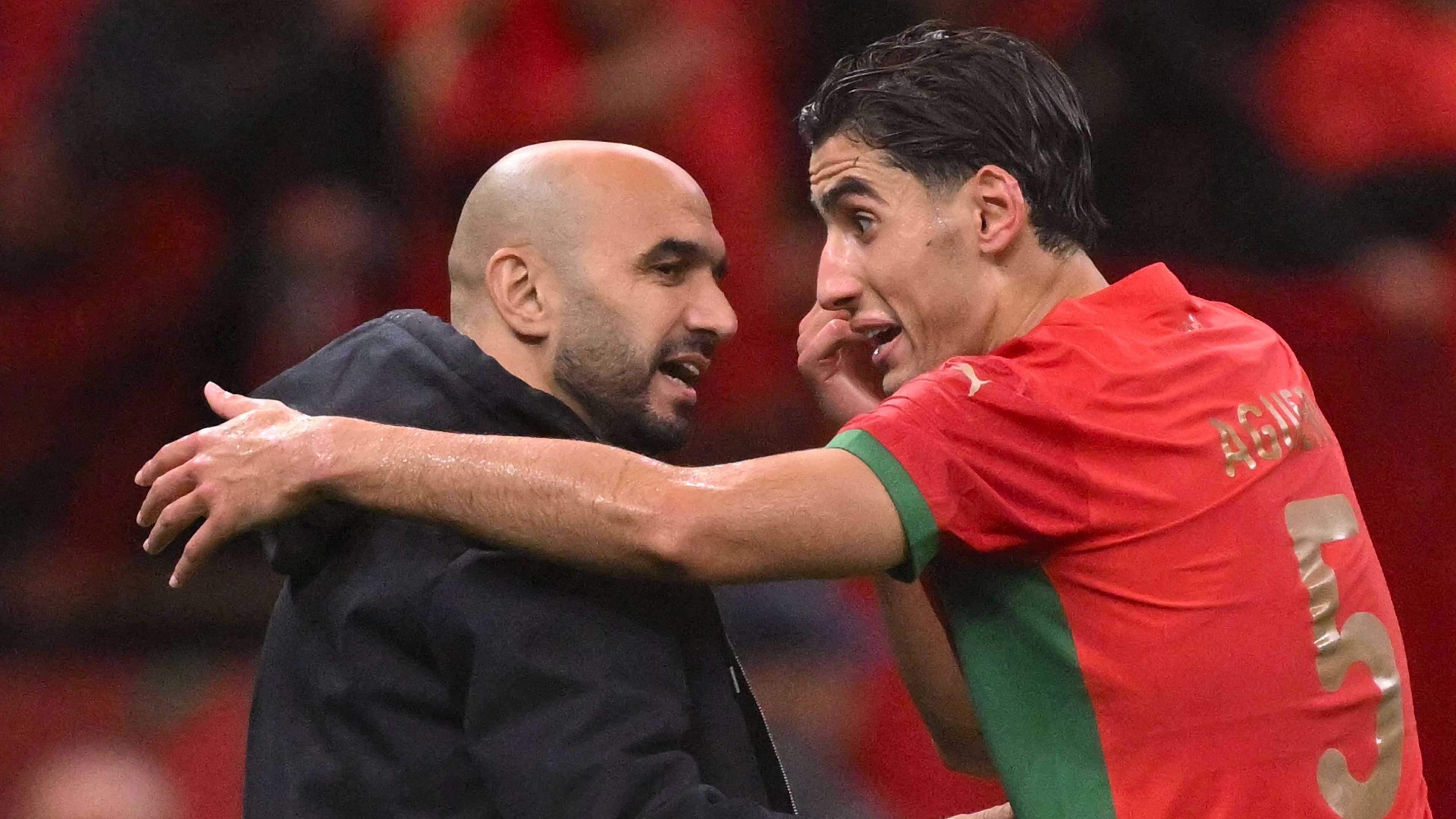
Players, too, are reportedly keen for him to stay. Regragui enjoys immense loyalty within the squad, built on trust, honesty and a shared journey through historic moments. Many of Morocco’s stars credit him with unlocking their belief that they can compete with the world’s elite.
At the same time, RMC Sport claims that Regragui has already been approached by clubs in Saudi Arabia, with talks taking place about a possible move should he decide that his international chapter has come to an end. Financially and professionally, the offer of a club role — away from the constant glare of national expectation — may be tempting.
A legacy that reshaped Moroccan and African football
FBL-AFR-2025-MATCH 01-MAR-COM
Whether Regragui ultimately stays or goes, his legacy is already secure. Statistically, his record speaks for itself: 36 wins from 49 matches, an extraordinary return at international level. But numbers only tell part of the story.
Regragui transformed Morocco’s identity. His team was organised, fearless and emotionally connected to its supporters. He blended European-based stars with locally grounded values, creating a group that played for each other and for something bigger than themselves.
Most importantly, he shattered a long-standing barrier by becoming the first African manager to guide a team to a World Cup semi-final. That achievement resonated far beyond Morocco. Across the continent, coaches and players saw proof that African leadership could succeed at the very highest level.
His potential departure just months before the 2026 World Cup feels almost cruel in its timing. This Moroccan squad, packed with experience from Europe’s top leagues, looked ready to take another step forward. Some believe they could even challenge for the title if everything aligned.
Instead, the focus has shifted to uncertainty, speculation and difficult conversations.
What comes next for Morocco and Regragui?
The coming weeks will be decisive. The FRMF is expected to make a concerted effort to convince Regragui to stay, at least until the World Cup concludes. There is a sense that asking him for “one last mission” may appeal to his sense of duty and unfinished business.
Yet there is also growing understanding that mental health and personal wellbeing cannot be ignored, even at the elite level. Regragui has given everything to this project. If he feels he can no longer give more, forcing him to continue could be counterproductive.
For Morocco, the stakes could not be higher. Appointing a new coach so close to a World Cup would be a huge gamble, no matter the quality of the replacement. Continuity, familiarity and trust matter immensely on the global stage.
For Regragui himself, the decision is deeply personal. Stay and attempt to write one more chapter of history, or step away knowing he has already changed the course of Moroccan football forever.
Either way, this moment will be remembered as one of the most dramatic and emotionally charged episodes in African football. A legend stands at a crossroads, and an entire nation waits anxiously to see which path he chooses.


There are no comments yet. Be the first to comment!