












































































Ex-F1 driver Heinz-Harald Frentzen issues pointed message amid Max Verstappen motivation concern
Heinz-Harald Frentzen’s warning lands at an awkward moment as Max Verstappen’s motivation concern grows louder in Formula 1
Formula 1 has always been a sport that rewards obsession almost as much as talent. The drivers who last the longest, the ones who survive the pressure, the politics, the travel, the constant scrutiny and the physical risk, are rarely the ones who simply happen to be gifted. They are usually the ones who remain emotionally locked in. They stay hungry. They stay sharp. They keep finding reasons to care, even when the car is wrong, the rules are frustrating, and the mood around them is turning sour.
That is why Heinz-Harald Frentzen’s message landed with such force this weekend.
The former Formula 1 driver, never one for empty noise, posted a short but pointed statement on social media that immediately set tongues wagging across the paddock. He did not name names. He did not need to. The timing did most of the talking for him.
“If you lose your motivation in F1, it’s better to quit, or at least take a break. That’s what I did. The sport is too dangerous if you lose your focus.”
A simple sentence. A direct one. And in the current climate, it was almost impossible not to read it through the lens of Max Verstappen.
Because right now, whether Red Bull want to admit it publicly or not, there is a very real conversation bubbling around the four-time world champion. It is not really about pace alone, or qualifying position alone, or even the new regulations in isolation. It is about mood. It is about body language. It is about the increasingly flat tone in Verstappen’s voice when he talks about Formula 1 and, perhaps most importantly, the fact that his own father has now openly admitted he fears the Dutchman could lose his motivation.
When Jos Verstappen says something like that, people listen.
And when a former grand prix winner like Heinz-Harald Frentzen then posts a warning about what happens when a driver loses focus, the whole thing suddenly feels a lot less like background noise and a lot more like a real issue.
Max Verstappen’s motivation concern is no longer just paddock gossip after Japanese Grand Prix frustration
There are moments in a Formula 1 season when a quote says far more than the result itself.
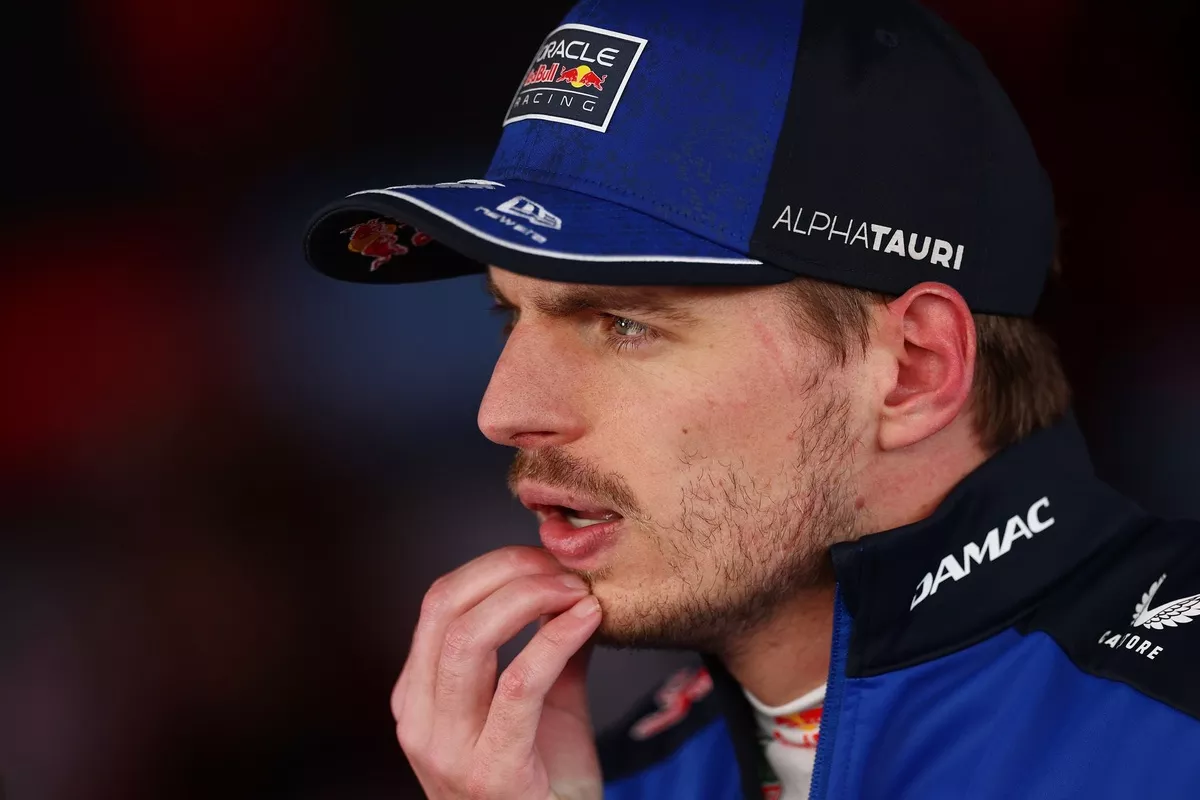
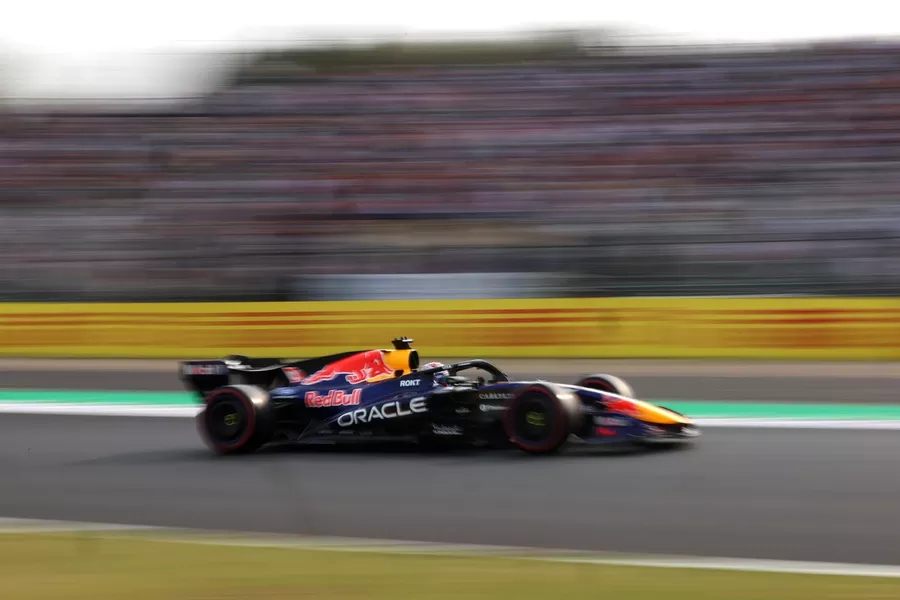
Max Verstappen qualifying 11th for the Japanese Grand Prix is, on paper, a story. For a driver of his level, in a team of Red Bull’s status, missing the top 10 is always going to trigger headlines. But the bigger story was not the position. It was the emptiness in the way he described it afterwards.
This was not the usual Verstappen irritation.
It was not the sharp-edged annoyance that fans have come to associate with him when something goes wrong. It was not even the kind of simmering anger that often signals a driver who still believes he can wrestle control of the situation through sheer force of will.
It was something colder.
“I’m not even frustrated anymore. I’m beyond that.”
That is not the language of a man merely having a bad Saturday.
That is the language of someone emotionally detaching from the cycle.
And in Formula 1, emotional detachment can be dangerous.
Verstappen went further, too, saying there was “probably no word” for what he felt. No disappointment. No frustration. No real anger. Just a kind of blank acceptance of what the current machinery is giving him. If you have watched Formula 1 long enough, you know that can be more alarming than rage. Anger means the fire is still there. Apathy, or something close to it, is much harder to fix.
That is why the wider concern has grown.
Because when a driver like Verstappen, one of the most relentlessly competitive personalities the sport has seen in years, starts sounding resigned rather than furious, people notice. They notice in the paddock. They notice in rival garages. They definitely notice inside his own team.
And they should.
Heinz-Harald Frentzen’s pointed message feels like a warning to Max Verstappen, even without naming him
Frentzen’s post was clever in a way that old racing men often are.
He did not make it explicit. He did not mention Verstappen. He did not accuse, speculate or grandstand. Instead, he framed it as wisdom from experience — a former driver speaking from the memory of his own limits, his own choices, his own understanding of how mentally demanding this sport can be.
That is what made it powerful.
He effectively said: if your motivation is gone, step away. Because if the motivation goes, focus can go with it. And if focus goes in Formula 1, you are playing with something far more serious than a poor qualifying session.
That last part is what matters most.
This is not tennis. It is not golf. It is not a sport where you can drift mentally for a few minutes and recover without consequence. Formula 1 is still, even in its modern and safer form, a dangerous discipline. Tiny lapses matter. Split-second reactions matter. Commitment matters. The willingness to throw yourself into corners at 300 km/h matters.
If a driver’s mind is even fractionally elsewhere, the consequences can be enormous.
That is why Frentzen’s comment resonated.
And honestly, it is hard not to feel there was at least some intention behind the timing. The social media world loves coincidence, but Formula 1 insiders tend to understand subtext better than most. Frentzen has been around the sport long enough to know exactly how a statement like that would be interpreted on a weekend where Verstappen’s emotional state is already being discussed openly.
Maybe it was aimed at him. Maybe it wasn’t.
But it certainly sounded like it could have been.
Jos Verstappen’s public admission makes the Max Verstappen motivation concern impossible to ignore
The biggest reason this story has real weight is simple: the concern is not being invented by outsiders.
It is coming from inside the Verstappen camp.
Jos Verstappen is not some random former driver making a guess from the grandstand. He is Max’s father, one of the most influential and blunt figures in his career, and someone who has rarely been shy about saying exactly what he thinks — whether Red Bull like it or not.
So when he tells De Telegraaf that he is afraid Max could lose his motivation, it is not a throwaway line.
It is a warning.
Jos framed it in a very specific way too. He did not say Max had stopped trying. Quite the opposite. He made clear that his son is still doing everything possible, together with Red Bull, to make the car more competitive. That matters, because it rules out laziness or disengagement in the literal sense.
But he also said the current cars do not challenge him.
That is a fascinating and slightly unsettling phrase.
Because Max Verstappen, at his core, is a driver who thrives on feeling in command of something difficult. He loves technical precision. He loves extracting lap time from unstable situations. He loves the fight between instinct and control. If the new regulations and the current car package are removing that sensation — if they are making the sport feel less pure, less intuitive, less stimulating — then the risk is not that he suddenly becomes slow.
The risk is that he becomes emotionally disconnected.
And that, in some ways, is even more problematic.
A disengaged Verstappen is still probably quicker than most of the grid on raw instinct. But a disengaged Verstappen is not the terrifying force Red Bull built their dominance around. He is not the man who drags a difficult weekend back into contention through sheer conviction. He is not the driver who turns frustration into aggression and aggression into lap time.
That version of Verstappen is built on emotional investment.
If that starts fading, the whole balance changes.
The new Formula 1 regulations may be feeding Max Verstappen’s growing sense of detachment
Verstappen has never been especially diplomatic when he dislikes the direction of Formula 1.
That is part of why so many fans respect him, even when they do not always agree with him. He rarely hides behind bland corporate language. If he thinks a rule is bad, he usually says so. If he thinks a car concept is awkward, he tends to make that clear too. And in this current regulatory cycle, he has looked increasingly unconvinced by what the sport is asking drivers to do.
That context matters.
Because this is not just about one bad result at Suzuka. It is about a broader relationship between driver and machine.
If Verstappen feels the new generation of cars is taking away the natural feel he values most, then every difficult weekend becomes more draining. A poor qualifying result is no longer just a bad day. It becomes confirmation of a deeper irritation. It becomes another reminder that he is not enjoying the process the way he once did.
That is what his quotes suggest.
He said there are things to fix in the coming weeks and months, which is standard enough. But when he then added that there is also “a lot of stuff” for him personally to figure out, it opened the door to a much wider interpretation.
And when pressed, his answer was simply: “Life, life.”
That is not a normal racing answer.
It is vague, almost deliberately so, but also revealing in its own strange way. It sounds like someone who does not want to unpack everything publicly, yet also does not want to pretend the issue is purely technical. There is a human dimension here. Whether that is exhaustion, changing priorities, dissatisfaction with the sport’s direction, or simply the natural psychological dip that can come after years at the very top, only Verstappen really knows.
But it is there.
And the paddock can sense it.
Why Heinz-Harald Frentzen’s message matters in a sport as dangerous as Formula 1
Frentzen’s intervention might sound dramatic to some, but there is truth in it that every serious racing person understands.
Formula 1 is safer than it used to be, yes. Vastly safer. The cars, circuits, medical response and safety structures are all generations ahead of where they once were. But none of that changes the core fact that drivers are still threading impossibly fast machines through violent corners, under immense load, with almost no margin for mental laziness.
Focus is not optional.
And motivation is often what protects focus.
A motivated driver tolerates the grind. He reviews the data late at night. He digs for tenths. He commits fully in qualifying. He finds emotional access to that extra layer of concentration when the car feels horrible or the weekend is slipping away. Motivation does not guarantee performance, but it usually guarantees presence.
Lose that, and things can get murkier.
Frentzen knows that because he lived it. He stepped away when he felt the internal balance had shifted. That does not make his path universal, but it does give him credibility when he talks about the danger of staying too long in the wrong mental state.
And if there is one driver on the current grid who could realistically decide to walk away early, even temporarily, it is probably Verstappen.
Not because he cannot cope.
But because he has never struck anyone as a man desperate to race forever just for the sake of it.
Could Max Verstappen actually quit or take a break if the motivation concern worsens?
This is the part people still hesitate to say out loud, but it is no longer unthinkable.
If Max Verstappen genuinely stops enjoying Formula 1, would he keep going for years out of obligation?
Honestly, maybe not.
He has already achieved more than most drivers ever dream of. Four world titles. A place in modern F1 history. Financial security. Legacy. Validation. He does not need to keep driving to prove he belongs among the elite. That box is already ticked in permanent marker.
More importantly, he has long hinted that he does not necessarily see himself doing this into his late 30s just because tradition says he should. He has interests beyond Formula 1. He likes sim racing. He values his own space. He has never given off the vibe of someone addicted to the circus element of the sport.
If anything, he often seems mildly irritated by it.
So if the cars stop inspiring him, if the regulations frustrate him, and if Red Bull’s competitiveness slips enough to make the daily grind feel joyless, then yes — the idea of a break is plausible. Not certain. Not imminent, perhaps. But plausible.
That is why Frentzen’s post hit such a nerve.
Because it spoke to a scenario that no longer feels completely hypothetical.
Red Bull now face a challenge bigger than car performance if Max Verstappen’s motivation concern is real
If you are Red Bull, this is where the problem becomes existential.
Fixing a car is hard enough. Fixing a driver’s relationship with the sport is far more complicated.
You can bring updates. You can change setup direction. You can adjust the way the team communicates. You can improve balance, ride, deployment, tyre preparation, all the usual things. But if the person at the centre of your project is starting to emotionally drift, then no front wing package alone is going to solve that.
You need momentum. You need trust. You need to give him a reason to feel alive in the cockpit again.
That is the real pressure now.
Not just to make Verstappen competitive — but to make him engaged.
Because the scariest version of this story for Red Bull is not Verstappen publicly exploding. They can handle anger. Anger is familiar. Anger can be channelled. Anger often means the care factor is still off the charts.
The scariest version is the quiet one.
The one where he shrugs.
The one where he says he is beyond frustration.
The one where his father starts openly worrying.
That version should make everyone inside Red Bull sit up.
Ex-F1 driver Heinz-Harald Frentzen issues pointed message — and Max Verstappen’s next few weeks suddenly matter a lot
Maybe Frentzen was speaking generally. Maybe he was simply reflecting on his own past. Maybe the timing was coincidence.
But in Formula 1, timing is rarely neutral.
And whether he meant it as a direct warning or not, his message landed in exactly the place where the sport is currently most sensitive: the uneasy space between frustration and disengagement around Max Verstappen.
That is why this story feels bigger than one social media post.
It is about the possibility that Formula 1’s most complete driver of the modern era is wrestling with something deeper than a bad setup window or a disappointing qualifying session. It is about the possibility that the sport’s current direction, and Red Bull’s current struggles, are beginning to wear on someone who has always been brutally honest about what he does and doesn’t enjoy.
Verstappen is still here. He is still competing. He is still trying. Nobody should confuse a difficult quote with a retirement note.
But the tone has changed.
And in Formula 1, tone matters.
Frentzen’s words, whether aimed at him or not, served as a reminder of something the sport sometimes prefers not to say too loudly: when a driver loses motivation, the consequences go beyond results. In a sport this fast, this demanding and this unforgiving, motivation is not a luxury. It is part of the safety net.
That is why the next few weeks around Verstappen matter so much.
Not because one former driver posted a pointed message.
But because the message felt uncomfortably believable.


There are no comments yet. Be the first to comment!