
















































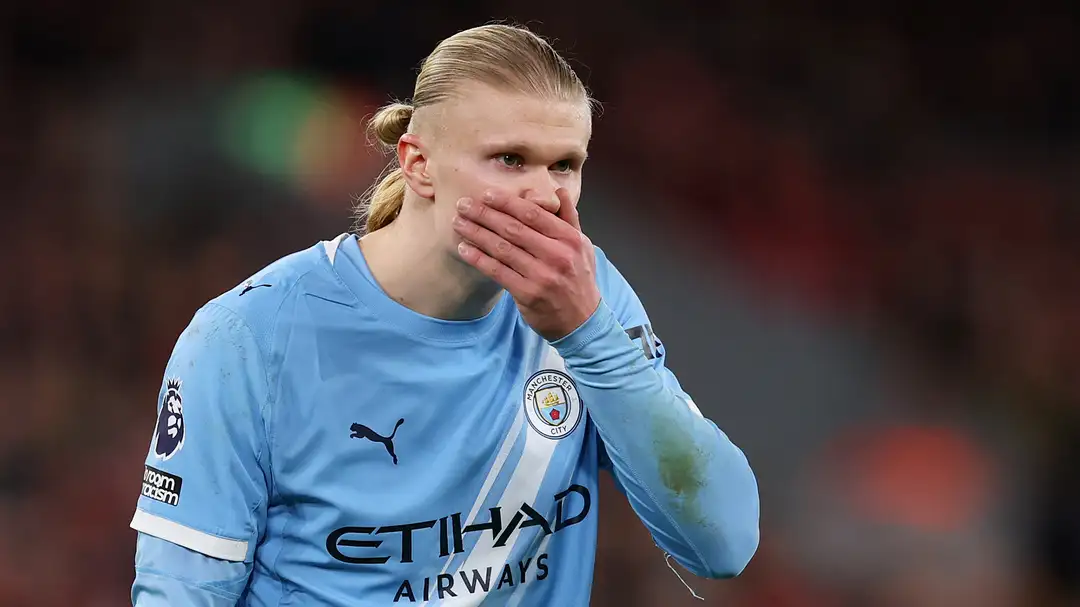
“Fatigue Is in the Head” – Erling Haaland Refuses to Blame Tiredness for Struggles in Front of Goal as Man City Hitman Outlines Areas for Improvement
Erling Haaland, Fatigue Is in the Head and Man City’s Goal Machine Facing Struggles in Front of Goal
There are strikers who measure success by goals alone, and then there is Erling Haaland – a player who sets standards so high that even elite numbers can feel like underachievement. The Manchester City forward once again reminded the football world why he is considered one of the most ruthless competitors in modern football, delivering a brutally honest self-assessment following City’s dramatic victory over Liverpool at Anfield.
While many players might have basked in the glow of such a pivotal result, Haaland chose a different route. The Norwegian superstar openly admitted his frustrations, refusing to hide behind fixture congestion or physical exhaustion. Instead, he delivered a message that perfectly captures his mentality: improvement starts with accountability.
For Haaland, the issue isn’t tired legs. It’s sharper instincts, better movement, and the relentless pursuit of perfection that has defined his rise to the very top of European football.
Anfield Heroics Overshadowed by Personal Frustration
Manchester City’s clash with Liverpool at Anfield had all the ingredients of a classic Premier League encounter. Tension, momentum swings, late drama – and, inevitably, Haaland right at the centre of it all.
With Pep Guardiola’s side trailing deep into the game, it was Haaland who sparked City’s comeback. Showing a side of his game that critics often overlook, he turned provider first, delivering a composed assist for Bernardo Silva’s equaliser. Moments later, with the clock ticking into stoppage time and pressure at its peak, Haaland stepped up to convert the decisive penalty, sealing a stunning turnaround that reignited the title race.
It was the type of performance that typically earns universal praise. But for Haaland, the victory felt incomplete. The penalty may have secured three points, yet it did little to quiet his own internal doubts about his recent form.
Haaland Demands More From Himself Despite Strong Numbers
Statistically speaking, Haaland remains one of the most prolific forwards in world football. His penalty against Liverpool lifted him to 21 Premier League goals for the 2025-26 season, keeping him comfortably ahead in the Golden Boot race.
And yet, numbers alone don’t satisfy him.
Speaking after the match, Haaland delivered a refreshingly candid evaluation of his performances since the turn of the year. He acknowledged that his output from open play – traditionally his greatest strength – has dipped below the extraordinary benchmark he established during his arrival in English football.
“I haven’t scored enough goals since the start of this year,” Haaland admitted. “I know I need to improve. I need to be sharper and better at everything. This is something I have to work on.”
It was not the tone of a player content with individual accolades. It was the voice of a striker obsessed with consistency, a footballer whose standards rarely allow him to enjoy even his own success for long.
“Fatigue Is in the Head” – No Excuses for Struggles in Front of Goal
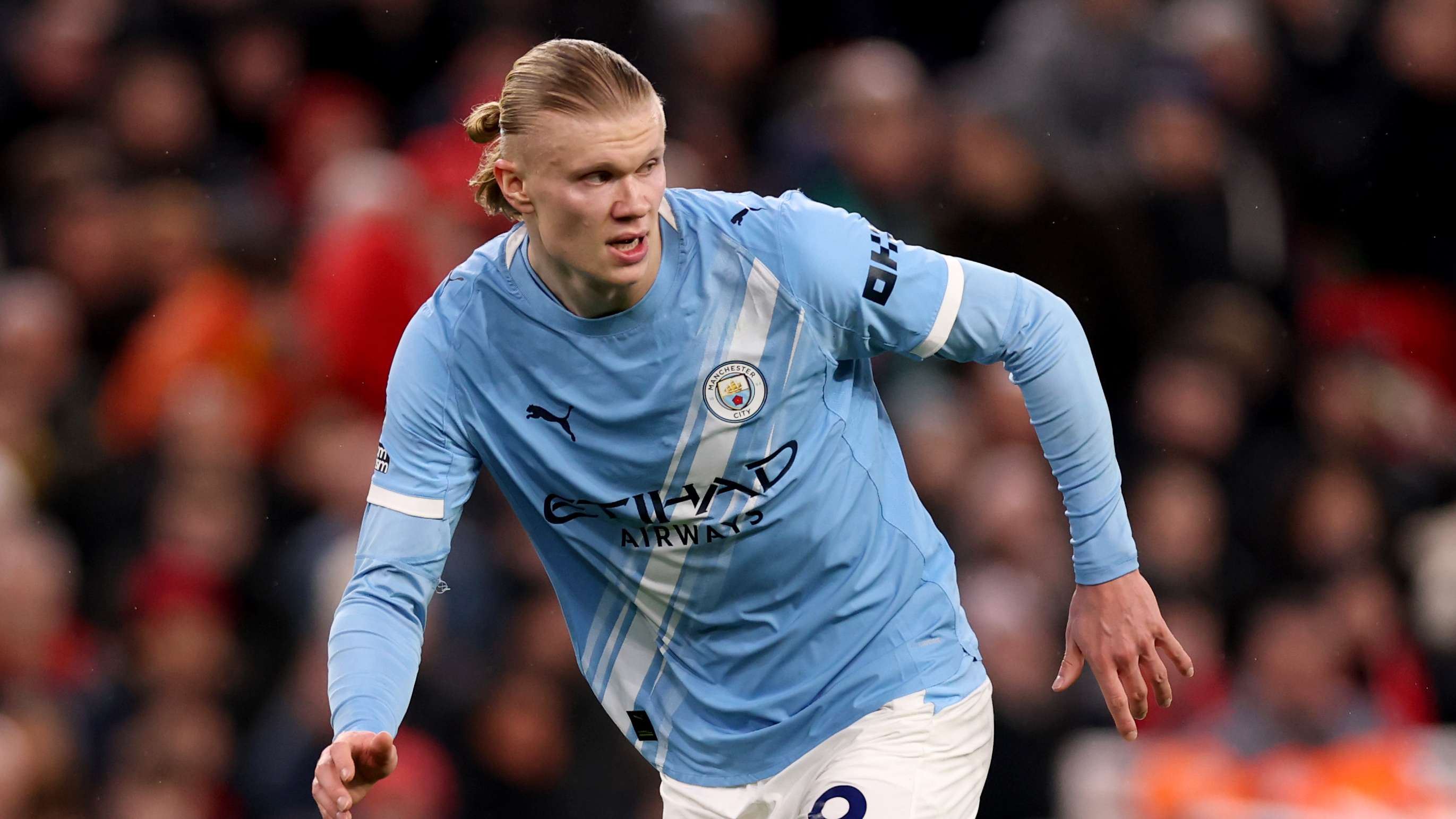
Liverpool v Manchester City – Premier League
Manchester City’s recent schedule has been relentless. Domestic competitions, European fixtures, international interruptions – the calendar has offered little relief. To make matters more complicated, City have had to cope without attacking partner Omar Marmoush, who has been representing Egypt at the Africa Cup of Nations.
The absence of rotation options has forced Haaland to shoulder an enormous physical burden. Many analysts and pundits have suggested that his recent dip in open-play goals is a natural consequence of burnout.
Haaland, however, has completely dismissed that narrative.
“I don’t want to speak about why I haven’t performed,” he said firmly. “I don’t think there’s any excuse. Fatigue is in the head.”
It was a striking statement, one that perfectly illustrates Haaland’s mental toughness. While acknowledging the difficulty of the schedule, he made it clear that elite athletes must find solutions rather than explanations.
“It’s a lot of games, yes,” he continued. “Look at the schedule – it’s not easy. But for me, it’s about staying fit, avoiding injuries, and being ready to help the team.”
In many ways, this mentality explains why Haaland continues to dominate the modern game. He refuses to accept comfort zones, even when circumstances might justify them.
Golden Boot Leader Despite ‘Drought’
The irony of Haaland’s situation is impossible to ignore. In what many are describing as a “goal drought,” he remains the Premier League’s top scorer.
His tally of 21 league goals leaves him four ahead of Brentford’s Igor Thiago, who has emerged as one of the season’s surprise contenders. For most strikers, such numbers would represent a career-best campaign. For Haaland, they feel like unfinished business.
The primary concern isn’t his overall scoring record. Instead, it’s the unusual lack of goals from open play across his last eight Premier League appearances. For a striker renowned for devastating runs, clinical finishing, and positional intelligence, that statistic has drawn significant attention.
The penalty at Anfield, while crucial, served more as psychological relief than tactical redemption. It broke a personal barrier, but Haaland knows that his reputation is built on much more than spot-kicks.
Guardiola’s System and Haaland’s Evolution
Part of Haaland’s recent challenge also reflects his evolving role within Guardiola’s tactical framework. Manchester City’s attacking structure continues to shift, demanding increased link-up play, movement into deeper spaces, and greater involvement in build-up phases.
Haaland has adapted impressively in many respects. His assist against Liverpool showcased improved vision and patience, qualities sometimes overshadowed by his reputation as a pure finisher.
Still, the Norwegian remains acutely aware that his primary responsibility is scoring goals. And by his own admission, that is where he feels he must improve.
The self-awareness displayed by Haaland highlights a crucial aspect of elite performance: evolution never stops, even for the best.
What Comes Next for Man City and Erling Haaland
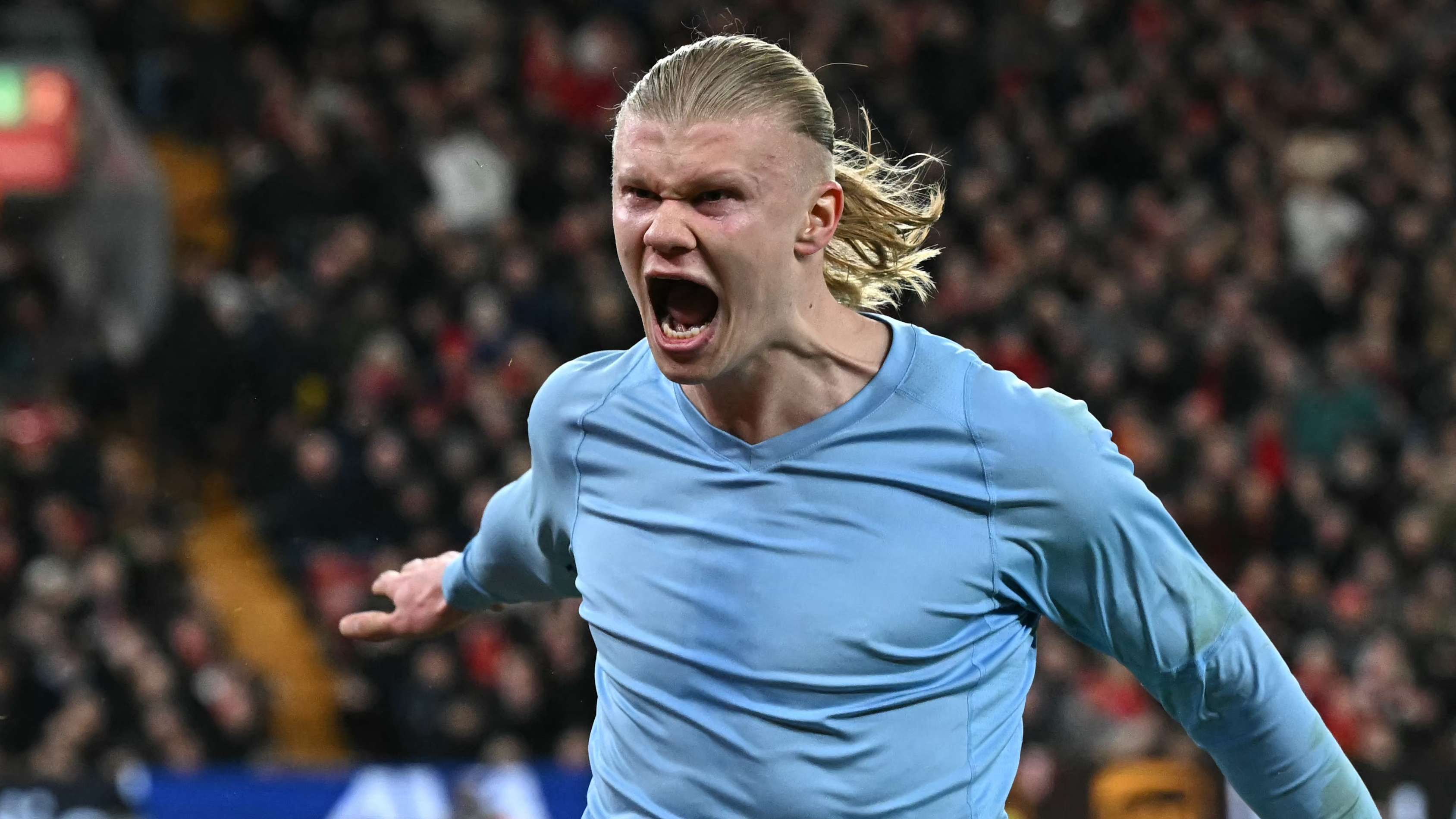
FBL-ENG-PR-LIVERPOOL-MAN CITY
Manchester City’s victory at Anfield could prove to be a defining moment in their season. Having looked in danger of slipping out of the title race, Guardiola’s side now find themselves just six points behind league leaders Arsenal.
Momentum, once lost, appears to be returning.
February, however, presents another demanding stretch of fixtures. City face Fulham in midweek, followed by an FA Cup clash against Salford. Premier League encounters with Newcastle United and Leeds United will then close out the month.
For Haaland, these matches represent more than just opportunities to collect points. They are chances to rediscover the relentless scoring rhythm that has made him one of football’s most feared forwards.
A Warning to the Rest of the League
Perhaps the most dangerous version of Erling Haaland is the one who feels he has something to prove. History suggests that criticism, pressure, or even minor dips in form often trigger explosive responses from the Norwegian striker.
Opposition defenders rarely need additional motivation to worry about him. But Haaland’s latest comments suggest a player who is mentally resetting, refocusing, and preparing for another surge.
Manchester City remain in contention for multiple trophies this season. If Haaland succeeds in eliminating what he describes as “fatigue in the head,” City’s pursuit of silverware could accelerate rapidly.
The Mindset That Defines Greatness
In an era where footballers often rely on scheduling complaints or physical fatigue to explain inconsistency, Haaland’s attitude stands out. His refusal to accept excuses reinforces his reputation as one of the sport’s ultimate competitors.
He understands the expectations placed upon him. More importantly, he embraces them.
Haaland’s self-criticism after a match-winning performance may appear harsh, but it reveals a mindset that separates good players from generational talents. He doesn’t measure success by isolated moments. He measures it by sustained excellence.
If his recent words are any indication, Erling Haaland isn’t concerned about proving critics wrong. He is focused on proving himself right – by becoming sharper, stronger, and more clinical than ever.
And if history tells us anything, that should worry every defence in the Premier League.


There are no comments yet. Be the first to comment!