















































FIA Reveals Tweaks to F1 2026 Driver Guidelines After Qatar Meeting
FIA Reveals Tweaks to F1 2026 Driver Guidelines Following Qatar Discussions
Formula 1’s governing body, the FIA, has unveiled a series of changes to the 2026 driver guidelines following a landmark meeting at the 2025 Qatar Grand Prix. This meeting brought together teams, drivers, and FIA officials to address growing concerns about consistency and fairness in stewarding decisions. The resulting tweaks focus on flexibility, common sense, and acknowledging the realities of wheel-to-wheel racing—a development that many in the paddock have welcomed as a much-needed step forward.
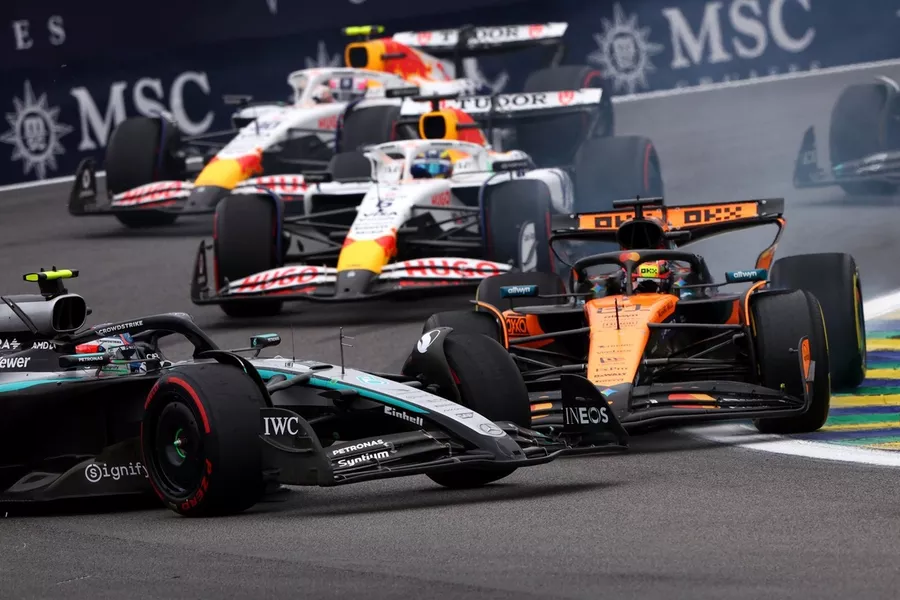
In recent seasons, stewards have often been criticised for treating driver guidelines as rigid laws rather than a framework to interpret racing situations. A particularly controversial example came during last year’s Brazilian Grand Prix, where McLaren’s Oscar Piastri was handed a 10-second penalty for a three-way collision at Turn 1 involving Kimi Antonelli and Ferrari’s Charles Leclerc.
Piastri, attempting an inside line, locked up his front-left tyre, causing a chain reaction where Antonelli subsequently collided with Leclerc. While the stewards ruled that Piastri was “too ambitious” and not sufficiently alongside Antonelli, many on the grid and fans argued that Antonelli had closed the door too quickly, making the collision almost unavoidable. The debate sparked widespread discussion, with Carlos Sainz in particular noting that the outcome didn’t match several similar incidents he had been involved in during the 2025 season.
Key Changes: Lock-Ups and Corner Rights
One of the most significant revisions concerns lock-ups. Previously, a locked-up tyre was often interpreted as a loss of control, automatically signalling reckless or dangerous driving. The revised guidelines acknowledge that a lock-up can simply be the result of physics or a split-second attempt to avoid contact.
This change directly addresses scenarios like Piastri’s at Interlagos, where he argued that the collision happened in mere seconds and that he couldn’t simply vanish from the racing line. According to the new rules, in an attacking manoeuvre, once a car has gained the right to a corner, the defending driver cannot expect the attacker to disappear. The apex may vary depending on the racing line and the nature of the corner, meaning the defending driver must account for legitimate attempts to pass.
FIA race director Niels Wittich noted that this adjustment aims to reduce penalisation for drivers who are making genuine overtaking attempts while navigating the constraints of racing physics. “It’s about fairness and acknowledging that not every lock-up or tight manoeuvre constitutes reckless driving,” he said.
Penalty Point System Overhaul
The FIA has also tweaked the penalty point system. Going forward, points will only be issued for “dangerous, reckless, or apparently deliberate actions resulting in a collision,” or for other forms of “unacceptable or unsportsmanlike behaviour.”
Under this clarification, previous cases like Piastri’s, where he received two penalty points, might have been handled differently had the new guidelines been in place. The FIA intends these changes to encourage stewards to focus on intent and consequence rather than applying rigid interpretations.
“This isn’t about letting drivers off the hook,” Wittich explained. “It’s about recognising that racing is dynamic. Drivers make split-second decisions, and the rules need to reflect that reality.”
Defending Drivers and Track Limits
Another major area of revision involves defending drivers and their interaction with track limits. In prior seasons, incidents where a defending car left the track to protect position were often treated leniently, especially if the attacking car went wide but the defending driver re-joined safely. Critics have argued this led to inconsistencies, with some incidents labelled racing incidents despite clear advantage gained off-track.
The revised rules now state that if a defending driver leaves the track or cuts a chicane and re-joins in the same position, stewards will generally consider that the driver gained a lasting advantage. As a result, the position should typically be conceded. The guidelines emphasise that the final decision rests with the stewards, who must determine whether the defending driver was legitimately “defending a position.”
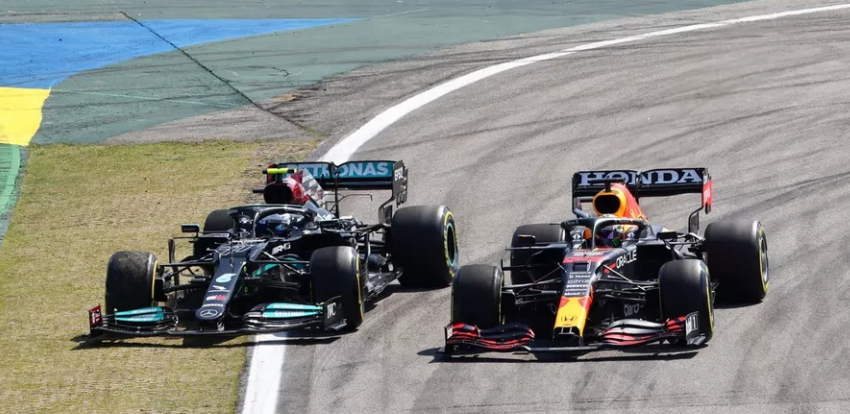
The clarification is expected to have implications for wheel-to-wheel battles in tight corners, particularly in high-stakes moments like first-lap tussles or overtaking zones on street circuits. Notably, examples like Max Verstappen defending from Lewis Hamilton at the 2021 Brazilian Grand Prix illustrate the type of scenario these revisions aim to address.
FIA Meeting in Qatar: A Turning Point
The revisions stem directly from a productive meeting held at the penultimate round in Qatar in 2025. Teams, drivers, and FIA officials gathered to address inconsistencies and misinterpretations of the guidelines.
Drivers highlighted that overly rigid application of the rules could punish legitimate racing and lead to frustration among competitors. Teams stressed that stewarding decisions needed clarity to avoid disputes that could overshadow the sporting spectacle. The FIA responded by agreeing that guidelines should serve as a framework rather than a strict code, allowing room for discretion while maintaining safety standards.
Several drivers welcomed the announcement, noting that clarity and common sense would reduce confusion and disputes on race weekends. “It’s a positive step,” commented one unnamed F1 driver. “Racing is about split-second decisions, and now we can expect stewards to consider context more carefully rather than just checking boxes on the rulebook.”
Implications for 2026 and Beyond
The 2026 season will be the first test of these updated guidelines. Observers expect a shift in how certain incidents are evaluated, especially during the opening laps where multi-car battles are most common.
From a sporting perspective, the tweaks aim to preserve the spectacle while reducing frustration for drivers and teams. Penalties will remain in place for genuinely reckless or dangerous behaviour, but drivers are less likely to be penalised for split-second errors in high-pressure situations.
The changes may also influence race strategy. Teams can now make overtaking attempts with slightly more confidence that they will not be unfairly penalised for minor misjudgements, potentially leading to more exciting on-track battles.
Stewards will retain ultimate authority, and FIA officials stress that discretion will be exercised consistently. However, the move toward context-based interpretation signals a broader philosophy shift in Formula 1 officiating—one that values sporting fairness alongside safety.
Key Takeaways
- Lock-Up Adjustments: Locking up tyres no longer automatically signals loss of control. Context and intent will now be considered.
- Corner Rights Clarification: Attacking cars with rightful corner position cannot be forced to “disappear,” recognising legitimate overtaking attempts.
- Penalty Points Update: Points issued only for reckless, dangerous, or deliberate incidents, or clear unsportsmanlike behaviour.
- Track Limits & Defending: Defending drivers leaving the track to maintain position are generally considered to have gained advantage; positions should typically be conceded.
- FIA Qatar Meeting: Teams and drivers worked with the FIA to ensure fairness, consistency, and flexibility in stewarding decisions.
In short, Formula 1’s stewards now have a clearer, more nuanced framework to judge incidents. For drivers like Oscar Piastri, Lewis Hamilton, or Max Verstappen, this could mean fewer controversial penalties and a more straightforward understanding of what constitutes legitimate racing. Fans can also expect closer, cleaner battles on track as drivers feel emboldened to push hard without fear of rigid, automatic punishments.
Ultimately, these tweaks represent a step toward a more intuitive and fairer F1, balancing the thrill of racing with the responsibility of safety—a victory for drivers, teams, and fans alike as the sport looks forward to an exciting 2026 season.


There are no comments yet. Be the first to comment!