







































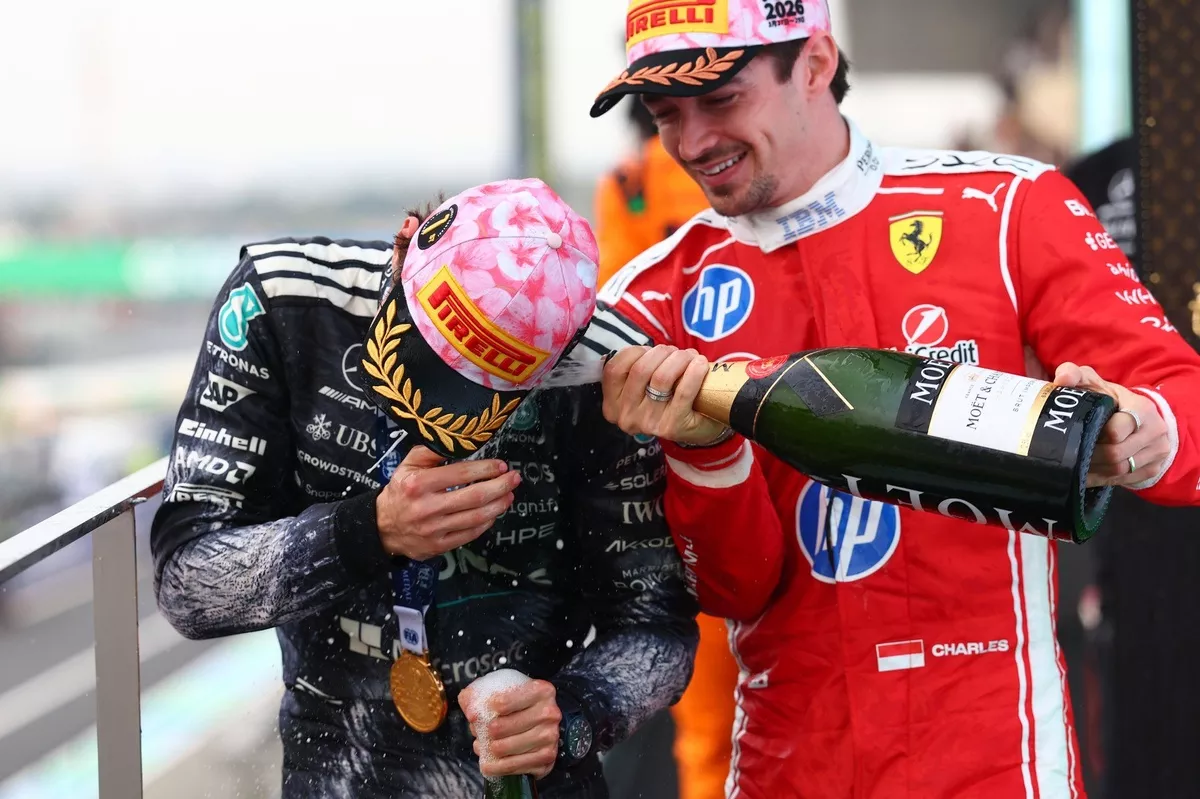
Fred Vasseur pinpoints what boosted Ferrari’s morale in Japan
Fred Vasseur pinpoints what boosted Ferrari’s morale in Japan as Charles Leclerc delivers a timely statement at Suzuka
For a team like Ferrari, morale is never a small thing.
At Maranello, confidence can feel fragile even when the results look respectable on paper. A podium might calm the outside noise for a few days, but it rarely changes the mood completely unless there is something deeper behind it — a sign that the car is improving, that the drivers are extracting more, or that the team has found a way to stand up to a genuine rival when it matters.
That is why Fred Vasseur pinpoints what boosted Ferrari’s morale in Japan as something far more meaningful than simply another podium finish.
Yes, Charles Leclerc brought home third place at the Japanese Grand Prix. Yes, it was Ferrari’s third podium in a row. And yes, under normal circumstances, that alone would be enough to frame the weekend as solid progress. But for Vasseur, the real value of Suzuka was in the manner of the result — in the fight, in the control, and in the fact that Ferrari managed to keep a fast Mercedes behind when the pressure was at its highest.
That, in his eyes, is where the real morale boost came from.
Not just the trophy.
Not just the points.
But the evidence.
Because if Ferrari are going to turn a decent start into a real title conversation later in the season, they need more than respectable finishes. They need proof that they can absorb pressure from the teams around them, make smart calls in the heat of battle, and trust the car enough to defend under strain.
At Suzuka, Leclerc gave them exactly that.
And in a season where Formula 1 now heads into a rare and significant break before the paddock reconvenes in Miami, that could matter more than many people realise.
Fred Vasseur pinpoints what boosted Ferrari’s morale in Japan after Leclerc’s smart battle with George Russell
Sometimes a podium tells the whole story.
Sometimes it barely tells half of it.
This one was definitely the second kind.
On the official timing screens, the takeaway was simple enough: Kimi Antonelli continued Mercedes’ blistering early-season run with another victory, while George Russell pushed hard but fell just short of the podium as Charles Leclerc held onto third by the narrowest of margins.
But if you watched the race closely, it was the final phase — that tense, tactical closing stretch — that really explained why Fred Vasseur pinpoints what boosted Ferrari’s morale in Japan with such conviction.
Leclerc did not just inherit a result or cruise to the flag.
He had to earn it.
Russell was right there, aggressive, fast, and constantly threatening. The Mercedes had enough pace to make Ferrari sweat, and in many seasons gone by, this is exactly the sort of moment where the Scuderia might have cracked — through tyre drop-off, energy mismanagement, poor positioning, or simple panic under pressure.
Instead, Ferrari stayed composed.
More importantly, Leclerc stayed sharp.
This was not only about defending a place. It was about managing the entire endgame: battery deployment, tyre life, track position, braking zones, and the split-second judgment required when another top driver is hunting you lap after lap.
Vasseur saw all of that.
And he clearly valued it.
In his view, this was the kind of drive that speaks not just to the driver’s quality, but to the team’s current state of health. A driver does not pull off that kind of measured, intelligent defence unless the tools around him are working, the communication is clean, and the confidence in the package is at least moving in the right direction.
That is why the mood inside Ferrari after Japan was stronger than a basic P3 might suggest.
Charles Leclerc’s strategic display gave Ferrari something real to build on
The most encouraging part for Ferrari was not just that Leclerc beat Russell.
It was how he did it.
There was a real intelligence to the drive. A rhythm. A maturity. And crucially, an understanding of racecraft that went beyond simply parking the car on the apex and hoping the car behind ran out of laps.
Leclerc had to think his way through the closing stages.
At times, he was clever enough to manipulate the positioning into the final chicane, even allowing Russell to edge ahead briefly in a way that would open the door to reclaiming the place into Turn 1. That kind of cat-and-mouse driving is not accidental. It comes from confidence, awareness and trust in your own execution.
It also reflects a driver who knows exactly where the strengths of his car are in that phase of the race.
That matters for Ferrari.
For years, the team has often been accused — sometimes fairly, sometimes a little lazily — of lacking sharpness in the moments that decide podiums and wins. Too often the narrative has been that Ferrari can look quick on Friday, flashy on Saturday, and somehow slightly less convincing when the race becomes a tactical knife fight on Sunday.
At Suzuka, that narrative did not fit.
Leclerc was controlled without being passive.
He was aggressive without being desperate.
And he looked like a driver fully aware that every battery release, every line choice, every braking point had to be managed like currency.
That is why Fred Vasseur pinpoints what boosted Ferrari’s morale in Japan not as a generic “good result,” but as a genuine sign of substance. Ferrari didn’t just survive a fast Mercedes attack. They out-thought it in key moments.
For a team chasing bigger things, that is exactly the kind of small victory that can change the internal temperature.
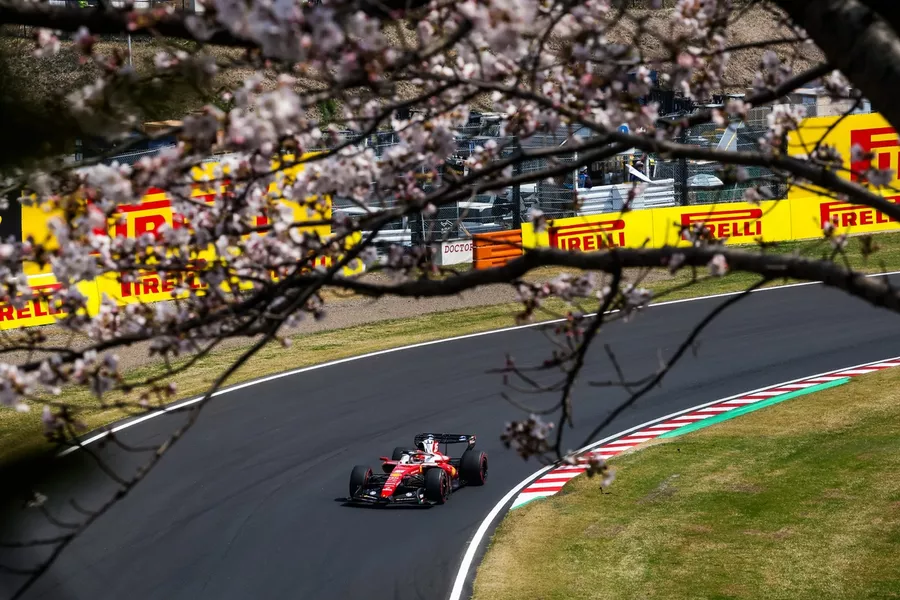
Why beating Mercedes in Japan felt bigger than the podium itself
In Formula 1, context is everything.
A third-place finish can mean very little if you are miles off the leaders and simply benefiting from attrition. But a third-place finish can feel huge if it comes in direct combat against a rival you know may currently have a slightly stronger package.
That is the lens through which Ferrari are viewing Suzuka.
Because right now, Mercedes look like the benchmark.
With Kimi Antonelli and George Russell sweeping the opening two races in Australia and China, and then Antonelli extending that momentum again in Japan, there is no hiding from the fact that Mercedes have made a serious early statement under the new rules. The car is fast. The operation looks clean. The confidence is growing. And for the rest of the field, that is a concern.
Ferrari know it.
The paddock knows it.
The tifosi definitely know it.
That is why Leclerc keeping Russell behind carried extra weight. It did not erase the broader performance gap to Mercedes, and nobody at Ferrari is pretending it did. But it showed that in at least one key race scenario, on a demanding circuit like Suzuka, Ferrari could still stand its ground against one of the dominant silver cars.
That matters psychologically.
And in a sport as intense and relentless as Formula 1, psychology often matters more than people admit.
Teams spend endless hours in the simulator, in the wind tunnel, in the factory, in debrief rooms, staring at traces and numbers and microscopic performance swings. What lifts morale in that environment is not motivational speeches. It is evidence.
Proof.
A result you can point to and say: There. That works. That can be repeated. That is something we can sharpen.
Suzuka gave Ferrari one of those moments.
Fred Vasseur knows Ferrari needed a morale boost before the April break
The timing of all this is almost as important as the performance itself.
If the Japanese Grand Prix had been followed immediately by another race weekend, Ferrari might have had a chance to carry momentum straight into the next event. But this year, the sport heads into a longer pause — a significant April break before Formula 1 resumes in Miami on the first weekend of May.
That changes the emotional value of the result.
A good race before a break can fuel belief.
A bad race before a break can leave frustration simmering in the factory for weeks.
So when Fred Vasseur pinpoints what boosted Ferrari’s morale in Japan, he is also talking about the practical impact of sending everyone away from Suzuka with a result that feels constructive rather than deflating.
That should not be underestimated.
Because Ferrari are one of the most emotionally scrutinised teams in world sport. Every race becomes a referendum. Every strategy call gets magnified. Every missed opportunity can snowball into headlines, criticism, and the familiar “same old Ferrari” conversation that has haunted the team in too many seasons.
Going into a long gap with another podium is useful.
Going into it with a podium earned by holding off Mercedes in a proper late-race fight is even better.
That gives the engineers something positive to study.
It gives the strategists something to trust.
It gives Leclerc a personal confidence boost.
And it gives Vasseur a much easier environment in which to push the next phase of development without the emotional noise becoming overwhelming.
Ferrari’s next challenge is turning morale into upgrades and real performance gains
Of course, no one inside Ferrari will be getting carried away.
And to be fair, Vasseur doesn’t sound like a man who wants anyone drifting into self-congratulation.
The Frenchman has been around long enough to know that morale is useful, but only if it leads to action.
That is the next step.
Because while Fred Vasseur pinpoints what boosted Ferrari’s morale in Japan, he is equally clear that the real work now begins. The season is still young. The car is still in the early phase of its development curve. And under modern Formula 1 regulations, especially in the homologation-sensitive early period, every team is still learning where the true ceiling of its package lies.
Ferrari, like everyone else, now heads into a month where development could define the next stretch of the championship.
That is where the real intrigue begins.
By the time the paddock lands in Miami, most front-running teams are expected to bring meaningful upgrade packages. New floors, revised aero details, suspension tweaks, cooling refinements, energy deployment improvements — maybe not all of that at once, but enough to shift the balance if executed well.
And right now, Ferrari need that step.
Not a miracle.
But a step.
Vasseur has essentially admitted as much. The data from the first three races has given Ferrari a clearer picture of where the car is competitive and where it is still lacking. That honesty is important. There is no pretending the Scuderia are already at the level they want to be. There is still ground to make up, and likely in multiple areas rather than one magic fix.
That is often the hardest truth in modern F1.
Performance rarely arrives from a single breakthrough.
It comes from dozens of small gains stacked together.
Ferrari know it.
Now they have to prove they can out-develop the teams around them.
Charles Leclerc’s drive in Japan may prove more important than it looked
It is easy in Formula 1 to focus only on wins.
Especially at Ferrari.
Anything less can be framed as a compromise, a missed opportunity, or just another “decent but not enough” weekend. And in a strict sense, that is understandable. This is Ferrari. The standards are brutal because the history is brutal.
But seasons are often shaped by quieter races too.
The ones where a driver squeezes a little more than expected from the car.
The ones where a team discovers it can handle pressure better than before.
The ones where a result, while not spectacular from the outside, becomes a reference point internally.
Suzuka might turn out to be one of those.
Leclerc’s drive was not flashy in the way a win is flashy. It was not headline-grabbing in the same way a dramatic overtake or a controversial strategy call would be. But it was deeply useful. It was one of those races engineers and team bosses love because it reveals something real about the package and the driver under pressure.
That is why it landed so well with Vasseur.
It was not just about being on the podium.
It was about proving Ferrari could execute.
And in a season where the margins at the front may become razor-thin once the development race really gets going, execution is often what separates contenders from hopefuls.
Final word: Fred Vasseur pinpoints what boosted Ferrari’s morale in Japan
So, Fred Vasseur pinpoints what boosted Ferrari’s morale in Japan with unusual clarity.
It was not simply the fact that Charles Leclerc finished third.
It was the quality of the fight.
It was the composure under pressure.
It was the strategic sharpness in those final laps as Leclerc held off George Russell and kept one of the dominant Mercedes cars behind at a circuit where every mistake gets punished.
For Ferrari, that matters.
Because the Scuderia still have work to do. The gap to Mercedes is not gone. The bigger prizes are still out of reach for now. And the upcoming April break will be spent doing what every serious team is doing — digging through data, preparing upgrades, and trying to return in Miami with a car that can take a bigger step.
But as far as morale goes, Japan gave them something they badly needed:
A real, visible sign that when the pressure came, they could respond.
That is the sort of performance that travels back to Maranello better than any motivational speech.
It tells the factory the car can fight.
It tells the driver the tools are improving.
And it tells the team boss that belief, for now at least, is still justified.
For Ferrari, that might not be the final goal.
But heading into a crucial break in the season, it is a very good place to start.


There are no comments yet. Be the first to comment!