





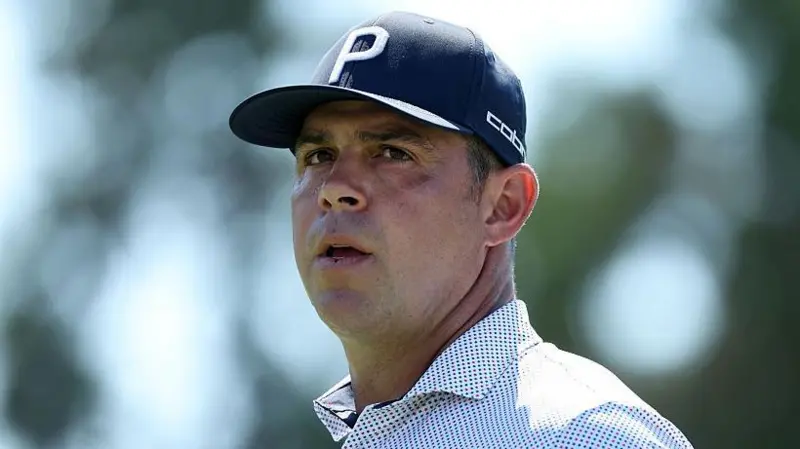
Gary Woodland Opens Up on PTSD Struggles After Brain Surgery: “I Can’t Waste Energy Hiding Anymore”
For years, Gary Woodland built his reputation on composure. The calm swing, the steady walk, the unshakeable focus under pressure — all trademarks of a golfer capable of winning a US Open on one of the toughest stages in the sport. But behind the controlled exterior, the American was fighting a battle few could see.
Now, the 2019 US Open champion has chosen honesty over silence.
After undergoing brain surgery in 2023 and returning remarkably to professional golf, Woodland has revealed that he has been living with post-traumatic stress disorder (PTSD), admitting that hiding the condition had become more exhausting than confronting it publicly.
His decision to speak openly marks another chapter in a journey defined not by trophies, but by resilience.
Gary Woodland and PTSD: A Fight Beyond the Fairways
When Woodland lifted the US Open trophy at Pebble Beach in 2019, he appeared to embody golfing strength — mentally tough, physically powerful, and emotionally balanced. Few could have imagined the challenges that awaited him just a few years later.
In September 2023, Woodland underwent brain surgery to remove a tumour, a life-altering moment that forced him to confront far more than questions about his playing career. The operation was successful, but recovery proved far more complex than simply regaining physical fitness.
The emotional and psychological toll lingered.
Speaking candidly to Golf Channel, Woodland admitted that he had been diagnosed with PTSD roughly a year ago, a revelation that reshaped how he understood the struggles he had been experiencing since surgery.
“I can’t waste energy any more hiding this,” Woodland said, choosing vulnerability over the stoicism athletes are often expected to maintain.
For a professional golfer — a sport built around mental control — admitting internal turmoil requires immense courage. Woodland acknowledged that although fans and fellow players offered support, his internal reality often felt very different.
“I’m blessed with a lot of support out here,” he explained. “But inside, I feel like I’m dying and living a lie.”
Those words reveal the invisible nature of mental-health struggles, even among elite athletes who appear outwardly successful.
The Long Road Back After Brain Surgery
Woodland’s return to the PGA Tour at the beginning of 2024 was widely celebrated. Simply competing again felt like a victory after brain surgery — a testament to determination and medical progress alike.
Yet the comeback was never straightforward.
Golf demands precision, concentration and emotional stability. For Woodland, everyday tournament environments suddenly became unpredictable triggers. Situations that once felt routine began provoking intense reactions he struggled to understand at the time.
One particularly difficult episode occurred during the Procore Championship in California last season.
A walking scorer approached from behind, unintentionally startling Woodland. The moment triggered a powerful reaction.
“I told my caddie, ‘You can’t let anybody get behind me,’” he recalled.
Moments later, symptoms intensified. His vision blurred. Confusion set in. He struggled to remember what he was doing mid-round — a terrifying experience for any athlete, let alone one competing at the highest professional level.
Despite his caddie’s concern, Woodland continued playing.
Part of that decision stemmed from responsibility. He was competing alongside members of the US Ryder Cup team and preparing to serve as a vice captain, a role he took seriously. Walking away felt, at that moment, impossible.
But the emotional cost was immense.
“I went into every bathroom to cry the rest of the day,” Woodland admitted. “When I finished, I got in my car and left immediately.”
It was a stark reminder that recovery is rarely linear, especially when mental health is involved.
Living With PTSD on the PGA Tour
Professional golf is uniquely isolating. Unlike team sports, players spend hours alone with their thoughts, walking long courses under intense scrutiny.
For Woodland, that environment sometimes amplified his struggles.
He described moments of overwhelming emotion — crying in scoring trailers, rushing to his car to hide distress from others, and attempting to maintain a public image while privately battling anxiety and fear.
“There are days when it’s tough,” he said. “I don’t want to live that way anymore.”
The admission reflects a growing shift in professional sport, where athletes increasingly speak openly about mental health challenges that were once hidden behind expectations of toughness.
Woodland’s honesty resonates precisely because it contradicts traditional sporting narratives. Here is a major champion, physically recovered enough to compete, yet still navigating unseen psychological hurdles.
Recognition and the Meaning of Courage
In 2025, Woodland received the PGA Tour Courage Award, recognizing his remarkable return to competition after surgery.
The honor acknowledged perseverance, but Woodland’s recent comments suggest the award represents something deeper than simply playing golf again.
Courage, in his case, has meant confronting vulnerability.
Returning to elite sport while managing PTSD requires daily emotional energy — something Woodland admits he no longer wants to spend pretending everything is fine.
His decision to speak publicly signals a turning point, not just personally but culturally within golf, a sport that has traditionally emphasized quiet resilience over open discussion.
Finding Strength Through Shared Experience
One of the most important aspects of Woodland’s recovery has been conversation.
He revealed that he has spoken extensively with military veterans who also live with PTSD, finding common ground in shared experiences despite vastly different life circumstances.
Those conversations helped him recognize that healing often begins with acceptance.
Woodland now hopes that continuing to compete — even imperfectly — might encourage others facing similar struggles.
“I hope somebody that’s struggling sees me still fighting,” he said. “Trying to live my dreams.”
The message is simple but powerful: progress does not require perfection.
A New Perspective on Success
For much of his career, success meant trophies, rankings and major championships. Today, Woodland measures achievement differently.
Simply stepping onto the course, managing difficult days, and continuing forward represent victories in their own right.
He has also acknowledged an important realization: helping others begins with helping himself.
“I want to help people too,” Woodland explained. “But I realise now I have to help myself first.”
That awareness marks a significant shift — one that reflects maturity shaped by adversity rather than competition.
More Than a Comeback Story
Gary Woodland’s journey is no longer just about golf.
Yes, he remains a former US Open champion striving to compete at the highest level. But his story has evolved into something broader — a reminder that elite athletes are not immune to mental-health challenges and that recovery can be ongoing even after physical healing appears complete.
By speaking openly about PTSD, Woodland has expanded the definition of strength within professional sport.
He is still chasing fairways and birdies, still walking PGA Tour courses with the same determined stride. But now, he does so without hiding the reality of his struggles.
And perhaps that honesty, more than any trophy, will become his most lasting legacy.


There are no comments yet. Be the first to comment!