









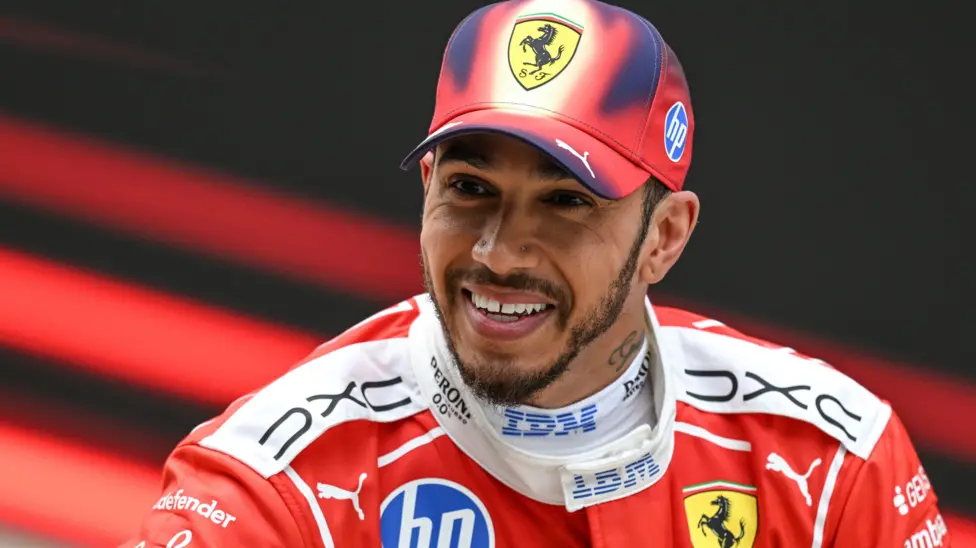
Hamilton Back to His Best? Mercedes Rise, Rule Changes Debate and the New F1 Narrative
F1 Q&A: Lewis Hamilton resurgence, Mercedes progress and potential rule changes shaping the Formula 1 season
Two races into the new Formula 1 season and already the paddock feels different. The early storylines have come thick and fast — a breakthrough victory for a rising star, a familiar name rediscovering form, and a growing debate about whether the sport’s latest regulations are helping or hindering the spectacle.
At the centre of it all sits a fascinating mix of past and future. Kimi Antonelli has announced himself in style with a maiden win at the Chinese Grand Prix, George Russell has underlined Mercedes consistency with another strong result, and perhaps most intriguingly, Lewis Hamilton is beginning to look — for the first time in a while — like himself again.
Add in technical questions around engine behaviour, race starts, and the direction of the sport’s rules, and the early phase of the season already feels like a turning point.
Lewis Hamilton and the return of a familiar force in Formula 1
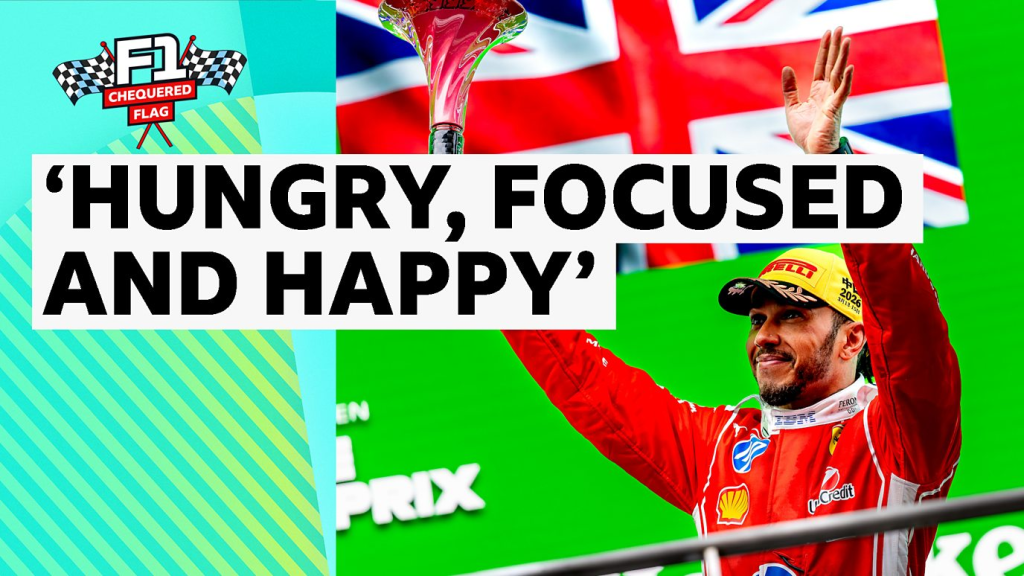
For much of last season, Hamilton cut a frustrated figure. His move to Ferrari was meant to open a new chapter, yet the reality proved far more complicated. Over the course of that campaign, he struggled to match the consistency of team-mate Charles Leclerc, and at times his performances seemed weighed down by both technical limitations and visible self-doubt.
Fast forward to now, and the shift is unmistakable.
Hamilton’s podium finish in China was not just a result — it was a statement. There was a sharpness to his driving, a clarity in decision-making, and perhaps most importantly, a renewed sense of belief.
The seven-time world champion himself has admitted as much, pointing to an intense winter of preparation — physically and mentally — as the foundation for his improved form. At 41, Hamilton appears to have doubled down on discipline rather than eased off, embracing heavier training loads and a more deliberate psychological reset.
But there is another layer to this resurgence.
Why the current Formula 1 cars suit Lewis Hamilton again
Hamilton’s driving style has always leaned toward aggression on corner entry — braking late, rotating the car sharply, and trusting instinct over smooth conservatism. It is a style that defined his dominance for more than a decade.
The previous generation of cars, however, demanded something different. The ground-effect era introduced characteristics that required smoother inputs and a more measured approach through corners — something that, surprisingly, never fully aligned with Hamilton’s natural instincts.
For a driver so renowned for adaptability, that disconnect raised questions.
Some within the sport quietly suggested that age might have played a role. Not in terms of physical decline, but in the difficulty of rewiring deeply ingrained habits developed over years of success.
Now, with the latest aerodynamic philosophy shifting closer to pre-2022 concepts, Hamilton looks more comfortable. The car responds in ways that suit his instincts again, allowing him to rely on muscle memory rather than forcing constant adaptation.
The result? A version of Hamilton that feels familiar — composed, confident, and capable of extracting performance when it matters most.
Mercedes momentum and Antonelli’s breakthrough in China
While Hamilton’s resurgence grabs headlines, Mercedes themselves are quietly building momentum.
Antonelli’s victory in China was a landmark moment, not just for the young driver but for the team’s evolving structure. Converting pole position into a controlled race win demonstrated both pace and composure — qualities that suggest Mercedes may have found a more competitive baseline than in recent seasons.
Russell’s second-place finish reinforced that impression. Consistency has become one of Mercedes’ strongest assets, and early signs indicate they may once again be capable of challenging at the front with greater regularity.
In contrast, McLaren endured a nightmare weekend. Both Lando Norris and Oscar Piastri failed to start due to power unit issues, raising fresh concerns about reliability. For a team expected to be firmly in the title conversation, such setbacks carry significant weight early in the campaign.
Ferrari’s race starts advantage over Mercedes explained
One of the more intriguing technical questions emerging from the opening races concerns race starts — specifically, why Ferrari appear consistently sharper off the line than Mercedes.
The answer lies deep within the sport’s complex power unit regulations.
This season, the removal of the MGU-H — a component previously used to manage turbo speed — has fundamentally changed how engines behave at low speeds. Without it, teams must rely more heavily on traditional methods to optimise turbo performance during starts.
At the same time, restrictions on the MGU-K prevent drivers from using electrical assistance at launch until a certain speed is reached. That leaves a narrow window where engine characteristics alone determine responsiveness.
Ferrari are believed to run a smaller turbo configuration. While this may limit peak performance at higher revs, it offers a crucial advantage in responsiveness at lower speeds — precisely what is needed for strong race starts.
It is a subtle trade-off, but in a sport where milliseconds matter, such differences can shape entire races.
Formula 1 rule changes: balancing entertainment and driver satisfaction
Beyond individual performances, a broader conversation is beginning to take shape around the direction of Formula 1 itself.
At its core lies a familiar tension: should the sport prioritise entertainment or purity?
The current regulations were not initially designed with spectacle in mind. Instead, they aimed to attract new manufacturers and align technological development with broader industry trends. Only later did concerns emerge about how those rules would affect racing quality.
The main issue revolves around energy management.
Modern F1 cars rely heavily on electrical systems, creating a delicate balance between performance and energy conservation. Drivers are often forced to manage deployment carefully, particularly in qualifying and high-speed corners, where full-throttle commitment has traditionally defined the sport.
Some within the paddock argue that this compromises the essence of Formula 1 — pushing drivers away from the limit rather than toward it.
Yet others, including key figures like Toto Wolff, point to increased overtaking and competitive midfield battles as evidence that the current product remains compelling for fans.
Potential rule tweaks and what could change next
While a complete overhaul of regulations is unlikely in the short term, several targeted adjustments are already being discussed.
One proposal involves increasing energy recovery limits, allowing cars to operate more efficiently without sacrificing performance. Another suggests reducing reliance on electrical power, extending deployment phases and improving consistency.
More radical changes — such as altering the balance between internal combustion and electric power — would require significant redesigns and are unlikely before future regulatory cycles.
For now, Formula 1 finds itself in a familiar position: refining rather than reinventing.
The impact of the early-season break on teams and development
An unusual early-season break has also added an extra layer of intrigue.
On the surface, it offers struggling teams an opportunity to regroup — particularly those facing reliability concerns. However, in reality, development cycles in Formula 1 are planned months in advance.
As Andrea Stella of McLaren has pointed out, upgrade timelines are largely unaffected by short-term calendar changes. Teams continue to push development at maximum speed regardless of race scheduling.
What the break does provide, however, is breathing room.
For teams like McLaren or Williams, it reduces immediate pressure and limits the number of races where points could be lost. Whether that translates into competitive gains depends entirely on how effectively they can interpret data and implement improvements.
A season already full of shifting narratives
Two races in, and the 2026 Formula 1 season already feels rich with possibility.
A new winner has emerged. A veteran appears reborn. Technical nuances are shaping outcomes in unexpected ways. And behind it all, the sport continues to wrestle with its own identity — balancing innovation, competition, and entertainment.
For Lewis Hamilton, the early signs are encouraging. For Mercedes, momentum is building. And for Formula 1 as a whole, the questions being asked now may define not just this season, but the direction of the sport for years to come.
If nothing else, one thing is clear: the story is only just beginning.


There are no comments yet. Be the first to comment!