




































How Brentford Keep Getting Managerial Calls Right
Brentford have done it again.
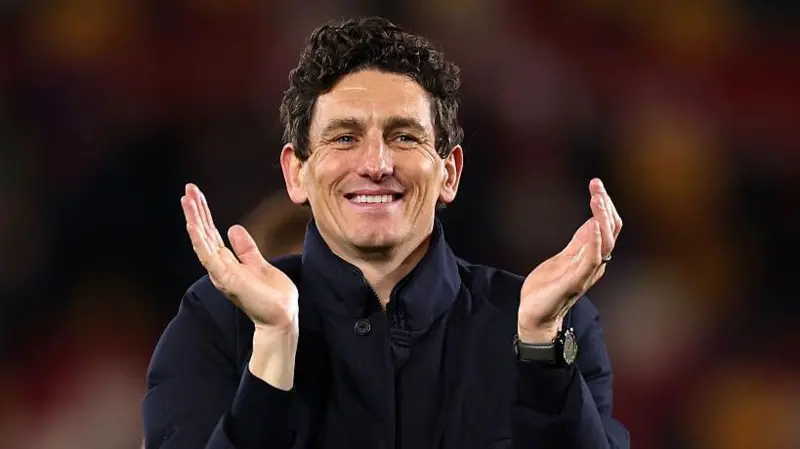
When Thomas Frank left for Tottenham Hotspur last summer, many predicted trouble for the Bees. Instead, under managerial newcomer Keith Andrews, Brentford are seventh in the Premier League and into the FA Cup fifth round.
While Frank was later dismissed by Spurs, Andrews has exceeded expectations in west London — continuing a remarkable trend under owner Matthew Benham.
So how do Brentford keep appointing the right managers?
A Model Bigger Than the Manager
Brentford’s success is rooted in structure, not sentiment.
Under Benham and director of football Phil Giles, the club operates a data-led, analytics-driven system. Recruitment, tactical identity and long-term planning are aligned across departments.
The manager is not asked to reinvent the club — only to execute its philosophy.
That continuity reduces risk.
When Andrews was promoted internally, it looked bold from the outside. Inside the club, it was seen as logical. He already understood the structure, the squad and the expectations. No overhaul required.
A Track Record of Smart Appointments
Over the past 15 years, Brentford have appointed just six permanent managers — and only one proved a misstep.
-
Uwe Rosler – First English managerial role, nearly secured promotion.
-
Mark Warburton – First managerial job, won promotion to the Championship.
-
Marinus Dijkhuizen – Sacked after nine games (the only clear mistake).
-
Dean Smith – Stabilised the club before moving to Aston Villa.
-
Thomas Frank – Secured Premier League promotion and top-flight stability.
-
Keith Andrews – Now pushing for European football.
That consistency is rare in modern football, where rivals frequently change direction.
Internal Promotion Over External Disruption
Brentford avoid hiring managers who demand structural change.
The club’s leadership prioritises cultural fit and system compatibility over reputation. A high-profile name who wants full control is seen as a bigger risk than a coach aligned with the club’s blueprint.
Compare that with Tottenham’s recent cycle of Jose Mourinho, Antonio Conte, Nuno Espirito Santo and others — each bringing vastly different footballing ideologies.
At Brentford, identity stays constant. The head coach adapts to the system, not the other way around.
Trusting the Process
Even during slow starts — including a spell near the relegation zone earlier this season — supporters backed the leadership.
The phrase often repeated among fans? “Trust the process.”
With one of the lowest budgets in the Premier League and regular sales of star players, Brentford cannot afford instability. Strategic patience is not optional — it’s essential.
Could This Model Work Elsewhere?
In theory, yes. In practice, it requires:
-
Long-term ownership vision
-
Alignment between board, recruitment and coaching staff
-
Patience from supporters
-
Clear identity and data-backed decision-making
Brentford’s manager is not the sole architect of success. He is part of a carefully built machine.
And as long as that machine remains intact, the Bees are likely to keep proving doubters wrong.


There are no comments yet. Be the first to comment!