





How the 2026 World Cup Draw Will Work: Seeding, Pots & Restrictions Explained
The World Cup Draw is Here – Here’s How It Will Work
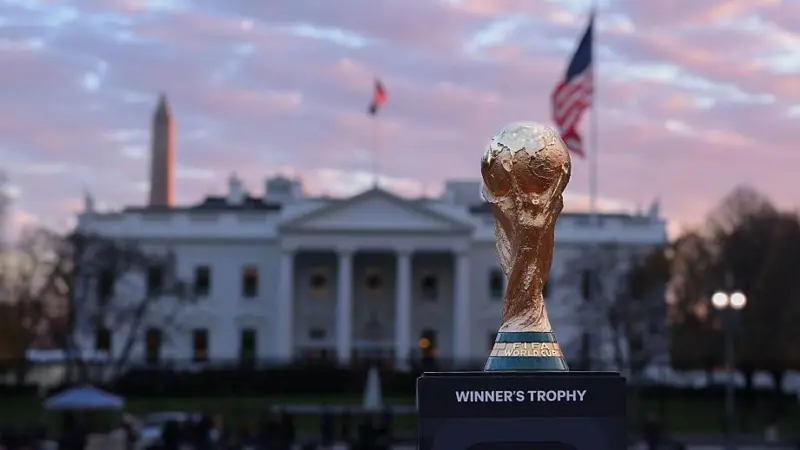
With 48 teams, new knockout routes, and hosts spread across three countries, the 2026 FIFA World Cup draw will be the most complex yet. Hosted in Washington D.C., this glitzy event is more than just pulling names from bowls. Here’s everything you need to know.
When and Where Is the Draw?
The ceremony starts at 17:00 GMT (12:00 local time) on 5 December, live from the Kennedy Center—just a mile from the White House.
Expect celebrity hosts like Heidi Klum, Kevin Hart, and Danny Ramirez, with performances by Andrea Bocelli, Robbie Williams, and Nicole Scherzinger. Speeches from FIFA president Gianni Infantino and US President Donald Trump will precede the main event.
Once the draw ends, the Village People will close the show with YMCA. Entire runtime: 90 minutes.
How Are the Teams Seeded?
Teams are divided into four pots of 12:
-
Pot 1: Top FIFA-ranked teams + Hosts (Mexico, Canada, USA)
-
Pot 2 & 3: Next ranked teams
-
Pot 4: Six Play-off path winners + lowest-ranked teams
Key note: Hosts are pre-assigned:
-
Mexico (Group A1)
-
Canada (Group B1)
-
USA (Group D1)
The Top 4 Seed Bonus Explained
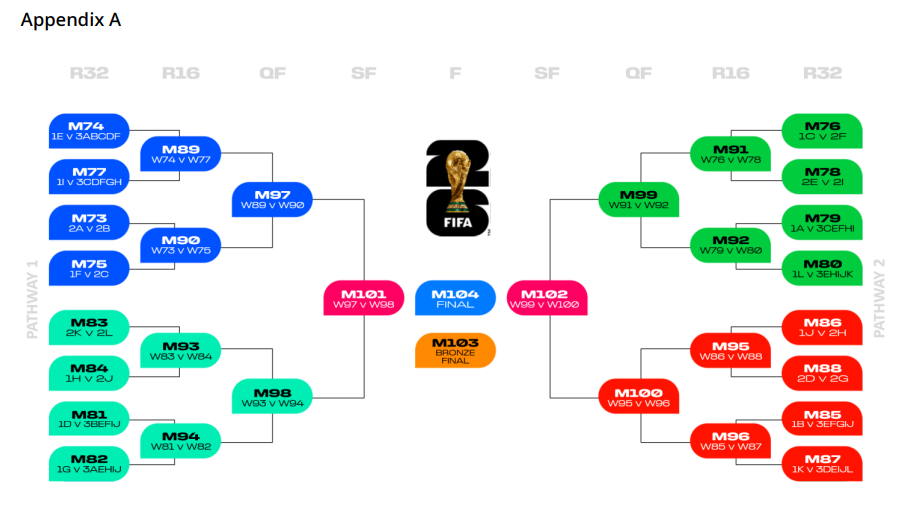
To increase chances of major matchups in later rounds, FIFA has placed the top 4 ranked teams—Spain, Argentina, France, and England—into different quadrants of the knockout bracket.
This ensures they can’t meet before the semi-finals or final, but only if they win their groups. If one finishes second, it loses its seeding advantage.
How Will the Draw Work?
-
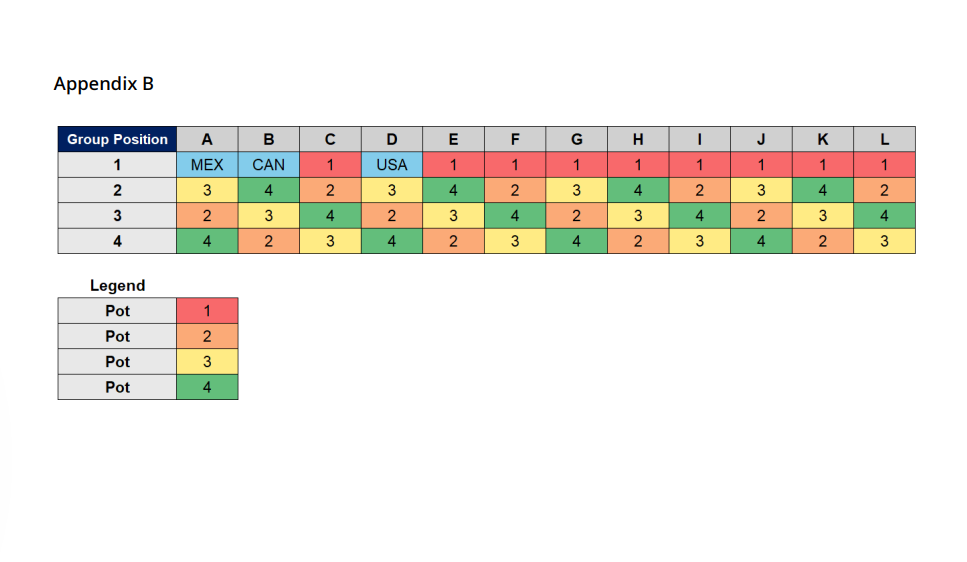
Pot 1 is drawn first, followed by 2, 3, and 4.
-
Each group (A-L) will include one team from each pot.
-
A computer ensures no group includes more than one team from each confederation—except Europe, which can have two per group (due to 16 UEFA nations).
Example: Brazil (CONMEBOL) and Uruguay cannot be in the same group.
Special Draw Restrictions
Inter-confederation Play-offs Cause Complexity
-
Pathway 1: DR Congo (CAF), Jamaica (CONCACAF), New Caledonia (OFC)
-
Pathway 2: Iraq (AFC), Bolivia (CONMEBOL), Suriname (CONCACAF)
Some are automatically blocked from joining groups with hosts or teams from the same region. This may skip certain groups to avoid violating confederation constraints.
A deadlock scenario occurs if no legal placement remains, so the computer pre-plans group availability accordingly.
How Are Teams Assigned to Groups?
Teams are placed into groups alphabetically while meeting confederation rules:
-
Host nations (A1, B1, D1) already have group positions.
-
All other teams follow a pre-defined grid, which determines match order without another draw.
For example:
-
If Scotland is drawn first from pot 3 and lands in Group A, they will play Mexico in the opening match (A1 vs A2).
When Will Teams Know Their Match Schedule?
-
On 5 December, teams will learn:
✔️ Their opponents
✔️ Match days
❌ Not yet the venues or kick-off times
-
On 6 December, FIFA will hold a match schedule broadcast at 17:00 GMT to unveil full venue and time details.
All groups follow the same match order:
|
Matchday |
Fixtures |
|---|---|
|
1 |
1 vs 2, 3 vs 4 |
|
2 |
1 vs 3, 4 vs 2 |
|
3 |
4 vs 1, 2 vs 3 |
What Should Fans Watch For?
-
Quadrant positioning of the top 4 teams
-
Which groups get 2 UEFA nations
-
Where the play-off winners go
-
Potential ‘Group of Death’ scenarios
FIFA’s draw system is complex but built to ensure balanced competition, regional representation, and blockbuster knockouts.


There are no comments yet. Be the first to comment!