






IOC bans trans women from female events from 2028
IOC’s major policy shift explained
The International Olympic Committee has introduced one of the most significant rule changes in modern sport — limiting women’s Olympic events to biological females only from the 2028 Los Angeles Olympics.
The decision marks a clear reversal from policies introduced under former president Thomas Bach, who had previously allowed each sport to set its own eligibility criteria.
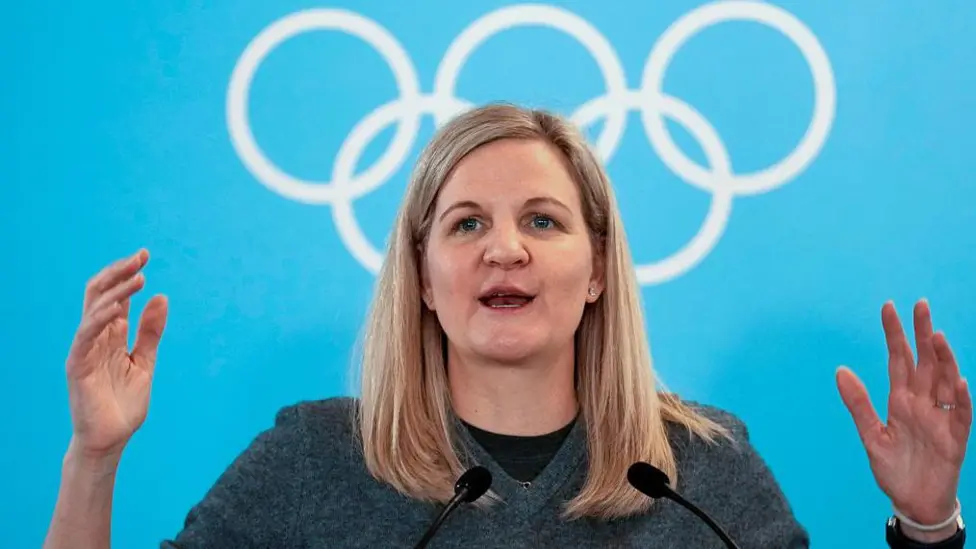
Now, under new president Kirsty Coventry, a universal rule will apply across all Olympic sports.
What exactly has changed?
The IOC’s new framework includes:
- Ban on transgender women in female categories
- Exclusion of some athletes with differences in sex development (DSD) who experienced male puberty
- Eligibility based on biological sex testing (SRY gene screening)
The SRY gene test detects the presence of a Y chromosome, indicating male sex development.
The IOC says the move is designed to protect:
- Fairness
- Safety
- Competitive integrity
Why the U-turn?
The IOC says its decision reflects:
- Updated scientific and medical evidence
- Athlete and stakeholder feedback
- Growing consistency across sports
According to the IOC:
- Male puberty provides 10–12% advantage in endurance sports
- Up to 20% in power events
- Even higher in combat sports
Several federations had already moved in this direction, including:
- World Athletics
- World Boxing
Divided global reaction
Supporters say
- Protects fairness in women’s sport
- Creates a clear, universal standard
- Encourages participation of female athletes
Many federations and women’s rights groups welcomed the clarity.
Critics argue
- It oversimplifies biological complexity
- Raises ethical concerns over genetic testing
- May violate privacy and human rights laws
Athletes like Caster Semenya have strongly opposed the move, arguing:
“Womanhood and female biology are not uniform.”
Meanwhile, US runner Nikki Hiltz questioned whether the policy addresses a real issue at elite level.
Legal and ethical challenges ahead
The new rules could face:
- Legal challenges under human rights and anti-discrimination laws
- Issues in countries where genetic testing is restricted
- Concerns about testing minors and privacy rights
Experts warn that using a single gene test may be too simplistic for complex biological realities.
Key unanswered questions
1. How will testing be implemented globally?
Different countries have different laws on genetic data.
2. Will all sports apply it the same way?
The IOC wants consistency — but enforcement may vary.
3. Could this trigger court battles?
Very likely, especially in Europe and North America.
4. What about Paralympics and grassroots sport?
The International Paralympic Committee has not yet adopted a similar rule.
Big picture
This is a defining moment for Olympic sport:
The IOC has moved from inclusion-focused flexibility to a uniform fairness-first model
But the debate is far from over.
The road to the 2028 Los Angeles Olympics is now set to include not just competition — but legal, ethical, and scientific battles shaping the future of sport.


There are no comments yet. Be the first to comment!