
















































‘It Feels More Real’ – Why the World Cup Draw Gives the USMNT Belief in Mauricio Pochettino’s Expectation to Achieve the Impossible
‘It Feels More Real’ – Why the World Cup Draw Gives the USMNT Belief in Mauricio Pochettino’s Expectation to Achieve the Impossible
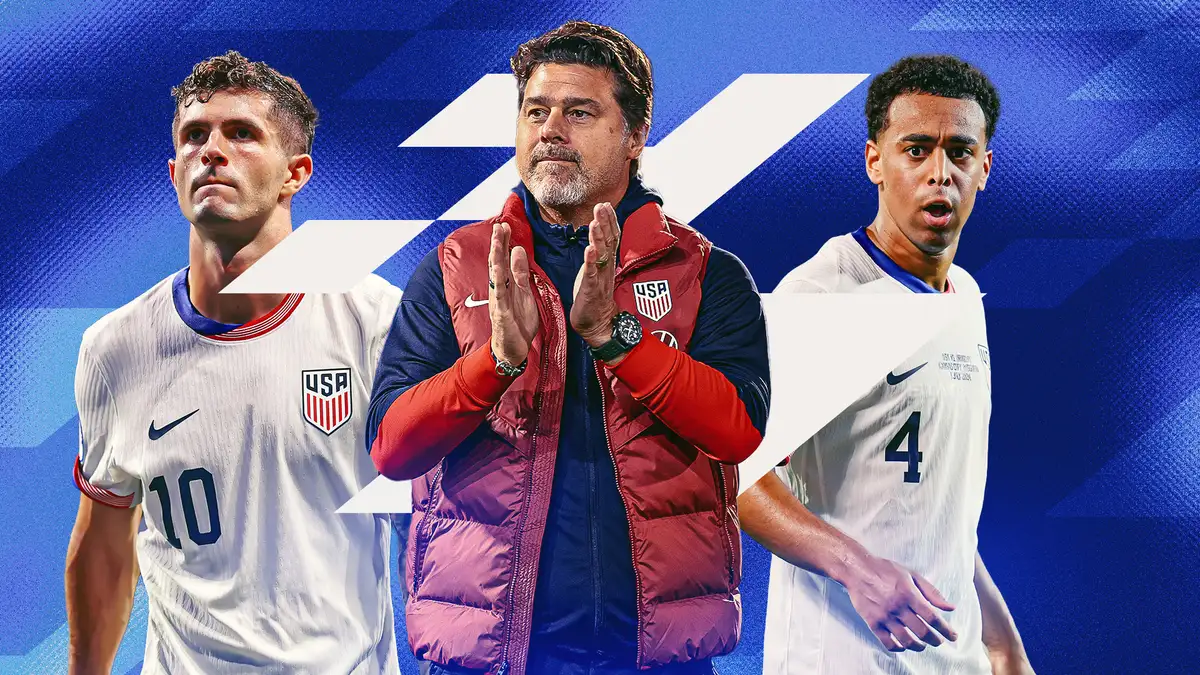
WASHINGTON — There are moments in sport when everything shifts from speculation to substance, when dreams begin to stretch into something resembling possibility. For the U.S. men’s national team, that moment arrived at the Kennedy Center, inside a theatre filled with legends, celebrities, and curious eyes fixed on gently wobbling ping-pong balls. Mauricio Pochettino went from silent observer to fully engaged head coach with the snap of an envelope. The World Cup draw was more than a show—it defined a path.
For a brief stretch, Pochettino was just another spectator, watching Shaquille O’Neal, Wayne Gretzky, Aaron Judge and Tom Brady wrestle with plastic capsules containing fates. He wasn’t coaching, not analysing, not adjusting. He was simply waiting. And then the waiting stopped. Paraguay first. Australia second. A European play-off winner third. There was suddenly direction, clarity, and, crucially, belief.
“Today we know the route,” Pochettino said afterward, reflecting with a dose of measured excitement. “With happiness, because it is a unique moment. What we see today can change in six months, but now we know. Now we prepare.”
A Draw That Delivered Clarity—and Encouragement
For supporters who tuned in, anticipation gradually replaced anxiety. The USMNT did not fall into a group drenched in danger; they landed in one that feels accessible and genuinely competitive. This is not Brazil-Spain-Senegal. It’s not France-Mexico-Japan. For once, the U.S. escaped chaos.
They know Paraguay. They know Australia. And if Turkey emerge through the playoff, they know them too, having pushed the U.S. into an uncomfortable—but educational—2-1 defeat earlier this year. Social media did what social media does: instantly assign probabilities, threads, predictions, and imagined knockout runs. Some labelled it ideal. Others called it reasonable. No one called it intimidating.
Even players noticed. Tyler Adams admitted that watching the spectacle—from the speeches, to the musical interludes, to President Donald Trump receiving an award—gave the event a uniquely American flavour.
“It made it feel like an American event already,” Adams said.
Christian Pulisic echoed the sensation, though with less ceremony. “Now that we know, it feels exciting,” he said.
They waited more than two hours before any actual ball landed in a meaningful location, but when it did, the World Cup stopped being a distant abstraction.
And that matters.
Familiar Opponents, Familiar Lessons

Christian Pulisic, USMNT
The schedule may appear advantageous, but Pochettino was not interested in overthinking it. What amused him at first became, quite quickly, a philosophical reminder.
“It means less work!” he joked.
He paused, smiled, and continued: “But of course, things will change.”
He’s not wrong. The Australia that visited Colorado in the fall will evolve. Paraguay—scrappy, physical, always awkward—will be sharper. If Turkey arrive, they’ll look nothing like the side the U.S. met. Watching film from friendlies is a reference point, nothing more.
“The team you meet in six months will not be the team you met before,” Pochettino said. “Players move, players recover, systems change.”
Those words weren’t caution—they were realism. And realism, in Pochettino’s world, is not defeatist. It is preparation.
Fans Dream in Brackets—Pochettino Doesn’t
Immediately after the draw, hypothetical brackets went viral. If the U.S. wins the group, their round-of-16 route could be dramatically smoother. If not, the tone changes. One loss shifts the story. A single draw reshapes the bracket entirely. And in the modern World Cup format, chaos exists in every direction.
Pochettino rejected all of that. His message: avoid the trap.
“If you are Argentina, the best team, the winner of the last World Cup, maybe you look ahead,” he said. “We don’t do that. The first game is the final. The second game is the final. The third game is the final.”
It was neither cliché nor deflection; it was the philosophy he has attempted to embed since day one. External narratives carry no tactical value. Mental focus does.
And yet, with that focus comes optimism.
He has repeatedly insisted that fans must feed belief into the program. That spectators, media, and even cynics play a role—not because enthusiasm wins matches, but because ambition sustains difficult moments.
‘We Don’t Need the Best Players; We Need the Right Players’

United States v Paraguay – International Friendly
Midway through his press availability, Pochettino reached into American sporting history and pulled out an iconic reference: Herb Brooks and the Miracle on Ice.
He recently watched the film Miracle, and its message lodged deeply into his thinking:
“We don’t need the best players; we need the right players.”
Pochettino repeated the line slowly, deliberately—almost as if identifying its future place in locker-room speeches.
“Good and right are completely different,” he emphasised. “A good player is not enough. We need the right player—who gives presence, who gives energy, who makes the team powerful.”
That idea will influence squad selections. It will influence rotations. It will influence tactical decisions more than any qualifying statistics or historical reputations. It also acknowledges something else: this U.S. team cannot out-talent the world.
But it might out-function it.
Realistic Goals—Leading to the Impossible

FIFA World Cup 2026 Official Draw – Red Carpet Arrivals
The phrase Pochettino has repeated over the past few months—almost to the point of becoming mantra—is simple:
“Be realistic and do the impossible.”
Realistic now means:
Advance from a manageable group.
Compete with conviction.
Avoid emotional collapse.
Impossible—the lofty version—means something else entirely.
Compete for the World Cup.
Chase something no U.S. team has ever legitimately approached.
Imagine, not survive.
That mindset doesn’t guarantee success, but it guarantees intent.
What Comes Next

United States v Uruguay – International Friendly
Momentum cannot wait until June. Training camps will matter more now than ever. Evaluations will tighten. Marginal details—fitness levels, tactical fluency, depth roles, pressing triggers—will form selection edges.
And when the U.S. walks onto the field for the first group match, Pochettino hopes their posture reflects something new: not fear, not novelty, not wide-eyed participation—but belonging.
Because, after all the ceremony, theatrics, speeches, trophies, musical acts and hesitant twisting of capsule lids, the message emerging from that ballroom was unmistakably clear:
This no longer feels hypothetical.
This no longer feels intangible.
“It feels more real,” Adams said.
And real, as Pochettino sees it, is where impossible begins.


There are no comments yet. Be the first to comment!