































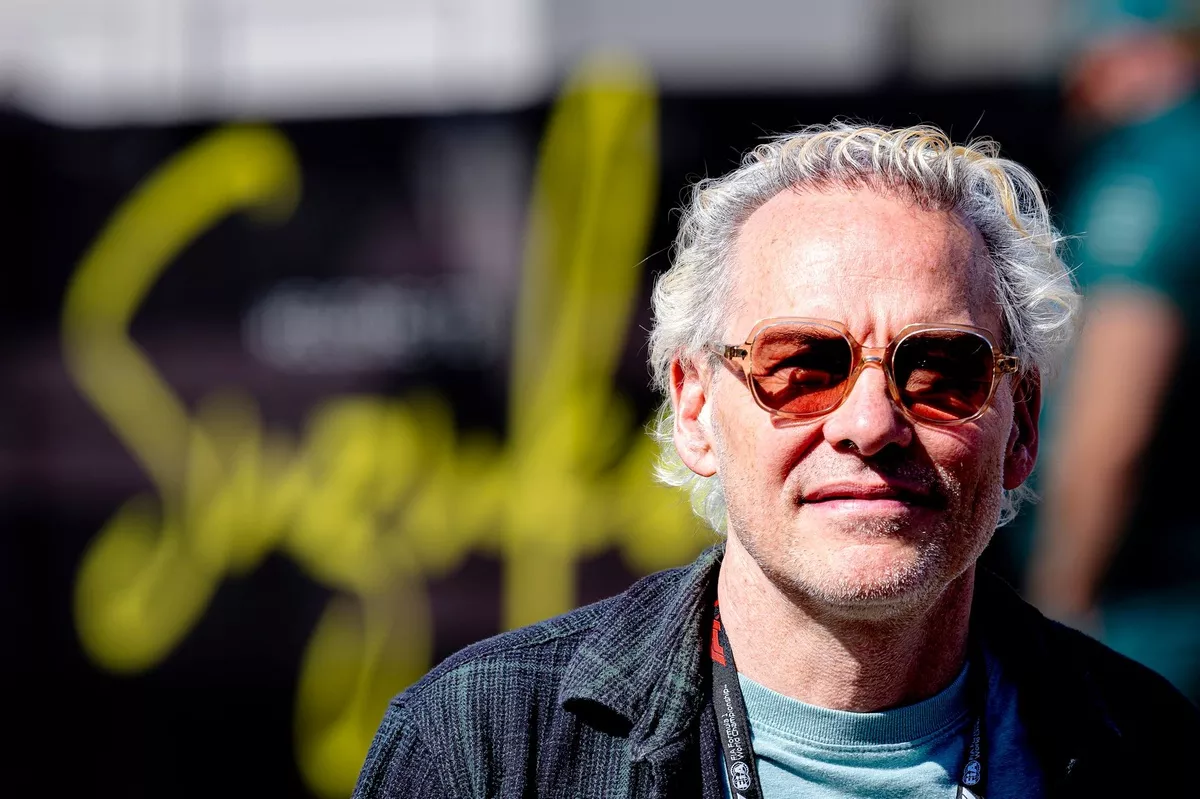
Jacques Villeneuve Spots Key Mercedes F1 Weakness Despite Kimi Antonelli’s Japanese GP Win
Jacques Villeneuve Spots Key Mercedes F1 Weakness as Kimi Antonelli’s Japanese GP Win Raises Bigger Questions
Winning papers over a lot in Formula 1.
It always has.
A team can leave a grand prix with the trophy, the points haul, the smiling photos in parc fermé, and the kind of weekend that looks spotless in the headlines — only for someone in the paddock to point out the one flaw nobody wants to talk about. And when that someone is Jacques Villeneuve, it usually comes with just enough bite to make people stop and listen.
That’s exactly what happened after Kimi Antonelli’s Japanese GP win.
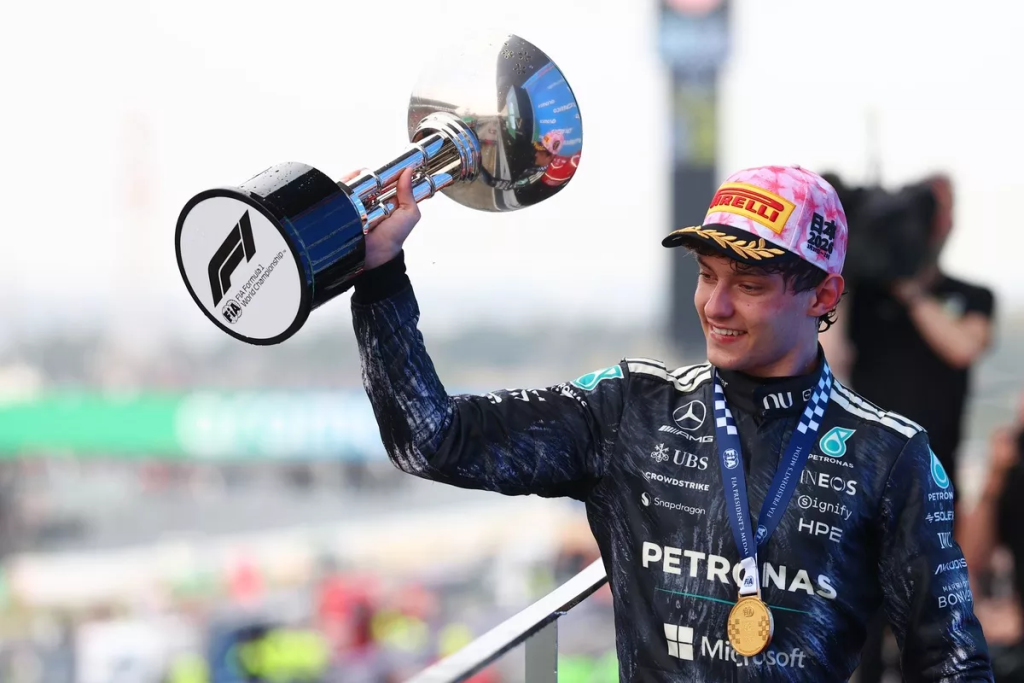
On the surface, it was another near-perfect chapter in what is rapidly becoming one of the stories of the season. Mercedes arrived in Japan looking like the class of the field yet again, and despite a scruffy start from Antonelli, the Brackley team still found a way to leave with victory. The Italian teenager converted pole position into another headline result, added to his growing reputation, and underlined why so many inside the sport believe he is not simply a future star — he is already a genuine title force.
But if you looked beyond the podium celebrations, the post-race glow, and the obvious excitement around Antonelli becoming the youngest driver to lead the championship standings, there was another conversation brewing.
A more technical one.
A more uncomfortable one.
Because Villeneuve, never exactly shy when it comes to calling things as he sees them, looked at Mercedes’ latest triumph and saw something else entirely: a possible weakness in the team’s 2026 Formula 1 car that could become a much bigger issue once the season gets messier, tighter, and less forgiving.
His verdict was simple but pointed.
Yes, the Mercedes was the fastest car all weekend.
Yes, Antonelli still deserved credit for making the most of the race as it unfolded.
But no, everything was not as flawless as the final result might suggest.
In Villeneuve’s eyes, the biggest red flag was how the Mercedes struggled in dirty air, especially when both Antonelli and George Russell had to fight their way through traffic. That, for him, was not just a small race-day inconvenience. It was a clue — maybe even a warning sign.
And in a season where Mercedes have looked almost untouchable in clean air, that’s exactly the sort of observation rivals will be paying attention to.
Kimi Antonelli’s Japanese GP win was impressive — but not as straightforward as the result suggests
If you only glance at the numbers, Kimi Antonelli’s Japanese Grand Prix win looks like another emphatic statement.
Pole position.
Victory.
Another huge points swing.
A milestone moment as the youngest driver ever to lead the championship standings.
That’s the sort of race result young drivers dream about, and it’s the kind of stat line that usually gets turned into a simple narrative: the wunderkind delivered again, Mercedes dominated again, and the rest of the grid were left chasing shadows again.
But Suzuka rarely tells such a tidy story if you watch it closely.
Antonelli was unquestionably quick all weekend. On outright pace, Mercedes looked like the benchmark. Over one lap, they had the balance, the confidence through the high-speed sections, and the kind of planted front end that gives a driver the freedom to attack the Esses rather than merely survive them. In race trim, too, the car had the authority of a machine that already understands its own strengths.
And yet, when the lights went out, Antonelli’s race immediately became more complicated than it needed to be.
His start was poor.
There’s no real point dressing that up. From pole, with the fastest package beneath him, he should have controlled the opening phase. Instead, he stumbled, lost the initiative, and suddenly found himself in exactly the sort of scenario dominant cars usually try to avoid: buried in traffic, reacting rather than dictating, and forced to work for a race that should have been under his control from Turn 1.
That is where Jacques Villeneuve’s criticism starts to make sense.
Because in theory, the fastest car in the field should still have enough in hand to slice through the pack, especially in the hands of a confident young driver riding momentum. But Antonelli did not carve through the traffic with the ease many expected. He had to be patient. He had to manage the tyres. He had to wait for openings rather than bully them into existence.
Yes, the well-timed safety car helped.
And yes, great drivers are often defined by how efficiently they exploit the moments fortune offers them.
Antonelli did exactly that.
Once the race swung back in his favour, he was calm, sharp, and clinical. He re-established control and did not blink when it mattered. That part deserves genuine praise. But it doesn’t erase the earlier struggle — and it’s that struggle that Villeneuve zeroed in on.
Jacques Villeneuve spots key Mercedes F1 weakness: dirty air remains a problem
This is the heart of the story.
For Jacques Villeneuve, the key takeaway from the Japanese GP was not simply that Kimi Antonelli won. It was how the Mercedes behaved when it wasn’t leading.
That distinction matters.
Villeneuve’s argument is not that Mercedes lack pace. Quite the opposite. He was clear that the Brackley car was the quickest machine all weekend. On raw speed, there was no real debate. If anything, that is what makes his criticism more interesting. He is not attacking the obvious. He is pointing to the hidden vulnerability inside an otherwise dominant package.
And in his view, that vulnerability is dirty air.
According to Villeneuve, the Mercedes appears far less comfortable than its rivals when forced to run in traffic. Where other cars can stay tucked in, manage the turbulence, and still attack, the Mercedes seems to need fresh air to unlock its full performance. Once it loses that clean aerodynamic window, it becomes noticeably more awkward, less aggressive, and less convincing when trying to recover through the pack.
That is a serious observation in modern Formula 1.
Because dirty air is not some rare inconvenience. It is a fundamental part of racing.
You can have the best qualifying car on the grid, but if a poor start, a mistimed stop, a safety car, a VSC, or a badly judged strategy drops you into traffic, your ability to survive that moment often decides whether a dominant weekend becomes a win or a wasted opportunity.
At Suzuka, Villeneuve felt both Antonelli and George Russell showed the same symptom.
That’s important too.
If only one driver struggles, you can blame circumstances, tyre prep, racecraft, or driver style. If both drivers look compromised in similar situations, the finger naturally points at the car.
That is exactly what Villeneuve did.
And frankly, it’s not an outrageous conclusion.
Some cars are monsters in clean air but become strangely fragile when tucked up behind another machine. The airflow over the front wing gets disturbed, the balance shifts, tyre temperatures creep upward, the front axle loses bite, and suddenly the driver cannot place the car with the same confidence. The gap looks small on timing screens, but the handling change inside the cockpit can be massive.
That is likely what Villeneuve believes he saw.
Why Mercedes’ 2026 F1 car could be vulnerable if this weakness continues
Now, one race does not define a season.
And one post-race comment, even from a world champion, does not automatically become technical gospel.
But what Jacques Villeneuve has highlighted is the kind of weakness that teams obsess over internally, precisely because it can stay hidden while a car is winning.
If Mercedes’ 2026 car is genuinely vulnerable in dirty air, then the issue may not fully show itself every weekend — especially not if the team keeps qualifying on pole, controlling track position, and spending most of its Sundays in clear air at the front. That’s the trap. Dominant teams can sometimes mask a flaw simply by rarely putting themselves in situations where it gets exposed.
But Formula 1 seasons are long, unpredictable, and ruthless.
At some point, the front-runner always gets dragged into traffic.
A slow pit stop.
A first-lap incident.
A mistimed safety car.
A red flag reset.
Rain.
A strategy gamble gone wrong.
When that happens, the ability to recover becomes almost as important as the ability to dominate from the front.
That’s why Villeneuve’s point matters.
If Mercedes can only truly shine when leading in clean air, they may still win plenty — perhaps even most — of the races. But the margins at the sharp end are never guaranteed to stay comfortable. Rivals evolve. Circuits change. Conditions shift. And the moment the field tightens, a dirty-air sensitivity that once looked manageable can suddenly become a defining limitation.
This is particularly relevant under modern aero-heavy regulations, where the smallest balance disturbance can ruin a driver’s confidence in medium- and high-speed corners.
Take a circuit where overtaking is already difficult.
Add tyre degradation.
Add turbulent wake.
Add a car that needs a pristine front-end feel to perform at its peak.
That is when a dominant package can start to look strangely human.
Antonelli still deserves credit — even if the Japanese GP exposed a weakness
It’s important not to lose sight of one thing here: Kimi Antonelli still did a very good job.
If anything, that’s what makes the race interesting.
Because Jacques Villeneuve was not dismissing the win entirely. He was challenging the neatness of the narrative, not erasing the result. There’s a difference.
Yes, Antonelli’s start was poor.
Yes, he made life harder for himself.
Yes, the safety car arrived at a useful moment.
But Formula 1 has never been about winning in perfect conditions only.
Sometimes the best race wins are messy.
Sometimes the best young drivers are the ones who survive their own mistakes, absorb the chaos, and still find a way to stand on the top step. That’s a huge part of what Antonelli did in Japan. He didn’t panic after the launch error. He didn’t overdrive trying to immediately fix the problem. He stayed in the fight, read the race properly, and when the window opened, he took it.
That matters.
It says something about his maturity.
A lot of rookies — or even experienced drivers, honestly — would have unravelled a bit after losing control of a race from pole. Antonelli didn’t. He looked irritated, yes, but not rattled. That is a very important distinction for a driver carrying title-level expectations this early.
So Villeneuve’s criticism should not be read as a takedown of Antonelli.
It’s more nuanced than that.
He is essentially saying: the driver did well enough, the car was still fastest, the opportunity arrived, and the win was banked — but there’s a technical flaw under the surface that could become costly later.
That is actually a fair analysis.
And it is the sort of thing good teams pay close attention to, even after victory.
George Russell’s race only strengthened Villeneuve’s case
If there was one detail that made Jacques Villeneuve’s argument more convincing, it was the fact that he did not base it solely on Kimi Antonelli.
He pointed to George Russell too.
That matters because Russell’s race offered a useful comparison point. Different situation, same car, similar struggle. If both Mercedes drivers looked less convincing than expected once they were asked to work through turbulent air, then the issue starts to look systemic rather than circumstantial.
Russell, for all the criticism he occasionally gets, is usually very clean in traffic. He’s methodical, smart with tyre positioning, and rarely wild when he’s trying to build an overtake. He tends to understand how to place the car, how to pressure the driver ahead, and how to keep himself in the right aerodynamic pocket for as long as possible before making a move.
So if he too looked compromised, that becomes harder to ignore.
This is where paddock observers start asking deeper questions.
Is the Mercedes generating so much of its lap time from a narrow aero platform that it becomes unstable when disturbed?
Is the front-end sensitivity too high?
Does the car overheat the tyres when tucked in?
Is the balance window too sharp to maintain in turbulent wake?
Those are exactly the sort of technical conversations that can spin out of one race weekend.
And while we don’t yet have enough evidence to say this is a season-defining flaw, Villeneuve has absolutely identified a pattern worth watching.
Jacques Villeneuve may have spotted the one thing rivals will target
For now, Mercedes still look like the team to beat.
That part is hard to argue with.
They’ve started the season with the kind of authority that makes the rest of the grid nervous: wins everywhere, pace in qualifying, control in race trim, and a young driver in Kimi Antonelli who already looks comfortable carrying major pressure. Those are not small advantages. They are championship-building advantages.
But in Formula 1, the most dangerous truths are often the ones hidden inside success.
And Jacques Villeneuve may have just pointed at one.
If the Mercedes 2026 car really does struggle in dirty air, then rivals now have a clear area to watch — and perhaps even exploit. They may not be able to beat the Brackley car outright in clean air right now. But if they can force Mercedes into traffic, compromise its front-end, stretch its tyre life, and turn races into strategic scrambles instead of controlled sprints, the picture could change.
That doesn’t mean Antonelli’s Japanese GP win was lucky.
It doesn’t mean Mercedes are suddenly vulnerable every Sunday.
And it certainly doesn’t mean the dominant start has been a mirage.
What it does mean is this: even the fastest car can have an uncomfortable habit, and in Formula 1, those habits have a nasty way of becoming expensive when the championship pressure rises.
Antonelli left Suzuka with the trophy.
Mercedes left with another win.
But thanks to Villeneuve, they may also have left with a question hanging over them.
And if that question keeps resurfacing over the next few races, the rest of the paddock will start smelling something they haven’t had much of so far this season:
A weakness.


There are no comments yet. Be the first to comment!