





















































James Vowles: All Solutions to Williams F1 Car Weight Are “In My Inbox Today”
Williams F1 Car Weight Problems Explained as James Vowles Reveals Plans to Fix FW48 Under Cost-Cap Rules
The start of a new Formula One season always brings a sense of anticipation, speculation and a fair bit of mystery. During pre-season testing, teams often play their cards close to the chest. Lap times are hidden behind heavy fuel loads, experimental setups and strategic sandbagging. Engineers downplay performance, drivers avoid bold predictions, and the true competitive picture remains blurred.
But once the lights go out for the first race weekend, the illusion disappears.
The curtain finally lifted at the Australian Grand Prix, where teams could no longer hide their real pace. For some outfits, the opening race confirmed encouraging progress. For others, it exposed problems that had been quietly brewing during winter development.
Unfortunately for Williams Racing, the latter category felt far more familiar.
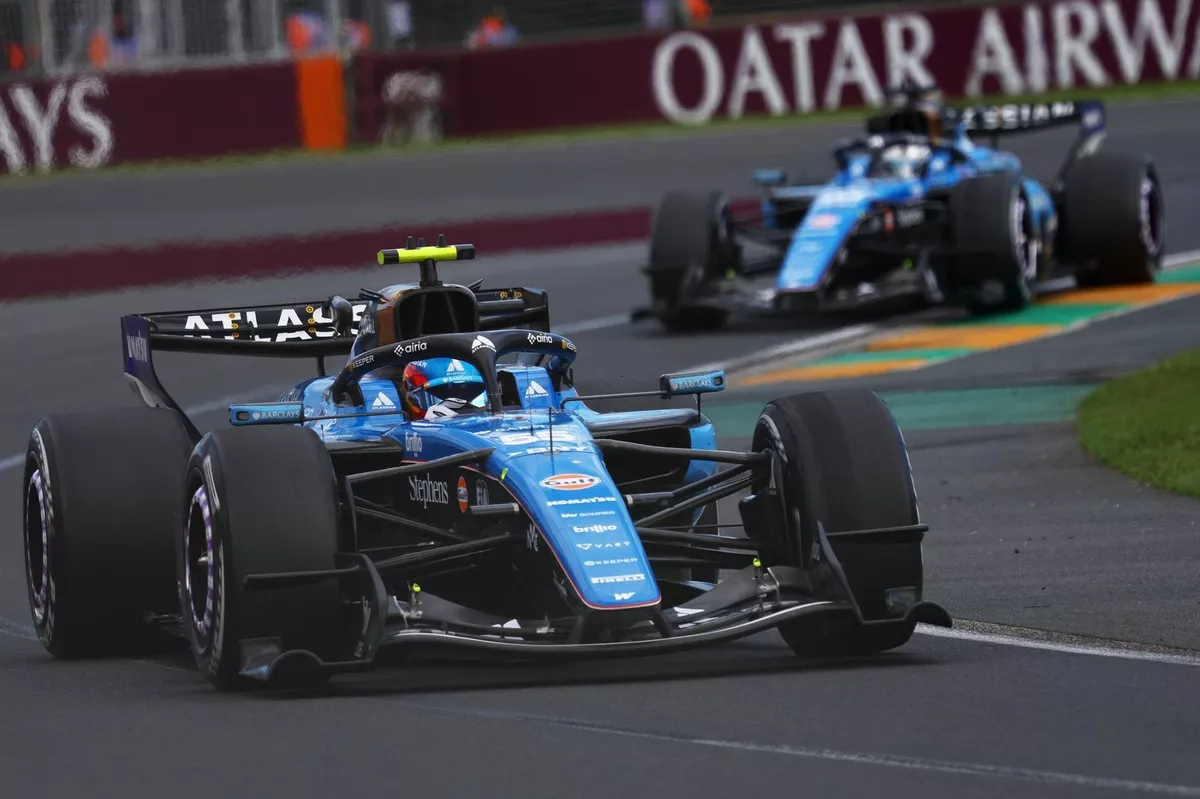
Their new challenger, the FW48, arrived at the start of the season carrying a significant handicap — quite literally. The car is heavier than intended, and that excess weight is costing precious lap time. Team principal James Vowles has acknowledged the issue openly, insisting that solutions already exist. But in the modern Formula One world, solving a problem is rarely as simple as building a lighter part and bolting it onto the car.
A Difficult Start for the Williams FW48
Even before the season began, warning signs had appeared.
Williams had planned to conduct an early shakedown at Circuit de Barcelona-Catalunya, a common location for teams to run their new machines before official testing begins. However, those plans were abruptly cancelled.
Reports emerged suggesting the car had initially failed a mandatory crash test and was also significantly overweight — potentially by more than 20 kilograms.
In Formula One terms, that number is enormous.
Every kilogram matters in modern race cars. Engineers spend months shaving grams from components, redesigning structures and using exotic materials to reach the minimum weight limit set by the sport’s regulations.
When a car arrives above that limit, the consequences are immediate.
Acceleration suffers. Braking distances increase. Tyre wear becomes worse. Cornering speeds drop.
Put simply, an overweight car struggles everywhere.
That reality became painfully clear during the opening race weekend in Australia.
Why Weight Matters More Than Ever in Modern Formula One
Historically, excess weight has always been undesirable in motorsport, but under the latest power unit regulations its effects have become even more pronounced.
Modern hybrid engines rely heavily on energy recovery systems. These systems harvest energy during braking and redeploy it later in the lap for additional power.
The efficiency of that process depends heavily on vehicle dynamics.
If a car carries extra mass, it loses corner speed at the apex. That reduced speed means less energy is harvested during braking, which in turn limits how much power can be deployed later on straights.
The problem compounds itself throughout the lap.
In other words, weight does not just slow the car down in isolation — it disrupts the entire energy management cycle.
For Williams, this is a particularly sensitive area because the team uses a power unit supplied by Mercedes-AMG Petronas Formula One Team. Customer teams inevitably operate with less detailed knowledge about power unit optimisation compared with the manufacturer’s works squad.
That knowledge gap can already cost tenths of a second per lap.
Add excess weight to the equation, and the disadvantage grows even larger.
James Vowles: The Solutions Already Exist
Despite the difficulties, Vowles insists the team already understands how to address the problem.
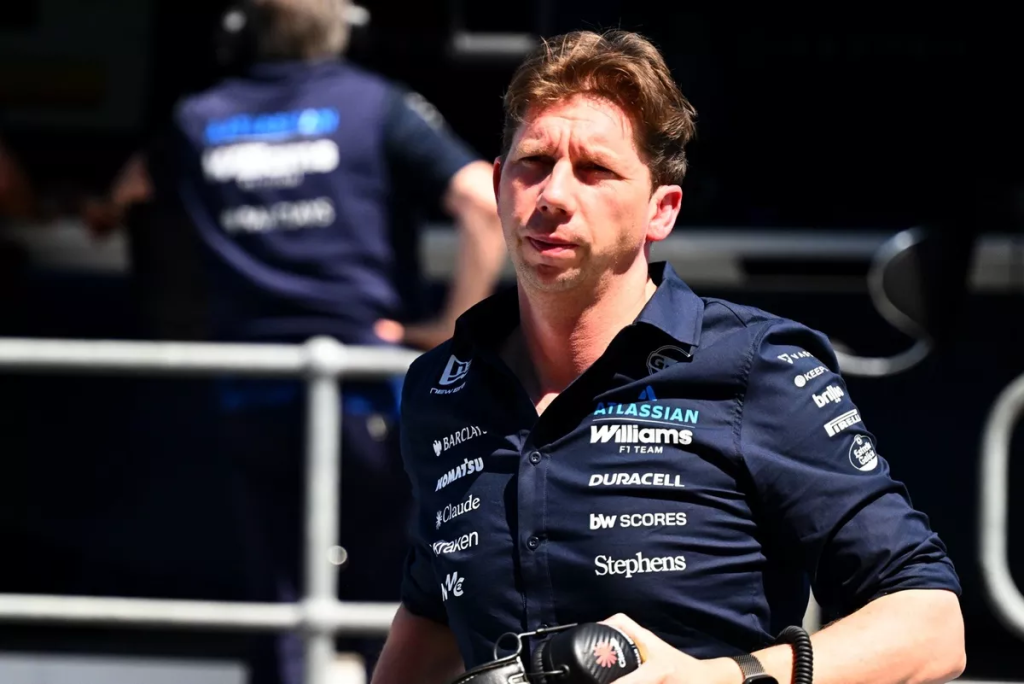
Speaking during the Australian Grand Prix weekend, the Williams boss revealed that engineers have identified multiple solutions to reduce the car’s weight.
“It’s not complicated to bring it down,” he explained.
According to Vowles, the necessary engineering plans are already prepared.
“In fact, everything I need is in my inbox today,” he said. “All the steps to not only bring the weight down but actually go underweight by a good margin are already there.”
That might sound reassuring.
But the challenge facing Williams isn’t technical — it’s financial.
The Cost Cap Complication
In the modern era of Formula One, teams operate under a strict financial regulation known as the cost cap.
Introduced to create a more competitive championship, the rule limits how much teams can spend on performance-related activities throughout the season.
While this regulation has improved competitive balance across the grid, it has also introduced new strategic dilemmas.
In a world without the cost cap, Vowles says the solution would be straightforward.
“If this was a cost-cap free world, I would execute the changes tomorrow,” he admitted. “We’d have the parts ready in a few weeks.”
But the current rules mean that rushing into major redesigns could consume a significant portion of the team’s annual development budget.
Instead, Williams must implement improvements gradually.
The Complex Process of Reducing Weight
Reducing weight in a Formula One car rarely involves one single fix.
Instead, it is a process of incremental gains.
Engineers examine every component across the car — suspension arms, bodywork panels, structural elements, electronics housings — searching for small opportunities to remove material or redesign parts.
Many of these components are built from carbon fibre composites, materials that offer incredible strength while remaining lightweight.
However, composite parts come with their own challenges.
Unlike metal, carbon fibre does not show obvious signs of fatigue before failure. A component might look perfectly intact right up until the moment it breaks.
For that reason, teams carefully track the operational lifespan of each composite piece. Every component has a calculated “life,” determined by the amount of stress it experiences during racing conditions.
When parts approach the end of that life, they are replaced.
Williams plan to introduce lighter components as part of this natural replacement cycle.
It’s a slower approach, but it spreads development costs across the season.
Logistics and the Hidden Cost of Upgrades
Another often overlooked factor in the cost cap era is logistics.
In previous years, teams could produce new parts and ship them around the world with little concern for transport expenses. Today, those costs count toward the cap.
Freighting urgent components to races can become surprisingly expensive.
This forces teams to think carefully about when and where upgrades are introduced.
“It’s a complexity,” Vowles admitted.
But he also believes the regulation ultimately benefits the sport.
“The cost cap is still a very positive thing overall,” he added.
Alex Albon Confident the Team Can Recover
Driver Alex Albon remains optimistic that the team can recover from its difficult start.
He acknowledged that the process of removing weight from the car will take time, but insisted that the engineers back at the factory are working relentlessly.
“There’s a huge push happening at the factory,” Albon said.
The team has already identified exactly where the lap time deficit lies.
“If you look at the numbers on paper, the weight alone represents a big chunk of our lost performance,” he explained.
While weight reduction will be the main focus, aerodynamic development will also play an important role.
Exploring Different Aerodynamic Concepts
One interesting observation from the opening race weekend was how differently teams have approached aerodynamic design this season.
Some have adopted aggressive concepts aimed at maximising downforce, while others have prioritised efficiency and straight-line speed.
According to Albon, Williams’ design philosophy sits toward the more extreme end of one particular concept.
That approach could prove beneficial once the weight problem is resolved.
But until then, the team will continue to operate at a disadvantage compared with its rivals.
Reliability Issues Add to the Challenge
Weight was not the only problem during the Australian Grand Prix weekend.
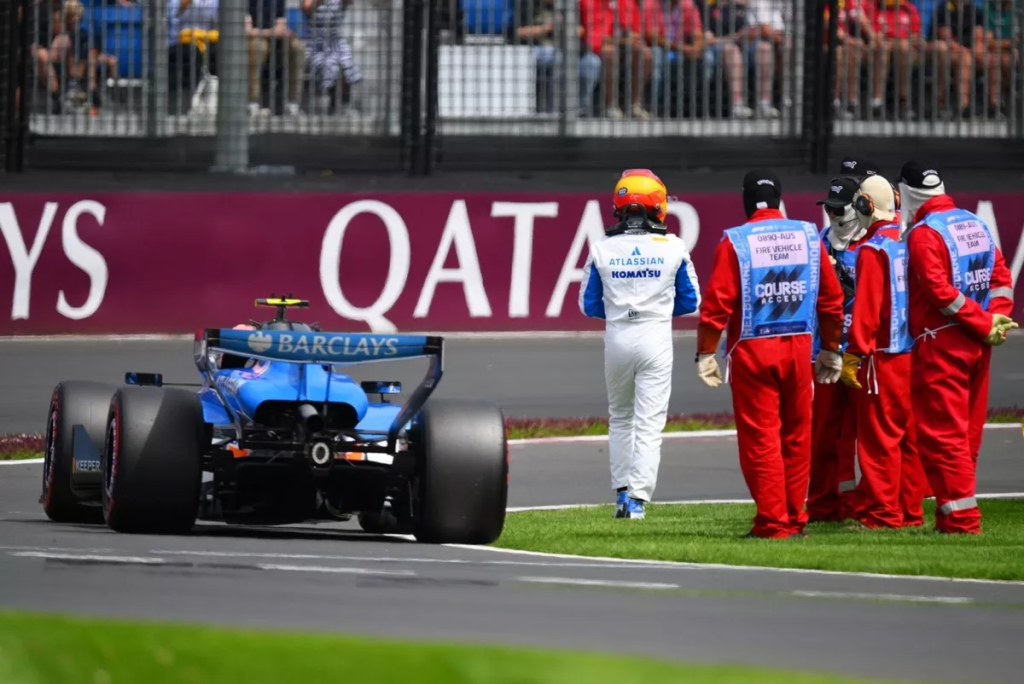
Driver Carlos Sainz encountered a frustrating reliability issue during the third practice session. His car stopped near the pit entry and could not be repaired in time for qualifying.
The incident proved costly.
It was the first opportunity for Mercedes-powered teams to directly compare their energy deployment strategies against the works team under identical race conditions.
With only one Williams car running, valuable data was lost.
“In qualifying we really saw how far off we are in terms of power unit management,” Vowles admitted.
The deficit in that area alone may amount to roughly three tenths of a second per lap.
Why Running Two Cars Matters
Formula One teams rely heavily on data comparison between their two drivers.
When both cars are running, engineers can test different setups, energy deployment strategies and tyre approaches simultaneously.
That allows the team to learn quickly.
With Sainz sidelined, Williams lost half of that learning potential.
“You need both cars out there to bounce ideas off each other,” Vowles explained.
Without that feedback loop, improving performance becomes slower and more difficult.
The Bigger Picture for Williams
At the start of the season, Vowles set an ambitious target for the team: finishing fifth in the constructors’ championship.
At the moment, that goal looks challenging.
Consistent top-10 finishes will be necessary to achieve it, and the current weight disadvantage makes those results harder to reach.
But inside the Williams factory, there is still confidence that progress will come.
The roadmap to fix the FW48 already exists.
Now it is simply a matter of executing it carefully within the financial constraints of modern Formula One.
And if Vowles’ inbox really does contain all the answers, the next few months will reveal just how quickly those solutions can make their way from computer models to the racetrack.


There are no comments yet. Be the first to comment!