





























































































































Jannik Sinner Historic Sunshine Double Raises the Stakes for Carlos Alcaraz
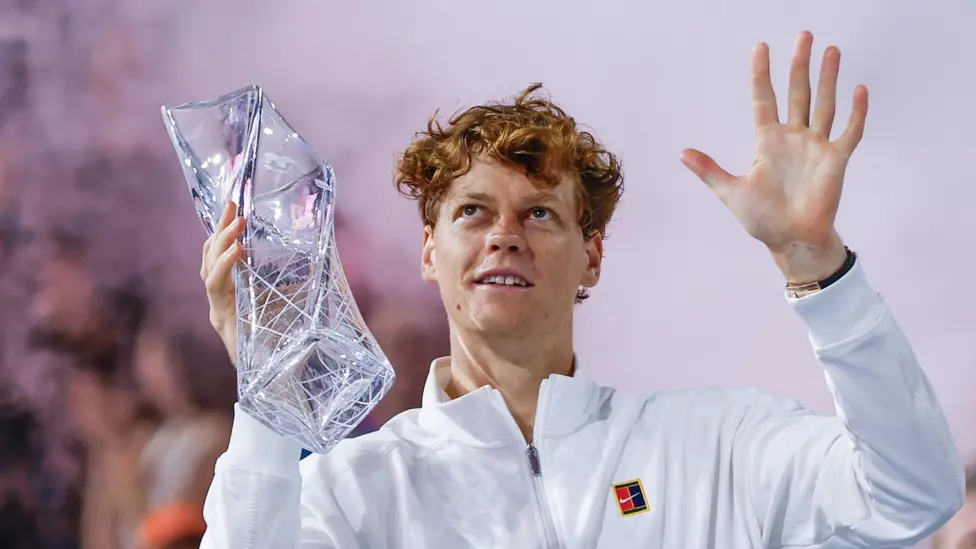
The men’s tennis tour has spent the past two seasons searching for its defining rivalry in the post–Big Three era. Now, it feels as though the answer has firmly arrived. Jannik Sinner’s historic Sunshine Double — capturing both Indian Wells and the Miami Open without dropping a single set — has not only etched his name into the record books but also sent a clear message to Carlos Alcaraz: the battle for supremacy is entering a new and fascinating phase.
What unfolded across the American hard-court swing was more than a winning streak. It was a statement of authority, precision, and relentless improvement from a player who seems determined to redefine his own limits.
Sunshine Double Perfection: How Jannik Sinner Raised the Alcaraz Stakes
Winning Indian Wells and Miami in the same season is already considered one of the toughest achievements outside the Grand Slams. Completing the Sunshine Double without losing a set, however, elevates the accomplishment into rare territory.
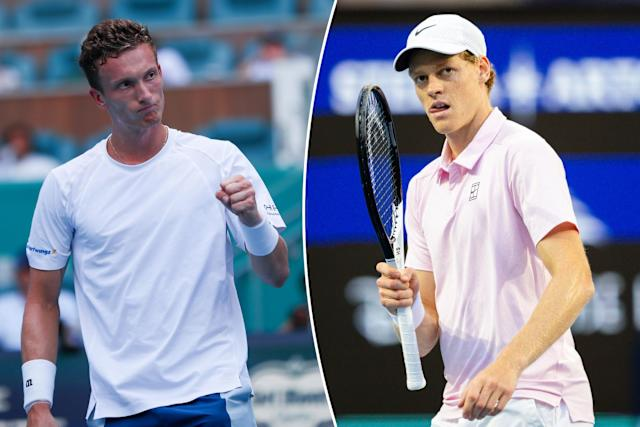
Sinner’s composed 6–4, 6–4 victory over Czech rising star Jiri Lehecka in a rain-interrupted Miami Open final captured the essence of his current form. There was no drama, no emotional swings — just clinical execution. Every rally felt measured, every service game controlled, every key moment handled with quiet confidence.
At 24 years old, the Italian has reached a level where dominance looks routine.
The achievement places him alongside Novak Djokovic and Rafael Nadal as one of the few men to win three consecutive Masters-level titles, confirming what many observers have suspected for months: the gap between Sinner, Alcaraz, and the rest of the ATP field is widening.
For Alcaraz, watching from afar after a third-round exit in Miami, the message was unmistakable. The rivalry is no longer theoretical — it is active, evolving, and increasingly intense.
A Rivalry Driving Modern Tennis Forward
Tennis has always thrived on duels that push players beyond their comfort zones. Federer needed Nadal. Nadal needed Djokovic. Now Sinner and Alcaraz appear locked in a similar dynamic.
Each victory by one feels like a challenge issued to the other.
Sinner himself admitted the American swing represented a turning point.
“It has been an incredible swing for me,” he said afterward, reflecting on the preparation and improvements that led to such commanding results. Behind those words lies months of careful refinement rather than sudden transformation.
The rankings tell part of the story. By lifting the Miami trophy, Sinner significantly reduced the gap to world number one Alcaraz, shrinking the difference to just 1,190 points heading into the European clay-court season.
With both players operating at a level far above the chasing pack, the ATP Tour increasingly resembles a two-man race.
The Evolution of Sinner’s Game: Precision Meets Power
Perhaps the most striking aspect of Sinner’s Sunshine Double run was not simply that he won — it was how he won.
For years, Sinner has been praised as one of the cleanest ball strikers in tennis history. His groundstrokes already possessed remarkable pace and accuracy, but critics occasionally pointed to moments of vulnerability under pressure, particularly on serve.
That weakness now appears largely erased.
Across six matches in Miami, Sinner fired 70 aces — the highest tally of his career in a three-set tournament. Even more impressive was his consistency: he lost his serve only once throughout the entire event.
In the final against Lehecka, Sinner won an astonishing 92 percent of points behind his first serve. The most revealing moment came early in the match when he faced three consecutive break points at 0–40. Rather than retreating into caution, he delivered five flawless first serves in succession, neutralising danger with almost mechanical calm.
It was reminiscent of Roger Federer at his peak — using serve not merely as a weapon but as an emotional reset button, draining hope from opponents.
Some commentators have jokingly referred to this phase as Sinner’s “servebot era,” but that description undersells the complexity of his improvement. His serve has become a foundation, allowing his aggressive baseline game to flourish even more freely.
Aggression Without Recklessness

Despite already owning one of the most feared forehands on tour, Sinner continues to search for marginal gains. That relentless pursuit of refinement is perhaps what separates great players from generational ones.
Against Lehecka, key moments in the opening set showcased this evolution. Twice, Sinner stepped inside the baseline to crush cross-court forehand returns off first serves — aggressive decisions executed with total conviction.
It was not just power; it was timing, intent, and awareness.
Frances Tiafoe, who faced Sinner earlier in the tournament, described him as “one of the best ball strikers the game has ever seen.” High praise, certainly, but increasingly difficult to dispute.
Even analysts struggled to identify flaws. Former Wimbledon champion Marion Bartoli summarized the challenge facing opponents bluntly: “The guy has zero weakness.”
Whether that assessment proves entirely true will be tested on clay, but on hard courts Sinner currently looks close to untouchable.
Carlos Alcaraz Responds — Quietly but Purposefully
While Sinner celebrated under the Miami lights, Alcaraz returned home to Murcia, already preparing for the next phase of the season.
That contrast perfectly captures their rivalry dynamic. One player lifts a trophy; the other immediately begins preparing the response.
Clay season offers Alcaraz familiar territory. His ultimate objective is clear: defending the French Open title he won last year after an unforgettable final victory over Sinner — a match many already consider a modern classic.
If Sinner has surged through consistency, Alcaraz remains defined by creativity and explosive variety. The Spaniard’s challenge now is maintaining that edge while matching the Italian’s growing reliability.
Every small improvement matters when margins are this thin.
A Ranking Race About to Ignite
The coming weeks could dramatically reshape the world rankings.
Sinner enters Masters events in Monte Carlo and Madrid with a rare advantage: he has no ranking points to defend due to last year’s suspension period following failed doping tests. That means every win represents pure gain.
Alcaraz, meanwhile, carries the pressure of defending points accumulated during his dominant 2024 clay campaign.
By the time Roland Garros begins, the race for world number one could be virtually level — a scenario that would have seemed improbable just months ago.
The rivalry may soon hinge not only on titles but also on weekly consistency across surfaces.
The Beginning of Tennis’ Next Great Era
What makes this moment compelling is not simply Sinner’s dominance or Alcaraz’s brilliance individually, but the way they elevate one another.
Each breakthrough forces adaptation. Each loss sparks reinvention.
The Sunshine Double may ultimately be remembered not just as a personal milestone for Jannik Sinner, but as the moment the rivalry fully crystallised — when the Italian transformed from challenger into equal contender.
As the tour moves onto clay, anticipation builds for their next encounter. Tennis rarely guarantees storybook rivalries, yet this one feels inevitable.
Two young champions, two contrasting styles, and one shared destination at the top of the sport.
If Miami was any indication, the chase is only just beginning — and the stakes between Jannik Sinner and Carlos Alcaraz have never been higher.


There are no comments yet. Be the first to comment!