







































































































































Jasmine Paolini Halts Katie Boulter Charge at the Merida Open After Stunning Turnaround
There are matches that swing gently, almost predictably. And then there are nights like this at the Merida Open — where momentum crashes from one side of the net to the other, confidence evaporates and then reappears, and the script is torn up in real time.
Katie Boulter arrived in Mexico riding a wave. Seven consecutive wins. A title in Ostrava. A renewed sense of authority in her game. For 28 blistering minutes against Jasmine Paolini, it looked as though that wave would carry her straight into the semi-finals.
Instead, it was Paolini — the Italian top seed and world number seven — who walked away with the victory, staging an impressive comeback to win 0-6, 6-3, 6-3 and book her place in the last four of the Merida Open.
Katie Boulter Blazes Early at the Merida Open
The opening set was as close to flawless as Boulter has looked all season.
From the very first return game, she struck the ball with conviction. Groundstrokes landed deep and heavy, forcing Paolini onto the back foot. Winners came from both wings. The British number one dictated rallies with clarity and aggression, barely allowing her opponent to settle.
Twenty-eight minutes. Six games. Not a single one conceded.
It was a statement set — 6-0 — and it left the crowd in Mexico momentarily stunned. Paolini, a 2024 finalist at both Wimbledon and Roland Garros, managed just three points on her own serve during that stretch. Three.
For a player of Paolini’s pedigree, it was almost surreal.
Boulter’s timing was exquisite. Her serve clicked. Her footwork was sharp. Everything she attempted seemed to land inside the lines. At that stage, the contest felt less like a quarter-final and more like a one-sided exhibition.
But elite players rarely remain subdued for long.
Jasmine Paolini Responds to Shift the Momentum
The second set told a very different story.
Paolini began by simply holding serve — a small detail on paper, but psychologically enormous after the chaos of the first set. That first solid service game steadied her. It bought her time. It gave her rhythm.
Then came the break.
At 1-1, Paolini dug into longer rallies, pushing Boulter a fraction deeper behind the baseline. The Italian adjusted her court positioning, taking the ball earlier and driving it harder through the middle. The change wasn’t dramatic, but it was deliberate.
Suddenly, the rallies lengthened. The margins narrowed. And small errors began creeping into Boulter’s game.
Paolini broke to move 3-1 ahead, and although Boulter responded with a break of her own — to love, no less — neither player could string together comfortable service holds in the next three games. It became scrappy. Tense. Edgy.
But in that tension, Paolini found calm.
The Italian held her nerve in the critical moments, capturing the second set 6-3 to level the match. What had begun as a demolition was now a genuine battle.
A Decider Full of Nerves and Fine Margins
By the time the third set began, the energy around the court had shifted entirely. Boulter’s early dominance felt distant. Paolini’s belief, meanwhile, was visibly growing.
The Italian surged into a 2-0 lead in the decider, reading Boulter’s patterns more effectively and absorbing pace before counterpunching with precision. Yet credit to Boulter — she refused to fade quietly.
Breaking back and then holding serve to edge 3-2 in front, the Brit hinted at one final push. For a brief spell, it seemed she might wrestle back control through sheer will.
But that would be the last time she led.
From 3-2 down, Paolini elevated again. Her shot selection sharpened. Her depth improved. She began stepping into the court, dictating exchanges rather than reacting to them. Four consecutive games followed, each built on discipline and clarity.
When match point arrived, there was no hesitation. Paolini closed it out 6-3, 6-3, completing one of the more dramatic turnarounds of her season.
Jasmine Paolini Reflects on Merida Open Comeback
After the match, Paolini was candid about the struggle she endured in that brutal opening set.
“It was a really tough one,” she admitted. “Katie in the first set was smashing every ball and hitting a winner everywhere.”
There was no attempt to sugarcoat it. She had been outplayed — comprehensively.
But her solution was pragmatic rather than emotional.
“I was telling myself to play more deep in the court and hit the ball harder because I had to raise the level to try and win the match and in the end it worked out.”
That self-adjustment proved decisive. Rather than forcing spectacular winners, Paolini focused on depth, tempo, and patience. She steadied her breathing, slowed the chaos, and gradually reclaimed the baseline.
“I was trying to be calm, to think what I had to do,” she added. “I think when you’re nervous you can’t find the solutions.”
It was a telling insight. While Boulter’s early brilliance was built on instinct and freedom, Paolini’s recovery was constructed on composure.
What the Defeat Means for Katie Boulter
For Boulter, the loss will sting — particularly after such a commanding start.
She entered the Merida Open brimming with confidence following her title run at the Ostrava Open. Seven straight wins had reinforced the sense that she was building something substantial this season. The first set against Paolini only strengthened that belief.
But tennis at this level demands consistency across two, sometimes three hours. Against a top-10 opponent, lapses are punished swiftly.
There were flashes of the sharp, assertive Boulter that has impressed in recent weeks. Her serve remains a potent weapon. Her forehand, when timed well, can overwhelm even elite defenders. Yet sustaining that intensity proved difficult once Paolini altered the rhythm.
Still, there is perspective here. Losing narrowly in three sets to a world number seven is hardly a collapse. It is, instead, a reminder of the fine lines separating victory and defeat at the top tier.
The Bigger Picture at the Merida Open
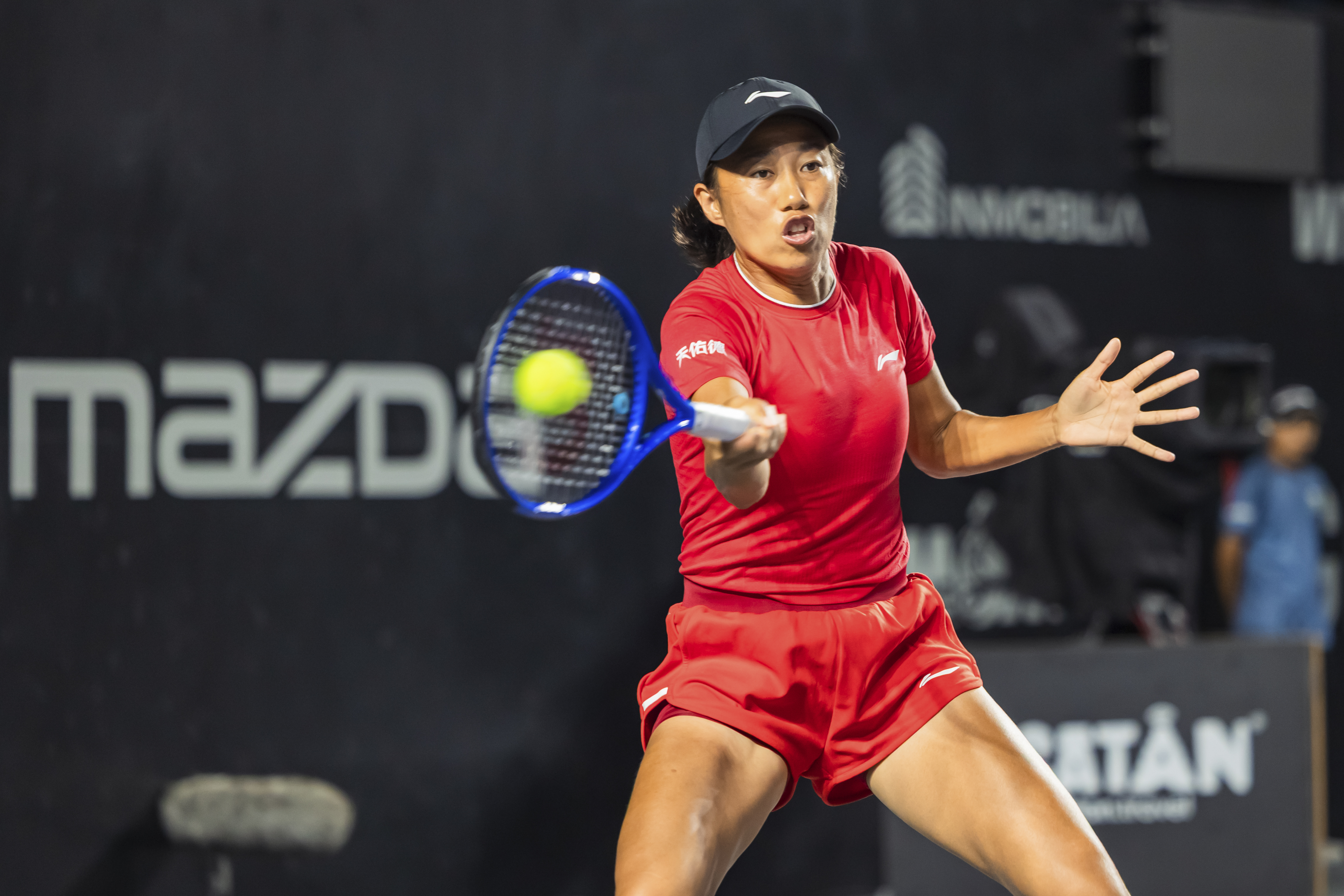
For Paolini, the victory reinforces her credentials as one of the tour’s most resilient competitors. To rebound from a 6-0 opening set defeat requires not just technical adjustment, but emotional stability.
Her run at the Merida Open now carries real momentum.
As for Boulter, the trajectory remains positive. A seven-match winning streak and a title in Ostrava are evidence of progress. The challenge now is to translate explosive starts into sustained control against the game’s elite.
On this occasion, brilliance for 28 minutes wasn’t enough.
At the Merida Open, it was Jasmine Paolini who adapted, endured, and ultimately advanced — halting Katie Boulter’s winning run with a comeback built on grit as much as skill.


There are no comments yet. Be the first to comment!